 Birch Bay Siding
 Semiahmoo's Coastal Climate: What Exteriors Are Up Against
Homes near Semiahmoo and Birch Bay sit close enough to saltwater that the exterior of a house takes a different kind of beating than a home twenty miles inland in Whatcom County. Salt-laden air drifts off the water and settles on siding, trim, fasteners, and roofing day after day. Add in Western Washington's long stretch of driving rain each fall and winter, plus a moss season that can run from October through May in shaded, north-facing spots, and you have an environment that rewards materials and installation methods built for moisture — and punishes anything that isn't.
This isn't a scare story. Plenty of homes in this area hold up fine for decades. But the ones that hold up best were built or re-sided with the local climate in mind, not with whatever was cheapest or fastest to install. That's the frame we bring to every siding, roofing, window, and deck job we do out here.
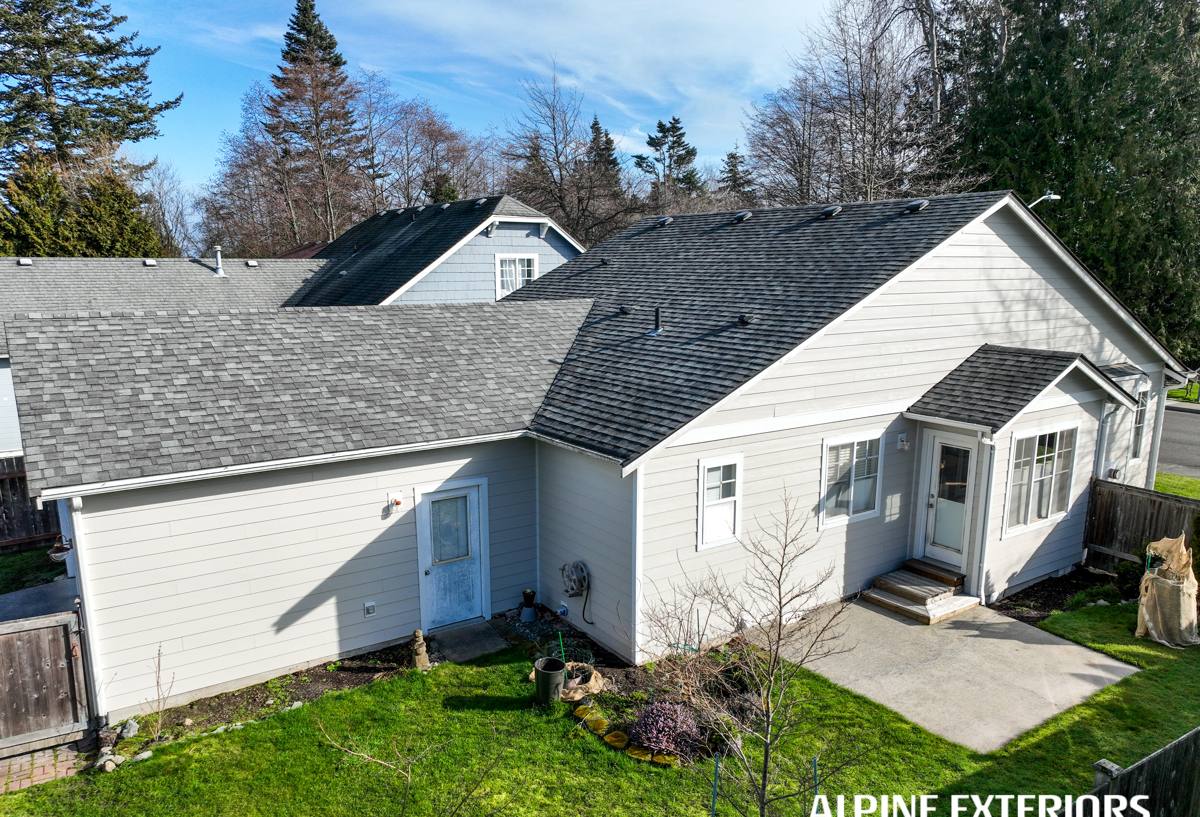
Why Salt Air Changes the Equation
Salt air isn't just "more moisture." It's moisture carrying dissolved salts that accelerate corrosion and speed up the breakdown of certain finishes. A few specific things we watch for on siding work near the water:
- Fastener corrosion — nails, screws, and metal trim pieces need to be rated for coastal or marine exposure, not standard interior-grade hardware.
- Paint and finish breakdown — factory-applied finishes generally outlast field-applied paint in salt air, because they're baked on under controlled conditions rather than brushed or sprayed on-site.
- Accelerated wear on caulking and sealants at joints, seams, and penetrations, which need more frequent inspection near the water than a few miles inland.
- Faster moss and algae growth on shaded elevations, which holds moisture against the siding surface longer than it would on a drier, sunnier wall.
None of this means coastal homes need exotic materials. It means the materials and installation details matter more here than they do in a lot of other places, and cutting corners shows up sooner.
Where James Hardie Fiber Cement Fits
We install James Hardie fiber cement siding exclusively, and the reasons matter more in a place like Semiahmoo than they would somewhere drier. Fiber cement is a blend of cement, sand, and cellulose fiber — it doesn't absorb water the way wood-based products can, and it doesn't expand and contract with moisture the way vinyl does in temperature swings. Hardie's ColorPlus factory finish is baked on in a controlled environment, which gives it better adhesion and more consistent weather resistance than a finish applied on-site after installation.
Hardie also builds region-specific product lines engineered for different climate zones. For the Pacific Northwest, that means siding formulated with moisture and cool, wet conditions in mind, rather than a one-size-fits-all product. It's also non-combustible, which matters as wildfire smoke and dry-season fire risk have become a bigger part of the conversation in Washington even outside the immediate coastal fog belt.
None of this makes fiber cement maintenance-free. It still needs proper caulking, periodic washing to keep salt film and organic growth from building up, and prompt attention if a panel gets damaged. But it holds its shape and finish in wet, salty air better than the alternatives we've chosen not to install.
Why We Don't Install Vinyl, LP SmartSide, or Bare Wood Siding Here
Vinyl siding can loosen, warp, or fade over time as it expands and contracts, and salt air speeds up UV-related fading on some vinyl products. Engineered wood products like LP SmartSide use a wood-strand substrate that, if water gets behind the siding or into a cut edge, can swell or deteriorate — a real risk in a place that sees this much sustained rain. Untreated or primed wood and cedar look great initially but demand a repainting and caulking schedule that's hard to keep up with in a marine climate, and any lapse invites rot. These aren't defects that make those products unusable everywhere — they're trade-offs that, combined with what Semiahmoo's air and rain do to a house, led us to standardize on one product system instead of juggling several.
Roofing, Windows, and Decks in the Same Environment
Siding doesn't work in isolation — the roof, windows, and any exterior decking on a Semiahmoo home face the same salt air and rain, and they all need to work together to keep water out of the structure.
Roofing
Roofing near the water deals with wind-driven rain finding its way under shingles or flashing that isn't sealed correctly, plus faster moss growth on north- and shade-facing slopes. Flashing details around chimneys, valleys, and roof-to-wall transitions matter even more here, since a small gap that might stay dry inland can let in water during a sustained coastal storm.
Windows
Window flashing and the integration between the window unit and the siding is one of the most common failure points we see on any coastal exterior, regardless of who installed it originally. Properly flashed and sealed window openings, tied into a correctly installed weather-resistive barrier, are what actually keep water out — the window itself is only part of the system.
Decks
Decks facing the water take on both rain exposure and salt spray, which affects fastener choice, ledger board flashing, and how quickly a deck surface needs cleaning to stay free of slick moss and algae growth.
Because we handle all four — siding, roofing, windows, and decks — we can look at a Semiahmoo home's exterior as one connected system rather than treating each component as a separate job with separate assumptions about how water moves around the building.
What Correct Installation Actually Involves
Good materials installed poorly still fail. In a marine-influenced climate, the installation details that get skipped on a rushed job are exactly the ones that matter most:
- A continuous, correctly lapped weather-resistive barrier behind the siding, with no gaps at seams or penetrations.
- Proper flashing at every window, door, and roofline transition, integrated with the barrier rather than just caulked over it.
- Correct fastener type, spacing, and penetration depth per the manufacturer's installation instructions — not a generalized approach used on every siding brand.
- Adequate clearance between siding and grade, decks, and roof lines to avoid standing water and prolonged wetting.
- Field-cut edges properly sealed, since factory finishes only protect the surfaces that were finished at the factory.
These details take longer to get right, and they're invisible once the job is finished — which is exactly why they're worth asking about before hiring anyone.
Cost Factors for a Semiahmoo Exterior Project
Every home and project scope is different, but a few factors consistently move the price on siding, roofing, window, and deck work in this area:
| Factor | Why It Matters Here |
|---|---|
| Home size and wall complexity | More corners, gables, and transitions mean more flashing detail and labor time |
| Existing exterior condition | Hidden rot or water damage found during tear-off adds repair scope before new siding goes on |
| Proximity to the water | Closer, more exposed elevations may warrant additional sealant and fastener attention |
| Access and site conditions | Slopes, landscaping, and staging space affect labor time and equipment needs |
| Scope bundling | Combining siding with roofing, window, or deck work in one project can reduce overlapping setup costs |
We don't publish blanket price lists because these variables genuinely change the number — but we walk every property and explain what's driving the estimate before any work starts.
Why a Local Crew Matters in Semiahmoo
A crew that works Whatcom County's coastal communities regularly has already seen how salt air and driving rain affect houses like yours over time — which trim details tend to fail first, which elevations take the worst weather, how moss builds up differently on a shaded wall facing the water versus a sunnier side. That local pattern recognition shows up in small decisions during a job: where to add extra flashing attention, which fastener spacing to lean toward, how to sequence work around the wetter months. It's not a substitute for manufacturer specs, but it's the difference between following instructions and understanding why they matter for this specific stretch of coastline.
Maintaining a Coastal Exterior Once It's Installed
Even the right materials, installed correctly, benefit from a bit of regular attention in this environment:
- Rinse salt film and debris off siding and windows a couple of times a year, more often on elevations facing the water directly.
- Check and refresh caulking at trim, window, and door joints periodically — sealants wear faster in salt air than inland.
- Keep gutters clear so water isn't overflowing onto siding or pooling near the foundation during heavy rain.
- Watch shaded, north-facing areas for early moss growth and clean it before it spreads or holds moisture against the surface.
- Have flashing and fastener condition checked periodically, especially after a particularly harsh storm season.
If you're planning a siding, roofing, window, or deck project for a home in Semiahmoo or elsewhere around Birch Bay, we're happy to take a look and put together a straightforward, no-pressure estimate — just fill out the form below.