 Birch Bay Siding
 California Creek: A Coastal Corner of Birch Bay
California Creek sits within the broader Birch Bay area of Whatcom County, close enough to Puget Sound and the Strait of Georgia that homes here live with coastal weather year-round. That means salt-laden air off the water, wind-driven rain that doesn't just fall straight down but gets pushed sideways into siding and trim, and the kind of persistent damp shade that lets moss and algae take hold on north-facing walls and rooflines. Homes in this pocket of Whatcom County aren't dealing with an occasional wet season — they're dealing with a nine-month stretch of moisture exposure that never fully lets up.
We work throughout Birch Bay and the surrounding Whatcom County communities, and California Creek is one of the areas where we see the clearest evidence of what coastal exposure does to a house over time. Siding that would hold up fine forty miles inland shows fatigue here in half the time. That's not a knock on any one product — it's just physics. Salt air is corrosive to fasteners and finishes, standing moisture is patient, and wood-based materials in particular have nowhere to hide from it.
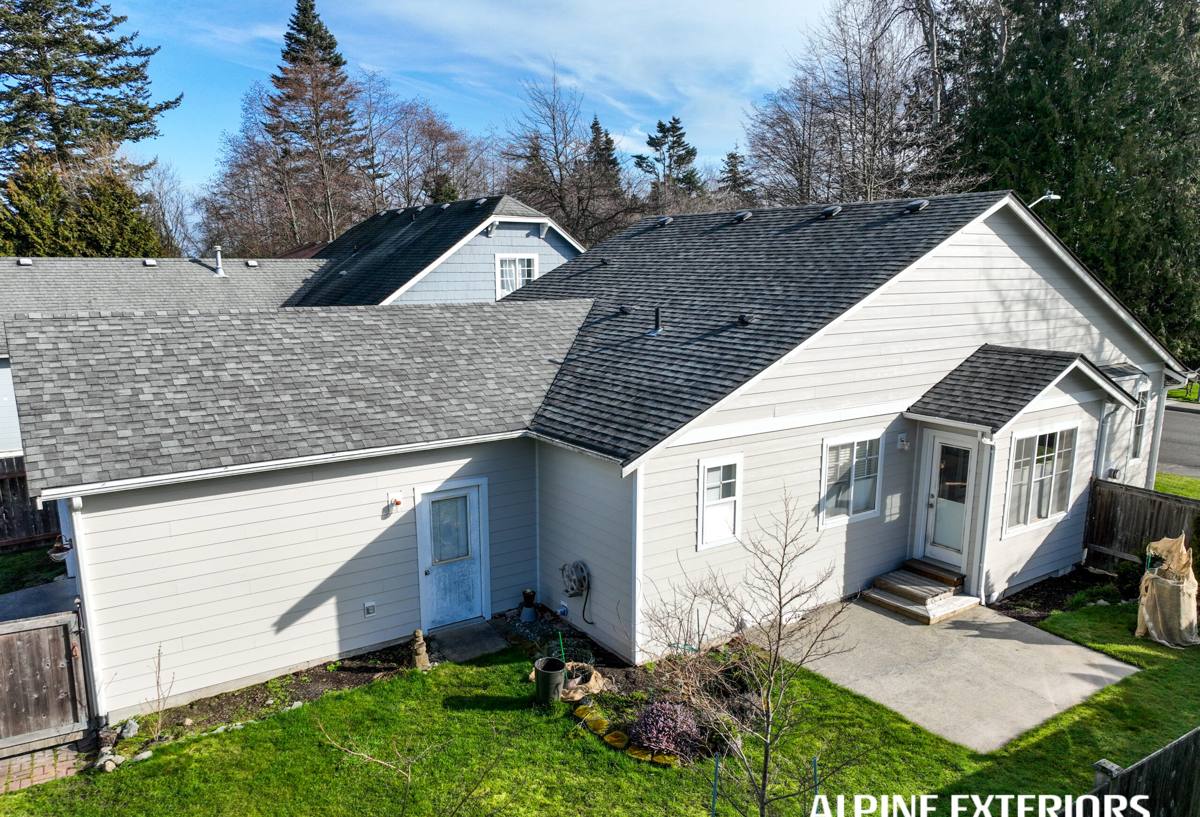
What the Local Climate Actually Does to a House
If you've owned a home in this area for more than a few years, you've probably already seen some combination of the following:
- Green or black staining on the shaded side of the house, especially under eaves and behind landscaping
- Paint that's chalking, peeling, or losing adhesion faster than the can promised
- Soft or swollen trim boards around windows and at the base of walls
- Caulk joints that have cracked open, giving wind-driven rain a path behind the siding
- Rust streaking from fasteners that were never rated for salt exposure
None of this is unusual for the area — it's just what coastal Whatcom County does to exterior materials that aren't built for it. The fix isn't more frequent repainting or another round of caulk. It's starting with a material and installation approach that's engineered for this specific combination of moisture, salt, and shade.
Why Moss Season Matters More Here Than Elsewhere
Moss and algae need three things to establish themselves on a wall: moisture, shade, and a surface they can grip. Homes near the water tend to have all three in abundance — tree cover for shade, marine air for moisture, and textured or porous siding surfaces for grip. Once moss gets a foothold on wood-based siding, it holds moisture against the surface constantly, which accelerates rot underneath long before it's visible from the ground. A siding material's surface texture and moisture tolerance matter as much here as its color or price.
Why We Install Only James Hardie Fiber Cement
We made a deliberate decision to install exclusively James Hardie fiber cement siding — not vinyl, not engineered wood products, not primed cedar or spruce. In an area like California Creek, that decision comes down to how each material actually behaves under sustained coastal exposure, not just how it performs on a spec sheet.
Fiber cement is made from cement, sand, and cellulose fibers. It doesn't absorb water the way wood-based siding does, and it isn't a petroleum-based product that softens and warps under heat and UV the way vinyl can. It's also non-combustible, which matters to a lot of homeowners regardless of location. James Hardie's HZ5 product line is specifically engineered for cold, wet climate zones, and their ColorPlus factory-applied finish is baked on and warrantied against fading and cracking in a way that field-applied paint simply isn't.
We're not going to tell you every other siding product is bad — plenty of them have real strengths. But we've chosen to build our business around one material we can stand behind fully, install to spec every time, and back with a warranty that means something. For homes fighting salt air, driving rain, and moss season, that's fiber cement.
How a Siding Project Works for California Creek Homes
Assessment and Moisture Check
Every project starts with a real look at the existing wall assembly, not just the siding surface. In a coastal area, we're specifically checking for trapped moisture, soft sheathing, and any spots where past caulk-and-patch repairs masked a bigger problem. This is the step that gets skipped by contractors racing to close a sale, and it's the step that determines whether new siding lasts fifteen years or fifty.
Water Management Comes Before Siding
Correct installation means a weather-resistant barrier, properly lapped flashing at every window, door, and penetration, and rainscreen or drainage detailing where it's warranted — especially on walls that take direct wind-driven rain. Siding is the visible layer, but the water management behind it is what actually keeps a coastal home dry.
Installation to Manufacturer Spec
James Hardie's warranty depends on installation following their specifications — correct fastener type and spacing, proper clearances at grade and roof lines, and correct joint treatment. We install to that spec as a baseline, not an upsell, because it's the difference between a warranty that actually protects you and one that's void the first time you'd need it.
Beyond Siding: The Full Exterior Envelope
Siding doesn't work in isolation. A house near California Creek is only as weathertight as its weakest exterior component, which is why we also handle roofing, windows, and decks. A few ways these connect:
- Roofing: Roof-to-wall flashing details directly affect how much water reaches your siding in the first place. Moss on a roof also tends to show up on the siding below it.
- Windows: Window flashing integration is one of the most common failure points behind new siding — old, leaking window flanges are a leading cause of hidden rot even under brand-new siding.
- Decks: Ledger board attachment and deck flashing where a deck meets the house are frequent water-entry points, especially on the wet, shaded sides of a lot.
Handling all four trades under one roof means fewer handoffs, fewer finger-pointing situations if something leaks, and an exterior that's actually detailed as one connected system.
What to Look For in a Local Contractor
Whatcom County has no shortage of contractors willing to quote a siding job, but coastal work rewards experience with this specific climate. A few things worth checking before you hire anyone:
- Do they have a documented process for water management, or do they just talk about the siding brand?
- Are they a certified or experienced Hardie installer, or are they treating fiber cement like any other siding?
- Will they show you how flashing and fastener details will be handled before work starts, not just after?
- Do they carry current licensing and insurance appropriate for Washington State?
- Can they explain, in plain terms, why they'd handle a shaded, moss-prone wall differently than a sun-facing one?
Questions Worth Asking Before You Sign a Contract
- What warranty applies to labor versus material, and who backs each one?
- How will you protect my landscaping and the creek-adjacent drainage on my property during tear-off?
- What happens if you find rot or soft sheathing once the old siding comes off?
- How long has your crew been installing fiber cement specifically, versus other materials?
Cost Factors for a Siding Project in This Area
Every home is different, and we don't quote pricing without seeing the house, but the factors that move a bid up or down are consistent across California Creek and Birch Bay projects:
| Factor | Why It Matters Here |
|---|---|
| Existing wall condition | Coastal moisture exposure means a higher chance of hidden sheathing repair, which affects both cost and timeline |
| Home size and wall complexity | More corners, gables, and trim details mean more cutting, flashing, and labor time |
| Siding profile and accessories | Lap width, trim style, and any shake or panel accents change material and labor cost |
| Access and site conditions | Tree cover, slope, and proximity to water features can affect staging and protection measures |
| Paired projects | Bundling siding with roofing, window, or deck work can reduce redundant setup and mobilization costs |
Living With Fiber Cement Siding in a Salt-Air Climate
One of the practical advantages of switching to fiber cement in this area isn't just the installation day — it's every year after. Fiber cement doesn't need repainting nearly as often as wood, doesn't swell and shrink with moisture the way engineered wood products can, and won't corrode or become brittle the way some plastics do under long-term UV and salt exposure. It still needs basic care: keeping gutters clear so water doesn't sheet down the wall, keeping vegetation trimmed back from shaded sides to reduce moss pressure, and an occasional gentle wash to keep salt residue and organic growth from building up. That's a much shorter maintenance list than most alternatives require in this climate.
Ready to Talk About Your Home
If you're in California Creek or elsewhere around Birch Bay and dealing with siding that's showing its age — staining, soft spots, failing paint, or just a feeling that it's time — we're happy to come take a look. There's no pressure and no obligation. Use the form below to request a free estimate, and we'll walk your home with you and talk through what we're actually seeing, not just what we're selling.