 Birch Bay Siding
 Sumas and the Realities of Whatcom County Weather
Sumas sits inside the broader Whatcom County service area we work in every week, and homes here deal with the same core exterior challenges that show up across the region: persistent moisture, salt-tinged air off the Strait of Georgia and Puget Sound, and long stretches of overcast, damp weather that never quite let a house's siding fully dry out. It's not dramatic weather. There's no hurricane season, no extreme heat to worry about. The problem in Whatcom County is patience — the climate is slow, steady, and relentless, and it finds every weak point in an exterior over years, not days.
That's the mindset we bring to every Sumas project. We're not selling homeowners on a single bad storm. We're building and repairing exteriors to hold up against decades of the low-grade wear that Northwest Washington throws at a house: rain that falls sideways during winter storms, humidity that lingers into summer mornings, and a moss and algae season that, if left unchecked, can run most of the year.
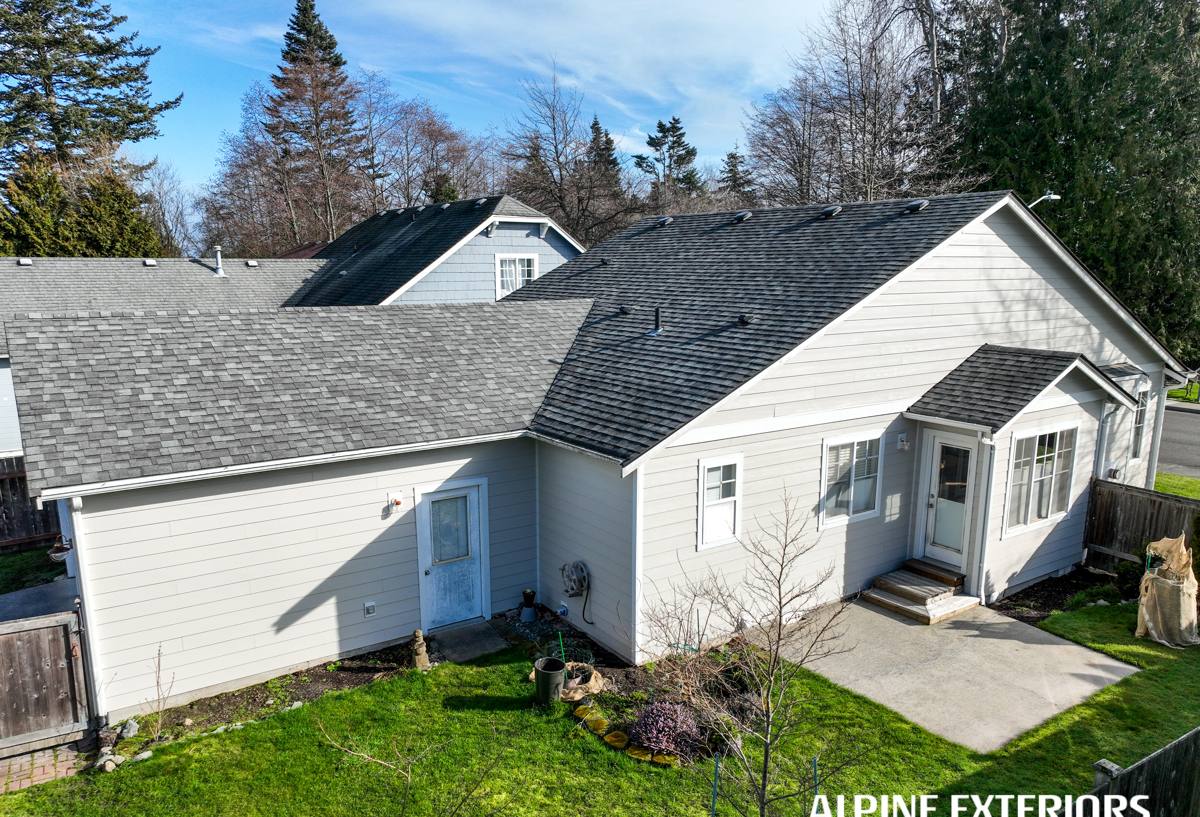
What Local Homes Actually Face
Driving Rain and Wind-Driven Moisture
Whatcom County gets a lot of its precipitation as prolonged, wind-pushed rain rather than heavy short downpours. That distinction matters for siding. Wind-driven rain gets forced sideways into seams, laps, and trim joints that would stay dry in a calmer climate. Any siding product with poor water management at the seams — or any installation that skips proper flashing and caulking details — will eventually let moisture behind the cladding. Once that happens, the damage is happening where you can't see it, inside the wall assembly, long before it shows up as a stain or a soft spot on the surface.
Salt Air
Proximity to the water means a measurable amount of salt in the air on windy days, even well inland from the immediate shoreline. Salt air accelerates corrosion on fasteners, flashing, and any exposed metal components, and it can be harder on certain paints and coatings over time. It's a slow effect, but it's a real one, and it's part of why material choice and installation detail matter more here than in a dry inland climate.
A Long Moss and Algae Season
Shade, moisture, and mild temperatures are exactly what moss and algae need to thrive, and Whatcom County offers all three for most of the year. Roofs are the most visible casualty, but siding — especially in shaded areas near landscaping, under eaves, or on the north side of a house — can develop the same green-black staining. Beyond the cosmetic issue, sustained moss growth holds moisture against a surface, which shortens the life of whatever is underneath it.
Temperature Swings and Material Movement
Winters aren't brutally cold here, but freeze-thaw cycles still happen, and any material that absorbs moisture and then freezes is at risk of cracking, swelling, or delaminating over repeated cycles. Siding materials that expand and contract significantly with temperature and humidity changes are also more prone to nail popping, joint gapping, and finish cracking over the years — small issues that compound if they're not addressed.
Why We Only Install James Hardie Fiber Cement
We made a deliberate decision as a company to install one siding system — James Hardie fiber cement — rather than offer a menu of products with very different long-term performance. That's not a marketing position; it's a practical one, built around exactly the conditions described above.
Fiber cement is dimensionally stable and doesn't swell or rot the way wood-based products can when they take on repeated moisture exposure. It's also non-combustible, which matters to insurers and homeowners alike. James Hardie's ColorPlus factory-applied finish is baked on under controlled conditions rather than field-painted, which gives it a more consistent, durable topcoat than most on-site finishing can match — and Hardie backs it with a meaningful, transferable warranty when the product is installed to their specifications.
Where Other Products Fall Short in This Climate
| Material | Common Trade-Off in Whatcom County Conditions |
|---|---|
| Vinyl siding | Can warp or distort with sustained temperature swings; seams and laps are more vulnerable to wind-driven rain intrusion over time |
| LP SmartSide | Engineered wood strand product — performs reasonably when detailing is perfect, but is more sensitive to sustained moisture exposure at cut edges and seams than fiber cement |
| Cedar / primed spruce | Attractive material, but requires ongoing maintenance (staining, sealing, moss treatment) to resist rot in a damp climate — a real ongoing cost most homeowners underestimate |
| Cemplank / Allura | Other fiber cement brands exist, but we've standardized on James Hardie specifically for its HZ climate-engineered product lines, finish warranty, and installation documentation |
None of these are "bad" products in the sense of being defective. They're reasonable choices in the right climate, installed correctly, and maintained on schedule. Our standard is simply that James Hardie's fiber cement gives Whatcom County homeowners the best combination of moisture resistance, finish durability, and low ongoing maintenance for what this specific climate does to a house year after year.
Siding Installation, Done for This Climate
Correct installation matters more than product choice alone. A premium siding product installed with poor water management will still fail early; a well-detailed installation is what actually delivers the product's rated lifespan. For Sumas and the surrounding area, that means paying close attention to:
- Proper weather-resistive barrier and rain-screen detailing behind the siding, so any moisture that does get past the cladding can drain and dry
- Correct flashing at windows, doors, and roof-to-wall transitions — the highest-risk points for wind-driven rain intrusion
- Manufacturer-specified fastening and gapping, so the material can handle seasonal movement without cracking the finish
- Caulking and sealant choices rated for sustained damp exposure, not just a quick weather event
- Attention to grade clearance and drainage around the foundation line, so siding isn't sitting in standing moisture
Roofing, Windows, and Decks: The Rest of the Envelope
Siding is only one piece of how a house handles Whatcom County weather. We also work on roofing, windows, and decks, because they share the same enemies — sustained moisture, moss, and salt air — and because a house is only as weather-tight as its weakest component.
Roofing
Roofs take the brunt of the region's long moss season and constant rain exposure. Ventilation, underlayment quality, and flashing detail matter as much here as the roofing material itself, since trapped moisture under a roof surface causes damage whether the shingles above it look fine or not.
Windows
Window flashing and sealant integration with the siding system is one of the most common failure points we see on older homes. A window that isn't properly integrated into the water-resistive barrier can leak for years before the damage becomes visible on an interior wall.
Decks
Outdoor structures see direct, unshielded exposure to rain and, depending on the lot, salt-laden air. Ledger board flashing, proper fastener selection, and board spacing for drainage are the details that determine whether a deck lasts through one Northwest winter or many.
What a Local Crew Adds
Working regularly across Whatcom County means we're not guessing at how a product will hold up here — we're watching the same houses, the same exposures, and the same moss and moisture patterns repeat year after year. That local pattern recognition shapes real decisions: where a rain-screen gap matters most, which elevations of a Sumas-area home tend to need extra moss treatment attention, and which flashing details actually matter versus which ones are just code minimum. It also means straightforward communication and accountability — the same company that quotes the job is the one standing behind it afterward.
Signs Your Exterior Needs Attention
Most exterior problems in this climate develop slowly, so it's worth knowing what to watch for before a small issue becomes a structural one.
- Soft or spongy spots when you press on siding, especially near the bottom courses or around window trim
- Visible moss or algae staining that keeps returning after cleaning, particularly on shaded or north-facing walls
- Paint or finish that's peeling, bubbling, or chalking unevenly rather than just fading uniformly
- Gaps opening up at seams, corners, or trim joints that weren't there a year or two ago
- Interior signs — musty smell, discoloration, or soft drywall — near exterior walls, which often trace back to a siding or flashing failure
- Roof moss buildup that's thick enough to hold visible moisture after a dry day or two
What Drives Project Cost
Every home and project is different, but a few factors consistently move the price on siding, roofing, window, and deck work in this area.
| Factor | Why It Matters |
|---|---|
| Existing damage or rot | Hidden moisture damage found once old siding comes off has to be repaired before new material goes on |
| Home size and complexity | More corners, gables, and trim details mean more labor and material for correct water management |
| Access and site conditions | Tight lots, slopes, or limited staging area affect crew efficiency and equipment needs |
| Product line and finish selection | James Hardie offers multiple plank profiles, textures, and ColorPlus color options at different price points |
| Scope bundling | Combining siding with roofing, window, or deck work in one project can reduce some overlapping costs versus doing each separately |
We walk every property in person before giving a number, because the factors above genuinely vary house to house — a generic estimate over the phone isn't useful to anyone.
Planning a Project in Sumas
Whether you're dealing with a specific problem — moss that won't stay gone, a soft spot near a window, an aging deck — or you're planning ahead for a full exterior update, it helps to start with an honest look at what's actually happening on the house rather than assuming the worst or waiting until it's obvious. We look at the whole envelope, not just the symptom you called about, because siding, roofing, windows, and decks all interact with the same moisture and drainage system.
If you're a homeowner in the Sumas area weighing your options for siding, roofing, windows, or decks, we're happy to take a look and give you a straightforward, no-pressure estimate — including an honest answer about whether a repair makes more sense than a full replacement right now.