 Birch Bay Siding
 Building for Whatcom County's Climate
Homes in and around Lynden deal with a specific combination of weather stresses that shows up differently than it does in drier parts of the state. Whatcom County sits close enough to the water and to marine air patterns moving in off the Salish Sea and the Fraser Valley that moisture is a near-constant factor in exterior wear. Add long stretches of overcast, low-angle winter sun, and driving rain that comes in sideways during fall and winter storms, and you get a set of conditions that punishes the wrong exterior materials year after year.
It isn't one dramatic event that wrecks siding, trim, or roofing out here — it's the slow accumulation of moisture cycling in and out of materials that weren't built to handle it, season after season, for a decade or two. That's the lens we use on every project in this area, whether it's a full siding replacement, a re-roof, window upgrades, or a deck rebuild.
Salt Air and Moisture Load
Coastal and near-coastal air in Whatcom County carries more moisture and salt content than air further inland in Washington. Over time this accelerates corrosion on fasteners and metal flashing, and it keeps wood-based and composite siding products damp longer after every rain event. Materials that absorb water at the edges or through damaged coating are especially vulnerable in this kind of environment.
The Long Moss Season
Shaded rooflines, north-facing walls, and anything tucked under mature trees stay damp for extended periods in this region — which is exactly what moss, algae, and lichen need to take hold. Once organic growth establishes itself on siding or roofing, it holds moisture against the surface and works into any seams, fastener holes, or coating breaks. On products that aren't dimensionally stable or that swell when wet, that trapped moisture becomes a long-term problem rather than a cosmetic one.
Freeze-Thaw and Seasonal Swing
Whatcom County winters bring cold snaps that aren't extreme by national standards but are enough to freeze water that's already worked its way into a compromised siding or trim joint. That freeze-thaw cycling is what turns a small moisture problem into cracked caulk, lifted trim, or delaminated panels by spring.
Siding: Why We Only Install James Hardie
We made the decision years ago to install one siding system — James Hardie fiber cement — and we don't deviate from that, even when it would be easier to quote something cheaper. That's not a marketing position; it's a practical one built around what actually holds up under the conditions described above.
Fiber cement is dimensionally stable and doesn't absorb and release moisture the way wood-based or wood-fiber composite sidings do. It won't swell at cut edges, it won't delaminate the way some engineered wood products can when water gets behind the coating, and it's non-combustible, which matters more every year as wildfire smoke and fire risk become bigger considerations even in western Washington. For a region where siding sits wet more often than dry for months at a time, that stability is the whole ballgame.
ColorPlus Factory Finish
Most of what we install uses Hardie's ColorPlus finish — a factory-applied, baked-on finish that's more consistent and more durable than field-applied paint, and that comes with its own finish warranty separate from the product warranty. For homeowners tired of repainting siding every five to seven years because of moss staining and moisture damage, this is usually the single biggest quality-of-life improvement a siding replacement delivers.
HZ5 Climate-Engineered Panels
Hardie engineers its HZ product lines for different climate zones, and Whatcom County falls into the wetter, more humid HZ5 category. That means the panels we install here are formulated for exactly the moisture exposure this region produces, rather than a generic all-climate product. It's a small distinction on paper but a meaningful one over fifteen or twenty years of Pacific Northwest weather.
We do not install LP SmartSide, vinyl siding, Cemplank, Allura, primed spruce, or cedar. Each of those has legitimate uses somewhere, but none of them match what fiber cement does in this specific climate, and we'd rather turn down work than install something we don't believe will hold up on a Lynden-area home.
Roofing
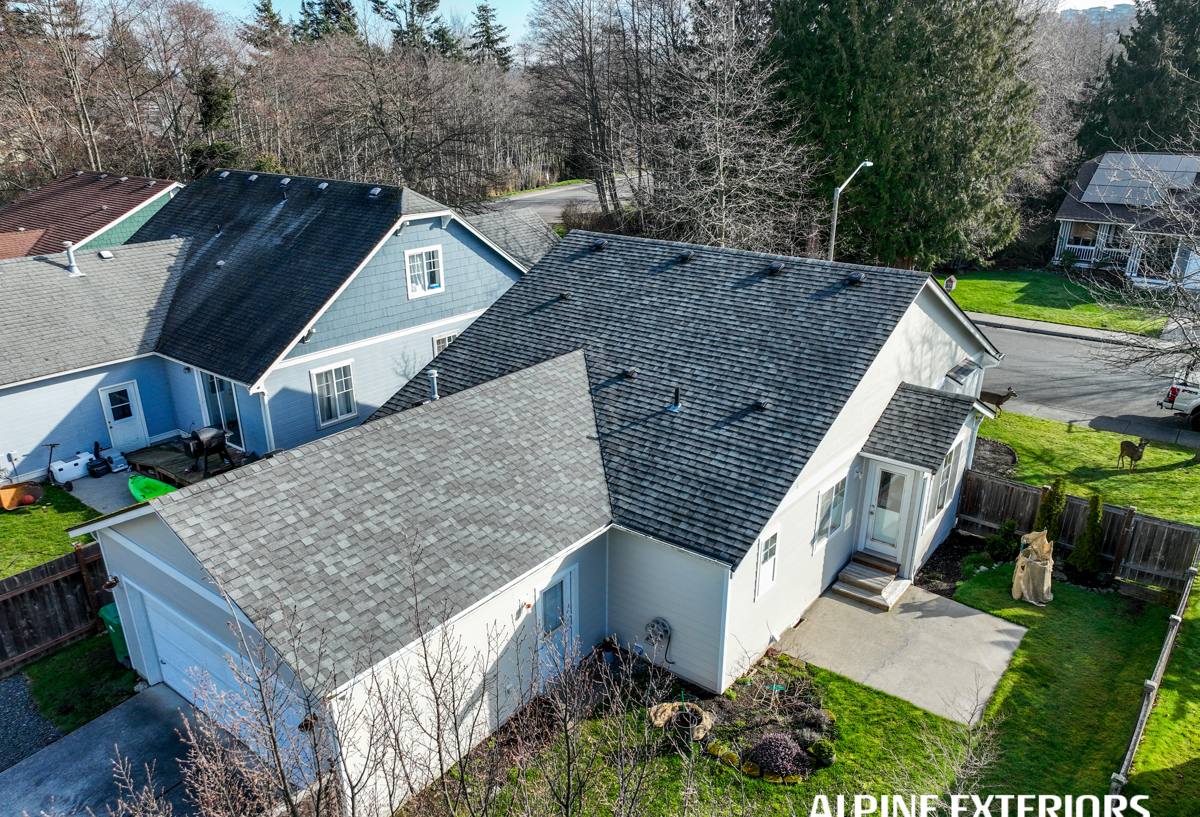
Roofing failures in this region are almost always moisture-driven — degraded underlayment, failed flashing around penetrations, or shingles that lost their granule protection years before they should have. We handle full re-roofs and roof repairs with the same climate-first mindset we bring to siding: proper underlayment, correctly lapped and sealed flashing, and attention to the north-facing and shaded sections of a roof where moss and algae take hold first. A roof and siding system that are both installed correctly work together — poor flashing details at wall-roof intersections are one of the most common sources of hidden moisture damage we find when we open up an older exterior.
Windows
Old, single-pane, or poorly flashed windows are a major source of both energy loss and water intrusion in older Whatcom County homes. When we replace windows, we pay close attention to the flashing and integration with the surrounding siding — a window that's beautiful but improperly flashed will let water behind the wall assembly regardless of how good the siding is. Window replacement is also a natural pairing with a siding project, since the wall is already open and it's the most cost-effective time to address both.
Decks
Decks in this climate take a beating from standing moisture, moss growth on horizontal surfaces, and UV exposure during the drier summer stretches. We build and repair decks with drainage and ventilation in mind — proper spacing, flashing at ledger boards, and materials suited to sustained moisture exposure — because a deck that traps water underneath will rot from below long before the visible surface shows obvious wear.
Why a Local Crew Matters
A contractor who works Whatcom County regularly knows what moss-heavy, rain-heavy conditions do to an exterior over time, because we see it on tear-offs and re-sides constantly. That local pattern recognition shapes real decisions — where we add extra flashing attention, which details we won't cut corners on, and why we don't sell products that look fine going up but struggle five years later once this region's weather has had time to work on them. It also means we're accountable locally: we're not driving in from out of the area for one job and then gone.
Cost Factors to Consider
Every exterior project's cost depends on the size of the home, the condition of what's being replaced, and the scope of trim and detail work involved. The table below is a general, honest comparison of factors that affect siding decisions specifically — not a quote, since real numbers depend on your home.
| Factor | Vinyl / Engineered Wood | James Hardie Fiber Cement |
|---|---|---|
| Upfront material cost | Generally lower | Moderate to higher |
| Moisture resistance in wet climates | Variable, coating-dependent | Strong, dimensionally stable |
| Repainting needs (ColorPlus) | Often every 5-10 years | Factory finish rated for decades |
| Fire resistance | Combustible | Non-combustible |
| Warranty structure | Varies by manufacturer | Strong transferable warranty |
| Long-term maintenance burden | Higher in moss-prone areas | Lower with proper install |
Maintenance That Actually Matters Here
Regardless of what's currently on your home, a few maintenance habits make a real difference in a climate like this one:
- Keep gutters clear so water isn't overflowing onto siding or fascia during heavy rain events
- Trim back trees and shrubs that keep walls shaded and slow to dry
- Address moss or algae growth early, before it works into seams or fastener points
- Check caulking around windows, doors, and trim annually for cracking or gaps
- Inspect roof flashing at chimneys, vents, and wall intersections each fall before storm season
- Watch for soft spots or discoloration at deck ledger boards and rim joists
Our Process
We start with an honest look at your home's exterior — siding, roofline, windows, and any deck structures — and talk through what's actually driving wear before recommending a scope of work. If siding replacement makes sense, we'll explain why we're recommending James Hardie for your specific situation rather than assuming it's a given. Every estimate is straightforward: what needs to happen, why, and what it costs, with no pressure to decide on the spot.
If you're in the Lynden area and dealing with tired siding, a roof that's showing its age, drafty windows, or a deck that needs attention, we're happy to take a look. Reach out for a free, no-pressure estimate — we'll walk the property, answer your questions honestly, and give you a clear picture of your options.