 Birch Bay Siding
 Siding Built for Ferndale's Weather, Not Just Installed on It
Ferndale sits close enough to the water that homes here deal with a different set of exterior problems than houses twenty miles inland. Salt-tinged air off the Salish Sea, long stretches of driving rain through fall and winter, and a moss season that seems to start earlier every year — all of it works on your siding, trim, and roofline whether you're paying attention or not. We've spent years working on homes throughout Whatcom County, and the pattern is consistent: exteriors that weren't matched to this climate fail early, and exteriors that were installed correctly with the right materials hold up for decades.
This page is about what we see on Ferndale homes specifically, what we recommend, and why. We handle siding, roofing, windows, and decks, and on all of it our approach is the same — use materials that are actually engineered for this environment, and install them the way the manufacturer specifies, not the way that's fastest.
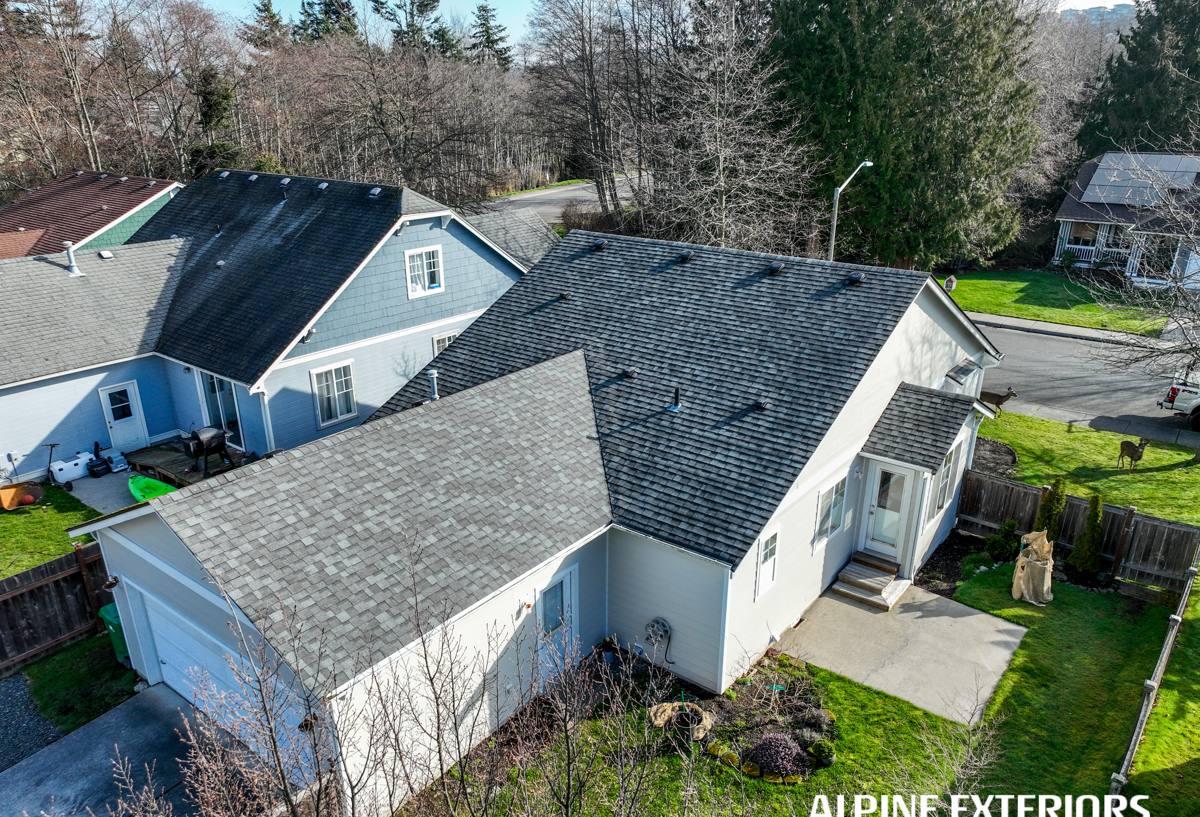
What the Ferndale Climate Actually Does to a House
Salt Air and Moisture
Proximity to Birch Bay and the broader Salish Sea coastline means airborne salt is a real factor here, more than most homeowners realize until they see it in their fastener corrosion or paint failure. Salt air accelerates the breakdown of certain sidings and finishes, and it's part of why we're careful about what materials and fasteners we spec for homes in this part of Whatcom County.
Driving Rain
Ferndale gets its share of wind-driven rain, the kind that doesn't just fall on a wall but gets pushed into every seam, lap, and penetration. Siding systems that rely on caulk and paint film to stay watertight are the ones that start showing trouble first — bubbling, soft spots, staining at the bottom edges of boards. A siding material's actual water absorption rate, and how the installer manages flashing and drainage behind it, matters more here than in a dry climate.
Moss and Sustained Dampness
Between the rain and the marine-influenced humidity, moss and algae have a long growing season on north-facing walls, shaded siding, and anything under tree cover. Moss holds moisture against a surface, and over time that sustained dampness is what causes rot in wood-based products and premature wear in coatings that aren't built to handle it.
Why We Only Install James Hardie Fiber Cement
We get asked fairly often why we don't offer vinyl, LP SmartSide, or the other fiber cement brands like Cemplank or Allura. The honest answer is that we made a standardization decision based on what holds up in this specific climate, and we'd rather install one product correctly than juggle several and hope each one performs.
Why Not Vinyl
Vinyl is inexpensive and easy to install, and for some climates it's a reasonable choice. But it's a thin plastic product that expands and contracts significantly with temperature swings, can crack in cold snaps, and doesn't hold paint or color the way fiber cement does — it fades and chalks over time with no practical way to refinish it short of replacement. In a marine climate with real temperature and moisture swings, we don't think it's the best long-term investment for most homeowners.
Why Not LP SmartSide
LP SmartSide is an engineered wood product, and engineered wood is still wood — it's treated to resist moisture, but wood-based siding depends heavily on caulking, paint maintenance, and cut-edge sealing being done exactly right, every time, forever. In a climate with Ferndale's rain exposure and moss pressure, that maintenance margin for error is thinner than we're comfortable with.
Why Not Other Fiber Cements
Cemplank and Allura are legitimate fiber cement products, and fiber cement as a category is the right call for this region. Where we land on James Hardie specifically is the factory-applied ColorPlus finish, the climate-specific HZ5 engineering for the Pacific Northwest, and the strength of the transferable warranty backing it. It's a product system built for exactly the conditions Ferndale sees, and we'd rather stand behind one system we know inside and out.
James Hardie: What You're Actually Getting
| Feature | What It Means for a Ferndale Home |
|---|---|
| Non-combustible fiber cement | Doesn't feed a fire the way wood-based sidings can |
| HZ5 engineered formulation | Built for Pacific Northwest moisture and temperature cycling |
| ColorPlus factory finish | Baked-on color, far less fading and chalking than field-applied paint |
| Rigid board structure | Resists warping, doesn't flex or crack like vinyl in cold weather |
| Transferable warranty | Adds resale value; coverage moves to the next owner |
None of that matters, though, if the installation is sloppy. Fiber cement siding is more installation-sensitive than vinyl — it needs correct fastening, proper clearances, and flashing details done right at every window, door, and penetration. That's where a lot of the long-term performance actually comes from.
Roofing, Windows, and Decks — the Same Logic Applies
Siding doesn't work in isolation. A roof with failing flashing will dump water right onto a wall assembly no matter how good the siding is. Windows with worn seals let moisture track into the wall cavity behind even well-installed siding. And a deck built without attention to ledger flashing and moisture management becomes its own rot problem right where it attaches to the house.
We look at the whole exterior envelope on a Ferndale home, not just the siding, because in a climate like this, moisture that gets past one weak point usually finds its way into everything nearby.
- Roofing: proper flashing at valleys, chimneys, and wall intersections to keep water out of the structure
- Windows: correctly flashed and sealed openings so the wall assembly behind the siding stays dry
- Decks: ledger board flashing and moisture separation where the deck meets the house
- Siding: rigid, factory-finished fiber cement installed to manufacturer spec, not shortcuts
What Correct Installation Looks Like
Before the First Board Goes Up
A proper install starts with what's underneath — a water-resistive barrier installed correctly, flashing at every window and door opening, and attention to how water will drain if it does get behind the cladding. Skipping or rushing this step is the single biggest reason siding fails early, regardless of brand.
During Installation
James Hardie has specific fastening patterns, clearance requirements from grade and roof lines, and joint treatment guidelines. Following these isn't optional if you want the warranty to actually mean something — Hardie's warranty coverage depends on installation to their published specifications.
After Installation
A well-installed fiber cement exterior needs very little from a homeowner — periodic rinsing to keep moss and grime from building up, and an eye kept on caulking at trim joints over the years. That's a much lighter maintenance load than repainting a wood-based product every several years.
Why a Local Crew Matters in Ferndale
A crew that works throughout Whatcom County and Birch Bay regularly knows which sides of a house take the worst weather, how moss tends to establish on shaded walls in this area, and how local wind-driven rain patterns affect flashing details. That's not something you get from a national franchise crew rotating through on a install-and-leave schedule. We're back in this area often, and we'd rather build a reputation on exteriors that hold up over the next twenty winters than on how fast we can finish a job.
Cost Factors to Understand Before You Get Quotes
| Factor | Why It Affects Price |
|---|---|
| Home size and complexity | More corners, gables, and trim details mean more labor and material |
| Existing siding removal | Tear-off and disposal adds cost versus a bare wall |
| Water damage found underneath | Rot repair to sheathing or framing is common once old siding comes off |
| Trim and accessory choices | Hardie Trim boards, corner treatments, and color options vary in cost |
| Access and site conditions | Multi-story homes or tight lots can add labor time |
A Homeowner's Checklist Before Committing to a Siding Project
- Ask what's happening to the water-resistive barrier and flashing, not just the visible siding
- Confirm the crew installs to the manufacturer's written specifications, not a generic approach
- Get clarity on whether the quote includes repair of any rot or damage found once old siding is removed
- Ask how the warranty works — both the material warranty and any workmanship warranty from the installer
- Check that the estimate is specific to your home's condition, not a rough per-square-foot guess
If your Ferndale home's siding is showing moss buildup, soft spots, fading, or you're just planning ahead for an exterior that can actually handle this climate, we're happy to take a look and walk you through what we're seeing. There's no pressure and no cost to get a straight answer — use the form below to request a free estimate.