 Birch Bay Siding
 Exterior Work Built for Custer's Corner of Whatcom County
Custer sits inland just enough from Birch Bay and the Strait of Georgia to feel like it should be sheltered from the worst of the marine weather — but ask anyone who has re-sided a house out here and they'll tell you that's not quite true. You still get salt-tinged air moving off the water, wind-driven rain that finds every gap in a wall system, and a wet season that stretches from October well into spring. Add in the tree cover that so many Custer properties sit under, and you've got a recipe for a very specific kind of exterior wear: moss, mildew, soft trim, and siding that never fully dries out between storms.
We're a Birch Bay-based crew, and Custer is squarely in our regular service area. That matters more than it might sound like — a contractor who works this stretch of Whatcom County every week knows which north-facing walls stay damp longest, which roof valleys clog with needle litter, and which older homes out here were built with materials that were never meant to handle this much sustained moisture.
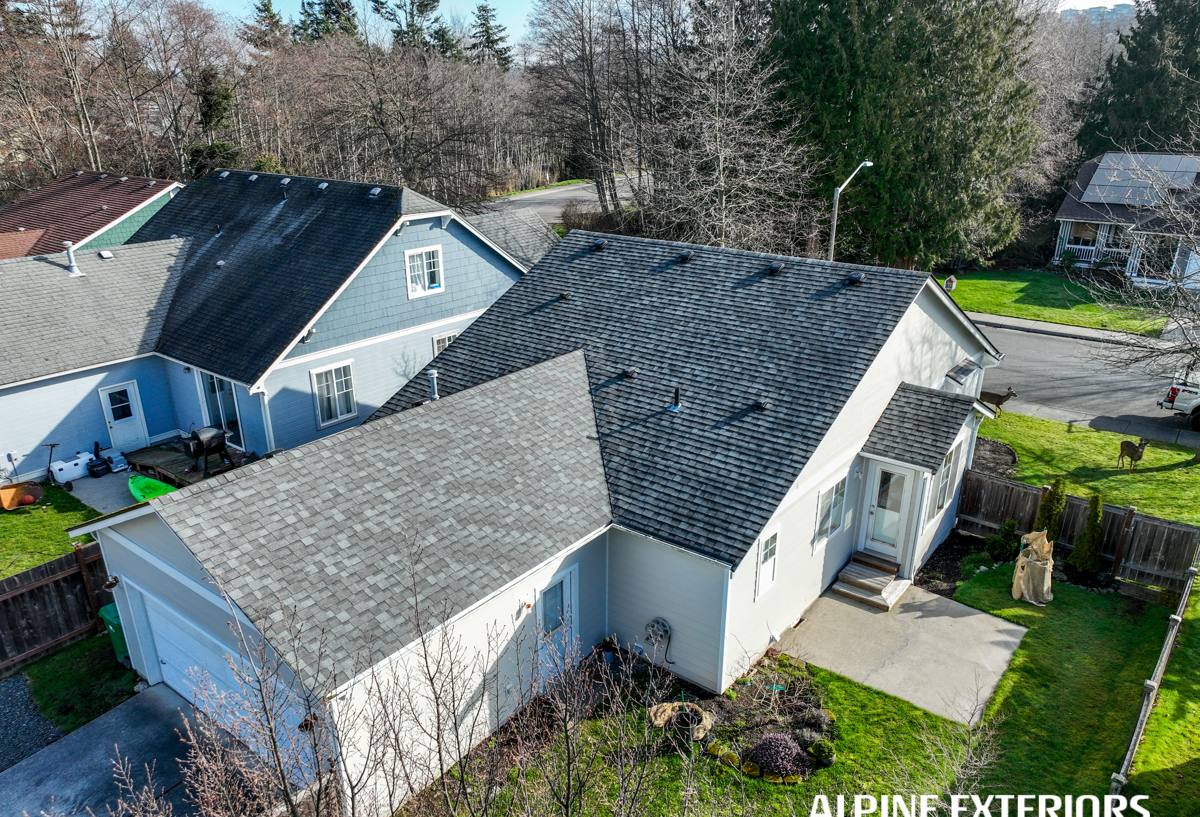
What Custer Homes Are Up Against
Moss and Organic Growth
Whatcom County's moss season isn't a two-month nuisance — on shaded, tree-lined lots typical of Custer, it can be a near year-round battle. Moss holds moisture directly against whatever surface it's growing on, and it doesn't just sit on top of siding — on porous or damaged materials, it works into seams, fastener holes, and butt joints. Roofs are usually the first place homeowners notice it, but siding, especially anything wood-based, is just as vulnerable.
Driving Rain and Wind Exposure
Open pockets around Birch Bay and Custer catch wind off the water, and that wind pushes rain sideways into wall assemblies rather than letting it run straight down and off. That's a different stress than most siding products were tested for in a lab. Horizontal rain finds unsealed joints, undersized flashing, and caulk that's started to crack — and once water gets behind siding, the damage often shows up as rot or delamination long before it's visible from the outside.
Temperature Swings and Freeze-Thaw
Whatcom County winters aren't brutal by Northwest standards, but Custer does see enough freeze-thaw cycling that any material holding moisture is at risk. Water that's soaked into a porous substrate and then freezes expands — and that's how small cracks become big ones over a few seasons.
Why We Install Only James Hardie Fiber Cement
We get asked fairly often why we don't offer vinyl, LP SmartSide, or a cheaper fiber cement alternative alongside James Hardie. The honest answer is that we've drawn a line based on what actually holds up in this climate, and we'd rather stand behind one product system we trust completely than offer several and let a homeowner guess which one is right.
What We're Not Installing, and Why
- Vinyl siding: It's inexpensive and low-maintenance in dry climates, but it's a thin, flexible material that can warp in temperature swings and doesn't hold paint if you ever want to change the color. In a wind-driven-rain environment, vinyl's seams and panel laps are also a common water entry point over time.
- LP SmartSide and other engineered wood products: These are wood-strand products with a resin binder, and their long-term performance depends heavily on edges and cut ends staying sealed. In a climate where siding rarely gets a long stretch to fully dry out, any breach in that seal is an invitation for moisture to get into the wood fiber itself.
- Cedar and primed spruce: Real wood siding can look great, but it demands a maintenance schedule — refinishing, caulking, moss treatment — that most homeowners underestimate, and in a moss-heavy area like Custer that schedule gets more demanding, not less.
- Other fiber cement brands (Cemplank, Allura): These are legitimate fiber cement products, but we've standardized on James Hardie specifically for its factory-applied ColorPlus finish, its regional engineering, and the strength of its transferable warranty. Consistency in what we install lets us guarantee our installation work with confidence.
None of this means those products are junk — plenty of homes around the country wear them fine. It means that for the specific combination of salt air, sustained moisture, and moss pressure you get in Custer, we've concluded fiber cement engineered for this climate is the better long-term bet, and James Hardie is the fiber cement system we trust most.
What James Hardie Gets Right for This Climate
James Hardie fiber cement is non-combustible, doesn't support the kind of fungal growth that gives moss a foothold the way wood fiber can, and holds its factory-baked ColorPlus finish for years without the fading and chalking you see on field-painted materials. Hardie also engineers regional product lines (HZ5, for example) specifically for wetter climates, which is a meaningful difference from a one-size-fits-all siding product. It won't warp, crack from moisture cycling the way engineered wood can, or degrade the way untreated wood does when it's shaded and damp most of the year — which describes a lot of Custer lots.
Beyond Siding: Roofing, Windows, and Decks
Siding is only part of a home's defense against Whatcom County weather, and we treat it that way. A siding job that ignores a failing roof or leaking window flashing is only solving part of the problem — water finds the next weak point.
Roofing
Roofs in Custer deal with the same moss and needle-litter pressure as siding, plus the added stress of standing water in valleys and around penetrations if drainage isn't right. We look at roof condition as part of any siding conversation, because a compromised roofline undermines even a brand-new wall system.
Windows
Window flashing is one of the most common hidden failure points we find when we open up a wall for a re-side. If flashing was installed wrong — or wasn't integrated with the water-resistive barrier correctly — years of driving rain will eventually find that gap. Replacing siding is a natural time to correct window flashing issues before they're sealed back up behind new material.
Decks
Outdoor living structures in this climate face their own version of the moss and moisture problem, and deck framing that stays wet too long is exactly the kind of thing that leads to costly surprises. We build and repair decks with the same climate-first approach we bring to siding.
How a Siding Project Works, Start to Finish
- On-site assessment: We look at your existing siding, trim, flashing, and any signs of moisture intrusion — not just the surface condition.
- Honest scope discussion: If a full re-side isn't necessary, we'll say so. If it is, we explain why, including what we find behind the existing material.
- Product and color selection: We walk through James Hardie's ColorPlus and profile options so the final look fits your home.
- Installation to manufacturer spec: Proper clearances, fastening patterns, and flashing details matter more than the siding brand itself — most fiber cement failures trace back to installation shortcuts, not the material.
- Final walkthrough: We go over the finished work with you before calling the job done.
Cost Factors to Expect
Every home is different, but these are the variables that most affect what a Custer siding project actually costs:
| Factor | Why It Matters |
|---|---|
| Home size and wall complexity | More corners, dormers, and trim details mean more labor hours per square foot. |
| Extent of existing damage | Rot or moisture damage found behind old siding has to be repaired before new siding goes on. |
| Siding profile and finish selected | James Hardie offers multiple plank widths, textures, and ColorPlus finish options at different price points. |
| Trim and accessory work | Window and door trim, corner boards, and fascia often get replaced or upgraded alongside siding. |
| Access and site conditions | Tree cover, slope, and staging space affect labor time on many Custer lots. |
What to Ask Before You Hire a Siding Contractor
A siding job is a long-term investment, and the contractor's installation quality matters as much as the product itself. Before hiring anyone for exterior work in Custer, it's worth asking:
- Are they James Hardie certified or specifically trained on fiber cement installation, not just general siding?
- Will they inspect and address sheathing or framing damage found once the old siding comes off, or just cover it up?
- Do they carry current licensing and insurance for work in Washington State?
- Can they explain their flashing and water-resistive barrier details, not just the visible siding product?
- Do they provide a written scope and warranty terms before work begins?
Why a Local Crew Matters in Custer
A lot of siding problems we see in this area aren't the result of bad products — they're the result of installation details that don't account for the local climate. A crew that works elsewhere in drier or less wind-exposed regions may not think twice about a flashing detail or clearance gap that's genuinely critical here. Working out of Birch Bay, we're in Custer and the surrounding communities regularly, and we bring that same climate-specific attention to every job, whether it's a full re-side, a roof replacement, window work, or a deck build.
If you're noticing moss buildup, soft or discolored siding, or just want an honest read on your home's exterior condition, we're happy to take a look. Reach out for a free, no-pressure estimate using the form below.