 Birch Bay Siding
 One Product, One Standard
Homeowners in Birch Bay sometimes ask why we don't offer a menu of siding brands the way some contractors do. The honest answer is that we made a decision years ago to install James Hardie fiber cement siding exclusively, and we haven't found a reason to change our minds. This page explains the reasoning behind that decision, not to talk down other products, but so you understand what you're getting when you hire us and why we won't put certain materials on your walls even if you ask for them.
We're not paid by James Hardie to say any of this. We're a local crew that has to stand behind every installation we do in a marine climate that is genuinely hard on exterior building materials. Standardizing on one proven product line lets us install it correctly every time, train our crews on one system instead of five, and give every customer the same warranty backing instead of a patchwork of promises.
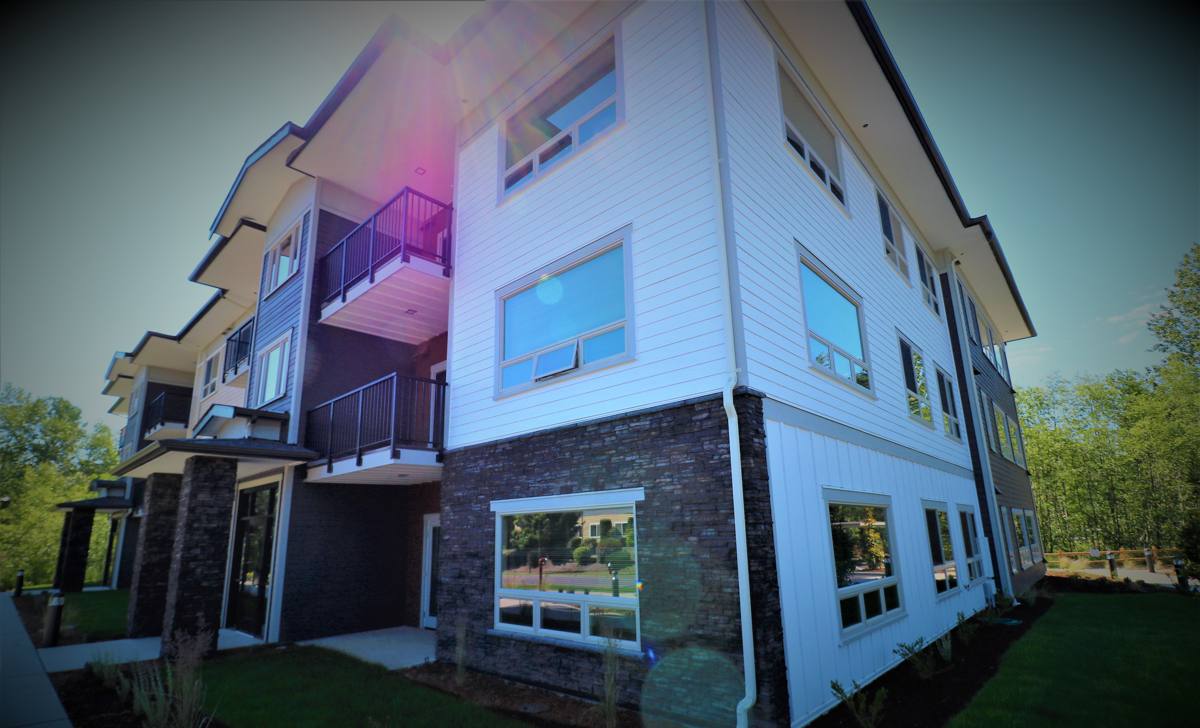
What Birch Bay's Climate Actually Does to Siding
Birch Bay sits right on the water in Whatcom County, which means siding here deals with a combination of stresses that inland homes never see. Salt-laden air moves off the bay and settles on exterior surfaces year-round. Driving rain off Georgia Strait hits walls at an angle, not just straight down, which pushes water into seams and laps that a calmer climate would leave alone. And the long, damp shoulder seasons here create months of moss and algae growth on north-facing and shaded walls before summer sun ever dries things out.
None of that is unusual for this part of Washington. But it means siding decisions that work fine in Spokane or even Seattle's drier microclimates don't always hold up the same way in Birch Bay. Salt air accelerates corrosion on fasteners and trim. Moisture that gets behind siding and can't dry out leads to rot, delamination, or paint failure. Moss holds moisture against a wall surface for weeks at a time. We've built our whole approach around materials and details that are built for exactly these conditions.
Why We Passed on Vinyl Siding
Vinyl is inexpensive, widely available, and easy to install fast, which is why it's so common. It also expands and contracts significantly with temperature swings, which over time opens gaps at seams and corners that let wind-driven rain behind the panels. In a straight-down-rain climate that's a minor issue. On a wall facing Birch Bay's angled, salt-carrying rain, it's a more persistent one.
Vinyl also fades under UV exposure, and the color is baked through the panel rather than applied as a separate finish, so once it fades there's no refinishing option short of replacement. It's a legitimate budget product for the right situation. We just don't think it performs well enough here to put our name on it.
Why We Passed on LP SmartSide
LP SmartSide is an engineered wood product, meaning it's wood strand material bonded with resins rather than solid lumber. LP has improved the product significantly over the years and it holds paint better than old-style hardboard siding did. But it's still wood-based at its core, and wood-based siding depends entirely on an intact factory coating and correctly sealed cut edges to keep moisture out. Any breach, a missed caulk joint, a scratch from installation, a woodpecker strike, gives water a path into the substrate.
In a climate with Birch Bay's rainfall and humidity, that margin for error is thinner than we're comfortable with. We'd rather install a product where the base material itself doesn't absorb and swell when moisture gets past the finish.
Why We Passed on Cemplank, Allura, and Other Fiber Cement Alternatives
This one surprises people, since these are also fiber cement products, the same category as James Hardie. The core material science is similar across brands. Where we've seen the difference is in the finish systems, the factory quality control, the depth and consistency of the product lines available for different exposures, and the strength of the warranty and the network standing behind it in the Pacific Northwest. James Hardie's ColorPlus finish process and their HZ5 climate-engineered products for our region gave us a level of consistency we wanted for every job, not just the ones where a customer specifically requested it.
Why We Passed on Primed Spruce and Cedar
Solid wood siding, whether primed spruce boards or cedar, has real appeal. It looks and feels like real wood because it is real wood. But wood is the material most vulnerable to everything Birch Bay's climate throws at it: it absorbs moisture directly, it's a food source for the moss and algae that thrive in our damp shoulder seasons, and it requires an ongoing maintenance commitment, painting, caulking, spot-treating, that most homeowners underestimate when they first choose it. Cedar in particular commands a premium price for a material that will need real upkeep to look good in year fifteen the way it did in year one.
We're not against wood siding as an aesthetic. We just don't think it's the right long-term investment for most homes in a salt-air, high-moisture coastal environment, and we'd rather be honest about that upfront than sell you something we don't believe will hold up.
What James Hardie Gets Right
James Hardie fiber cement is roughly 90% sand, cement, and cellulose fiber, pressed and cured into a dense, stable board. It doesn't absorb water the way wood-based products do, it won't rot, and it's non-combustible, which matters more every year given regional wildfire smoke and ember exposure concerns. The ColorPlus finish is baked on at the factory under controlled conditions, which gives a more consistent, fade-resistant color than field-applied paint and comes with its own finish warranty separate from the substrate warranty.
Hardie also engineers different product lines for different climate zones. The HZ5 products used in our region are formulated for cold, wet climates specifically, which is a level of climate-specific engineering most competing brands don't offer at the same scale.
The Product Lines We Install
- HardiePlank lap siding — the most common choice, available in several exposure widths and textures (smooth or cedar-mill)
- HardiePanel — vertical panel siding, often used for board-and-batten looks or accent sections
- HardieShingle — staggered or straight-edge panels that mimic a shingled look without the maintenance of real cedar shingles
- HardieTrim — matching trim boards for a consistent finish system around windows, corners, and fascia
What Correct Installation Actually Requires
Fiber cement is only as good as its installation. A poorly installed Hardie job can fail just as badly as any other product installed wrong. This is the part of our standardization that matters as much as the material choice itself.
| Detail | Why It Matters in Birch Bay |
|---|---|
| Correct nail placement and fastener spacing | Improper fastening causes buckling and cracking under our seasonal temperature and moisture swings |
| Proper clearance from grade, roofing, and decks | Keeps siding out of standing water and splash-back zones during heavy driving rain |
| Rain screen / drainage gap behind siding | Lets any moisture that does get behind the panel drain and dry instead of sitting against sheathing |
| Caulking only where Hardie specifies | Over-caulking traps moisture; under-caulking lets it in — both are common mistakes |
| Field-cut edge sealing | Unsealed cut ends are the single most common source of early moisture damage on fiber cement jobs |
The Warranty Difference
James Hardie backs its siding with a non-prorated, transferable limited warranty, meaning it doesn't lose value over time the way some prorated warranties do, and it can pass to a new owner if you sell the home. The ColorPlus finish carries its own separate finish warranty. Because we install exclusively to Hardie's specifications on every job, our workmanship warranty and Hardie's product warranty work together instead of leaving gaps where a manufacturer might deny a claim over an installation detail.
What This Means If You're Getting Quotes
If you're comparing bids and another contractor is offering vinyl, LP SmartSide, or a different fiber cement brand at a lower price, that's worth understanding on its own terms, not just dismissing. Ask what climate zone the product is rated for, what the finish warranty actually covers, and whether the installer is factory-trained on that specific product. We'd rather lose a bid to a contractor who can answer those questions honestly than win one by cutting corners on a product we don't believe in.
- Ask whether the siding line is rated for coastal, high-moisture climates specifically
- Ask whether the color finish is factory-applied or will be field-painted
- Ask what the fastener and drainage-gap specifications are for the installation
- Ask whether the workmanship warranty is separate from or tied to the manufacturer's warranty
- Ask how the contractor handles cut-edge sealing on-site
Get a Straight Answer for Your Home
Every home on the water in Birch Bay is a little different, sun exposure, wind direction, how close you are to the shoreline, and those differences affect which Hardie product and color line make the most sense. We're happy to walk your property, look at your current siding's condition, and give you a straightforward, no-pressure estimate using the form below.