 Birch Bay Siding
 Siding Built for Bellingham's Marine Climate
Homes around Bellingham and the rest of Whatcom County sit in one of the more demanding exterior environments in the Pacific Northwest. You're close enough to Bellingham Bay and the Strait of Georgia to deal with salt-laden air, far enough north to see a genuinely long wet season, and shaded enough by evergreen tree cover in many neighborhoods that moss and algae growth is a year-round conversation rather than a seasonal one. Siding, trim, roofing, and window flashing all take that abuse at once. We work on homes throughout this area and we build our approach around what actually happens to a house here over ten, twenty, and thirty years — not just what looks good on install day.
This page is written for homeowners in and around Bellingham who are evaluating siding, and often roofing, windows, or decking, as part of the same project. We install one siding product — James Hardie fiber cement — and we'll explain why below, along with what our process looks like for homes in this part of Whatcom County.
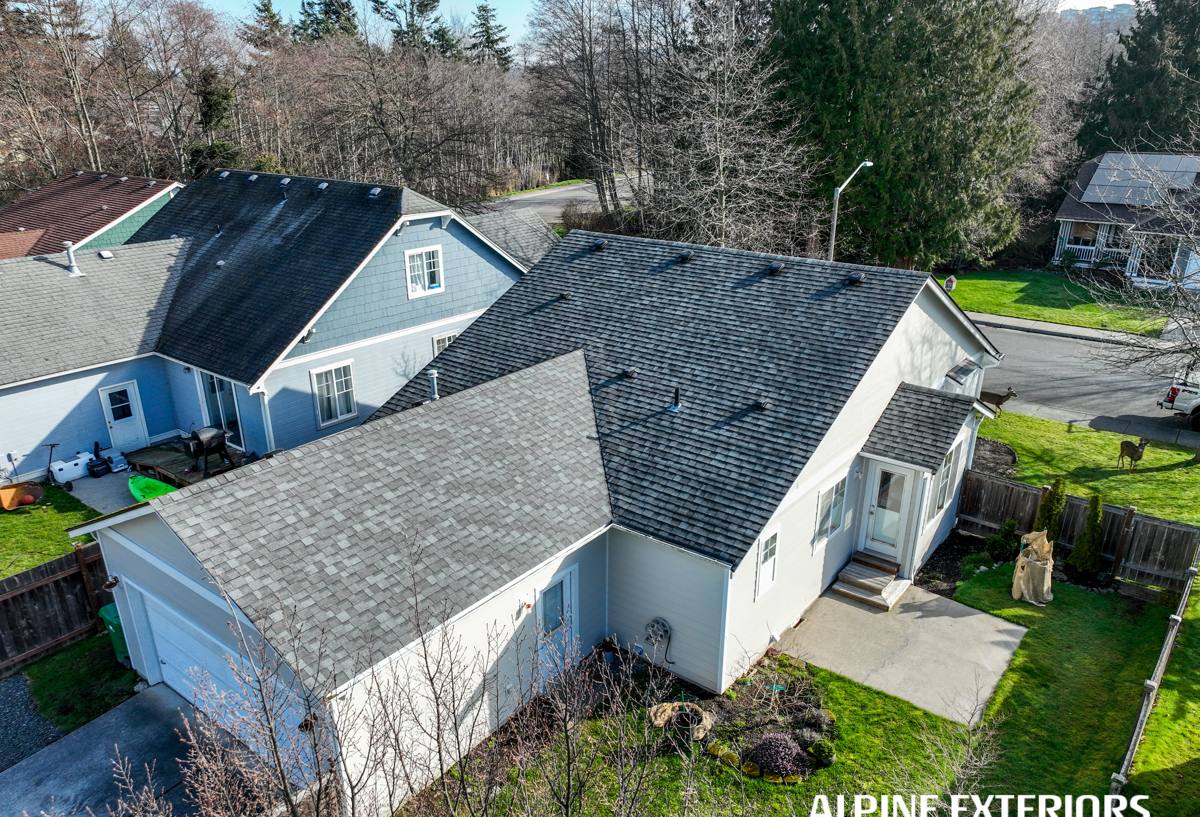
What Salt Air, Rain, and Moss Actually Do to a Home's Exterior
Salt Air
Proximity to saltwater means airborne salt settles on exterior surfaces, especially on the sides of a house that face the water or catch the prevailing wind. Salt is corrosive to fasteners, flashing, and metal trim, and it accelerates the breakdown of finishes that aren't formulated to resist it. Paint film on wood siding chalks and fades faster near the coast than it does further inland, which is one reason repaint cycles tend to run shorter for homes closer to the bay.
Driving Rain
Whatcom County doesn't just get a lot of rain — it gets a lot of wind-driven rain, which behaves differently than a straight-down shower. Wind-driven rain gets pushed sideways into laps, seams, and butt joints in siding, and it finds its way behind trim and around penetrations that would stay dry in a calmer climate. Any siding system in this area has to shed water at every horizontal joint, not just look sealed from the ground.
Moss and Algae Season
Between the tree cover common in Whatcom County neighborhoods and the number of overcast, damp days each year, north-facing and shaded siding surfaces stay wet longer than they do in drier climates. That extended moisture window is exactly what moss, algae, and mildew need to establish themselves. On wood-based products, that growth can hold moisture against the substrate; on any siding, it's a recurring cleaning and maintenance item if the material and finish aren't chosen with that reality in mind.
Why We Install Only James Hardie Fiber Cement
We made a deliberate decision to standardize on James Hardie fiber cement siding and not install vinyl, LP SmartSide, Cemplank, Allura, primed spruce, or cedar. That's not a marketing position — it's a reflection of what holds up best, with the least maintenance headache, in a climate like this one.
Where the alternatives fall short here specifically
Wood and primed spruce siding can look great and many homeowners love the appearance, but it's an organic material in a climate that stays wet for long stretches of the year. It needs regular repainting or staining, careful caulking maintenance, and it's the most vulnerable of the common options to the moss and mildew issues described above. Cedar in particular is a beautiful, legitimate product — but keeping it looking that way near the coast is a real ongoing commitment.
Vinyl siding is affordable and low-maintenance in the sense that it doesn't need painting, but it's a thin, flexible plastic product that can warp or distort with sustained sun exposure and can become brittle over time in cold snaps. It also isn't a great match for driving rain performance at seams, and its appearance and color options are limited compared to a factory-finished fiber cement product.
LP SmartSide, Cemplank, and Allura are all reasonable products with their own installer bases, and we're not here to disparage them. Our reasoning is about consistency and long-term standards: we wanted one product system we could install to a single, exacting specification, back with one warranty conversation, and stand behind without hedging between multiple manufacturers' installation guidelines.
What James Hardie gets right for this area
James Hardie fiber cement is non-combustible, dimensionally stable in swings of moisture and temperature, and available in HZ5 formulations engineered for wetter, harsher climate zones — which describes Whatcom County well. The ColorPlus factory finish is baked on under controlled conditions rather than field-painted, which gives it better fade and chip resistance than a job-site paint job, and it comes with a real, transferable limited warranty on both the substrate and the finish. It won't rot, it resists moss and mildew far better than wood, and it holds paint-grade color performance without the repaint cycle that wood siding demands near the coast.
Comparing Common Siding Materials in a Coastal, High-Moisture Climate
| Material | Moisture / Rot Resistance | Salt Air Durability | Maintenance Burden | Finish Stability |
|---|---|---|---|---|
| James Hardie Fiber Cement | Strong — non-organic, engineered HZ lines | Strong | Low — occasional wash | Factory ColorPlus finish, long fade resistance |
| Cedar / Wood | Weak without diligent upkeep | Moderate, finish-dependent | High — recoat/repaint cycles | Field-applied, shorter repaint interval near coast |
| Vinyl | Good, but seams are a weak point | Moderate | Low, but can warp/fade with sun | Color molded in, but can chalk over time |
| LP SmartSide (engineered wood) | Moderate — treated but still wood-based | Moderate | Moderate — seam and edge sealing matters | Factory or field finish depending on product |
This table reflects general product characteristics, not a claim about any specific competitor's failures. Every product on this list has homeowners who are happy with it. We simply concluded that fiber cement gives us the best combination of durability and low maintenance for the climate we work in, which is why it's the only siding we install.
Our Process, From Estimate to Finished Install
Every project starts with a walk-around of the home, not a sales pitch. We look at your existing siding, trim, flashing, window and door penetrations, and roofline to understand what's actually happening on the exterior before we talk about products. For homes in the Bellingham area specifically, we pay close attention to which elevations take the most weather — usually the sides facing prevailing wind and water — because those areas often need extra attention at flashing and joints regardless of what siding goes over them.
From there we put together a written scope and estimate, walk you through the James Hardie product line and color options that fit your home, and schedule the work. Installation follows James Hardie's published installation specifications for our climate zone — proper clearances, correct fastening, and flashing details at every horizontal joint and penetration — because a great product installed loosely will still let water in. We clean up thoroughly at the end of each work day and do a final walkthrough with you before calling the job done.
More Than Siding: Roofing, Windows, and Decks for the Whatcom Coast
Siding doesn't work in isolation. The same wind-driven rain and salt air that affect siding decisions also affect the roof over it, the windows set into it, and any deck attached to the house. We handle all four because they're connected systems on a real building, not separate line items:
- Roofing — the first line of defense against the same driving rain and moss growth that affects siding; roof condition and siding condition are worth evaluating together.
- Windows — proper flashing integration between window units and new siding is one of the most common places water intrusion starts if it's rushed or done out of sequence.
- Decks — exposed to the same moisture and moss pressure as siding, with their own material and maintenance considerations for a wet climate.
If you're already planning a siding project, it's worth a conversation about whether your roof, windows, or deck are due for attention at the same time — coordinating the work can save money and reduce disruption compared to tackling each one separately down the road.
Why a Local Whatcom County Crew Matters
A siding job installed to a generic national spec doesn't always account for what a specific region throws at a house. A crew that works around Bellingham regularly knows which elevations tend to take the worst of the wind and rain, understands how moss and algae behave on shaded lots common to this area, and has seen firsthand what happens when flashing details get rushed on a house exposed to salt air. That local pattern recognition shows up in the small decisions — where to add extra flashing, how tight to run clearances, which details to double-check — that don't show up on a spec sheet but matter over the life of the siding.
It also means warranty and service conversations stay local. If a question comes up five or ten years after installation, you're talking to a crew that's still working in the same county, not chasing down a company that's moved on.
Maintaining Your Hardie Siding in Bellingham
James Hardie siding is genuinely low-maintenance, but "low-maintenance" isn't "zero-maintenance," especially in a climate this wet. A little seasonal attention goes a long way:
- Rinse siding with a garden hose (not a high-pressure washer aimed directly at seams) once or twice a year, more often on shaded, moss-prone elevations.
- Check caulking at trim, window, and door joints annually and re-caulk any cracked or separated sections before wet season sets in.
- Keep gutters clear so overflow isn't running down the siding face during heavy rain events.
- Trim back vegetation and tree branches that keep siding shaded and damp longer than necessary.
- Watch for moss or algae buildup on north-facing walls and address it early with a gentle cleaning rather than letting it establish.
- Have flashing and joints inspected periodically, especially after major wind storms off the water.
Getting a Straight Answer for Your Home
Every home in the Bellingham area carries its own mix of sun exposure, tree cover, and wind direction, which means every siding recommendation should start with a look at your specific house, not a generic quote. If you're weighing a siding replacement, or thinking about siding alongside roofing, windows, or a deck, we're happy to come take a look and give you a straightforward, no-pressure estimate along with an honest read on what your home actually needs.