 Birch Bay Siding
 Siding Built for Life on Lummi Island
Lummi Island sits out in the Salish Sea, connected to the mainland by a short ferry ride from Whatcom County's Gooseneck Point. That separation is part of what makes the island special, but it also means homes here take a different kind of weathering than houses just a few miles inland. Wind comes off open water with nowhere to break it, salt spray settles on siding and trim year-round, and the region's long, wet fall-through-spring stretch keeps exteriors damp for months at a time. If you own a home on the island, you already know your siding works harder than siding on a sheltered lot in town.
We're a Birch Bay-based exterior contractor serving Whatcom County, including Lummi Island. We install one siding product: James Hardie fiber cement. That's not a marketing line — it's a standard we hold because we've seen what holds up out here and what doesn't, and we'd rather turn down a job than install something we don't believe will last through another Whatcom County winter.
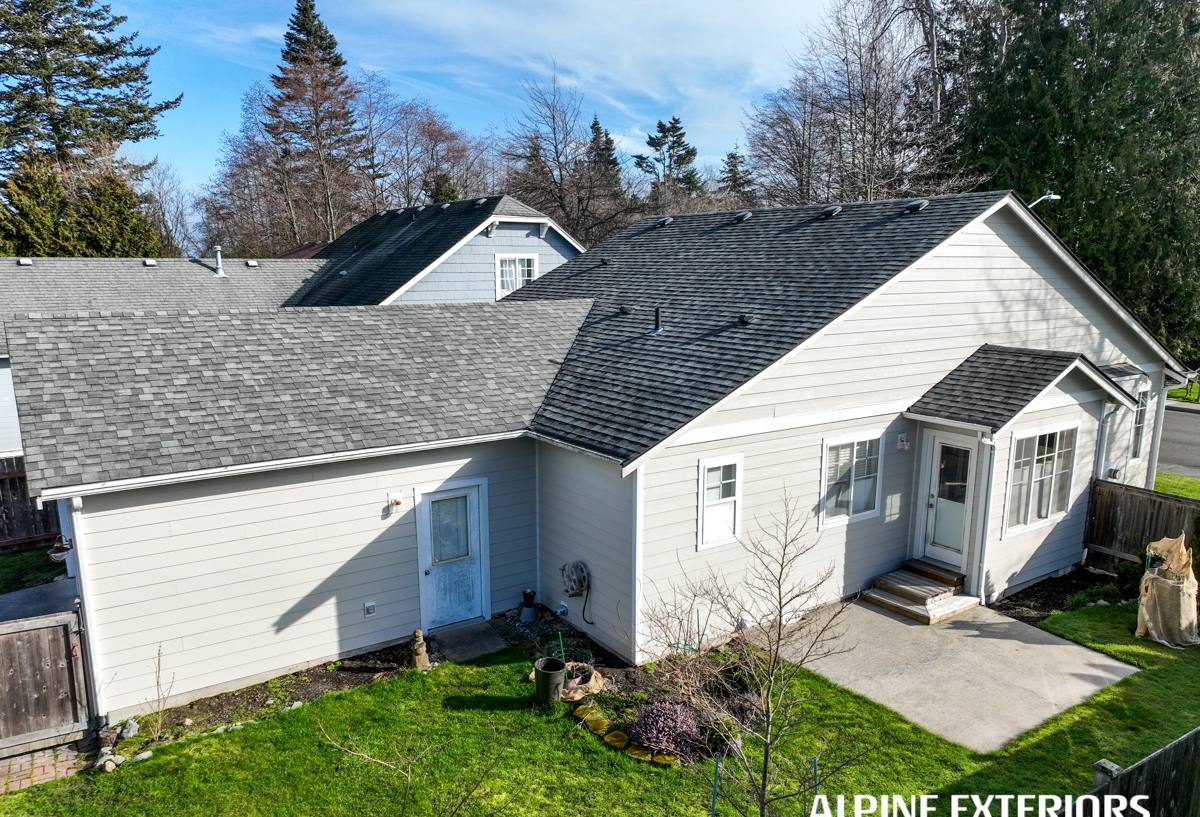
What Lummi Island's Climate Does to Exterior Siding
Salt Air and Marine Exposure
Homes closer to the shoreline take on airborne salt that settles into paint film, caulking, and any exposed fasteners. Over years, that salt exposure accelerates the breakdown of lower-grade coatings and can corrode fasteners that aren't rated for a marine environment. It doesn't matter how well a product performs in a lab test somewhere inland — the real question is how it performs a few hundred yards from saltwater, in wind that carries that salt onto every exterior surface of the house.
Driving Rain and Wind-Driven Moisture
Open-water exposure means rain on Lummi Island often doesn't fall straight down — it comes in sideways, driven by wind off the Strait. That matters enormously for siding performance, because wind-driven rain finds every gap, seam, and weak point in a wall assembly. Products that rely on tight seams, careful caulking, and low moisture absorption to stay dry perform very differently under driving rain than they do under a gentle vertical shower.
The Long Moss and Mildew Season
Northwest Washington's mild, wet climate is ideal for moss, algae, and mildew growth, and shaded or north-facing walls on the island can stay damp for weeks without direct sun to dry them out. Siding that holds moisture at its surface — or that swells and softens when wet — gives moss and mildew something to grow on. Siding that sheds water and dries quickly doesn't.
Why We Only Install James Hardie Fiber Cement
Fiber cement is a mix of cement, sand, and cellulose fibers, engineered specifically to resist moisture, fire, and pests without the dimensional instability of wood or the brittleness some other siding materials develop over time. James Hardie is the manufacturer we've standardized on because their product lines are engineered by climate zone, their factory-applied ColorPlus finish is formulated to hold up under UV and moisture exposure far better than field-applied paint, and their installation specifications are detailed enough that a correctly installed Hardie wall performs consistently — not just on paper, but on real houses in wet, salty, windy conditions like Lummi Island's.
We don't install LP SmartSide, vinyl siding, Cemplank, Allura, primed spruce, or cedar. Each of those has legitimate uses somewhere, and we're not here to trash them — but we've made a professional call that for the climate we work in, fiber cement from Hardie is the material we're willing to put our name behind. Vinyl can warp and fade under UV and doesn't offer the impact resistance homeowners near the water often want. Cedar and primed spruce are wood products at their core, meaning ongoing maintenance, repainting, and vulnerability to moisture and rot no matter how well they're initially finished. Engineered wood products carry their own moisture-management requirements that we've found harder to guarantee in a marine environment over the long run.
Hardie Product Lines We Install
| Product | Common Use | Why It Fits This Climate |
|---|---|---|
| HardiePlank lap siding | Most common wall siding, horizontal profile | Available in HZ10 formulation engineered for wetter, harsher climates |
| HardiePanel vertical siding | Modern look, board-and-batten style | Durable large-format coverage, fewer horizontal seams for water to sit on |
| HardieTrim boards | Corners, window and door trim, fascia | Resists the swelling and rot that wood trim develops in damp conditions |
| HardieShingle siding | Accent areas, gables | Cedar-shingle look without the maintenance burden |
How We Approach a Siding Project on Lummi Island
Ferry-Aware Scheduling
Working on an island means we plan around the ferry schedule, not against it. We batch our trips, stage materials efficiently, and coordinate crew and delivery timing so we're not making unnecessary back-and-forth runs that waste your time and ours. If you've dealt with contractors who treat island jobs as an afterthought, you know how much smoother a project runs when the crew actually accounts for that logistics reality up front.
Assessing Your Home's Exposure
Not every wall on a Lummi Island house faces the same conditions. A shoreline-facing wall catching direct wind and salt spray needs different attention at seams, flashing, and fastener choice than a more sheltered wall on the leeward side. We look at your home's specific orientation, tree cover, and proximity to the water before we finalize a materials and installation plan — this isn't a one-size-fits-all process.
Installation Details That Matter Out Here
- Correct fastener spacing and type, sized to resist wind-driven rain and corrosion in a marine environment
- Proper flashing and water-resistive barrier detailing behind every siding course, not just at obvious trouble spots
- Rain-screen gapping where appropriate, to let moisture that does get behind siding dry out instead of sitting trapped
- Caulking and sealant choices rated for UV and salt exposure, not generic hardware-store product
- Manufacturer-specified overlaps and clearances so water sheds the way the system was engineered to shed it
Fiber cement siding installed even slightly out of spec — wrong fastener depth, missing flashing, insufficient clearance from grade or roofing — gives up a lot of the durability the material is capable of. That's true anywhere, but it matters more on an island where callbacks and warranty repairs are a bigger logistical hassle for everyone involved.
Beyond Siding: Roofing, Windows, and Decks
Siding doesn't work in isolation. A roof that's shedding water poorly, windows with failed flashing, or a deck ledger board that's trapping moisture against the house all put stress on the siding system around them. We handle roofing, window replacement, and decks as well as siding, which means we can look at your Lummi Island home as one connected exterior system rather than patching one component while ignoring problems elsewhere on the building envelope.
Where This Matters Most
- Roofing: Poor roof drainage or failing gutters send extra water down exterior walls, exactly where siding is already fighting driving rain and salt exposure
- Windows: Improperly flashed windows are one of the most common sources of hidden water intrusion behind otherwise sound siding
- Decks: Ledger boards and deck-to-house connections are frequent trouble spots for trapped moisture if not detailed correctly
Why a Local Whatcom County Crew Matters
We're based in Birch Bay, and we work throughout Whatcom County, so Lummi Island isn't an unfamiliar stop for us — it's part of the same coastal, marine-influenced territory we work in every week. That local familiarity shows up in practical ways: we know how differently a north-facing wall performs out here compared to a south-facing one, we've seen how quickly moss establishes on shaded siding in this climate, and we understand the added planning that goes into any project reached by ferry. A contractor unfamiliar with the area might treat your project like any other job; we treat it like the coastal, moisture-heavy environment it actually is.
What a Siding Project Typically Involves
Cost Factors to Expect
| Factor | Why It Affects Cost |
|---|---|
| Home size and wall complexity | More corners, dormers, and trim details mean more labor and material cutting |
| Existing siding removal | Tear-off and disposal of old siding adds time versus a bare-wall install |
| Underlying wall condition | Rot or moisture damage found during removal may require repair before new siding goes on |
| Product line and profile | HZ10 boards, panel sizes, and trim details vary in material cost |
| Site access and logistics | Island delivery and staging require more planning than a mainland job of the same size |
A Realistic Project Checklist
- On-site assessment of current siding condition and wall exposure
- Written estimate outlining product, scope, and timeline
- Confirmation of ferry-based delivery and crew scheduling
- Removal of old siding and inspection of sheathing underneath
- Repair of any moisture damage found before new siding goes up
- Installation to Hardie's specifications, including flashing and fastening details
- Final walkthrough covering warranty documentation and basic care
Caring for Hardie Siding in a Marine Climate
Fiber cement asks less of a homeowner than wood siding, but it isn't zero-maintenance. A periodic rinse to clear salt residue and organic buildup, keeping gutters clear so water isn't overflowing onto walls, and trimming back vegetation that shades and dampens siding all go a long way toward getting the full lifespan out of the material. Because ColorPlus finish is baked on at the factory rather than applied on-site, you're not looking at a repainting cycle the way you would with cedar — but a house sitting exposed to Salish Sea wind and salt still benefits from basic upkeep.
Get an Honest Look at Your Home's Exterior
If you're weighing a siding, roofing, window, or deck project on Lummi Island, we're happy to come take a look, walk the exterior with you, and give you a straight assessment — including whether replacement makes more sense than repair. There's no pressure and no obligation. Reach out for a free estimate using the form below.