 Birch Bay Siding
 Point Whitehorn: A Different Kind of Exposure
Point Whitehorn sits on the water side of Birch Bay, out where Whatcom County's shoreline catches the full brunt of the Strait of Georgia weather. Homes here don't face the same conditions as a house ten miles inland in Ferndale or Lynden. They face salt-laden air moving off the water almost year-round, wind-driven rain that hits siding sideways instead of straight down, and a wet season that runs long enough for moss and algae to get a real foothold on anything that stays damp. If you own a home in this area, you already know your exterior works harder than most.
We're a local crew that works this stretch of Whatcom County regularly, not a company that shows up once and disappears. That matters more in a microclimate like Point Whitehorn than it does in a typical subdivision, because the failure patterns here are specific — and knowing them ahead of time is what separates a repair that lasts from one that doesn't.
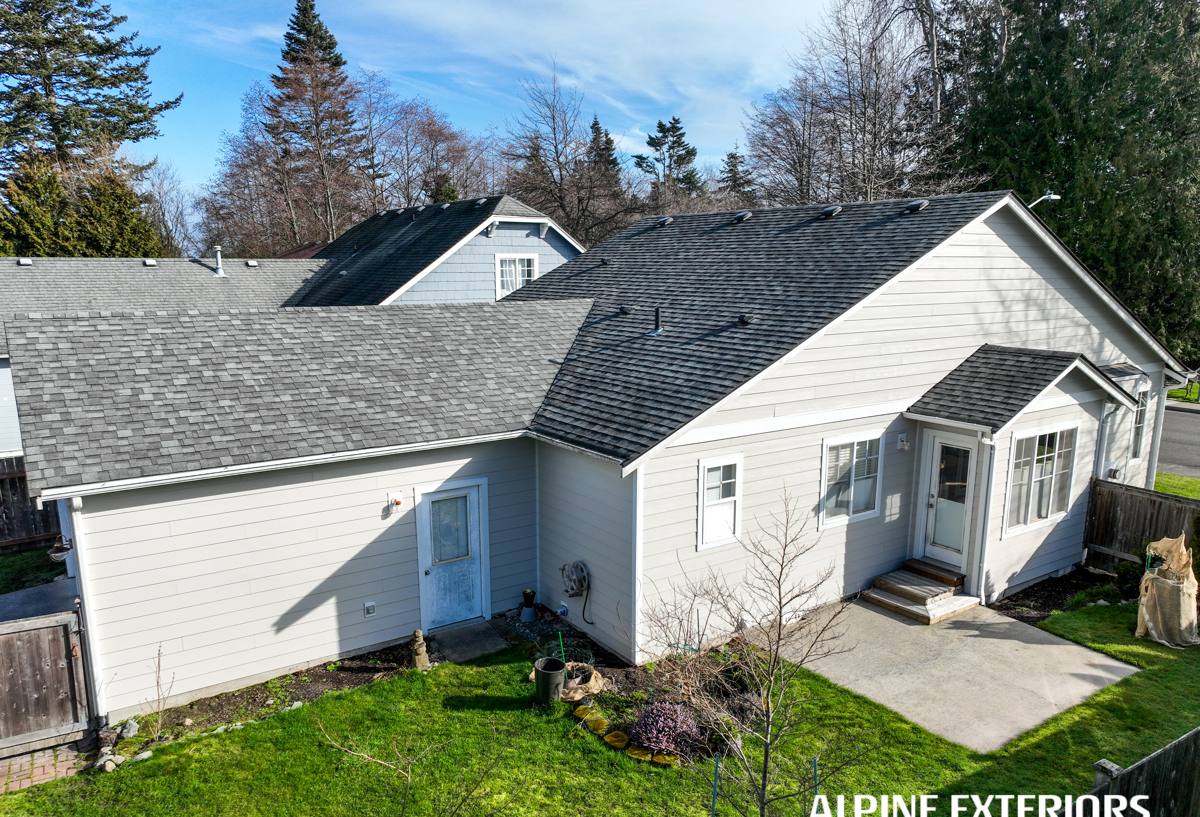
What Salt Air and Driving Rain Actually Do to a House
Salt Air
Airborne salt doesn't just sit on a surface — it works its way into fasteners, flashing, and any exposed metal on your exterior. Over years, that accelerates corrosion in ways homeowners further inland simply don't deal with. Nails, screws, and hardware that would last decades in a dry inland climate can start failing early near the water if they weren't rated for the exposure in the first place.
Driving Rain
Point Whitehorn's exposure to wind coming off the Strait means rain frequently arrives at an angle, not straight down. That matters because siding, trim, and window details that are perfectly adequate in a sheltered yard can let water in at a shoreline lot — water finds horizontal laps, unsealed joints, and poorly flashed penetrations that a calmer site would never test. This is a big part of why installation detail work matters as much as the material choice itself.
Extended Moss Season
Whatcom County's wet season already runs long compared to most of the country, and shaded, moisture-holding surfaces near the water stay damp even longer. Moss and algae don't just look bad — sustained moisture against a wall assembly is the number one thing that shortens the life of siding, trim, and roofing, regardless of brand. Anything that traps water against a substrate is working against you here.
Why We Install Only James Hardie Fiber Cement
We made a deliberate decision years ago to stop installing vinyl, LP SmartSide, primed wood, and comparable fiber cement alternatives like Cemplank or Allura, and to install James Hardie exclusively. That's not a marketing position — it's a response to what we've seen happen to exteriors in exactly this kind of coastal, high-moisture climate.
- Non-combustible core: Hardie's fiber cement doesn't burn, which matters everywhere but is a genuine plus for coastal properties near dry brush.
- Climate-engineered product lines: Hardie's HZ5 formulation is engineered specifically for wetter, colder climates like ours — it's built to hold up to freeze-thaw cycling and sustained moisture exposure better than a one-size-fits-all product.
- ColorPlus factory finish: A baked-on finish applied under controlled conditions holds color and resists fading and moisture intrusion at the surface far better than field-applied paint, which is especially valuable on a wall that takes direct salt spray.
- Proven longevity when installed to spec: Fiber cement's track record in Pacific Northwest coastal conditions is long and well documented — but only when installation follows manufacturer clearances, fastening, and flashing requirements exactly.
- Strong transferable warranty: A warranty that survives a sale matters in a market where waterfront and near-waterfront properties change hands.
Vinyl can warp and become brittle under the wide freeze-swing and sun-exposure conditions a shoreline lot sees. Primed wood and spruce siding need a maintenance commitment — regular repainting and caulk inspection — that most owners underestimate until moisture gets behind a joint. Alternative fiber cement brands aren't necessarily bad products, but we don't install products we can't fully warranty and stand behind for this specific climate, so we standardized on one system we know inside and out.
How This Plays Out at the Detail Level
The material is only part of the equation. In a driving-rain, salt-air environment, the way siding is installed determines whether it performs for 30 years or fails at year eight. A few specifics we hold to on every Point Whitehorn job:
- Correct manufacturer-specified fastener spacing and gauge, chosen for exposure — not the minimum the code allows
- Proper clearance between siding and grade, decks, roof lines, and other transitions so wind-driven rain doesn't wick upward
- Rain-screen or drainage plane detailing behind the siding so incidental moisture has somewhere to go instead of sitting against the wall
- Sealed, correctly lapped flashing at every window, door, and penetration — the majority of moisture failures we diagnose start at a flashing detail, not the field of the siding itself
- Factory-finished cut edges sealed in the field, since an exposed cut edge is the one place ColorPlus doesn't protect on its own
Roofing, Windows, and Decks: The Rest of the Envelope
Siding doesn't work in isolation — it's one piece of a building envelope that either sheds water and salt air together or fails together. That's why we handle roofing, windows, and decks as part of the same conversation, not as separate contractors working around each other.
Roofing
A roof under constant salt exposure and long wet seasons needs attention to the same things siding does: fastener corrosion resistance, proper underlayment, and flashing details at every valley, chimney, and wall intersection. Moss buildup on a north-facing or shaded roof slope is common in this area and worth addressing before it holds moisture against shingles or panels long-term.
Windows
Window flashing integration is one of the most common failure points we find on coastal Whatcom County homes, often because the window and the siding around it were installed by different crews at different times with no shared plan for how water sheds past the joint. When we replace siding, we make sure window flashing is tied in correctly rather than just caulked over.
Decks
Decks facing the water take the same driving rain and salt exposure as your siding, plus standing water and foot traffic. Ledger board flashing where a deck meets the house is a classic spot for hidden rot, and it's directly connected to how well the adjacent siding is detailed.
Comparing Exterior Cladding Options for a Shoreline Lot
| Material | Salt Air Behavior | Driving Rain / Moisture Behavior | Maintenance |
|---|---|---|---|
| James Hardie fiber cement (HZ5) | Stable; factory finish resists surface intrusion | Engineered for wet climates; performs well when installed to spec | Occasional wash-down; no repainting cycle |
| Vinyl siding | Can become brittle with UV and temperature swings over time | Prone to gapping at seams over time, allowing water behind the panel | Low, but limited repair options once damaged |
| Primed wood / spruce | Vulnerable without diligent upkeep | Absorbs moisture at end grain and joints if not maintained | Regular repainting and caulk inspection required |
| Other fiber cement brands | Varies by formulation and finish process | Varies; installation sensitivity still applies | Depends on finish system used |
What to Ask Before You Hire Anyone on This Stretch of the Bay
- Have they worked shoreline or near-shoreline properties in Whatcom County before, and can they speak to why?
- Do they follow manufacturer fastening and clearance specs, or industry minimums?
- Will they explain their flashing plan at windows, doors, and deck ledgers before work starts?
- Are they licensed and insured to work in Washington, and will they put warranty terms in writing?
- Do they treat siding, roofing, windows, and decks as one connected system, or hand you off between separate unrelated jobs?
Why a Local Crew Matters Here
A contractor who mostly works inland can do fine work and still misjudge what a Point Whitehorn lot needs, simply because they don't see this exposure every week. We do. We know which sides of a house here typically take the worst of the wind-driven rain, which details tend to fail first in a salt-air environment, and how long the moss season really runs in this part of Birch Bay versus a few miles inland. That local pattern recognition shows up in small decisions throughout a project — where we add extra flashing attention, which fastener spec we default to, how we sequence work around the wetter months — and those small decisions are what determine whether an exterior holds up on this shoreline or needs attention again in a few years.
Ready to Talk About Your Home
If you're weighing a siding, roofing, window, or deck project at your Point Whitehorn property, we're happy to take a look, walk the exterior with you, and talk honestly about what your specific exposure calls for. There's no pressure and no cost to get our take — just fill out the form below and we'll set up a time to come out.