 Birch Bay Siding
 Cherry Point's Exterior Challenge: Shoreline Exposure Meets a Long Wet Season
Cherry Point sits along the Whatcom County shoreline north of Birch Bay, close enough to the water that homes here deal with a different set of exterior stresses than houses further inland. Salt-laden air moves in off the Strait of Georgia and Puget Sound, driving rain comes in sideways during winter storms, and the marine layer keeps humidity high for much of the year. Add in a moss season that can run from October through April in this part of Whatcom County, and you have an exterior environment that is genuinely harder on siding, trim, and roofing than what you'd find in a drier inland climate.
None of this means a home in Cherry Point is doomed to constant repairs. It means the exterior materials and installation details matter more here than in most places, and that a crew familiar with this specific stretch of coastline builds differently than a crew that mostly works dry, sheltered lots.
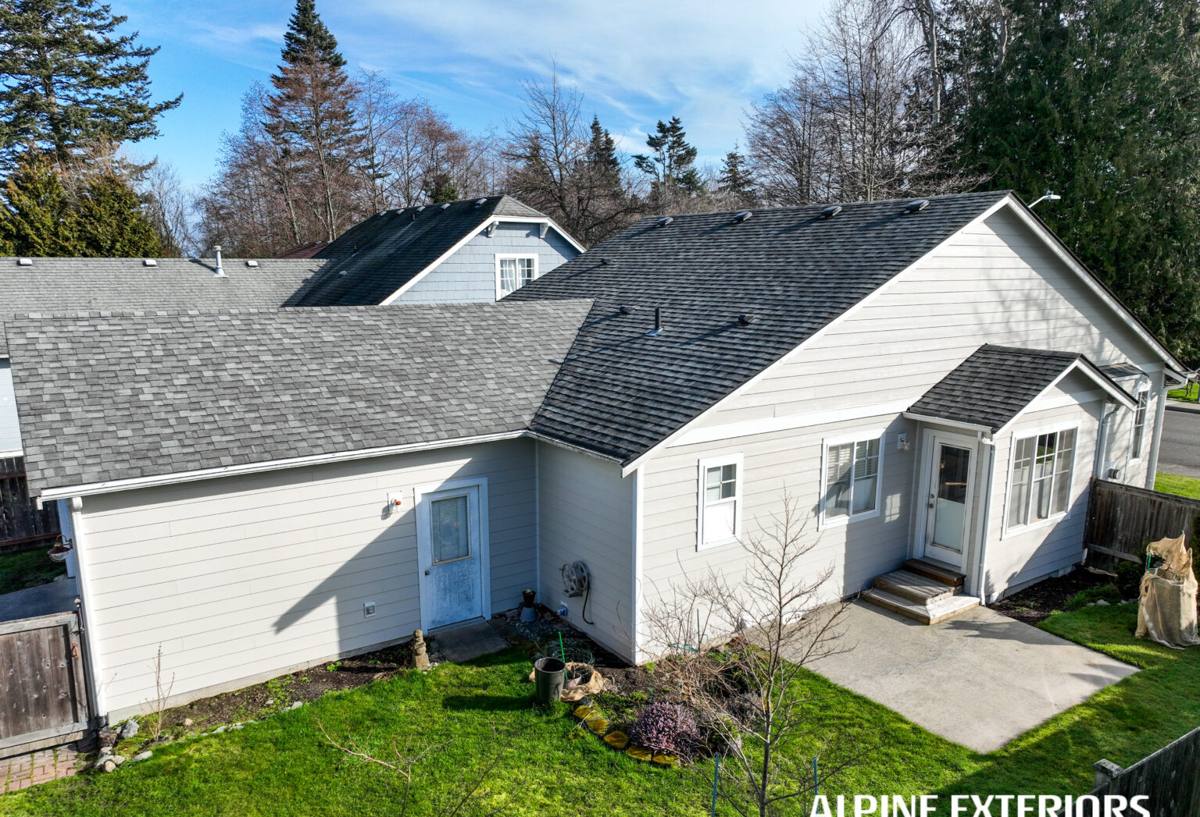
What Salt Air Actually Does to a House
Salt air isn't just a coastal cliché — it's a chemical and mechanical stressor on building materials. Fine salt particles carried on wind settle on exterior surfaces and, combined with moisture, accelerate corrosion of exposed metal fasteners, flashing, and hardware. Painted wood and many composite sidings can chalk, fade, or develop surface breakdown faster near open water than they would a few miles inland. Caulk joints dry out and crack sooner under repeated salt-and-moisture cycling.
This is one of the reasons we standardized on James Hardie fiber cement for every siding job we do, including homes in Cherry Point. Fiber cement doesn't corrode, and it isn't vulnerable to the same salt-driven surface degradation that affects some other siding materials. That doesn't mean every component of the wall assembly is immune — fasteners, flashing, and trim details still need to be chosen and installed correctly for a marine environment — but the siding panel itself holds up to salt exposure far better than most alternatives.
Driving Rain and Wind-Driven Water Intrusion
Cherry Point's exposure to open water means wind-driven rain is a regular event, not an occasional storm. Rain that comes in at an angle finds every gap in poorly lapped siding, undersized flashing, or caulk-dependent joints. Over years, that intrusion shows up as soft trim, staining, or rot in the sheathing behind the cladding — problems that are often invisible from the street until they're expensive.
Correct installation matters more than the siding brand in this respect: proper flashing above windows and doors, correct lap and fastening patterns, and drainage planes that let incidental moisture escape rather than pool. We install to Hardie's published specifications because those details are engineered around exactly this kind of exposure — not because the label alone solves the problem.
The Long Moss Season
Whatcom County's combination of shade, moisture, and mild temperatures makes it prime moss and algae territory, and Cherry Point's marine humidity extends that season. Moss on siding and roofing isn't just cosmetic — it holds moisture against the surface, which accelerates wear on materials that are sensitive to sustained dampness. Fiber cement siding resists this kind of moisture retention better than wood-based products, but roofing, gutters, and shaded north-facing walls still need periodic attention regardless of what siding is on the house.
Why We Install Only James Hardie Fiber Cement
We don't install vinyl, LP SmartSide, Cemplank, Allura, primed spruce, or cedar. That's a deliberate standard, not a lack of options. In a climate like Cherry Point's, the trade-offs of those products become real maintenance and durability issues rather than theoretical ones:
- Vinyl siding can warp or become brittle with temperature swings and doesn't offer the same fire resistance or long-term color stability as fiber cement.
- LP SmartSide and similar wood-strand products are engineered wood at their core — better than raw lumber, but still vulnerable to moisture intrusion at cut edges and seams if installation or maintenance lapses in a wet marine climate.
- Cemplank and Allura are fiber cement competitors to Hardie, and reasonable products in general terms, but we've standardized our crews, warranty process, and installation training around one system rather than switching between products.
- Primed spruce and cedar are real wood, which means real wood problems: repainting cycles, susceptibility to rot at end grains and joints, and higher long-term upkeep — all magnified by salt air and extended damp seasons.
James Hardie fiber cement is non-combustible, holds its factory-applied ColorPlus finish for years without the fading and chalking that plain paint experiences, and comes in HZ product lines engineered for specific climate zones, including the wetter, milder conditions found throughout Western Washington. It's not a magic material that eliminates maintenance entirely, but it removes the biggest recurring failure points we see in coastal Whatcom County homes.
Comparing Siding Options for a Cherry Point Home
| Material | Salt Air Resistance | Moisture Behavior | Typical Upkeep |
|---|---|---|---|
| James Hardie Fiber Cement | Strong — non-corrosive, factory finish holds up well | Dimensionally stable, doesn't rot | Occasional wash; repaint only if not ColorPlus finished |
| Vinyl | Fair — can fade or become brittle over time | Doesn't rot but can trap moisture behind panels if installed poorly | Low, but limited lifespan in harsh exposure |
| Engineered Wood (LP SmartSide) | Moderate — coatings protect but edges are vulnerable | Can swell or delaminate if water reaches raw substrate | Regular inspection of seams and cuts |
| Cedar / Primed Spruce | Weak to moderate — natural wood is porous | Prone to rot, especially in shaded, damp areas | Repainting/staining every few years |
Siding Isn't the Only Exterior Element That Matters
We work on roofing, windows, and decks as well as siding, because in a climate like this, the exterior envelope has to function as a system. A well-installed siding job can still let water in around a poorly flashed window, and a good roof doesn't help if the siding behind the gutters isn't shedding water correctly. When we look at a Cherry Point home, we're looking at how the roof, windows, siding, and any deck or attached structure work together to keep water moving away from the building.
Windows
Window flashing and integration with the siding plane is one of the most common failure points on coastal homes. Wind-driven rain finds gaps around window frames faster than almost anywhere else on the exterior, so this detail gets extra attention on every job near the water.
Roofing
Roofing in a moss-prone, high-humidity area needs attention to ventilation and moisture management, not just the shingles themselves. Poor attic ventilation compounds moss growth and can shorten roof life regardless of material quality.
Decks
Decks facing open water or persistent shade deal with the same moisture and salt exposure as siding, often with less protection from the elements. Material choice and fastener selection matter as much here as they do on the walls of the house.
Why a Local Crew Matters in Cherry Point
A contractor who mostly works inland, drier parts of Whatcom County may not think twice about standard fastener specs, standard flashing details, or standard caulk joints — because in a lot of the county, standard is good enough. Cherry Point isn't one of those places. Crews who regularly work this stretch of coastline know to spec corrosion-resistant fasteners, to pay closer attention to flashing laps at wind-exposed corners, and to plan installation timing around the wetter months rather than fighting through them.
That local knowledge doesn't show up as a line item on an estimate, but it shows up ten years later in whether the trim around your windows is still tight and whether your siding still looks like it did the day it went up.
What a Cherry Point Siding Project Typically Involves
- On-site assessment of current siding, trim, flashing, and any signs of existing moisture damage
- Inspection of sheathing condition once old siding is removed — a step that shouldn't be skipped in a wet climate
- Correct house wrap or weather-resistive barrier installation before new siding goes on
- James Hardie lap or panel siding installed to manufacturer spec, including proper fastening and clearances
- Flashing detail work at windows, doors, and any roof-to-wall intersections
- Final walk-through covering warranty documentation and basic care expectations
Cost Factors for Siding Work Near the Water
Every home is different, but a few factors consistently affect cost on shoreline and near-shoreline properties in this area: the condition of the sheathing underneath the existing siding, the amount of trim and window flashing work required, wall height and access complexity, and how much existing damage needs to be addressed before new siding can go on. A straightforward re-side on a house with sound sheathing costs less than a project that uncovers rot or inadequate flashing once the old siding comes off — which is one more reason a thorough initial inspection matters more here than in a drier climate.
Getting a Straight Answer About Your Home
If you're dealing with siding that's showing its age, planning ahead before winter storms roll in, or just want to know what shape your exterior is really in, we're happy to take a look. We'll tell you honestly what we see — including if your siding has more life left in it than you think — and walk through what James Hardie fiber cement would mean for your specific home and its exposure to Cherry Point's weather.
Reach out for a free, no-pressure estimate using the form below. We'll come take a look, answer your questions, and give you a straightforward assessment with no obligation.