 Birch Bay Siding
 Exterior Work Built for Marietta's Coastline
Marietta sits close enough to the water that its homes deal with a different set of exterior stresses than houses further inland in Whatcom County. Salt-laden air moves off Birch Bay and Bellingham Bay, driving rain comes in sideways off Puget Sound during fall and winter storms, and the region's long stretch of gray, damp months keeps exterior surfaces wet for days at a time. None of that is exotic weather by Pacific Northwest standards, but it adds up. Siding, trim, and roofing in this pocket of the county take more abuse per year than the same materials would fifty miles inland, and the products and installation choices that hold up in a drier climate often don't hold up here.
We're a local exterior contractor working siding, roofing, windows, and decks across Birch Bay and the surrounding Whatcom County communities, including Marietta. We don't run a franchise playbook written for a different climate — we build and repair exteriors for houses that sit a short walk from saltwater, and we've made our material choices around what actually survives that environment over decades, not just what looks good on install day.
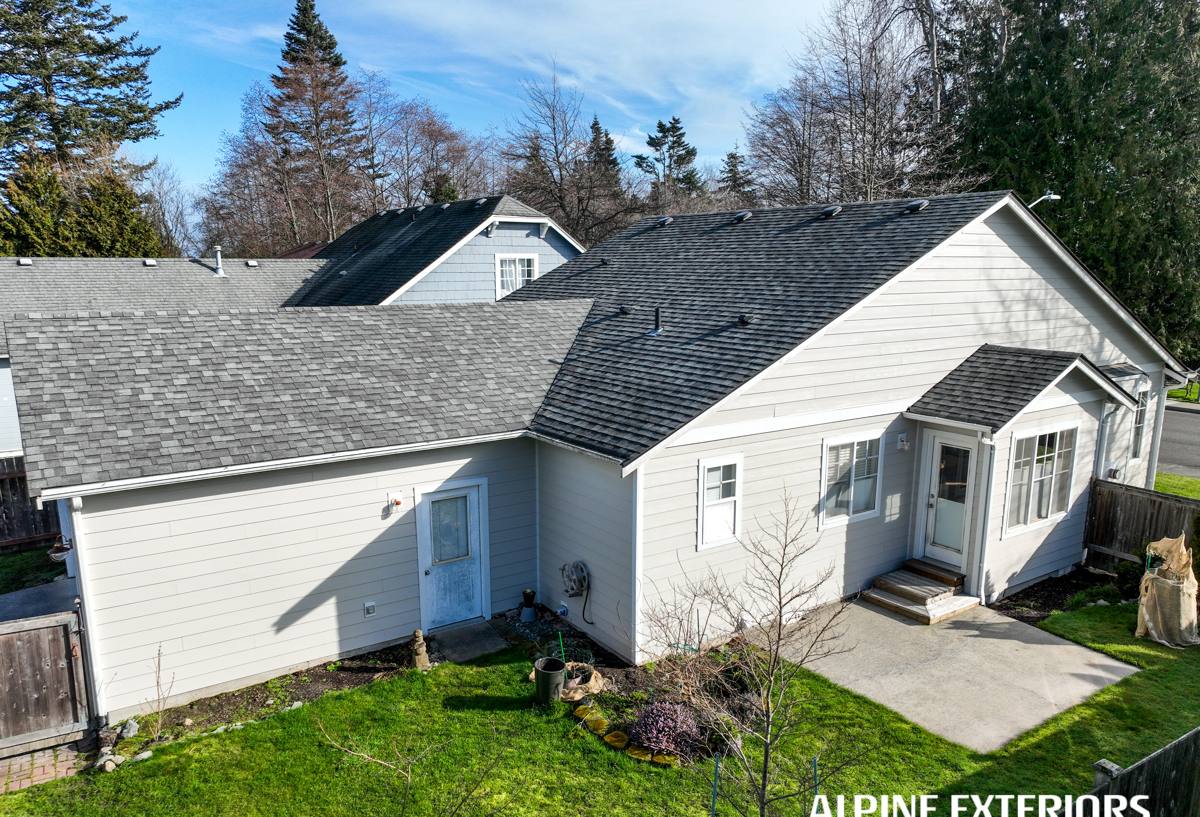
What Marietta's Climate Does to a House Over Time
Moisture That Doesn't Let Up
Whatcom County gets a long wet season, and Marietta's proximity to the bay means humidity stays elevated even on days without active rain. Wood-based siding products absorb that ambient moisture slowly over years. The damage isn't usually a single storm — it's the cumulative effect of siding that never fully dries out between rain events, especially on north-facing walls and areas shaded by trees or neighboring structures.
Salt Air and Metal Fasteners
Airborne salt accelerates corrosion on exposed metal — nail heads, flashing, hardware, and fastener systems that aren't rated for coastal exposure. When fasteners corrode before the siding around them fails, you get staining, loosening panels, and points where water can work its way behind the cladding. This is a bigger factor for homes within a mile or two of open water than most homeowners realize until they're doing a close inspection.
Moss and Algae Season
Whatcom County's moss season runs long — often eight months or more of conditions favorable to growth on north- and shade-facing exterior surfaces. Moss and algae aren't just cosmetic. They hold moisture against the surface underneath them, and on porous or organic siding materials, that sustained dampness is what eventually leads to soft spots, delamination, or rot at seams and butt joints.
Why We Only Install James Hardie Fiber Cement Siding
We made a deliberate decision to install one siding system — James Hardie fiber cement — and not offer alternatives like LP SmartSide, vinyl, Cemplank, Allura, primed spruce, or cedar. That's not brand loyalty for its own sake. It's a standard we settled on after weighing how different materials actually perform against the specific conditions Marietta and Birch Bay throw at a house year after year.
Fiber cement is non-combustible, which matters in a region where wildfire smoke and ember exposure have become a more regular seasonal concern even outside the immediate fire zones. It doesn't absorb water the way wood-based composite products can, so it isn't prone to the same swelling, softening, or edge deterioration that shows up on organic siding materials after years of Whatcom County's wet season. James Hardie's ColorPlus factory-applied finish is baked on and warranted separately from the substrate, which means the color layer is engineered to resist the fading and chalking that field-applied paint struggles with under UV and salt exposure.
James Hardie also engineers specific product lines — its HZ5 formulation — for regions with heavy moisture and freeze-thaw cycling, which fits the Pacific Northwest better than a one-size-fits-all national product. And the warranty structure is transferable to a new owner, which matters to anyone who might sell in the years ahead — a well-documented, transferable warranty is a real selling point on a coastal property.
What We're Turning Down, and Why
We want to be fair about this rather than dismissive. LP SmartSide and similar engineered wood products have improved their moisture resistance over the years and can perform reasonably well in the right climate with disciplined maintenance. Vinyl is inexpensive and low-maintenance in the sense that it doesn't need painting. Cedar has real aesthetic appeal and a long tradition in this region. Our objection isn't that these products are worthless — it's that, installed on homes exposed to Marietta's combination of salt air, sustained moisture, and long moss season, they carry maintenance burdens or failure modes we're not willing to put our name behind. Wood-based products need consistent re-sealing and repainting to keep water out at seams. Vinyl can warp, fade, and crack under UV and temperature swings, and it does little to stop moisture that gets behind it. We'd rather install one system correctly than offer several and let cost be the only factor in the decision.
| Material | Moisture Behavior | Maintenance Burden | Typical Longevity |
|---|---|---|---|
| James Hardie Fiber Cement | Does not absorb water like wood; engineered for wet climates | Low — factory finish, occasional washing | 30+ years with proper install |
| Cedar | Absorbs moisture; prone to swelling/checking | High — periodic sealing, refinishing | 15-25 years, highly maintenance-dependent |
| Vinyl | Sheds water on surface, doesn't stop moisture behind panels | Low, but limited repair options | 20-30 years, UV/impact dependent |
| LP SmartSide / engineered wood | Better than raw wood but still moisture-sensitive at cut edges and seams | Moderate — edge sealing and inspection needed | 20-30 years if maintained closely |
Roofing, Windows, and Decks Face the Same Climate
Siding isn't the only part of a Marietta home under pressure from salt air and moisture. Roofing systems need underlayment and flashing details that account for driving rain coming in at an angle, not just straight down. Windows in coastal-adjacent homes benefit from better seals and frame materials that resist the same corrosion and moisture infiltration that affects siding hardware. Decks — especially uncovered ones — take direct exposure to rain, UV, and salt air simultaneously, which is why fastener choice and board spacing for drainage matter more here than in a drier inland location.
We handle all four trades — siding, roofing, windows, and decks — because exterior problems on a house are rarely isolated. Failing flashing at a roofline can send water behind siding. A leaking window can rot the sheathing behind it long before the leak is visible inside. Treating the exterior as one connected system, rather than four separate contractors working in isolation, is part of why a coordinated local crew gets better long-term results than piecing the work out.
How We Approach a Marietta Siding Project
Inspection First
Before we talk about products, we look at what's actually happening on the house — moisture readings where we suspect trouble, condition of existing trim and flashing, and any soft spots or staining that point to water intrusion already underway. On a coastal-adjacent home, we pay particular attention to north-facing walls, areas with heavy moss growth, and anywhere metal fasteners are visibly corroding.
Installation to Manufacturer Spec
James Hardie siding is only as good as its installation. Proper fastener placement, correct clearances at grade and roofline, flashing integration, and caulking at penetrations all matter more in a wet climate than in a dry one, because installation mistakes that would go unnoticed for years elsewhere show up faster here. We install to the manufacturer's published specifications, not shortcuts that speed up the job but shift risk onto the homeowner down the road.
Cleanup and Warranty Documentation
When the job wraps, we walk the property, clean up job-site debris, and make sure the homeowner has the documentation needed to register the manufacturer's warranty — which is what makes it transferable if the home is sold later.
What Affects the Cost of a Siding Project
| Factor | Why It Matters |
|---|---|
| Home size and wall complexity | More corners, gables, and dormers increase material cuts and labor time |
| Extent of existing damage | Rot or moisture damage found during tear-off requires sheathing repair before new siding goes on |
| Siding profile and trim style | Lap width, shingle-style panels, and trim detailing affect material and labor cost |
| Access and site conditions | Slopes, tight lot lines, and landscaping can affect scaffolding and staging |
| Scope beyond siding | Bundling window, trim, or flashing replacement with siding work is often more efficient than separate projects |
We give straightforward, honest ranges once we've actually seen the house — we don't quote blind over the phone, because the condition behind the old siding is often the biggest cost variable on a coastal property.
Signs a Marietta Home May Need Siding Attention
- Persistent moss or algae staining on north-facing or shaded walls
- Soft spots or slight give when pressing on siding near the bottom courses or window trim
- Visible rust streaking below nail heads or metal trim pieces
- Paint that's peeling or bubbling in patches rather than wearing evenly
- Gaps opening up at seams, corners, or where siding meets window and door trim
- A musty smell or visible staining on interior walls that back up to exterior siding
Any one of these on its own isn't necessarily an emergency, but on a home this close to the water, they're worth having a professional look at sooner rather than later — moisture problems in fiber cement's predecessors tend to compound quietly behind the surface before they become obvious.
Why a Local Crew Matters Here
Whatcom County's coastal microclimates aren't uniform. A crew that mostly works drier inland projects can miss the details that matter on a Marietta or Birch Bay property — the fastener corrosion patterns, the moss growth cycle, the flashing details that keep driving rain out of a wall assembly facing open water. Working this area regularly means we see the same failure patterns repeat on homes with similar exposure, and we build our installation standards around preventing them rather than reacting to them after the fact.
If you're planning a siding project, dealing with an aging exterior, or just want an honest read on what condition your home's siding is really in, we're glad to take a look. Reach out for a free, no-pressure estimate — we'll walk the property, tell you what we see, and give you a straight answer about what it would take to do the job right.