 Birch Bay Siding
 Roof Repair Built for Semiahmoo's Coastal Conditions
Semiahmoo sits close enough to the water that its roofs live a different life than roofs ten miles inland. Salt-laden air moves off the bay and settles on every exposed surface, driving rain comes in sideways during winter storms, and the shaded, damp stretches under trees and along north-facing slopes stay wet long enough to grow moss for months at a time. A roof here doesn't fail because it was built wrong — it fails because these three forces work on it year after year, and small problems that would sit harmless in a drier climate turn into leaks much faster.
This page covers roof repair specifically for homes in and around Semiahmoo — what the local conditions actually do to a roof, what a repair needs to include to hold up, and how we approach the work when we're called out.
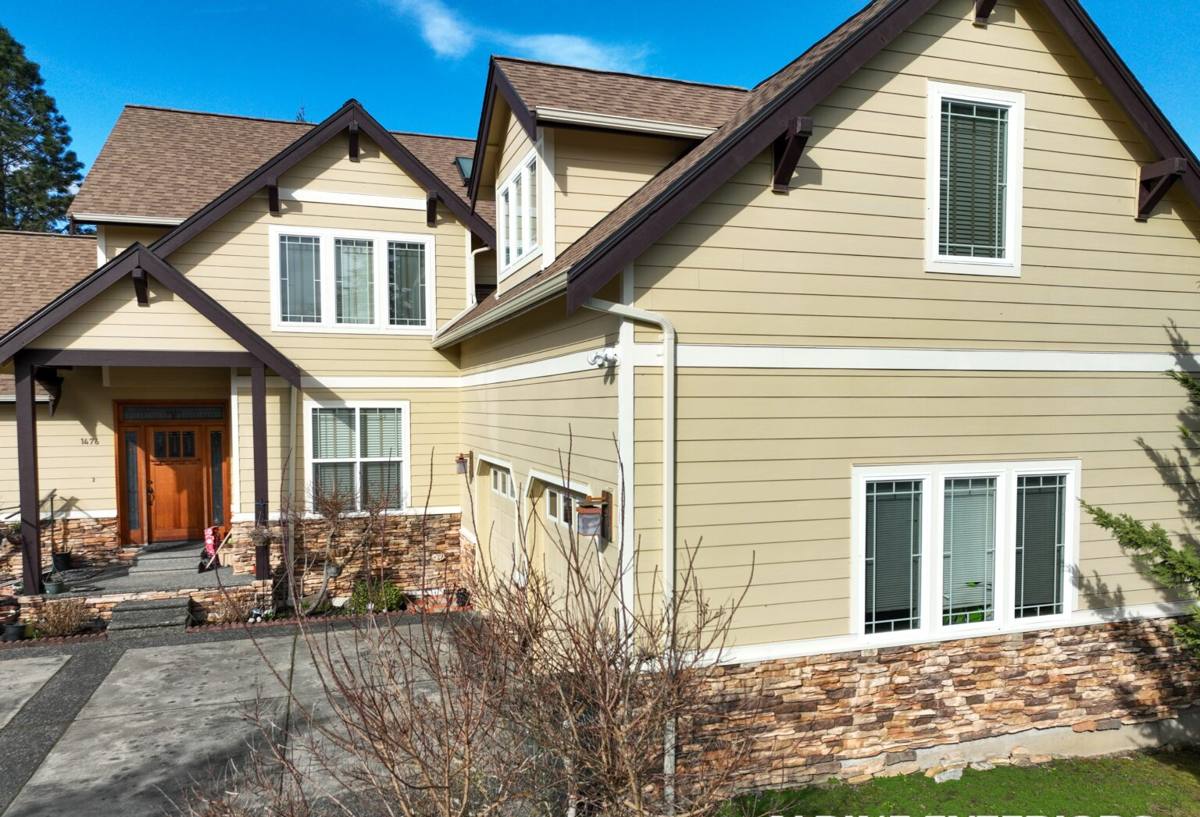
What Salt Air, Rain, and Moss Do to a Roof Here
Salt Air and Metal Fasteners
Salt air accelerates corrosion on anything metal — nail heads, flashing seams, gutter hangers, vent boots with metal collars. A fastener that would last decades inland can start rusting and losing its grip years earlier this close to the water. Once a nail head corrodes and loses its seal, water has a path underneath the shingle or panel it was supposed to hold down, and that's how a small leak starts without any obvious storm damage triggering it.
Driving Rain and Wind-Driven Water
Whatcom County's coastal storms don't just drop rain straight down — wind pushes it sideways and up under laps, edges, and flashing that were only ever designed to shed water moving downhill. Roofs that look fine from the ground can have wind-driven water working its way under ridge caps, around chimneys, or up under the bottom courses of siding where it meets the roofline. This is why a repair that only patches the visible damage and ignores the wind exposure of that area often fails again in the next storm.
Moss, Shade, and Moisture Retention
Long moss seasons are a fact of life in this part of Washington. Moss holds moisture directly against roofing material, and on shaded or north-facing sections it can stay damp for weeks between rain events. Over time that moisture breaks down the granule surface on asphalt shingles, lifts shake and shingle edges, and works its way into fastener holes. Moss also grows into the small gaps at ridge caps and step flashing, prying them open a little more each season.
Common Roof Repair Needs We See in This Area
- Flashing that's rusted, lifted, or improperly lapped around chimneys, skylights, and roof-to-wall transitions
- Moss buildup causing lifted shingle edges and granule loss, especially on shaded slopes
- Nail pops and corroded fasteners letting water track underneath roofing material
- Wind-lifted or missing shingles after a coastal storm, often along ridges and exposed corners
- Soft or stained decking discovered after a slow leak has been running longer than the homeowner realized
- Clogged or undersized gutters backing water up under the roof edge instead of carrying it away
- Deteriorated pipe boots and vent seals, a common weak point regardless of roofing material
What a Correct Roof Repair Actually Involves
A repair that holds up in this climate has to do more than cover the hole. Here's what we check and address on every roof repair call, not just the spot the homeowner pointed out:
- Confirm the actual source of the leak — water often travels along decking or underlayment before it shows up as a stain, so the visible spot inside isn't always where the roof is failing
- Inspect flashing at every penetration and transition near the damaged area, not just the roofing material itself
- Check for hidden decking damage — soft, delaminated, or rotted sheathing needs to be replaced, not covered over
- Match repair materials to the existing roof as closely as possible so the patch weathers evenly with the rest of the roof
- Reseal or replace pipe boots and vent collars if they show any cracking or UV breakdown
- Clear moss and debris from the surrounding area so the repair isn't sitting under a moisture trap the day it's finished
- Check gutters and downspouts near the repair to confirm water is actually being carried away from the roof edge
Skipping any of these steps is how a "repaired" roof ends up leaking again in the same spot within a year or two — usually because the fix addressed the symptom and not the underlying moisture path.
Repair or Replace? How We Help You Decide
Not every roof problem in Semiahmoo needs a full replacement, and we don't push one when a solid repair will genuinely hold. But we're also honest when a roof is past the point where patching makes sense. Here's the general framework we use:
| Factor | Leans Toward Repair | Leans Toward Replacement |
|---|---|---|
| Age of roofing material | Under 15 years, or well within expected service life | Near or past the manufacturer's expected lifespan |
| Extent of damage | Localized — one section, one flashing detail, one leak source | Multiple areas failing independently across the roof |
| Decking condition | Solid, dry sheathing under the affected area | Widespread soft or rotted decking found during inspection |
| Moss and moisture history | Manageable with cleaning and minor repair | Chronic moss damage has degraded material broadly, not just in one spot |
| Cost over time | Repair cost is a small fraction of replacement cost | Repeated repairs are starting to add up toward replacement cost |
We'll give you our honest read on which side of that table your roof falls on, with the reasoning explained, not just a recommendation to take on faith.
Our Process, Start to Finish
1. Inspection
We get on the roof and look at more than the reported problem area — flashing, penetrations, ridge lines, and any shaded or moss-prone sections, since those are often where the next leak starts.
2. Honest Assessment
We tell you what we found, what's causing it, and what it will take to fix — including if the answer is "this is a smaller job than you were expecting" or, less often, "this is closer to a replacement conversation than a repair."
3. The Repair
We do the work to match the existing roof, address the actual moisture path rather than just the visible symptom, and clean up thoroughly — including clearing moss and debris that contributed to the problem in the first place.
4. Follow-Through
We stand behind the work. If something isn't right after we leave, that's on us to make right.
Materials and Methods We Work With
Most Semiahmoo homes are roofed in asphalt composition shingle, with some cedar shake and a smaller number of metal roofs. Repair approach differs by material:
| Roof Type | Repair Considerations Near the Coast |
|---|---|
| Asphalt composition shingle | Matching granule color and sealing lifted tabs; moss removal without stripping granules |
| Cedar shake | Replacing individual damaged shakes without disturbing the surrounding weathered pattern; watching for moisture trapped beneath |
| Metal roofing/flashing | Addressing corrosion at fasteners and seams before it spreads; resealing panel laps exposed to wind-driven rain |
Where a repair touches flashing details, we use materials suited to salt-air exposure and install them with the laps and seals oriented to shed wind-driven rain — not just water falling straight down.
Why It Matters That We Already Work in This Area
A roof repair crew that mostly works inland can miss things a coastal roof needs — how much a nail head has actually corroded versus how it looks from the ground, how far wind-driven rain travels up under a lap in an exposed spot, or how quickly moss comes back in a shaded corner near the water. Working roofs in Birch Bay and the surrounding Whatcom County coastline regularly means we're not guessing at how this climate behaves — we're accounting for it in every repair, from the fasteners we choose to how we handle moss before we close a job out.
We also know that a repair that isn't done right the first time costs more in the long run — another service call, more interior damage, sometimes decking replacement that could have been avoided if the leak had been caught and fixed properly earlier. Getting it right the first time matters more here than in places with a gentler climate, simply because the conditions don't give a roof much room for error.
Get a Straight Answer on Your Roof
If you've got a leak, a moss problem, storm damage, or just want a second opinion on a repair someone else quoted, we're happy to take a look. We'll give you a clear, honest assessment of what's going on and what it will actually take to fix it — no pressure, no upsell. Request a free estimate using the form below and we'll get back to you to schedule a time to come out.