 Birch Bay Siding
 Siding Replacement Built for Nooksack's Climate
Nooksack sits inland from the water, but it still lives inside the same wet, marine-influenced weather system that shapes exterior building decisions across Whatcom County. Homes here see long stretches of driving rain, heavy morning dew, and a moss season that can run from fall through spring. Add in the humidity that settles into low-lying farmland and tree-lined lots, and siding takes a beating year-round that homeowners further inland rarely deal with. When siding fails here, it's almost always moisture-related — not one dramatic storm, but months of slow saturation that nobody notices until the damage shows up as soft trim, bubbling paint, or a musty smell along an exterior wall.
That reality drives every decision we make on a Nooksack siding replacement: material choice, house wrap detail, flashing, and fastening. Get any one of those wrong and the siding might look fine for a year or two before problems surface. Get them right and the wall assembly can handle decades of this region's weather without drama.
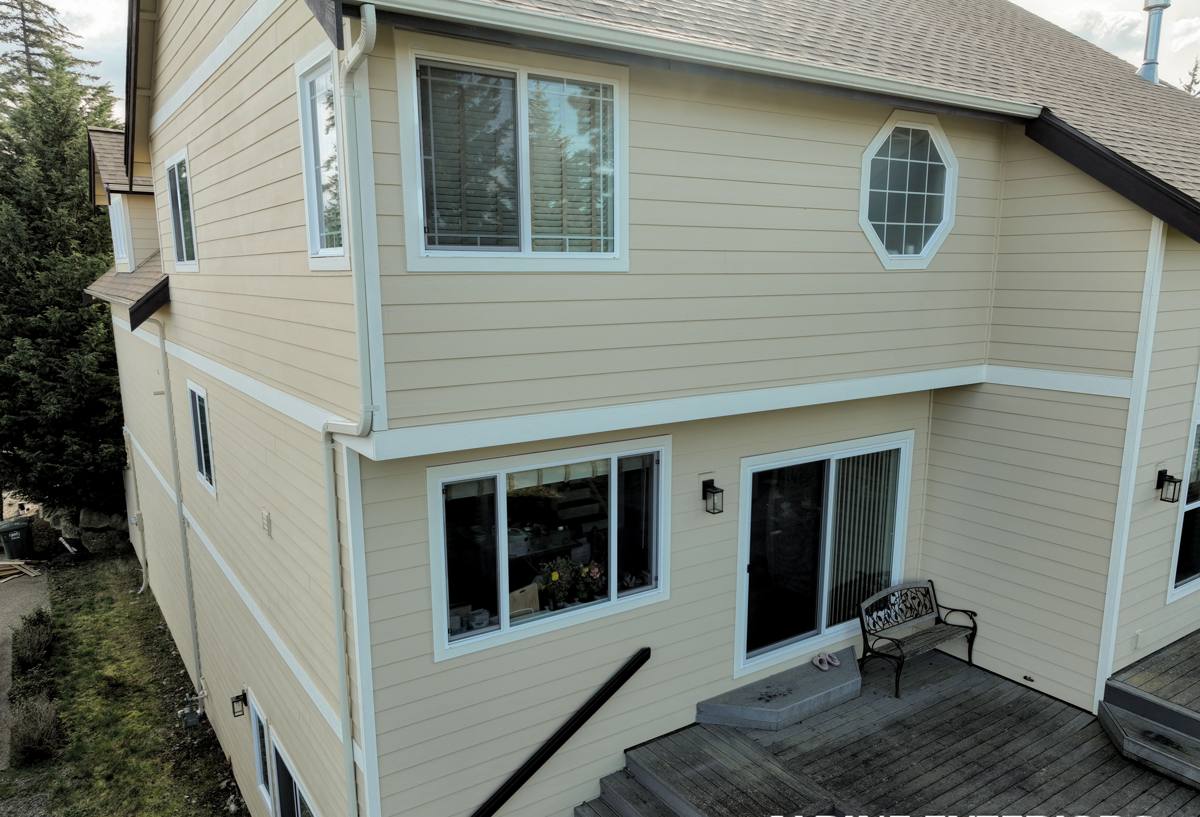
What Nooksack Homes Actually Need From Their Siding
Most of the siding failures we find on service calls in this part of the county trace back to a handful of recurring issues, not bad luck:
- Moisture that has nowhere to go. Older siding installs, especially wood-based products, were often nailed tight to the wall with no drainage plane. Once water gets behind it, it stays.
- Moss and algae holding water against the surface. Shaded, tree-covered lots — common around Nooksack — stay damp longer after rain, which accelerates surface breakdown on absorbent siding materials.
- Paint film failure. Field-painted siding depends entirely on the paint holding a seal. In a climate this wet, that seal is under constant stress, and repainting on a normal cycle is expensive to keep up with.
- Swelling and delamination at butt joints and corners where water intrusion concentrates and the substrate can't dry out between rain events.
A correct siding replacement doesn't just swap old panels for new ones — it fixes the drainage and moisture-management details that let the failure happen in the first place.
Why We Only Install James Hardie Fiber Cement
We standardized on James Hardie siding for every job we do, including here in Nooksack, and we don't install vinyl, LP SmartSide, primed spruce, cedar, or other fiber cement brands. That's a deliberate line, not a sales preference. Hardie's fiber cement is non-combustible, dimensionally stable in wet-dry cycling, and doesn't feed moss and algae the way wood-based products can. The factory-applied ColorPlus finish is baked on under controlled conditions — it holds up to years of grey, damp weather far better than a field-applied paint job, and it carries its own finish warranty separate from the product warranty. In a climate that punishes anything dependent on a surface seal, that combination matters more here than almost anywhere else we work.
What a Correct Siding Replacement Involves
Siding replacement is a wall-assembly project, not a cosmetic one. On every Nooksack home, our process covers the same core steps, adjusted for that specific house's exposure and construction:
1. Tear-off and Substrate Inspection
We remove the old siding down to the sheathing and inspect for rot, soft spots, or existing moisture damage before anything new goes up. This is the point where hidden problems — often invisible from the outside — get caught and repaired instead of sealed behind new siding.
2. Weather-Resistive Barrier
A new house wrap or weather-resistive barrier goes on with properly lapped and taped seams, so water is directed down and out rather than trapped against the sheathing.
3. Drainage Plane
We install a rainscreen or drainage gap behind the siding wherever the wall assembly calls for it. This gap lets any incidental moisture that gets past the siding drain and dry out, instead of sitting against the back of the panel — one of the biggest differences between a siding job that lasts and one that fails early in a climate like this.
4. Flashing at Every Penetration
Windows, doors, hose bibs, light fixtures, and roof-to-wall transitions are exactly where wind-driven rain finds a way in. Each gets properly integrated flashing, not just a bead of caulk, because caulk is a maintenance item and flashing is permanent protection.
5. Hardie Panel Installation to Manufacturer Spec
Fastener spacing, joint treatment, clearance from grade and roof lines, and butt-joint flashing all follow James Hardie's installation requirements. This isn't optional detail work — it's what keeps the transferable warranty valid and what actually determines how the siding performs over the next 30-plus years.
6. Trim, Caulking, and Final Detailing
Corner boards, trim, and caulk joints are finished last, with attention to anywhere two materials meet — the most common spot for future leaks if it's rushed.
Comparing Siding Options for a Nooksack Home
| Factor | James Hardie Fiber Cement | Vinyl | Wood / LP SmartSide |
|---|---|---|---|
| Moisture resistance | Excellent — engineered for wet climates, doesn't rot | Won't rot, but can trap moisture behind panels | Vulnerable to swelling, rot, and moss if moisture gets in |
| Finish durability | Factory ColorPlus finish, separate finish warranty | Color molded in, can fade and chalk over time | Depends on field-applied paint holding its seal |
| Fire resistance | Non-combustible | Combustible, can warp near heat | Combustible |
| Maintenance cycle | Occasional wash and caulk check | Low, but damage often means full-panel replacement | Regular repainting and moisture monitoring |
| Typical lifespan when installed to spec | 30+ years | 20-30 years | Varies widely, shorter with moisture exposure |
We won't pretend the other materials have no upside — vinyl is inexpensive and low-maintenance in a dry climate, and wood products have a natural look some homeowners want. But in Whatcom County's driving rain and long moss season, those trade-offs cost homeowners more over time than the up-front savings are worth, which is why we don't install them.
Signs a Nooksack Home Needs Siding Replacement, Not a Patch
- Soft or spongy areas when you press on the siding, especially near the bottom courses or under windows
- Persistent moss or dark staining that comes back within weeks of cleaning
- Paint that's peeling, bubbling, or chalking heavily across large sections
- Visible gaps or warping at panel joints and corners
- A musty smell near exterior walls, especially in a garage or crawlspace bordering that wall
- Rising heating bills that suggest the wall assembly is no longer performing as insulation
One or two of these might mean a repair is enough. Several at once, especially combined with visible substrate damage, usually means it's time to replace rather than patch — patching over a failing wall assembly just delays a bigger repair later.
Why Hiring a Crew That Already Works Nooksack Matters
Siding installation looks similar on paper everywhere, but the details that actually matter — how much rainscreen gap to build in, how aggressively to flash a north-facing wall that never fully dries, how to sequence work around this area's rain patterns — are learned by doing the work here repeatedly, not by reading a spec sheet. A crew that's replaced siding across Whatcom County knows which wall orientations on a given lot need extra attention and which shortcuts that work fine in a drier climate will cause callbacks here within a couple of winters.
There's also a scheduling reality: this region doesn't offer long, reliable dry windows the way some climates do. A crew familiar with local weather patterns plans tear-off and dry-in sequencing to minimize the number of days a wall sits exposed, which matters more here than almost anywhere.
What to Expect From Our Process
- Free on-site estimate. We walk the exterior, check for existing moisture damage, and talk through what your home's exposure actually needs.
- Written scope and product selection. You'll know exactly which Hardie product line, plank profile, and color are going on the house before work starts.
- Tear-off and substrate repair. Any rot or damage found gets fixed and documented before new siding goes up.
- Installation to manufacturer spec. Weather barrier, drainage plane, flashing, and panel installation, in that order, done right the first time.
- Final walkthrough. We review the finished work with you before calling the job done.
A Note on Cost
Siding replacement cost depends on square footage, the number of stories, how much trim and detail work is involved, and what condition the substrate is in once we open the wall up. Homes with hidden rot or extensive trim work cost more than a straightforward single-story replacement. We don't give ballpark numbers over the phone because guessing wrong in either direction doesn't help anyone — a walk-through gives you a real number tied to your actual house.
If your Nooksack home is showing signs of siding wear, or you're just planning ahead before the next wet season sets in, we'll come out, take a real look, and give you a straightforward, no-pressure estimate. Fill out the form below to get started.