 Birch Bay Siding
 Ferndale's Roof Repair Reality: Why Salt Air and Moss Change the Math
Ferndale sits close enough to the water that roofs here take a different kind of beating than roofs forty miles inland. Salt-laden air off the Strait works its way into fasteners, flashing seams, and exposed metal, speeding up corrosion in places a dry-climate roof would never see trouble. Layer on Whatcom County's long, low-angle rainy season and the moss that thrives in the shade of mature evergreens, and you get a roof that's under near-constant low-grade attack for most of the year. None of this means a Ferndale roof is doomed — it means the repair work has to account for conditions that a generic patch job usually ignores.
Most of what we get called out for isn't dramatic storm damage. It's the slow stuff: a shingle edge that's been lifting for two winters, a flashing joint that finally gave up, a moss mat that's been holding moisture against the roof deck since spring. Catching and fixing that early is cheaper, faster, and far less disruptive than waiting until it becomes a ceiling stain.
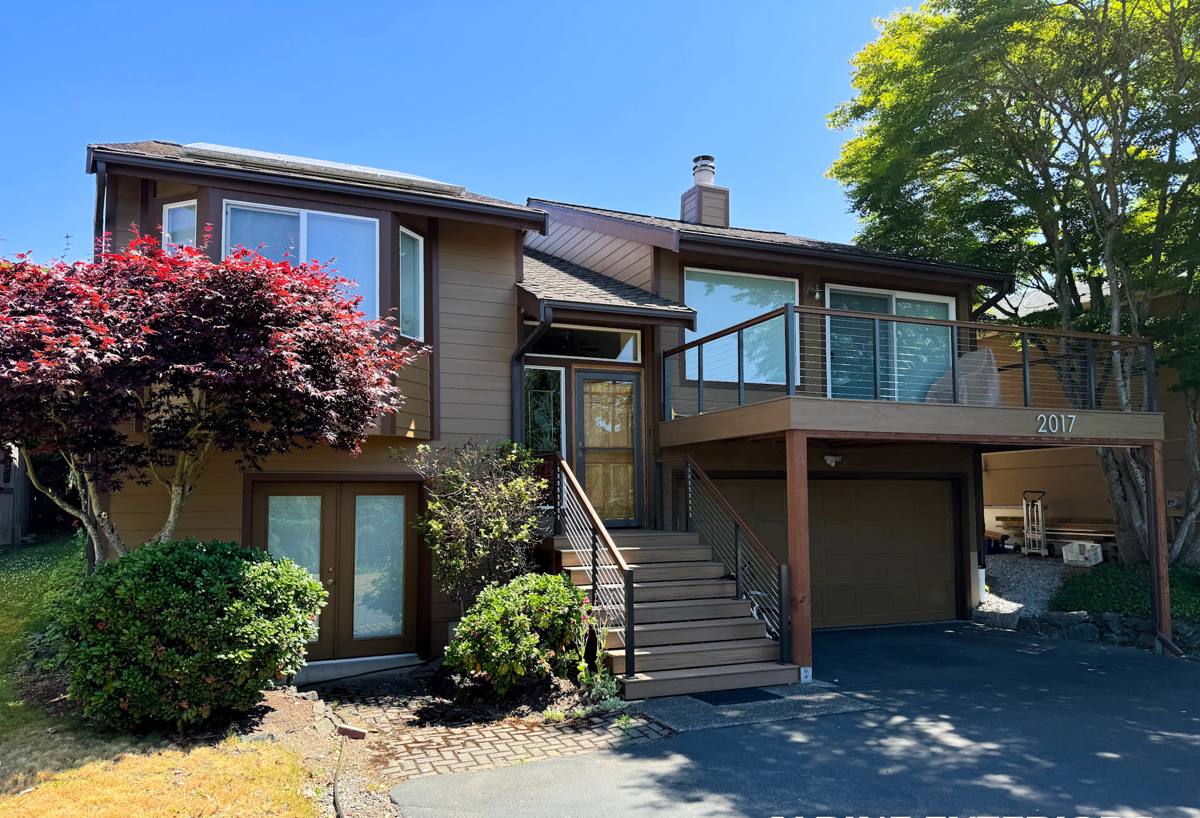
Common Roof Repair Issues We See Around Ferndale
Every region has its own repair pattern, and Ferndale's is shaped almost entirely by moisture and moss. The issues we're called out for most often include:
- Moss and algae buildup on north-facing and shaded slopes, where shingles stay damp longer and granules erode faster
- Lifted or cracked shingle tabs along ridges and eaves where wind-driven rain gets underneath the edge
- Failed flashing around chimneys, skylights, and roof-to-wall transitions — usually the first place a leak actually starts
- Clogged or sagging gutters that back water up under the first course of shingles during heavy rain
- Corroded fasteners and metal trim from long-term salt air exposure, especially on roofs facing open water or prevailing wind
- Soft or delaminating roof decking discovered only after a leak has been running for a while, often under moss mats that trapped moisture unseen
Individually, most of these are minor repairs. Left alone through a few more Whatcom County winters, several of them turn into deck replacement and interior repair — a different budget entirely.
What a Correct Roof Repair Actually Involves
A roof repair that actually holds up here is more than swapping a shingle and calling it done. It means understanding why that spot failed in the first place, so the fix doesn't just move the problem a few feet over.
Diagnosing the Real Cause, Not Just the Symptom
A stain on your ceiling doesn't always mark the spot where water is entering — water travels along rafters and decking before it shows itself inside. We trace leaks back to their actual source, checking flashing, underlayment condition, and decking integrity before deciding what needs to be opened up.
Flashing Comes First
Flashing failures cause more leaks than worn shingles do, especially around chimneys, vent pipes, skylights, and any place a roof plane meets a wall. Salt air accelerates corrosion in cheaper or improperly lapped flashing, so a proper repair means re-bedding or replacing flashing correctly — not just sealing over it with caulk, which is a temporary fix at best.
Matching Materials, Not Just Covering the Hole
Shingles fade and weather over time, so a patch using brand-new material next to a ten-year-old roof plane will always look mismatched, and mismatched color usually means mismatched profile too — which can affect how well it sheds water. We match as closely as the existing roof allows and are upfront when an older roof simply won't blend perfectly.
Checking the Decking Underneath
Any repair that's been leaking for a while gets a decking check. Soft, spongy, or delaminated plywood or OSB needs to be cut out and replaced before new shingles or underlayment go back down — shingling over compromised decking just guarantees a repeat visit.
Repair vs. Replace: How We Help You Decide
Not every roof problem in Ferndale needs a full replacement, and we don't push one when a solid repair will genuinely hold. The honest answer usually comes down to age, extent of damage, and how many separate issues are stacking up at once.
| Factor | Points Toward Repair | Points Toward Replacement |
|---|---|---|
| Roof age | Under 12–15 years, or recently replaced in sections | Nearing or past the material's expected service life |
| Damage extent | Isolated to one slope, flashing point, or a handful of shingles | Spread across multiple slopes or recurring in several spots |
| Decking condition | Solid, dry, no soft spots | Widespread soft or delaminated decking |
| Moss/algae history | Light, surface-level, hasn't compromised granules | Heavy, long-term buildup that's eroded shingle surfaces |
| Shingle availability | Reasonably close match still available | Discontinued color/profile, poor match likely |
Our estimates walk through where your roof lands on each of these before we recommend anything. If a repair genuinely covers it, that's what we quote.
Our Roof Repair Process, Start to Finish
- Inspection. We get on the roof (not just a ground-level look) and check the affected area plus flashing, valleys, and decking nearby.
- Diagnosis and honest estimate. You get a clear explanation of what's actually wrong, what it takes to fix it correctly, and a written price before any work starts.
- Prep and protection. Landscaping, gutters, and walkways near the work area get protected before we start removing anything.
- Removal of damaged material. Old shingles, failed flashing, and any compromised decking come out — not just papered over.
- Deck repair if needed. Any soft or rotted decking gets cut back to solid wood and replaced.
- Underlayment and flashing. New underlayment and properly lapped, sealed flashing go in before a single shingle is set.
- Shingle installation and matching. New material is installed and blended as closely as possible with the surrounding roof.
- Cleanup and final walkthrough. Job site debris and nails are cleared, and we walk the repair with you before calling it finished.
Materials and Products We Use, and Why
We're selective about materials for Ferndale roofs specifically because of the salt air and moisture load. Standard-grade fasteners and cheaper flashing metals corrode faster this close to the water, so we default to corrosion-resistant fasteners and properly gauged flashing metal even when it costs a little more upfront — it's a smaller bill now than a re-repair in three years.
For shingle repairs, we lean toward algae-resistant shingle products in moss-prone areas. These use a copper- or zinc-infused granule that slows algae and moss growth on the shingle surface — it doesn't make a roof moss-proof, since moss can still take hold in debris and shaded valleys, but it meaningfully extends the time between cleanings and repairs on the sections that stay shaded most of the year.
On flashing and valley work, we favor metal over cheaper alternatives in high-exposure areas, since it holds up better against the kind of wind-driven rain Whatcom County sees through the fall and winter. Underlayment gets upgraded to a self-adhering ice-and-water membrane at vulnerable points — valleys, eaves, and around penetrations — even on repair work, because that's where driving rain and wind-blown moisture find their way in first.
Roof Types Common to Ferndale Homes and Their Repair Needs
Ferndale's housing stock includes a mix of ages and roof types, and each one has its own repair quirks.
Composition (Asphalt) Shingle
The most common roof type in the area, and generally the most straightforward to repair well — provided the replacement shingles are matched properly and the flashing underneath gets addressed, not just the visible shingle damage.
Cedar Shake
Older Ferndale homes sometimes still carry cedar shake roofs. These require repair work that respects the material's specific moisture behavior — proper spacing for airflow and drainage matters more here than with asphalt, since shake that's repaired without that airflow tends to trap moisture and rot faster in a wet climate.
Metal Roofing
Less common but present on some homes and outbuildings. Metal roof repairs are almost always about fastener backouts, seam sealant failure, or panel damage rather than the panels themselves — and salt air makes fastener condition worth checking even when the panels look fine.
A Homeowner's Roof Health Checklist
Most roof problems in this climate give warning signs well before they become an active leak. A few minutes checking these from the ground or a ladder — never walk a wet or mossy roof yourself — can catch small issues early:
- Moss or dark streaking concentrated on north-facing or shaded roof slopes
- Shingle edges or tabs that look lifted, curled, or cracked, especially near eaves and ridges
- Granules collecting in gutters or at downspout outlets
- Rust streaks or visible corrosion around flashing, vent pipes, or metal trim
- Gutters that overflow during moderate rain instead of just heavy storms
- Any ceiling stain, even a small one, especially after a windy rainstorm
- Daylight visible through the roof deck from inside an unfinished attic
Finding one of these doesn't necessarily mean a big repair — it means it's time for a proper inspection before it becomes one.
Why a Crew That Already Works Ferndale Matters
A repair crew that works Whatcom County roofs regularly already knows which details actually matter here — where moss tends to build fastest, which flashing details fail first under coastal wind and rain, and which shingle products hold up and which ones struggle in this level of moisture exposure. That's the difference between a repair that gets diagnosed correctly the first time and one that gets re-opened next winter because the underlying cause was never addressed.
It also means someone who can get out to your property on a reasonable timeline when a leak shows up mid-storm season, and who's still around and reachable if a question comes up after the work is done. Local presence isn't a marketing line — it's what makes follow-through possible.
If you're dealing with a leak, moss buildup, or a roof that's just due for a look, we're glad to come out, get on the roof, and give you a straight answer about what it needs. The estimate is free, there's no pressure to sign anything on the spot, and you'll get a plain explanation of what we find — use the form below to get started.