 Birch Bay Siding
 Why Decks in Birch Bay Village Wear Differently
Birch Bay Village sits close enough to the water that salt air is a daily fact of life, not an occasional nuisance. Combine that with Whatcom County's long wet season, and a deck here is dealing with three things at once: salt-laden air working on metal fasteners and hardware, near-constant moisture pushing into any gap in the wood or coating, and enough shade and humidity in the cooler months to grow moss and algae on almost any horizontal surface. None of this is unique to any one deck design or material, but it does mean a deck built or repaired without that combination in mind tends to show problems years before it should.
We've worked on enough decks in this area to know the failure points aren't random. They cluster around the same few spots — ledger boards, fastener heads, the underside of boards where moisture sits, and railing posts that were never properly flashed. A good repair addresses those specific weak points, not just the board that happens to be visibly rotted or split.
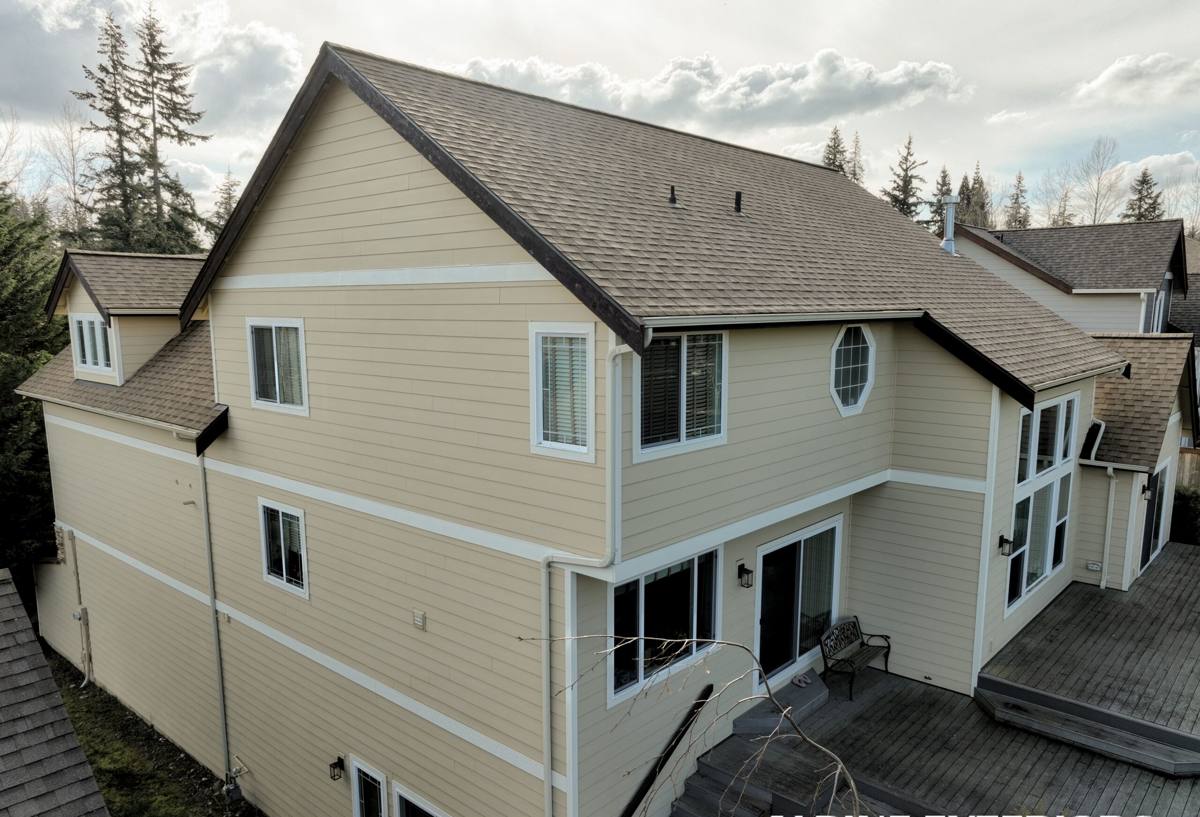
Signs a Birch Bay Village Deck Needs Attention
Most deck problems don't announce themselves loudly. They show up as small cues that are easy to write off as cosmetic. Worth checking for:
- Soft or spongy spots underfoot, especially near the house or around post bases
- Dark staining or streaking running down from fastener heads (a sign the metal is corroding)
- Persistent green or black film on boards that doesn't scrub off easily — often moss or algae that's gotten a foothold
- Gaps opening up between the deck and the house at the ledger board
- Railings or posts that flex or wiggle more than they used to
- Nails backing out or screw heads stripped and rusted in place
- Peeling or bubbling on stained or painted surfaces, particularly on the underside of the decking
Any one of these on its own might be minor. Several together, especially near the ledger or a support post, usually means the moisture and salt exposure have been working on the structure longer than the surface lets on.
The Problems We See Most Often Here
Ledger Board and Flashing Failures
The ledger board — where the deck attaches to the house — is the single most important structural connection on most decks, and it's also the most common failure point in this climate. If it wasn't flashed correctly when the deck was built, or if the flashing has degraded, water gets trapped between the ledger and the siding every time it rains. Over years, that hidden moisture rots the ledger from the inside, which is a structural problem, not a cosmetic one.
Fastener and Hardware Corrosion
Salt air accelerates corrosion on any metal that isn't properly rated for coastal exposure. Standard galvanized fasteners can start rusting and weakening well before the wood around them shows any wear. This is especially true for joist hangers and structural connectors, which take the full structural load but are hidden underneath the deck where nobody looks.
Moss, Algae, and Surface Breakdown
Whatcom County's long wet season gives moss and algae plenty of time to establish themselves, particularly on shaded decks or areas that don't dry out between rains. Beyond being slippery and unattractive, a persistent moss layer holds moisture against the wood surface, which speeds up rot and breaks down stain or sealant faster than normal weathering would.
Board Cupping, Splitting, and Delamination
Wood decking that repeatedly gets wet and dries out will cup, crack, and eventually split along the grain. Composite decking is more resistant to that specific failure but isn't immune to problems — some older composite products can delaminate or swell at the edges if water gets into a cut end or fastener hole that wasn't properly sealed during the original install.
What a Correct Deck Repair Actually Involves
A repair that only replaces the boards you can see often misses the reason those boards failed in the first place. Our approach starts with figuring out why the damage happened, then fixes the cause along with the visible symptom.
| Step | What We Check or Do | Why It Matters in This Climate |
|---|---|---|
| Structural inspection | Ledger connection, joists, beams, and post footings | Hidden rot at the ledger or footings is the most common cause of a deck that "feels off" |
| Flashing review | Ledger flashing and any point where the deck meets the house | Improper or degraded flashing is the top cause of hidden moisture damage here |
| Fastener condition | Joist hangers, structural screws, and connectors | Salt air corrodes standard hardware faster than inland installations |
| Board-by-board assessment | Sorting boards into keep, repair, and replace | Avoids paying to replace sound wood, or leaving rotted boards in place |
| Drainage and airflow | Gaps between boards, ground clearance underneath | Poor airflow underneath a deck is what lets moss and rot take hold |
| Sealant or coating | Reapplying or upgrading surface protection | A worn-out finish is often the first thing to fail and the easiest to prevent |
Repair or Replace? Weighing It Honestly
Not every deck problem calls for a full rebuild, and not every repair is worth doing if the underlying structure is compromised. We'll give you a straight answer based on what we actually find, not a sales pitch toward the bigger job.
| Factor | Favors Repair | Favors Replacement |
|---|---|---|
| Ledger board condition | Solid, flashed correctly | Rotted or improperly flashed |
| Extent of damage | Isolated boards or fasteners | Damage spread across most of the structure |
| Framing and footings | Sound, no soft spots | Soft, shifting, or undersized footings |
| Age of the deck | Newer, well-built structure with localized wear | Original build is old and was never built to current code |
| Your plans for the deck | Keeping the same size and layout | Wanting a different footprint, railing style, or added features |
In many cases in Birch Bay Village, we find the framing is in better shape than homeowners expect — it's the surface layer, fasteners, and flashing that took the hit. That's good news, because it usually means a repair can restore the deck without the cost of a full rebuild.
Materials and Why We Choose Them
For repair work in a salt-air, high-moisture environment, we lean toward stainless or coated fasteners rated for coastal exposure rather than standard galvanized hardware, even though it costs more up front. The reasoning is simple: hardware that corrodes is the single most common reason a "repaired" deck develops the same problem again within a few years, and hardware is far cheaper to get right the first time than to replace after it's buried under new decking.
For decking material itself, both quality wood and composite have a place, and the right choice depends on your budget, how the deck is used, and how much upkeep you want to take on. Wood is more affordable and easier to spot-repair board by board, but it needs regular sealing or staining to hold up against this much rain. Composite costs more initially and resists moisture and moss better, but it isn't maintenance-free — it still needs proper end caps, correct fastening, and drainage underneath to avoid the moisture-related issues that show up when it's installed carelessly. We'll walk you through the honest trade-offs for your specific deck rather than pushing one material as a universal answer.
Our Deck Repair Process
- On-site assessment — we get underneath and around the deck, not just look at the surface, to check framing, ledger, and fasteners.
- Clear scope and estimate — you get a plain explanation of what's failing, what we recommend, and why, with pricing before any work starts.
- Structural repairs first — ledger, flashing, framing, and hardware get addressed before any cosmetic work, since these are what the rest of the deck depends on.
- Board and railing work — damaged decking and railing components are replaced or repaired to match the existing structure as closely as possible.
- Finish and protection — sealing, staining, or coating as needed to protect the repair from Whatcom County's wet season going forward.
- Final walkthrough — we go over what was done and what to watch for so you're not guessing about maintenance afterward.
Maintaining Your Deck After Repair
A good repair holds up a lot longer with a small amount of regular attention, especially given how much moisture and salt this area sees over a year. A simple seasonal routine goes a long way:
- Sweep debris off the deck regularly so it doesn't trap moisture against the boards
- Rinse off salt residue and grime a few times a year, especially after storms
- Address moss or algae as soon as it appears rather than letting it establish
- Check fastener heads periodically for rust streaking or backing out
- Inspect the ledger area where the deck meets the house once a year
- Reapply sealant or stain on the schedule the product calls for, not just when it looks worn
- Keep gutters and downspouts near the deck clear so runoff isn't draining directly onto it
Why Local Experience Matters for This Work
Deck repair looks straightforward from the outside, but the failure patterns in Birch Bay Village are specific to this environment — the salt exposure, the rainfall totals, and the shaded, moss-prone conditions common to this part of Whatcom County. A crew that hasn't worked in coastal Washington conditions before may default to standard fasteners, skip a flashing detail that matters less inland, or miss early signs of corrosion because they're not used to looking for them. We've repaired enough decks in this specific area to know where the damage tends to start, which shortcuts don't hold up here, and what a repair actually needs to include to last through another wet season rather than needing attention again in a year or two.
If your deck in Birch Bay Village is showing soft spots, rust streaks, persistent moss, or just doesn't feel as solid as it used to, we're happy to take a look and give you a straightforward assessment. Use the form below to request a free, no-pressure estimate.