 Birch Bay Siding
 Bellingham's Climate Doesn't Go Easy on Siding
Homes in and around Bellingham sit in one of the wetter, damper corners of Washington. Whatcom County gets a long, marine-influenced rainy season, salt-laden air drifting in off Bellingham Bay and the Strait of Georgia, and enough overcast, moisture-holding weather each year to give moss and algae months to take hold on anything that stays damp. Siding here isn't decorative — it's the first line of defense against a climate that works against a house nearly year-round.
That combination — salt air, driving wind-driven rain, and a moss season that can run from fall through spring — is hard on siding materials that aren't built for it. Vinyl can warp and fade under UV and temperature swings, and its seams give water a path inward. Wood needs paint and caulk maintained on a strict schedule or it starts absorbing moisture at the grain. Cheaper fiber cement or composite panels that aren't engineered for coastal exposure can fail at the edges and fastener points years before they should. We install James Hardie fiber cement siding on Bellingham homes because it's the one product line built specifically to hold up to this kind of exposure, and we install nothing else.
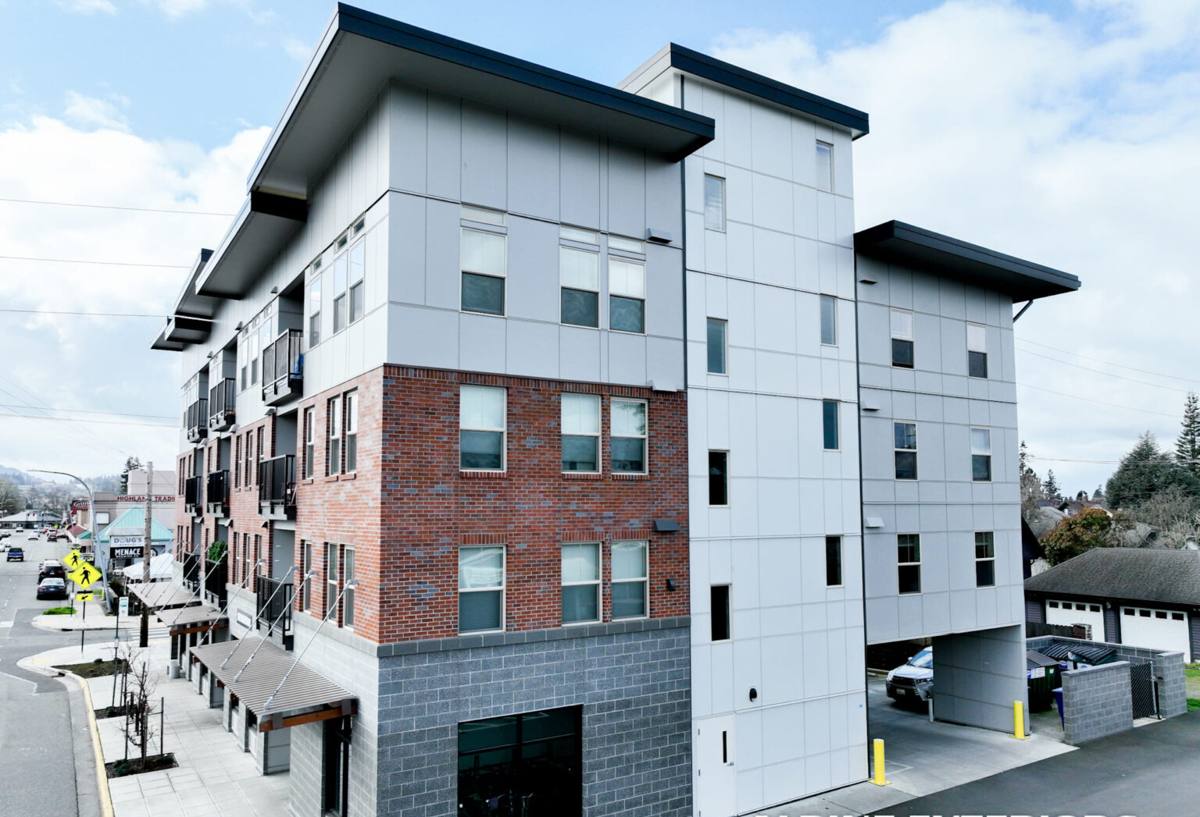
Why We Standardized on James Hardie for This Region
We don't install LP SmartSide, vinyl, Cemplank, Allura, primed spruce, or cedar. Each of those has a place somewhere, but for the salt air and sustained moisture Bellingham and Birch Bay homes deal with, we've found the trade-offs aren't worth it — moisture-sensitive substrates, seam-dependent water management, or maintenance schedules that most homeowners can't realistically keep up with. James Hardie fiber cement is non-combustible, dimensionally stable in wet-dry cycling, and backed by a product line built specifically for wet coastal climates.
The HZ5 Engineered Line
James Hardie engineers its siding by climate zone, and the Pacific Northwest falls into the HZ5 category — the line built for regions with sustained moisture exposure and freeze-thaw cycling. HZ5 boards are formulated to resist moisture absorption and cracking better than a generic, one-size-fits-all fiber cement product, which matters when a house is going to sit through eight or nine months of damp weather every year.
ColorPlus Factory Finish
Most Hardie siding we install carries the ColorPlus finish — a multi-coat, baked-on finish applied at the factory rather than brushed or sprayed on site. It resists fading and chipping far better than field-applied paint, and because it's cured under controlled conditions rather than exposed to the site's humidity during application, it holds up better through Bellingham's damp stretches. Fewer repaint cycles also means fewer chances for moisture to work into the substrate at touch-up points.
What Salt Air and Moss Actually Do to a Siding System
Salt air accelerates corrosion on anything metal — fasteners, flashing, trim caps — long before it visibly affects the siding panel itself. Once a fastener starts corroding, it loses holding strength and can allow small amounts of water behind the board, which starts the clock on hidden rot in the sheathing. Moss and algae need two things to establish themselves: moisture and something to hold onto. A siding system with tight seams, correct clearances, and a working drainage plane behind it dries out between rain events. One that traps moisture at the bottom edge, around trim, or behind panels stays damp long enough for growth to take hold and spread.
None of this is a reason to avoid siding altogether — it's a reason to be precise about the details most homeowners never see once the job is finished.
Climate Challenge vs. What Correct Installation Does About It
| Local Condition | What It Does to Siding | What a Correct Install Addresses |
|---|---|---|
| Salt air off Bellingham Bay | Accelerates corrosion on fasteners, flashing, and trim | Corrosion-resistant fasteners and flashing rated for coastal exposure |
| Driving, wind-blown rain | Pushes water past seams and under-lapped joints | Correct overlap, sealant only where specified, and a functioning drainage plane |
| Long moss and algae season | Growth takes hold anywhere moisture lingers | Proper clearance from grade, roofing, and decks so panels can dry between rains |
| Repeated wet-dry cycling | Stresses seams and fastener points over years | HZ5-rated boards engineered for dimensional stability in this cycle |
Hardie Product Options That Fit Bellingham Homes
James Hardie makes more than one profile, and picking the right one for a given wall or elevation is part of doing the job correctly rather than defaulting to whatever is easiest to install.
HardiePlank Lap Siding
This is the most common choice for a full re-side and the closest match to a traditional lap-siding look. It comes in several width and texture options and is what most Bellingham homes end up with for their primary walls.
HardiePanel and Board-and-Batten
Vertical panel siding gives a more modern or craftsman look and is often used on gables, accent walls, or newer construction. It sheds water differently than horizontal lap siding, which changes how the flashing and seams need to be detailed.
HardieShingle
Used for accent areas — gables, dormers, and similar detail work — rather than as a whole-house product in most cases. It gives a shingle-style look without the maintenance burden of actual wood shingles in a climate this damp.
What a Correct James Hardie Installation Actually Involves
The siding itself is only part of the system. A correct Hardie installation on a Bellingham home involves several layers most people never think about until something goes wrong.
Behind the Boards
A weather-resistant barrier and, in most cases, a drainage plane go on before a single piece of siding is hung. This is what lets any moisture that does get past the outer layer drain and dry out instead of sitting against the sheathing. Skipping or shortcutting this step is one of the most common ways a siding job fails years later, even if the panels themselves look fine.
Fastening and Clearances
James Hardie publishes specific fastener types, spacing, and penetration depths, and specific minimum clearances from grade, roof lines, decks, and other siding-to-trim intersections. In a climate like this one, those clearances aren't a suggestion — they're what keeps splash-back and standing moisture away from the bottom edge of the siding, which is the spot most prone to trapped water and moss growth.
Flashing and Sealant
Flashing goes above every window, door, and horizontal trim break, directing water outward instead of behind the wall assembly. Sealant is used only at the specific joints James Hardie calls for — not as a blanket fix for every seam, which actually traps moisture rather than shedding it.
Warranty Protection That Actually Follows the House
James Hardie backs its siding with a long-term limited warranty, and the ColorPlus finish carries its own separate finish warranty on top of that. Unlike field-applied paint, that finish warranty holds up because the color is baked on under controlled factory conditions rather than applied on site, where humidity and temperature swings affect how well paint cures. The warranty is also transferable if the home sells, which is worth something in a market where buyers ask what exterior work has been done and what coverage is still active.
None of that protection means much if the installation doesn't follow James Hardie's published specifications — an installation error can void manufacturer warranty coverage even when the siding material itself is sound. That's a direct reason we follow the fastening, clearance, and flashing specifications exactly rather than treating them as optional on jobs in this climate.
Our Process for Bellingham Homes
We start with an on-site assessment of the existing siding and the wall assembly behind it, because what's happening underneath drives every decision that follows.
- We check for hidden moisture damage in the sheathing and framing before quoting the job, so there are no surprises once the old siding comes off.
- We confirm the right Hardie product for the specific elevation and exposure — a wall facing prevailing wind and rain off the water may call for different detailing than a sheltered side of the house.
- We install the weather-resistant barrier and drainage plane to spec, not as an afterthought.
- We hang, fasten, and flash the siding to James Hardie's published installation requirements — the same requirements that keep the manufacturer's warranty intact.
- We walk the finished job with the homeowner and go over what basic upkeep, if any, is needed going forward.
What Drives Cost on a Bellingham James Hardie Project
Every house is different, but the same handful of factors tend to move the price up or down on jobs in this area:
| Factor | Why It Matters |
|---|---|
| Removal of existing siding | Tear-off, disposal, and any sheathing repair found underneath add labor before new siding goes up |
| Home size and wall complexity | More corners, gables, and trim breaks mean more cutting, flashing, and detail work |
| Product selection | Lap siding, panel siding, and shingle-style Hardie products carry different material and labor costs |
| Exposure and elevation | Walls taking the brunt of wind-driven rain off the water often need more careful flashing and clearance work |
| Trim and accessory scope | Corner boards, fascia, and soffit work done alongside the siding affects total project scope |
We give straightforward, no-pressure quotes based on what we actually find at your house — not a generic per-square-foot number that ignores what's happening behind the old siding.
Signs Your Current Siding Is Already Losing the Fight
- Dark streaking, green or black growth that returns shortly after cleaning
- Soft or spongy spots when you press on the siding near the bottom edge or under windows
- Visible gaps, warping, or panels that have pulled away from the wall
- Paint that's peeling or bubbling rather than just fading
- Rust staining running down from fasteners or trim
- Persistent musty smell along an exterior wall inside the house
Any one of these is worth a look before it turns into a repair to the wall assembly underneath, not just the siding.
Why Hiring a Crew That Already Works Bellingham Matters
Siding installation isn't uniform across Washington. A crew used to installing in a dry inland climate can do a technically fine job on paper and still miss the details that matter here — clearance heights, flashing at horizontal joints, and fastener selection that accounts for salt air. We work Birch Bay, Bellingham, and the rest of Whatcom County's coastal communities regularly, which means we're not guessing at how this climate treats a wall assembly over ten or twenty years — we've seen it firsthand and build accordingly.
If you're weighing a siding replacement or want a second opinion on what's already on your house, we're happy to take a look. Request a free, no-pressure estimate below and we'll walk the property with you and give you a straight answer on what your home actually needs.