 Birch Bay Siding
 Siding Repair on Semiahmoo Isn't a One-Size-Fits-All Job
Semiahmoo sits out on the spit near Blaine, with water on more than one side and almost nothing to break the wind before it hits a house. Homes there take on salt air, driving rain, and a long moss season harder than most properties even a few miles inland in Whatcom County, and that shows up first in the siding. A repair call on Semiahmoo is rarely just "replace the cracked piece and move on" — the same exposure that damaged the original section is still there, and a repair that doesn't account for it just buys a homeowner a shorter repeat of the same problem.
We do siding repair work specifically around Semiahmoo on a regular basis, and we treat every call as a chance to find out why the damage happened, not just to patch what's visible. That distinction matters more here than it does on a sheltered inland lot.
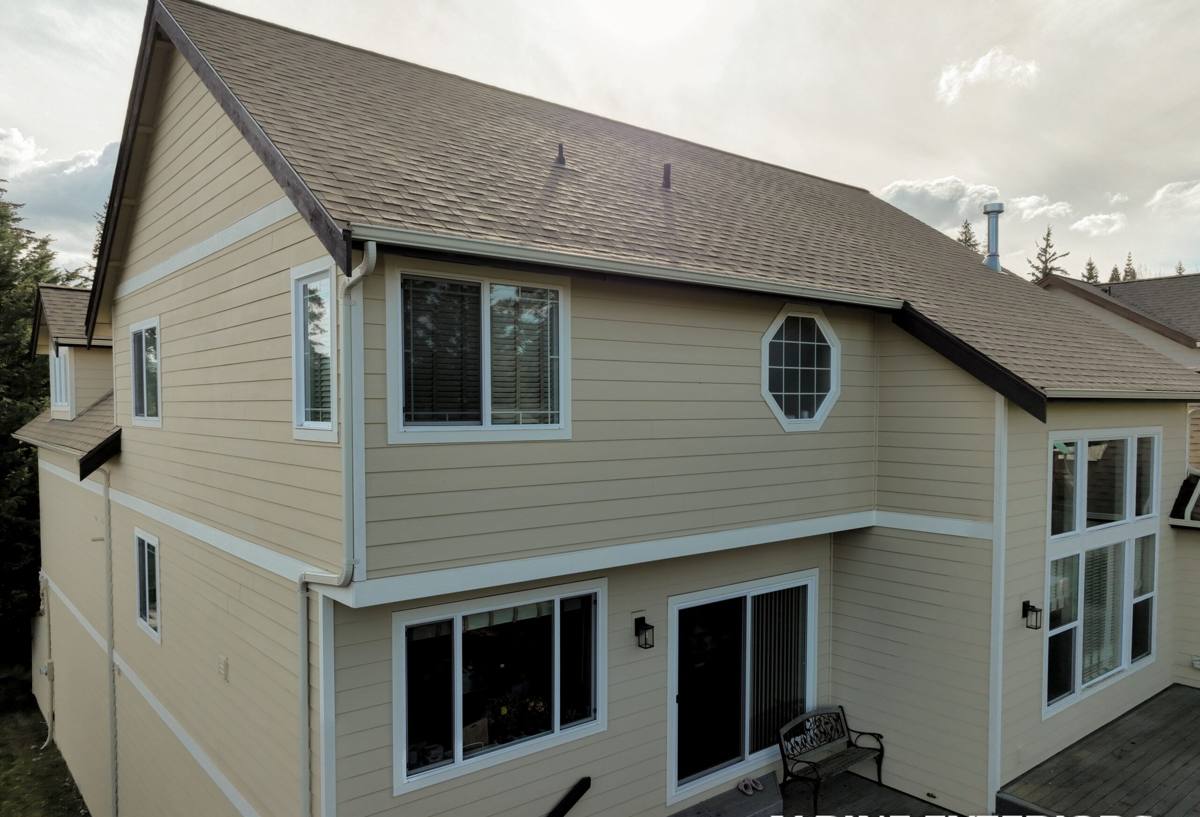
What Salt Air, Driving Rain, and Moss Do to Siding Here
Salt Air Accelerates the Small Failures
Because Semiahmoo has water exposure from more than one direction, salt-laden air reaches siding, fasteners, and trim from angles a typical inland property never sees. Salt speeds up corrosion in nails, screws, and metal flashing, and it breaks down lower-quality caulks and finishes faster than a drier site would. A repair that reuses corroded fasteners or skips corrosion-resistant hardware is a repair that's already on a shorter clock.
Driving Rain Finds the Gaps
With open wind and almost no windbreak, rain on the spit gets pushed sideways into laps, joints, and trim intersections instead of just falling straight down. That's a heavier moisture load than the region's overall rainfall would suggest. A lot of the siding repair calls we get on Semiahmoo trace back to a joint, a piece of trim, or a flashing detail that was fine under normal rainfall but failed under sustained wind-driven rain.
A Moss Season That Runs Most of the Year
Mild temperatures and near-constant humidity keep moss and mildew active across most of the calendar in this part of Whatcom County, and shaded, north-facing walls on Semiahmoo properties tend to hold onto it longest. Moss itself doesn't cause structural damage to fiber cement the way it can to a roof, but it holds moisture against the surface, and on any porous or damaged siding section, that constant dampness accelerates whatever failure is already underway.
Common Reasons We Get Called Out for Siding Repair on Semiahmoo
- Impact damage — from storm debris, falling branches, or accidental contact — that's cracked or dented a section of siding
- Failed caulking at trim, corner boards, or window and door surrounds that's let water behind the siding plane
- Fastener corrosion causing panels to work loose or show rust streaking
- Moisture staining or soft spots near the base of walls, often where siding sits too close to grade or a deck
- Faded or chalking paint on older, non-factory-finished siding that's lost its protective layer
- Gaps or separation at seams and joints where wind-driven rain has been getting behind the assembly
Some of these are cosmetic and isolated. Others are a visible symptom of a moisture problem that's already working its way into the wall assembly behind the siding. Part of a proper repair visit is telling the difference between the two before any work starts.
Repair or Replace: How We Actually Make That Call
Not every damaged section needs a full re-side, and not every visible crack is a quick fix. The right call depends on how much of the wall is affected, what's happening behind the siding, and how the existing material has held up overall.
| What We Find | What It Usually Means | Typical Direction |
|---|---|---|
| Isolated impact damage, sound siding elsewhere | Localized panel failure, surrounding material still performing | Targeted repair |
| Failed caulking or trim gaps with no interior staining | Caught before moisture reached the wall assembly | Repair the joint, reseal, monitor |
| Soft sheathing or staining found behind removed siding | Moisture has been getting into the wall for some time | Repair scope expands to address the wall assembly, not just the panel |
| Widespread fading, chalking, or fastener corrosion across most of the house | Original material or finish reaching the end of its service life | Full re-side usually makes more sense than repeated repairs |
We walk homeowners through which category their situation falls into and why, rather than defaulting to whichever option is more profitable for us. On an exposed Semiahmoo property, that assessment carries more weight than it would elsewhere, because the same exposure that caused the original damage will keep testing whatever gets put back.
What a Correct Siding Repair Actually Involves
A repair that just swaps in a matching piece of siding and re-caulks the edges can look fine for a season and still fail the same way again. Doing it right on a Semiahmoo property means addressing the conditions behind the visible damage, not just the surface.
- Removing enough surrounding material to inspect the sheathing and house wrap behind the damaged section, not just the piece that's visibly cracked
- Repairing or replacing any compromised flashing, house wrap, or drainage detailing found underneath before new siding goes back on
- Using corrosion-resistant fasteners appropriate for a salt-air, waterfront exposure
- Matching panel profile, reveal, and finish as closely as the original installation allows
- Properly lapping and sealing new joints so wind-driven rain can't get behind them the way it did before
Skipping the inspection step is the most common shortcut we see from repairs done elsewhere — a new piece of siding goes over the same compromised flashing or damaged sheathing that caused the original failure, and the homeowner is back to square one within a year or two.
Why We Only Work With James Hardie Siding — Repairs Included
We install James Hardie fiber cement exclusively, and that standard carries through to repair work. We don't install LP SmartSide, vinyl siding, Cemplank, Allura, primed spruce, or cedar, and if an existing home is sided in one of those products, we'll be straightforward about what a repair can and can't accomplish on that material rather than pretending it performs the same way Hardie does.
- Non-combustible core: Fiber cement doesn't feed a fire the way wood-based siding products can, which matters for both safety and, in many cases, insurance underwriting.
- Factory-applied ColorPlus finish: Color is baked on under controlled factory conditions rather than brushed on in the field, so a well-matched repair section holds its color far longer than field-painted patches do.
- Climate-engineered HZ product lines: Hardie's HZ5 formulation is built for regions with heavy moisture exposure and freeze-thaw cycling, which fits waterfront Whatcom County well.
- Dimensional stability: Fiber cement doesn't swell, cup, or warp the way engineered wood products can after repeated wetting, which makes long-term panel matching more reliable.
- Strong transferable warranty: Hardie backs its product with a substantial warranty structure, as long as installation and repair work follow their spec.
Each of the products we don't install has a legitimate place in the market and homeowners who are satisfied with it elsewhere. Our position is simply that on an exposed, salt-air property like Semiahmoo, we'd rather stand fully behind one system — including how we repair it — than mix materials or methods that shift long-term maintenance risk back onto the homeowner.
Our Process for a Semiahmoo Siding Repair Call
We start with an on-site look at the damaged area and enough of the surrounding wall to understand whether the problem is isolated or connected to something bigger — flashing, drainage, or a wider finish failure. From there we give a clear, written scope covering what we found, what we recommend, and why, before any work begins. If the repair turns up moisture damage behind the siding, we tell the homeowner before opening things up further, not after the invoice arrives. Once work starts, we treat proper flashing, corrosion-resistant fasteners, and correctly lapped joints as standard practice for this kind of exposure, not optional add-ons.
A Checklist Before Hiring for Siding Repair Near Semiahmoo
- Ask whether they'll inspect behind the damaged siding, not just replace what's visible
- Confirm they carry current Washington contractor licensing and active liability insurance
- Ask what fastener and hardware corrosion resistance they use for salt-air, waterfront exposure
- Ask how they'll match panel profile and finish to your existing siding
- Get a written scope of work — including what happens if they find moisture damage once the old siding is off
Why a Crew That Already Works Semiahmoo Matters for Repair Work
A contractor who regularly works this stretch of the Whatcom County coastline already has a feel for how salt air, open wind, and prolonged moisture behave differently here than even a few miles inland in Blaine. That familiarity shows up directly in repair decisions — which fastener grade to use, how much surrounding material to open up for inspection, where extra flashing or drainage detailing is worth adding while the wall is already open. Those are exactly the calls that determine whether a repair holds for the long haul or shows the same damage again after the next wet season.
If you've got a section of siding on a Semiahmoo home that's cracked, staining, or coming loose, we're glad to take a straightforward look and tell you honestly whether it's a targeted repair or something bigger. Reach out below for a free, no-pressure estimate.