 Birch Bay Siding
 Siding Installation in Sumas: What the Climate Actually Does to a Home
Sumas sits inland from the water we work along every day out of Birch Bay, but the siding on a Sumas home is fighting the same fundamental enemy as everywhere else in Whatcom County: moisture that never really goes away. Long stretches of driving rain, low winter sun angles, and heavy shade from mature trees keep exterior walls damp for days at a time. That dampness is what feeds the county's long moss and algae season, which can run from late fall well into spring on north- and west-facing walls that don't get much direct sun to dry out.
Our crew also works the immediate coastline around Birch Bay, where salt-laden marine air adds another layer of stress to exterior materials — corroding fasteners, breaking down cheap coatings, and accelerating wear on anything not built for it. Sumas doesn't sit on the water, so it isn't dealing with direct salt spray, but it shares the same marine-influenced, humid Pacific Northwest air mass, and it deals with its own version of the same core problem: siding that stays wet longer than it should, and finishes that weren't built to handle that.
None of this is exotic. It's just relentless. A siding material or installation detail that would be perfectly fine in a dry climate can fail here in a fraction of the time if it wasn't chosen or installed with this weather pattern in mind.
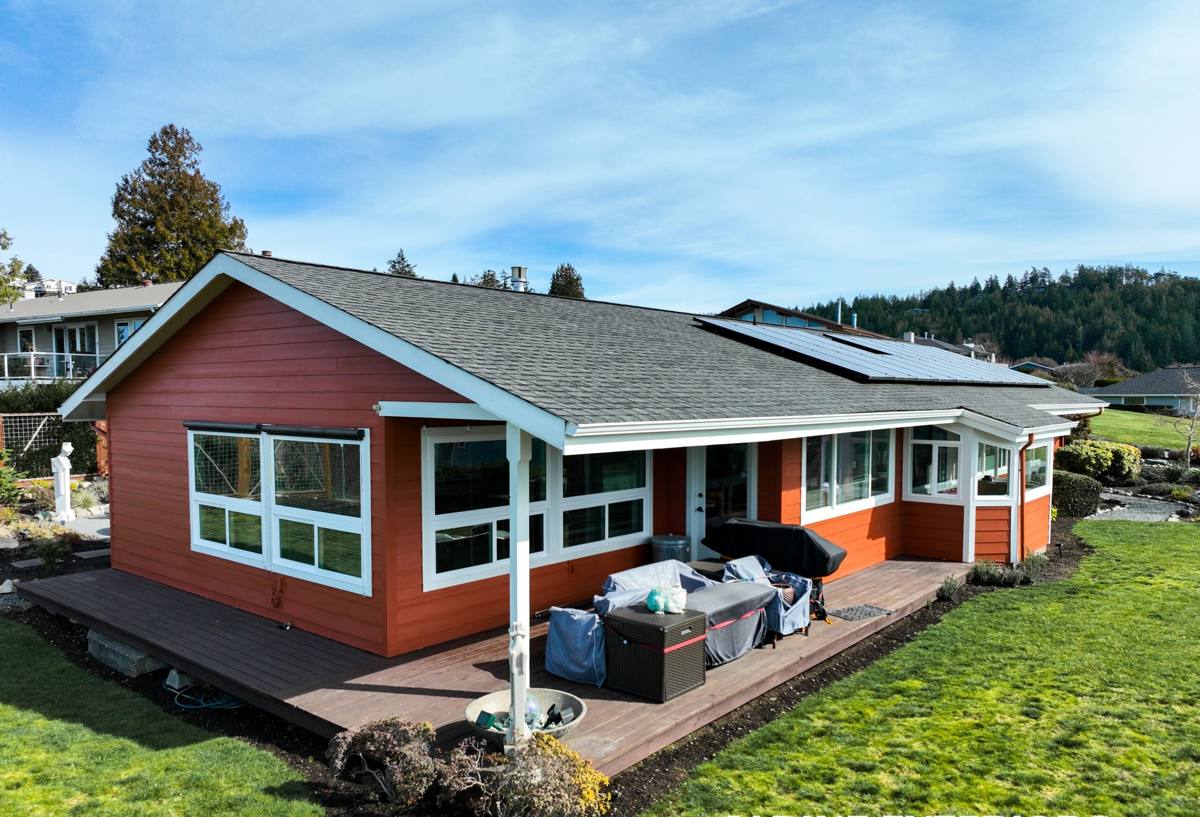
Why Local Homes Need More Than a Standard Install
A siding job that looks fine on day one and a siding job that still looks fine in year fifteen usually come down to the same handful of details, and in a climate like this those details matter more than they would somewhere drier. Water management behind the siding, correct fastening, and product selection all carry more weight here because the margin for error is smaller — moisture finds any gap, seam, or fastener hole that wasn't sealed correctly, and it doesn't take long to find it in a place that sees this much rain.
Moss and algae growth is mostly cosmetic on a well-built wall, but it's also a signal. A wall that's staying wet enough to grow moss quickly is a wall that's staying wet enough to eventually cause bigger problems underneath, especially where siding meets trim, windows, or the ground.
What This Means in Practice
- Weather-resistant barriers and flashing details need to actually shed water downward and outward, not just be present
- Fastener placement and clearances need to follow the manufacturer's spec exactly, not "close enough"
- Factory-applied finishes hold up to humidity and shade far better than field-applied paint
- Ground clearance and drainage around the base of the wall matter as much as the siding itself
Why a Birch Bay-Based Crew Working Sumas Makes a Difference
Siding installation isn't a one-size-fits-all trade. A crew that mostly installs in dry inland climates learns habits that don't translate well to Whatcom County. A crew that works this specific region — coastal Birch Bay out to inland communities like Sumas — sees the same failure patterns repeatedly: siding that trapped moisture behind it, caulk joints that failed within a few years, finishes that faded or chalked from constant damp shade, and fastener corrosion in places that never fully dry out.
That repetition is useful. It means the crew showing up at a Sumas home already knows which details can't be skipped, which manufacturer specs actually matter in this climate, and where the previous siding on a similar home probably failed. It also means a shorter distance to travel for warranty follow-up, punch-list items, or a quick look if something seems off after a big storm — all things that matter more with an exterior product that's supposed to last decades, not years.
What a Correct Fiber Cement Installation Actually Involves
Water Management Comes First
Before a single piece of siding goes up, the wall needs a continuous weather-resistant barrier with properly lapped and taped seams, and flashing integrated at every window, door, and horizontal trim transition so water is directed out and away from the sheathing rather than trapped behind the cladding. This is the step that determines whether a house stays dry for the next 30 years or develops hidden rot in five.
Fastening and Clearances
Fiber cement siding has specific nailing patterns, fastener types, and minimum clearances from the ground, roofline, and other surfaces. Getting this wrong doesn't usually show up right away — it shows up as cracking, buckling, or moisture intrusion years later, after it's expensive to fix.
Joints, Caulking, and Trim
Butt joints, corners, and trim transitions are where most siding failures start. Correctly sized gaps, the right sealant for a fiber cement product, and factory-mitered or properly flashed corners all reduce the number of places water can get behind the assembly in the first place.
Why We Install Only James Hardie Fiber Cement
We don't install vinyl, LP SmartSide, primed spruce or cedar, or other fiber cement brands. That's not a marketing position — it's a standard we hold ourselves to because of what we've seen this climate do to exteriors over time. Vinyl can warp and fade, and its seams give moisture an easy path in a climate this wet. Wood and wood-based composite products need diligent, ongoing maintenance to keep moisture out, and in a region with this much shade and rain, that maintenance schedule is unforgiving.
James Hardie fiber cement is non-combustible, dimensionally stable in wet-dry cycling, and available in HZ5 formulations engineered specifically for climates like the Pacific Northwest. The factory-applied ColorPlus finish is baked on under controlled conditions, which holds color and resists the fading, chalking, and moisture damage that field-applied paint struggles with under constant humidity and shade — exactly the conditions Sumas and the rest of Whatcom County deal with for much of the year. It also carries a strong, transferable manufacturer warranty when installed to spec, which matters on a product that's supposed to be a decades-long investment, not a five- or ten-year one.
Our Installation Process
- On-site assessment — we look at existing siding, wall assemblies, moisture history, and any problem areas specific to the home before recommending anything
- Product and color selection — choosing the right Hardie plank, panel, or shingle profile and ColorPlus finish for the home
- Tear-off and inspection — removing old siding and inspecting the sheathing underneath for hidden rot or moisture damage before it gets covered up again
- Weather barrier and flashing installation — the step that determines long-term performance more than any other
- Siding installation to manufacturer spec — correct fastening, clearances, and joint treatment throughout
- Trim, caulking, and final detailing — the finishing work that keeps water out of vulnerable transition points
- Final walkthrough — reviewing the completed work with the homeowner before we consider the job done
Signs a Sumas Home Might Need New Siding
- Persistent moss, algae, or mildew that comes back quickly after cleaning
- Soft spots, warping, or visible cracking in siding panels
- Peeling or bubbling paint, especially on shaded or north-facing walls
- Rising energy bills that suggest failing insulation or air sealing behind the siding
- Visible gaps at joints, corners, or trim where water could be getting behind the wall
- Siding that's original to a home built more than 20-25 years ago
Cost Factors for a Sumas Siding Project
Every home is different, but the same variables drive cost on almost every siding project in this area. Broad honest ranges depend heavily on home size, existing condition, and complexity of the trim work.
| Factor | Why It Affects Cost |
|---|---|
| Home size and wall square footage | More surface area means more material and labor |
| Existing siding removal and disposal | Tear-off adds labor and hauling costs over a fresh install |
| Sheathing repair or replacement | Hidden moisture damage found during tear-off has to be fixed before new siding goes on |
| Number of stories and roof lines | More cutting, staging, and complex flashing details around dormers or multiple gables |
| Trim and detail work | Corner boards, window trim, and fascia detail add labor time |
| Siding profile and finish selection | Different Hardie profiles and ColorPlus finishes carry different material costs |
Living With Fiber Cement Siding in a Wet, Shaded Climate
One advantage of a correctly installed Hardie system in a climate like this is how little ongoing maintenance it actually needs compared to wood or vinyl. It won't rot, and the factory finish resists the fading and chalking that plagues field-painted surfaces in constant humidity. That said, moss and algae can still form on the surface over time, the same way it forms on roofs, fences, and decks throughout the county — it's a function of shade and moisture, not a defect in the siding. Periodic gentle washing keeps it looking right, and because the color is baked into the product rather than painted on top, it holds up to that cleaning far better than a painted surface would.
If you're weighing a siding replacement for a Sumas home, we're happy to take a look and give you a straightforward, no-pressure estimate — no invented urgency, just an honest read on your home's current siding and what it would take to do the job right. The form below gets you started.