 Birch Bay Siding
 Building a Deck That Holds Up in Sumas's Climate
A deck in Sumas has to earn its keep in a different way than a deck built somewhere dry. Whatcom County sees long stretches of wet weather every year, and that moisture doesn't just fall from the sky and go away — it sits in shaded corners, soaks into end grain, and works its way into any gap a builder left unsealed. Add in a moss season that can stretch from fall through spring, and a deck that wasn't built with drainage and material choice in mind will show it within a few years: soft boards, green film on the walking surface, and fasteners that have started to bleed rust into the wood around them.
We build decks for this climate specifically, not decks that happen to be located here. That distinction shows up in the footings, the flashing, the fastener spec, and the spacing between boards — details that don't matter much in a dry climate but matter a great deal in ours.
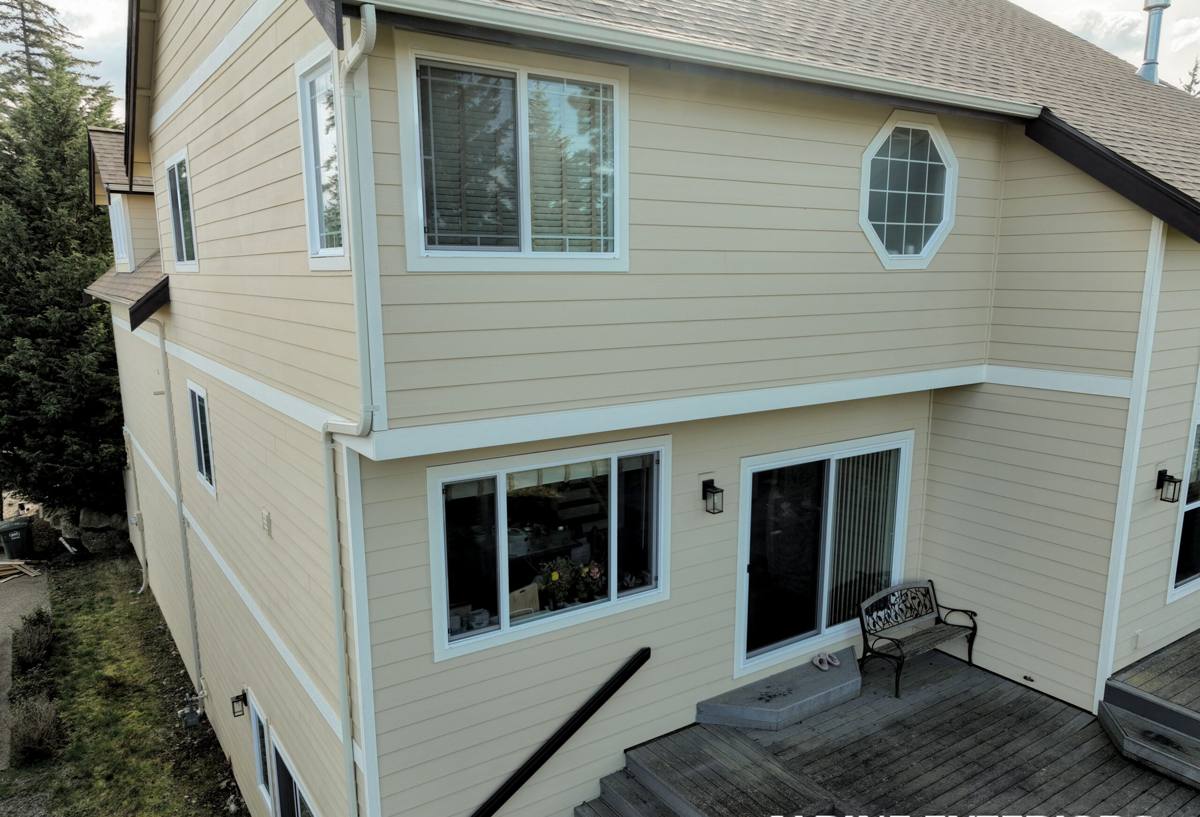
What Makes a Sumas Deck Different From a Coastal Build
Valley Wind and Cold Snaps
Sumas sits inland, at the base of the Fraser Valley, and that geography matters. When cold air pools on the Canadian side in winter, it can funnel south through this valley as sustained, gusty wind — stronger and more persistent than what you'd feel closer to the water. A deck built here needs solid blocking, properly rated fasteners at the railing posts, and framing connections that won't work loose under repeated wind load over the years.
Moisture Without the Salt Spray
Unlike a deck right on Birch Bay's shoreline, a Sumas deck isn't fighting direct salt spray. But it's still part of a broader Whatcom County climate where damp, marine-influenced air rolls in off the Salish Sea and settles into inland valleys, keeping humidity high and drying times slow. The practical result is similar to a coastal deck's: wood stays wetter longer, moss and algae get a foothold faster, and any design detail that traps water instead of shedding it becomes a maintenance headache.
Choosing a Decking Material That Fits the Climate
There's no single "best" decking material — there's a best material for your budget, your maintenance appetite, and how much sun or shade the deck actually gets. Here's how the common options compare for a build in this area.
| Material | Moisture Behavior | Maintenance | General Cost Range |
|---|---|---|---|
| Pressure-treated wood | Resists rot when properly sealed and maintained; end cuts and fastener holes are the weak points | Needs cleaning and a fresh sealer or stain every 1-3 years | Lowest upfront cost |
| Cedar | Naturally rot- and insect-resistant, but still needs finish maintenance to hold its color and stay sealed | Regular cleaning and refinishing, similar cycle to pressure-treated | Mid-range |
| Composite / PVC decking | Doesn't absorb water into the board itself; moss and algae still grow on the surface film if it's not cleaned | No staining or sealing, but still needs periodic washing to stay slip-safe | Higher upfront cost |
Homeowners who want the lowest long-term maintenance tend to lean composite. Homeowners who want a traditional wood look and don't mind a maintenance schedule often stick with cedar or pressure-treated. Either choice can hold up well here — the failures we see almost always trace back to installation shortcuts, not the material itself.
What a Correctly Built Deck Actually Involves
Footings Below Frost Depth
Every post footing needs to be set deep enough to sit below the local frost line and bear on undisturbed, stable soil. Skipping this, or pouring a shallow footing on fill dirt, is how decks end up with heaving posts and a bouncy, uneven feel a few winters in.
Ledger Board Flashing
Where a deck attaches to the house, the ledger board is the single most common source of hidden rot — both in the deck and in the house's own wall framing behind it. Proper flashing, with the right lap order and a gap for water to drain away from the house, is not optional. This is one detail that's genuinely hard to verify after the fact without pulling boards, so it has to be done right the first time.
Joist Spacing and Airflow
Tighter joist spacing than the material's minimum spec adds stiffness and reduces bounce, but the framing also needs enough clearance underneath for air to move and moisture to evaporate. A deck built too close to the ground, with no ventilation path, stays damp longer after every rain — which is exactly the condition moss and rot need.
Fasteners and Hardware
Coated or stainless-rated screws and structural connectors matter more here than in a dry climate. Standard hardware that isn't rated for treated lumber contact or persistent moisture will corrode and stain the decking around it well before the wood itself has a problem.
Permits, Codes, and Guardrail Requirements
Most decks attached to a house, and many freestanding decks above a certain height, require a permit from Whatcom County or the applicable local jurisdiction. Requirements typically cover things like footing depth, guardrail height on any deck surface elevated above a certain point, baluster spacing (to keep small children from squeezing through), and stair rise-and-run dimensions. We pull permits as part of the job and build to current code rather than to whatever the neighbor's deck happens to look like — code exists because these are the failure points that hurt people when they're ignored.
Cost Factors for a Custom Deck in Sumas
Every deck quote is different, but the same handful of variables drive most of the cost difference between two decks of a similar size.
| Factor | Why It Moves the Price |
|---|---|
| Decking material | Composite and PVC cost more upfront than pressure-treated wood but need less ongoing maintenance |
| Height off grade | Taller decks need deeper footings, more framing, stair complexity, and code-required guardrails |
| Site access and grading | Sloped or hard-to-access lots take more labor to excavate footings and move materials |
| Railing style | Cable, glass, or custom metal railing costs more than standard wood or composite balusters |
| Attached vs. freestanding | Attached decks need ledger flashing work tied into the existing house; freestanding decks need their own full support structure |
Our Process, Start to Finish
- On-site assessment — we look at grade, drainage, sun and shade exposure, and how the deck will tie into the house before recommending anything.
- Design and material selection — layout, size, and decking/railing material chosen around your budget and how you'll actually use the space.
- Permitting — we handle the permit application and code review so you're not chasing paperwork.
- Footings and framing — footings poured below frost depth, framing built to spec with proper joist spacing and blocking.
- Decking, railing, and finish work — boards installed with correct spacing for drainage and seasonal movement, railings set to code height.
- Final walkthrough — we go over the finished deck with you, including how to care for the specific material you chose.
Deck Maintenance Checklist for Sumas Homeowners
A well-built deck still needs some seasonal attention in this climate. This is the short list we give every customer:
- Sweep debris off the deck surface regularly, especially in fall — trapped leaves hold moisture against the boards and feed moss growth
- Clean the surface at least once a year to remove algae and moss film before it gets slick
- Check and re-seal or re-stain wood decking on the schedule appropriate to your product, don't wait until it's visibly graying
- Inspect ledger board flashing and the area where the deck meets the house for any signs of staining or soft wood
- Look at railing posts and connections for movement, especially after a windy winter
- Keep gutters and downspouts near the deck clear so runoff isn't dumping directly onto or under the structure
Common Deck Problems We Fix in This Area
Most of the deck repair calls we get in and around Sumas come down to a handful of repeat issues: rot starting at the ledger board where flashing was missing or installed wrong, moss buildup that's gone untreated long enough to start holding moisture against the boards, popped or corroded fasteners leaving black staining trails, and framing that's begun to sag because footings were undersized or set too shallow. Almost all of these are preventable with correct original installation, and most of them are catchable early if someone's actually looking for them.
Why Hire a Crew That Already Works in Sumas
A deck contractor who only occasionally works this far inland from the coast doesn't have the same feel for how this valley behaves — the wind patterns, the way moisture lingers in shaded yards, or what the local permitting process actually expects. We work throughout Whatcom County, including Sumas, on a regular basis, which means we're not guessing at frost depth or relearning the permit process every time we take on a project here. That familiarity translates into fewer surprises during the build and a deck that's built for the conditions it will actually face, not generic conditions from a different climate.
If you're planning a new deck or replacing one that's past its prime, we're happy to take a look and put together a straightforward, no-pressure estimate. Use the form below to get started.