 Birch Bay Siding
 Fiber Cement Siding for Ferndale, Installed by a Crew That Already Works This Area
We are based out of Birch Bay, and Ferndale is well inside the stretch of Whatcom County we work in regularly. When a Ferndale homeowner calls about siding, they are not getting a crew that drove in from outside the region for a one-off job and is figuring out local conditions as it goes. We already know what salt air, driving rain, and a long moss season do to a wall out here, because it is the same climate we deal with on our own home turf a few miles away.
This page is specifically about fiber cement siding for Ferndale homes: what the material needs to do in this climate, what a correct installation actually involves, and how we run the job from first look to final walkthrough. We install James Hardie fiber cement exclusively, and we will explain why below, but the bigger point of this page is narrower and more practical than a brand pitch. It is about what your siding actually needs to hold up here, and what to expect if you hire us to do it.
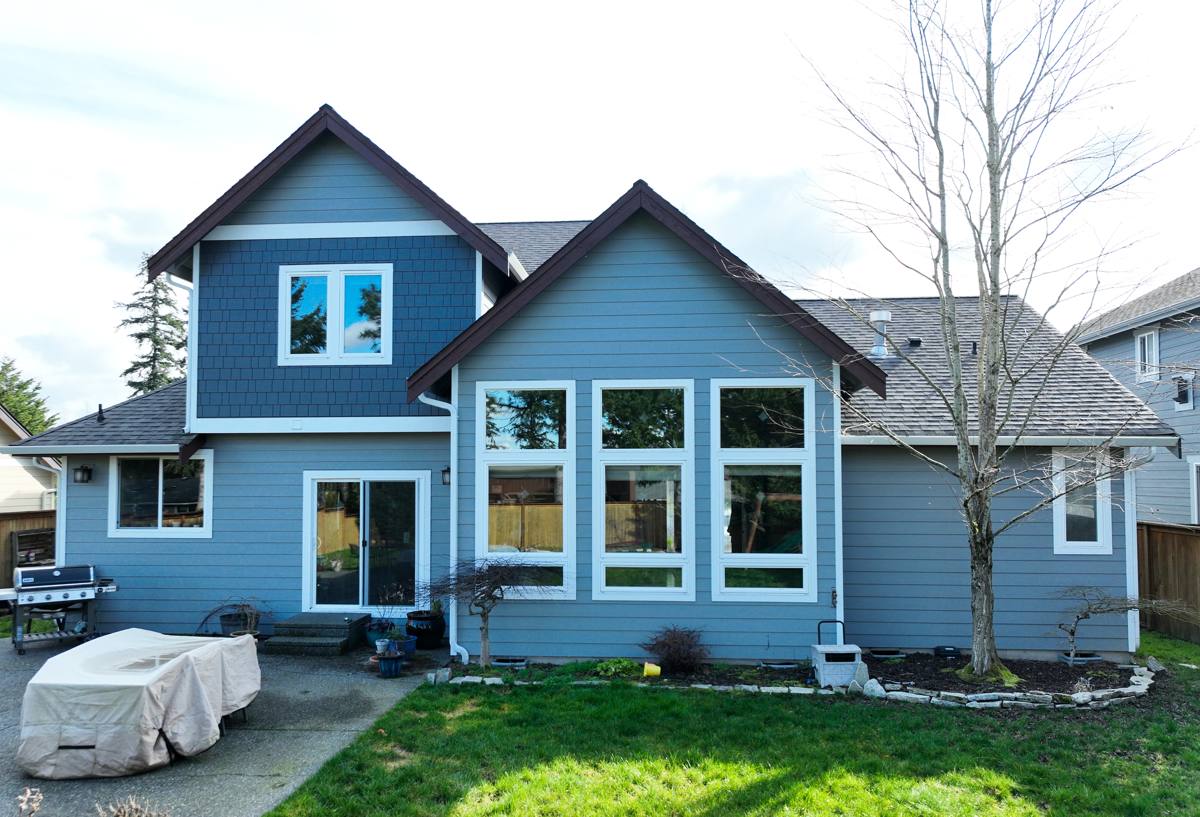
What Ferndale's Climate Demands From Siding
Salt Air
Ferndale sits close enough to the water that homes here get a steady dose of salt-tinged marine air moving through, even on properties set back from the immediate shoreline. Salt is hard on fasteners, flashing, and any finish that is not built to resist it. It speeds up corrosion and breaks down lower-grade coatings faster than a drier, more inland climate would. Siding hardware and finish choices that would hold up fine somewhere landlocked do not last the same way out here.
Driving Rain
Rain in this part of Whatcom County rarely falls straight down. Wind pushes it sideways into lap joints, trim details, and any seam in the wall assembly that is not sealed correctly. That is a tougher test than a simple annual rainfall total suggests, because the water is coming at the wall from an angle, not just from above. A siding system that would perform fine in a calm, sheltered spot can still leak here specifically because it was not detailed for sideways water.
A Long Moss Season
Mild temperatures, shade, and consistent moisture add up to a moss and mildew season that runs most of the year on shaded and north-facing walls across this area. Any siding material that is even slightly porous, or that traps moisture against the substrate, becomes a growth surface over time. It typically shows up first on the shaded side of the house or wherever trees keep a wall from drying out, well before it is visible from the street.
Why Fiber Cement Is the Right Material for This Job
Given what Ferndale's climate does to an exterior wall, the material itself matters as much as the workmanship. We install James Hardie fiber cement specifically because its core is cement, sand, and cellulose fiber rather than wood-based material. It does not swell, cup, or warp the way wood or engineered wood products can after repeated wet-season moisture cycling, and it does not feed fungal growth the way an organic substrate can.
- Non-combustible core: Fiber cement does not burn the way wood-based siding can, which matters for household safety and can matter for insurance as well.
- Factory-applied ColorPlus finish: The color is baked on in a controlled factory process instead of brushed on in the field, so it resists fading, chalking, and moisture intrusion far longer than site-applied paint exposed to salt air.
- HZ5 formulation: Hardie's HZ5 product line is engineered specifically for regions with heavy moisture exposure and freeze-thaw cycling, a good match for this part of the county.
- Dimensional stability: The panels hold their shape through wet winters and dry summers instead of expanding, contracting, and opening up joints over time.
- Transferable warranty: Hardie backs the product with a strong warranty structure, provided the installation follows their published spec.
We do not install LP SmartSide, vinyl, Cemplank, Allura, primed spruce, or cedar. Those are all legitimate products with homeowners who are satisfied with them elsewhere. We made a professional call that, in a climate this consistently wet and salty, we would rather stand fully behind one system than offer a cheaper option that quietly pushes more maintenance onto the homeowner down the road.
What a Correct Fiber Cement Installation Involves
Buying the right material is only part of the job. Fiber cement performs the way it is designed to only when it is installed to spec, and the details matter more here than they would in a drier climate:
- Fastener pattern and type: Correct nail or screw placement and corrosion-resistant fasteners, since salt air accelerates rust on anything undersized or mismatched to the material.
- Clearances from grade and roofline: Proper gaps keep splashback and roof runoff from sitting against the bottom courses of siding.
- Joint lapping and sealing: Lap joints and butt joints need to shed wind-driven rain rather than give it a place to collect.
- House wrap and flashing integration: The siding has to work with the water-resistive barrier and flashing underneath it, not against it, especially around windows, doors, and roof-to-wall transitions.
- Caulking at penetrations: Every fixture, vent, and fastener point through the face of the siding is a potential entry point if it is not sealed correctly.
Skipping or rushing any of these steps is one of the more common ways a genuinely good product ends up performing poorly on an actual house. We treat installation detail with the same seriousness as material selection, because in this climate the two are equally responsible for how long the siding lasts.
Repair or Full Replacement?
Not every siding issue on a Ferndale home calls for a full tear-off. A section damaged by a storm, or trim that failed around a single window, can often be repaired and matched into the surrounding fiber cement without touching the rest of the wall. But when moisture has been tracking behind the siding for a while, or the existing material is an older product nearing the end of its service life, patching it usually just delays a larger job and lets hidden damage keep spreading. We assess the whole wall assembly, not just the visible symptom, and tell you honestly which situation you are in rather than defaulting to whichever option costs more.
Our Process for a Ferndale Fiber Cement Project
- On-site assessment: We walk the property, look at the existing siding condition, check for moisture damage behind it where visible, and note the specific exposure of each wall, including which sides get the most direct wind, rain, and shade.
- Written scope and estimate: You get a clear breakdown of the work, material selections, and cost before anything is signed, not a verbal ballpark that shifts later.
- Tear-off and substrate check: Removing the old siding is when hidden moisture damage usually surfaces. We address any rotted sheathing or framing before new siding goes up rather than covering a problem back over.
- Installation to Hardie's spec: Fastening, clearances, flashing, and joint details are handled to the manufacturer's published requirements, which is also what keeps the warranty intact.
- Final walkthrough: We go over the finished work with you directly so you know exactly what was done and what to expect from the material going forward.
Fiber Cement Siding Cost Factors in Ferndale
| Factor | What It Affects | Why It Matters Here |
|---|---|---|
| Home size and wall complexity | Total material and labor | More trim, dormers, and corners mean more joints exposed to wind-driven rain |
| Tear-off vs. overlay | Labor scope and substrate access | Tear-off is often the only way to catch moisture damage that has been building behind older siding |
| Substrate condition | Repair costs before new siding goes on | Trapped moisture behind failing siding can rot sheathing and framing over time |
| Trim and color selection | Material cost and finish longevity | ColorPlus factory finishes outlast field-applied paint under salt air and UV exposure |
| Site access | Labor time and equipment needs | Larger lots, fencing, or tree-shaded properties can add setup and staging time |
These are the factors that move a price up or down, not a quote. Exact numbers depend on the specific house, which is why we walk the property in person before giving a real estimate rather than working off a generic price sheet.
Signs Your Ferndale Home's Siding Needs Attention
- Moss or dark staining that returns quickly after cleaning, especially on shaded or north-facing walls
- Soft or spongy siding, particularly near the bottom of the wall or around window and door trim
- Peeling paint, bubbling, or visible warping in the siding boards themselves
- Cracked, chipped, or missing sections after a windstorm
- Visible gaps at seams, corners, or trim joints where water can track in
- A rising energy bill that may point to a wall assembly that is no longer sealing properly
Why a Crew That Already Works Ferndale Matters
Anyone can quote a siding job off a set of photos or a quick drive-by. What is harder to fake is the judgment that comes from working this specific stretch of Whatcom County over and over: knowing which wall orientations stay wet the longest through the winter, where extra flashing attention actually pays off, and which shortcuts show up as callbacks two years later instead of holding up. Because we are based in Birch Bay and already run jobs throughout this part of the county, Ferndale is not a stretch assignment for us. It is the same salt air, the same driving rain, and the same moss season we plan around every week, on homes not far from your own.
If your Ferndale home needs new fiber cement siding, a repair, or an honest read on what is going on behind an aging wall, we are glad to take a look. Reach out using the form below to schedule a free, no-pressure estimate.