 Birch Bay Siding
 Why Semiahmoo Roofs Take a Different Kind of Beating
Semiahmoo sits about as exposed to Georgia Strait weather as a Whatcom County roof can get. Homes here catch wind off open water with almost nothing to slow it down, and that wind rarely arrives alone — it brings driving rain at an angle that finds every weak seam, lifted shingle tab, and worn flashing joint a roof has. A storm that just knocks a few branches down a mile inland can strip shingles, drive water under flashing, and crack ridge caps on a Semiahmoo roof because the wind load and salt exposure are both higher this close to the water.
Add in the long Pacific Northwest moss season — moss holds moisture against the roof deck for months at a time — and you get a combination most repair crews from outside the area underestimate: wind damage on top of a roof that's already softened by chronic moisture and salt-air corrosion of fasteners and flashing. Repairing storm damage here means understanding that combination, not just patching what's visibly broken.
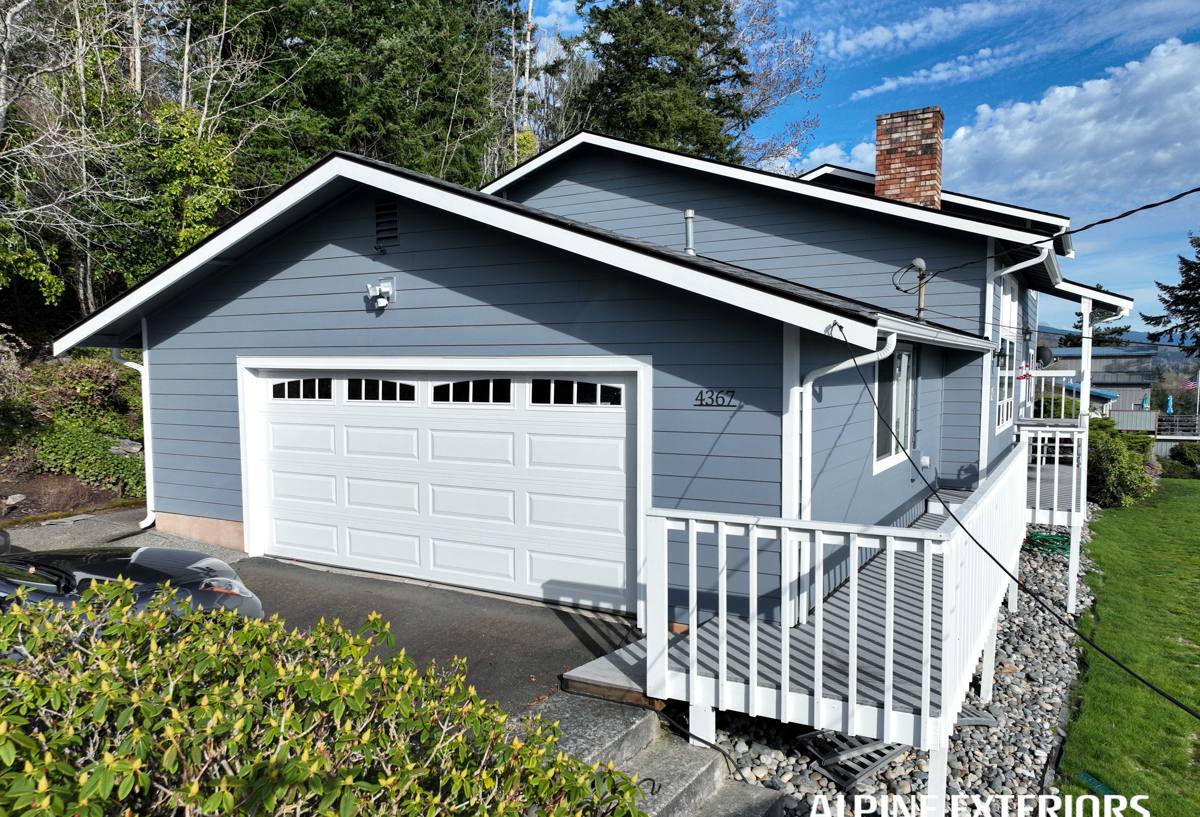
What Actually Counts as Storm Damage in This Area
Homeowners often assume storm damage means a hole or missing shingles you can see from the driveway. In Semiahmoo, a lot of the damage that matters most is less obvious:
Wind-Lifted and Creased Shingles
Wind doesn't have to tear a shingle off to ruin it. Repeated flexing during a storm creases the shingle's seal strip, breaking the adhesive bond even if the shingle looks fine afterward. Those shingles will lift again in the next windstorm, and by then water has usually already found its way underneath.
Flashing Failure
Flashing around chimneys, skylights, and roof-to-wall transitions takes the worst of wind-driven rain. Salt air accelerates corrosion of the fasteners and sealant that hold flashing tight, so a storm can finish off flashing that was already weakened by years near the water.
Water Intrusion Without Visible Exterior Damage
Some of the worst storm calls we get in this area involve no missing shingles at all — just a ceiling stain that shows up two or three days after the wind event, because water tracked in under a lifted seam and traveled along the decking before it found a gap to drip through.
Moss-Weakened Decking Exposed by Storms
Where moss has been sitting on a roof for a season or more, the plywood or OSB decking underneath can already be soft before a storm ever hits. Wind uplift on a compromised roof section is more likely to tear shingles loose entirely, because the decking isn't holding fasteners as well as it should.
What a Correct Storm Damage Repair Actually Involves
A repair that only replaces what's visibly missing is a repair that fails again in the next storm. Done right, a storm damage repair in Semiahmoo covers four things:
- Full-slope inspection, not just the damaged area. Wind damage is rarely confined to one spot — we check the whole roof plane for creased seals, lifted tabs, and secondary damage the storm caused nearby.
- Decking check before re-covering anything. If moss or prior leaks softened the decking under the damaged shingles, patching over it just hides a problem that will resurface.
- Flashing inspection and, where needed, replacement — not just resealing. Sealant is a short-term fix over corroded or improperly lapped flashing.
- Matching materials correctly. Shingle color and profile drift over time as products get discontinued or reformulated, so we tell homeowners honestly when a patch will be visible versus when it will blend in.
Our Process for Storm Damage Calls
1. Emergency Tarp or Board-Up, If Needed
If the roof is actively leaking or has an open section, the first priority is stopping further water intrusion — a temporary, properly secured tarp buys time to do the repair right instead of rushing it.
2. On-Site Inspection and Documentation
We walk the roof (or inspect from a lift where pitch or safety requires it), photograph the damage, and note anything that looks storm-related versus long-term wear. This documentation matters for the next step.
3. Insurance Coordination
Most storm damage repairs in this area involve a homeowner's insurance claim. We provide a clear, itemized scope of damage and repair that adjusters can work from, and we're available to walk the roof with an adjuster if that's useful. We don't inflate scope to pad a claim — an honest scope holds up better and closes faster.
4. Repair Plan and Written Estimate
Before any work starts, you get a written scope: what's being replaced, what materials are being used, and why. If a section is borderline between repair and replacement, we explain the trade-offs plainly instead of defaulting to the bigger job.
5. The Repair Itself
Decking replaced where needed, underlayment restored to spec (not just patched around), flashing replaced or resealed depending on condition, and shingles matched as closely as the current market allows.
6. Cleanup and Final Walkthrough
Job site cleared of debris and old material, magnet-swept for nails, and a final walkthrough so you can see exactly what was done before we call it complete.
Repair vs. Replace: How We Make That Call
Not every storm-damaged roof needs a full re-roof, and not every repair is worth doing if the roof is already near the end of its life. The table below covers the main factors that push the decision one way or the other.
| Factor | Leans Toward Repair | Leans Toward Replacement |
|---|---|---|
| Extent of damage | Isolated to one slope or section | Multiple slopes, widespread lifted or missing shingles |
| Roof age | Under roughly 10-12 years, good remaining shingle life | Nearing or past typical service life for the material |
| Decking condition | Solid, no soft spots found on inspection | Soft or delaminated decking found in multiple areas |
| Material availability | Matching shingles still in production | Discontinued product, visible patch unavoidable |
| Moss/moisture history | Roof has been kept clear, minimal staining | Long-term moss coverage, chronic moisture damage present |
We'll tell you honestly which side of that table your roof falls on. A repair that's likely to need another repair within a year or two isn't a good use of your money, and we say so up front.
Salt Air, Fasteners, and Why Corrosion Matters Here
One thing that sets Semiahmoo apart from roofing further inland is how salt-laden air affects metal components over time. Nails, flashing, and vent boots corrode faster this close to the water, and corroded fasteners lose their grip on shingles well before the shingles themselves wear out. When we're repairing storm damage, we check fastener condition in and around the repair area — a shingle that reseals over corroded nails is a shingle that will lift again in the next windstorm, regardless of how well the shingle itself performed.
What Homeowners Can Safely Check After a Storm
You don't need to get on the roof to spot warning signs. From the ground or from inside the attic (if you have safe access), here's what's worth checking after any significant wind or rain event:
- Shingle granules collecting in gutters or downspouts — a sign of wind abrasion or impact
- Visible gaps, curled edges, or missing shingles from a ground-level look at each slope
- New or growing water stains on ceilings, especially near chimneys, skylights, or where two roof planes meet
- Damp insulation or daylight visible through the attic roof deck
- Loose or missing flashing around the chimney, vents, or where the roof meets a wall
- Debris — branches or larger material — that landed on the roof and hasn't been removed
- Gutters pulling away from the fascia, which can signal wind uplift stress on the roof edge
If you see any of these, it's worth getting an inspection before the next storm rolls through rather than waiting for a leak to confirm the problem.
Why It Matters That We Already Work Semiahmoo
A roofing crew that mostly works inland Whatcom County jobs will inspect a Semiahmoo roof the same way they'd inspect any other roof — and that's exactly the gap that causes repairs to fail. Wind exposure varies noticeably by lot position here; a home a block back from the water can have a very different wind and salt exposure profile than one directly facing open water, and that affects how aggressively we check flashing, fasteners, and decking condition. Knowing which parts of the neighborhood take the worst of a given storm direction, and having already seen how moss and salt air behave on roofs in this specific area over multiple seasons, means fewer surprises and a repair scope that's accurate the first time — which matters both for your wallet and for how fast an insurance claim moves.
Get a Free, No-Pressure Estimate
If your Semiahmoo home has taken storm damage — or you just want a roof checked over before the next windstorm season hits — we're glad to come take a look. There's no obligation and no pressure; you'll get an honest assessment and a clear estimate before any work happens. The form below gets you started.