 Birch Bay Siding
 California Creek's Coastline Climate Is Hard on Siding
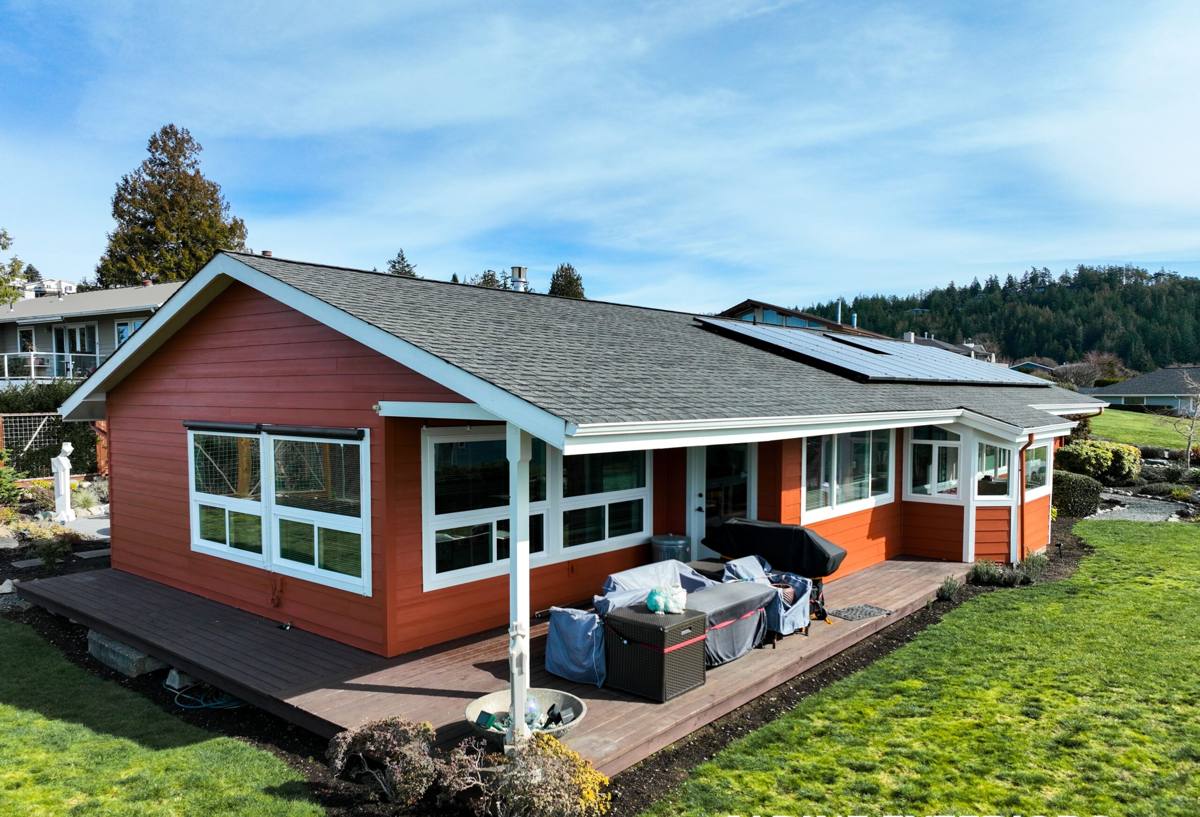
Homes near California Creek sit close enough to Birch Bay's saltwater and tidal marsh to catch salt-laden air on a regular basis, and that air doesn't stay out at the water's edge — it moves inland and settles on siding, trim, and fasteners year-round. Add in Whatcom County's long, wet winters and the driving rain that comes off Georgia Strait storms, and you have a siding environment that punishes anything not built to handle sustained moisture exposure. Then there's moss. The combination of shade from mature trees, high humidity, and a cool, damp season that stretches from fall through spring gives moss and algae months to establish themselves on any surface that holds moisture.
None of this is unique to one house on one street — it's the baseline condition for the whole California Creek area, and it's why the siding choice matters more here than it would in a drier inland climate. Material that's marginal in Spokane or Yakima can fail outright on a Birch Bay lot exposed to salt air and near-constant dampness.
What Salt Air, Rain, and Moss Actually Do to Siding
Salt air is corrosive to exposed metal fasteners and flashing, and it accelerates the breakdown of finishes that aren't formulated to resist it. Driving rain finds every gap, seam, and unsealed joint, and once moisture gets behind a siding panel, the assembly underneath — sheathing, house wrap, framing — starts absorbing it. Wood-based products swell, checking and cupping as they cycle wet and dry. Moss and algae take hold wherever a surface stays damp longer than it can dry, and once established, they hold even more moisture against the material, which speeds up whatever damage was already happening underneath.
Why This Matters More for Some Materials Than Others
Every siding material handles this differently. Some resist water absorption but perform poorly against fire or impact. Some hold paint well but require frequent maintenance to keep moisture from finding a way behind the cladding. The table below is a general comparison, not a claim about any specific product line — it's meant to show why the material question deserves real thought before a California Creek homeowner commits to a re-side.
| Material | Moisture/Rot Resistance | Salt Air Durability | Moss/Algae Resistance | Typical Maintenance |
|---|---|---|---|---|
| Fiber cement (James Hardie) | High — engineered to resist moisture damage | High with factory finish | Good with routine washing | Low |
| Vinyl | Won't rot, but can warp/crack in temperature swings | Moderate — fasteners and trim more exposed | Moderate | Low, but limited repair options |
| Wood/cedar | Low without constant upkeep | Low — salt accelerates weathering | Poor — moisture-prone by nature | High — regular sealing/painting |
| Primed spruce | Low — primer is a starting point, not a shield | Low | Poor | High |
This is why we standardized on one material and one installation standard rather than offering whatever a homeowner asks for. In a climate like this, the material and the install quality both have to be right, or the siding becomes a maintenance project instead of a long-term investment.
Why We Install Only James Hardie Fiber Cement Here
Birch Bay Siding Contractor installs James Hardie fiber cement exclusively — we don't offer vinyl, LP SmartSide, Cemplank, Allura, primed spruce, or cedar. That's a deliberate standard, not a lack of options. Fiber cement is a cement-and-cellulose composite that doesn't rot, doesn't feed moss the way wood does, and doesn't warp the way vinyl can when a black-painted panel sits in direct afternoon sun. It's also non-combustible, which matters increasingly to insurers and homeowners alike.
For this specific climate, Hardie's HZ5 product line is engineered for regions with more moisture exposure — it's built to hold up in cold, wet, coastal-adjacent conditions rather than the hot, dry climates some other regional formulations target. Combined with the factory-applied ColorPlus finish, which is baked on under controlled conditions rather than field-applied, the color coat resists the fading and chalking that salt air and UV exposure cause on job-site-painted materials. Homeowners also get a strong transferable warranty backing the product, which matters if the home changes hands before the siding's service life is up.
What This Standard Rules Out — and Why
Vinyl siding tends to expand and contract more than fiber cement in temperature swings, and gaps at trim and corners are where wind-driven rain gets in. Cedar and primed spruce both require an ongoing maintenance commitment — sealing, painting, and moss treatment — that most homeowners underestimate until the material starts showing damage years earlier than expected. We're not saying these products have no place anywhere; we're saying that for a California Creek exterior facing salt air and a long wet season, we've seen enough to know we don't want our name on that install. Fiber cement is what we put on homes in this area, full stop.
What a Correct Fiber Cement Installation Actually Involves
Fiber cement performs well over the long run only when it's installed correctly. A rushed or generic install — the kind that treats Hardie like any other lap siding — is how homeowners end up with moisture problems despite having "the good siding."
Flashing and Weather Barrier Details
Every penetration — windows, doors, hose bibs, vents, light fixtures — needs proper flashing and integration with the weather-resistive barrier behind the siding, not just caulk at the edges. In a driving-rain climate, water will find any shortcut taken here. Housewrap needs to be lapped correctly, and flashing needs to direct water out and away from the wall assembly rather than trapping it.
Fastening, Gaps, and Clearances for This Climate
Hardie's installation instructions specify fastener type, spacing, and placement, and following them isn't optional if the warranty is going to hold. Panels need the correct gap at butt joints and around trim to allow for expansion, and siding needs proper clearance from grade, roofing, and decks so it isn't sitting in standing water or splash-back during heavy rain events. Caulking at joints has to use a product rated for the exposure, applied to a properly prepared surface — not smeared over a gap as an afterthought.
- Weather-resistive barrier lapped and sealed before any siding goes up
- Flashing integrated at every window, door, and penetration
- Correct fastener type, spacing, and depth per manufacturer spec
- Proper gapping at joints and trim for expansion
- Minimum clearance maintained from grade, decks, and roof lines
- Factory-cut edges primed or capped where field-cutting exposes raw material
- Caulk and sealant matched to the exposure, not just whatever's on the truck
Our Process, From Estimate to Finished Siding
- Walkthrough and assessment — we look at the existing siding, sheathing condition, and any moisture or moss damage already present, since a re-side is also the chance to address problems hidden behind the old material.
- Written estimate — a clear scope covering material, prep work, flashing and trim details, and timeline, with no vague allowances.
- Material order — James Hardie panels, trim, and ColorPlus finish selections specific to the project.
- Removal and prep — old siding comes off, sheathing is inspected and repaired as needed, and the weather barrier is installed or corrected before anything new goes up.
- Installation to manufacturer spec — flashing, fastening, and gapping done the way Hardie's instructions require, not shortcut for speed.
- Final walkthrough — trim, caulking, and finish details reviewed with the homeowner before we call the job done.
Cost Factors for a California Creek Fiber Cement Project
Every home is different, so a real number only comes from a walkthrough, but the factors that move the price are consistent from job to job. As a rough starting point, most fiber cement re-side projects in this region land somewhere in the low-to-mid teens per square foot installed, with total project cost shaped heavily by the factors below.
| Factor | Why It Matters |
|---|---|
| Existing siding removal | Multiple layers or damaged sheathing add labor and repair costs |
| Home size and wall complexity | More corners, dormers, and trim details mean more cutting and labor time |
| Siding profile and plank width | Different Hardie profiles carry different material costs |
| Trim and accent work | Custom trim, fascia, and accent boards add both material and labor |
| Underlying moisture damage | Rot found during removal needs to be repaired before new siding goes up |
| Access and site conditions | Steep grades, tight lot lines, or limited equipment access affect labor time |
Maintenance in a Moss-Prone, Salt-Air Environment
Fiber cement needs far less maintenance than wood, but "low-maintenance" doesn't mean "no maintenance" in this climate. A little routine attention keeps siding performing the way it's designed to for decades.
- Rinse siding with a garden hose once or twice a year to clear salt residue and organic buildup, especially on shaded or north-facing walls
- Keep gutters clear so overflow isn't running down the siding face during heavy rain
- Trim back vegetation and tree cover that keeps sections of the wall shaded and slow to dry
- Inspect caulking at trim and penetrations annually and re-seal if it's cracked or pulling away
- Address any moss or algae growth promptly with a gentle wash rather than pressure-washing, which can drive water behind panels
- Watch for any soft spots, staining, or discoloration that could point to a flashing or moisture issue underneath
Why Local Experience in Birch Bay Matters
A crew that installs siding across a range of inland climates knows fiber cement in general. A crew that works this specific stretch of Whatcom County coastline knows what actually happens to a wall assembly here — where wind-driven rain hits hardest on a given lot orientation, how much shade and moisture a given tree line creates, and which flashing details matter most given how often these homes deal with salt air and prolonged damp seasons. That's the difference between a technically correct install and one that's actually built for California Creek's conditions.
We're not a general contractor who occasionally does siding — fiber cement installation to James Hardie's standard is what we do, on homes in this same coastal environment. That focus is what lets us stand behind the work.
Ready to Talk About Your Home?
If you're weighing a re-side for a California Creek home and want a straight answer about what it involves and what it will cost, we're happy to walk the property with you. Reach out for a free, no-pressure estimate — there's a form below to get started.