 Birch Bay Siding
 Why Marietta Homes Need Windows Built for This Climate
Marietta sits close enough to the water that homes here take a different kind of weathering than houses further inland in Whatcom County. Salt-laden air off the bay works into hardware and finishes over time, driving rain off the Strait pushes water sideways into gaps that would stay dry in a calmer climate, and the long gray moss season keeps everything damp for months at a stretch. Windows are one of the first places that shows up. A window that's a good fit for a dry inland town can fail early here — not because the product is bad, but because it wasn't installed, sealed, or specified with this exposure in mind.
When we quote a window job in Marietta, we're not just measuring openings. We're looking at which walls take the brunt of the weather off the water, how the existing flashing was (or wasn't) done, and whether the current windows are original to the house or a past retrofit that cut corners. That context changes the recommendation more than most homeowners expect.
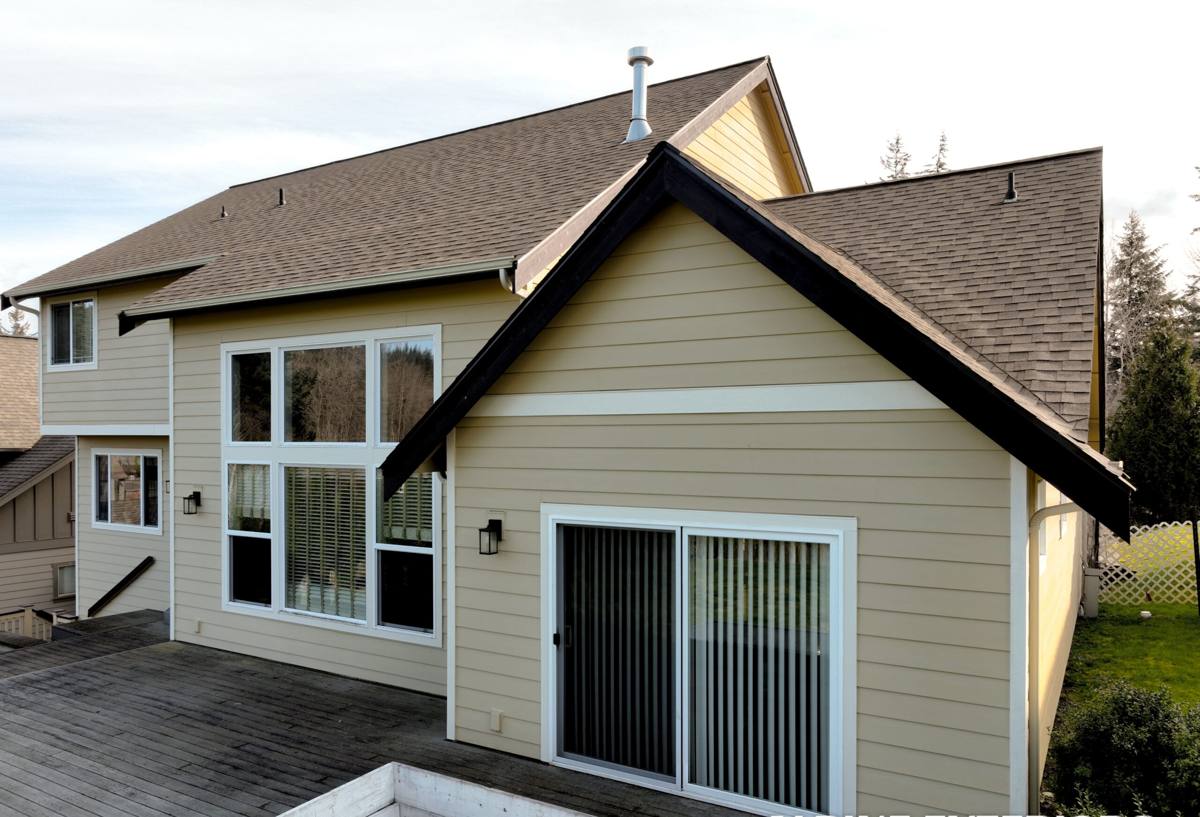
What "Custom" Actually Means for a Window Install
"Custom" gets used loosely in this trade. For us it means the window is built and installed to fit your actual opening and your actual wall assembly — not a stock size forced into a rough opening with shims and caulk. That matters more on older Whatcom County homes, where openings are rarely square after decades of settling and moisture cycling.
Retrofit vs. New-Construction Windows
There are two basic approaches, and picking the wrong one is one of the most common mistakes we see corrected after the fact:
- Retrofit (pocket) windows — installed into the existing frame, keeping the original trim and siding largely undisturbed. Faster, less invasive, and usually less expensive, but it depends entirely on the existing frame being sound and properly flashed.
- New-construction (full-frame) windows — the old frame comes out down to the rough opening, exposing the wall assembly so we can inspect and correct flashing, sheathing, and water management before the new window goes in.
On a coastal-exposed house, we lean toward full-frame more often than a typical inland job would, simply because it's the only way to actually see what's happening behind the trim before it's covered up again.
Material and Glass Options
Frame material and glass package both affect how a window holds up to salt air and constant moisture — not just how it looks or performs on an energy bill.
| Frame Material | Coastal Durability | Maintenance | Typical Fit |
|---|---|---|---|
| Vinyl | Good — won't corrode or rot | Low; occasional cleaning | Most retrofits and budget-conscious replacements |
| Fiberglass | Very good — stable in temperature swings, resists moisture | Low | Higher-exposure walls, longer-term hold |
| Wood-clad | Fair — depends heavily on cladding integrity and sealant maintenance | Higher; cladding seams need periodic inspection | Homes prioritizing a specific interior wood look |
| Aluminum | Poor to fair near salt air without upgraded finishes | Moderate to high | Rarely our first recommendation this close to the water |
We don't push wood-clad windows on homes with direct salt exposure as a rule — not because the product is defective, but because the cladding seams are one more place water can get behind the finish over years of damp weather, and the maintenance burden to stay ahead of that is real. That's a professional judgment call we're upfront about, not a claim about any specific manufacturer.
Glass Packages
For this climate, we typically spec dual-pane glass with Low-E coating and argon gas fill as the baseline, not an upgrade. It cuts condensation risk on cold, damp mornings and holds up better to the temperature swings between a cold night and a sun-warmed afternoon that are common along the water.
The Flashing and Moisture Detail That Makes or Breaks the Job
Most window failures we get called out to inspect aren't glass failures — they're water management failures. Driving rain off the bay doesn't fall straight down; it hits walls at an angle and finds any gap in the flashing sequence. A window that leaks two years after install almost always traces back to one of these steps being skipped or done out of order.
What a Correct Installation Includes
- Sill pan flashing under the window opening, sloped to shed any water that gets past the window back outward, not into the wall.
- Proper lap sequencing of flashing tape and the weather-resistive barrier — each layer overlapping the one below it, shingle-style, so water always drains down and out.
- Correct sealant placement — sealed where it needs to seal, and deliberately left open where the assembly needs to drain or breathe.
- Fastening and shimming that keeps the window square and supported without distorting the frame, which can compromise the seal over time.
- Interior air sealing separate from exterior weatherproofing — these are two different jobs that both need to be done, not one job standing in for the other.
This sequence is the same in principle everywhere, but how much margin for error it allows changes a lot with exposure. On a sheltered inland wall, a minor flashing shortcut might not show up for a decade. On a Marietta wall that catches driving rain directly, it can show up in a single wet winter.
Our Installation Process
We keep the process straightforward and explain what we're doing at each step, since window work happens right at the edge of your living space.
- On-site assessment — we look at each opening individually, check the condition of existing framing and flashing where visible, and note which walls take the most weather.
- Measurement and ordering — precise measurements for each opening; nothing is ordered off a rough estimate.
- Removal — old windows come out carefully, with the opening protected from weather for the duration of the work.
- Inspection and correction — any rot, soft sheathing, or failed prior flashing found during removal gets addressed before the new window goes in, not covered over.
- Installation — window set, shimmed square, flashed and sealed per the sequence above.
- Interior and exterior finish work — trim, caulking, and touch-up to match the surrounding siding and interior finish.
- Final walkthrough — we check operation, sealing, and cleanup with you before we consider the job done.
We don't leave openings exposed overnight longer than we have to, which matters in a climate where an unplanned rain event is never far off.
Cost Factors
We don't publish flat prices because window jobs vary too much house to house, but these are the factors that actually move the number:
| Factor | How It Affects Cost |
|---|---|
| Retrofit vs. full-frame | Full-frame costs more upfront but addresses hidden wall issues retrofit can't reach |
| Window style | Fixed and single-hung are simplest; casements, sliders, and large picture windows cost more |
| Frame material | Vinyl is typically the most budget-friendly; fiberglass and wood-clad run higher |
| Size and quantity | Larger openings and whole-house jobs bring per-unit pricing down somewhat |
| Existing damage | Rot or failed flashing found during removal adds repair scope |
| Access and site conditions | Second-story or hard-to-reach openings add labor time |
Signs Your Current Windows Are Failing
Given the exposure homes in Marietta deal with, it's worth checking your windows for these signs before small problems become structural ones:
- Fogging or condensation between panes — the seal on the insulated glass unit has failed
- Soft or discolored trim and sill wood, especially on walls facing the water
- Visible daylight or a noticeable draft around the frame
- Difficulty opening, closing, or locking — often a sign the frame has shifted or swelled
- Paint or finish bubbling or peeling near the window edges
- Moss or persistent green growth building up on sills or nearby trim
- A musty smell in the room, which can point to moisture getting into the wall cavity
Any one of these is worth a look. Several together usually means the flashing detail, not just the window itself, needs attention.
Why a Crew That Already Works Marietta Matters
A window crew that mostly works dry, inland jobs will still get you a window installed — but they may not default to the flashing sequence and material choices that hold up under sustained coastal exposure, simply because it's not what they see every week. Working regularly in Whatcom County's coastal communities means we're used to spec'ing for driving rain and salt air as the baseline, not the exception, and we know what tends to fail first on homes with this kind of exposure so we can address it proactively instead of reactively.
Local permitting and code requirements are also part of it. Window replacement can trigger specific requirements depending on the scope of work and whether it touches egress or structural framing. We handle that as part of the job rather than leaving it for the homeowner to sort out.
Maintenance Tips for the Local Climate
A well-installed window still benefits from a little seasonal attention in this environment:
- Rinse salt residue off frames and hardware periodically, especially on water-facing walls
- Clear moss and debris from sills and weep holes so water can drain as designed
- Check exterior caulking annually and touch up any cracked or separated sealant
- Operate hardware a few times through the winter to keep moving parts from seizing
- Watch for condensation between panes as an early warning of seal failure
If you're weighing a window replacement, or just want an honest read on whether what you have now is holding up, we're happy to come take a look. Fill out the form below for a free, no-pressure estimate.