 Birch Bay Siding
 Point Roberts Roofs Work Harder Than Most
Point Roberts sits on its own peninsula at the edge of the Strait of Georgia, cut off from the rest of Whatcom County by water and by the Canadian border. That geography is part of what makes the community special, but it also means roofs there take a beating that inland Whatcom County homes simply don't see. Salt-laden air off the water accelerates corrosion on fasteners, flashing, and metal roofing components. Driving rain, pushed sideways by wind coming straight off the strait, finds every weak seam, lifted shingle tab, and undersized flashing detail. And the long, damp shoulder seasons here mean moss has months to establish itself before a homeowner ever notices it's a problem.
None of that is unique to any one house — it's the baseline condition every roof in this part of Whatcom County has to survive. A repair that would hold up fine in a drier, more sheltered part of Washington can fail within a season or two out here if it isn't built with these conditions in mind.
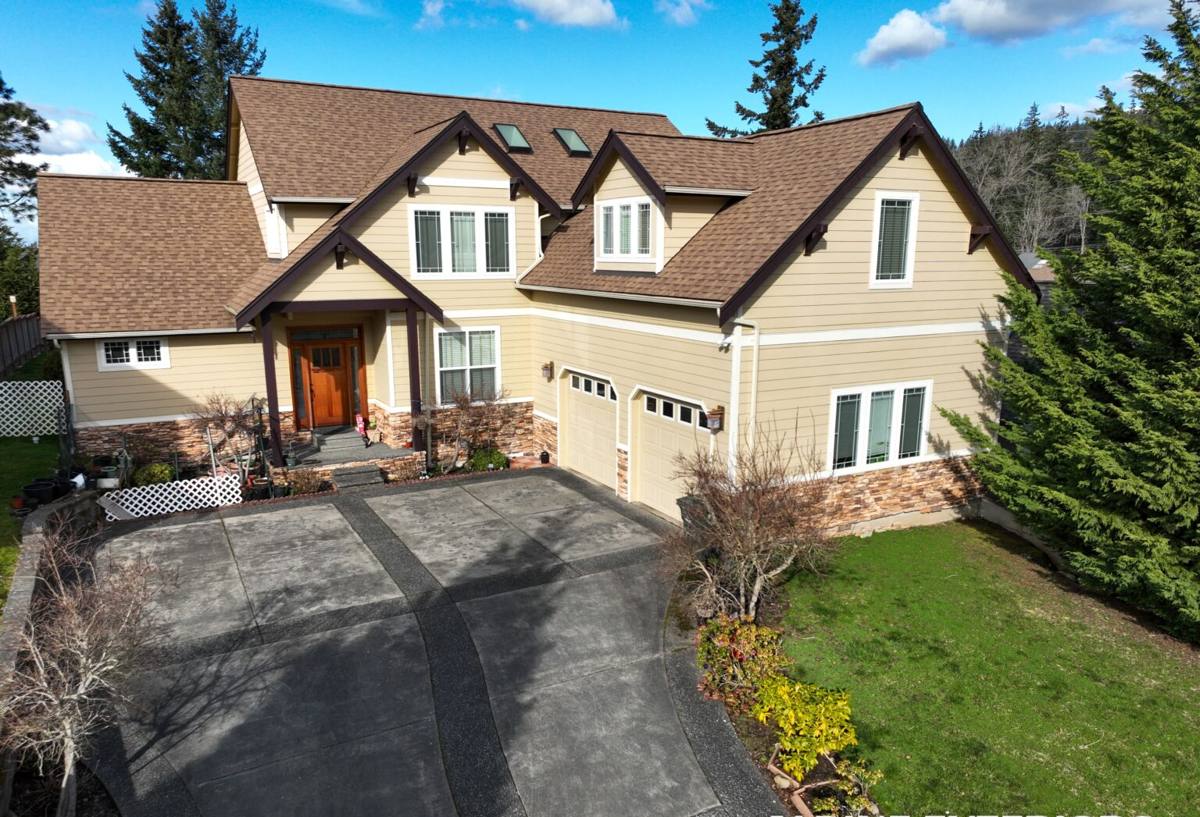
How Salt Air, Rain, and Moss Actually Damage a Roof
Salt Air and Corrosion
Salt-laden coastal air speeds up rust and corrosion on anything metal — nail heads, drip edge, valley flashing, roof vents, and gutter hardware. Once a fastener starts to corrode, it loses grip and can back out or leave a hole that water works its way into. This happens gradually, which is exactly why it goes unnoticed until there's a leak or a stain on the ceiling.
Driving Rain
Wind-driven rain doesn't behave like a gentle vertical shower. It gets pushed under shingle edges, into valleys, and around penetrations like vent pipes and chimneys — places where a roof relies on flashing and underlayment, not just shingles, to stay dry. A repair that only patches the visible shingle without addressing the flashing and underlayment underneath often leaks again in the next storm.
Moss and Moisture Retention
Whatcom County's long wet season gives moss plenty of time to take hold, especially on north-facing slopes and shaded roof sections. Moss holds moisture directly against the roofing material, which shortens the life of asphalt shingles and can lift edges as it grows, creating entry points for water. Left untreated, moss growth turns a roof that still has years of life left into one that's failing early.
What Correct Roof Repair Looks Like Here
A repair job that's built for Point Roberts conditions isn't just about matching shingles. It includes:
- Removing and replacing damaged underlayment, not just the surface shingles, wherever water has gotten underneath
- Re-flashing valleys, chimneys, and vent penetrations with corrosion-resistant materials rather than reusing pitted or rusted flashing
- Fastening with corrosion-resistant nails or screws appropriate for a marine-influenced climate
- Removing moss by hand or with appropriate low-pressure methods rather than power-washing, which can strip granules and shorten shingle life
- Checking and improving attic ventilation, since trapped moisture inside the roof system contributes to rot and accelerates moss regrowth
- Verifying that gutters and downspouts are actually moving water away from the roof edge, since backed-up water at the eaves is a common cause of repeat leaks
Skipping any of these steps to save time usually just means the same leak or the same moss patch comes back within a year or two.
Common Point Roberts Roof Problems We See
| Problem | What Causes It | Why It Matters |
|---|---|---|
| Lifted or curling shingle edges | Wind-driven rain working under tabs over time, plus UV and moisture cycling | Creates entry points for water even when the roof "looks fine" from the ground |
| Corroded flashing and fasteners | Ongoing exposure to salt air | Loses its seal or grip, leading to leaks around chimneys, valleys, and vents |
| Moss colonies on shaded slopes | Extended damp season and limited direct sun | Retains moisture against shingles and can lift edges as it spreads |
| Ceiling stains or attic moisture | Slow leaks that have been present for a while before symptoms show up indoors | Often indicates underlayment failure, not just a surface issue |
| Clogged or undersized gutters | Debris buildup plus heavy regional rainfall volumes | Forces water to back up under the roof edge instead of draining away |
Our Roof Repair Process
1. Inspection and Honest Diagnosis
We start by getting on the roof (weather permitting) and in the attic where possible, tracing the actual source of a leak or damaged area rather than assuming it's directly above where the stain shows up indoors — water often travels along framing before it drips.
2. A Clear Repair Plan
Before any work starts, we explain what we found, what needs to be repaired, what it will cost, and why. If a section of roof is beyond a reasonable repair, we'll say so and explain the tradeoffs rather than patching something that won't hold.
3. The Repair Itself
We replace damaged materials down to sound decking and underlayment, re-flash as needed, and match shingle color and style as closely as possible so the repair blends in rather than standing out as a patch.
4. Cleanup and Follow-Through
We clear debris, old materials, and stray fasteners from the property, and we're available afterward if questions come up once you've had a chance to live with the repair through a rain event.
Repair vs. Replacement: How to Think About It
Not every roof problem calls for a full replacement, and not every leak can be fixed with a patch. The right call depends on the roof's age, how widespread the damage is, and how it was maintained over the years.
| Factor | Favors Repair | Favors Replacement |
|---|---|---|
| Age of roofing material | Under roughly 12-15 years old | At or beyond its expected service life |
| Extent of damage | Isolated to one section, valley, or penetration | Widespread across multiple slopes |
| Underlayment condition | Still intact beneath the damaged area | Failing or missing in multiple spots |
| Moss/moisture history | Recently treated, limited regrowth | Long-term untreated growth with granule loss |
| Decking condition | Solid, no soft spots | Soft, delaminated, or rotted decking found |
We'll tell you plainly which category your roof falls into rather than defaulting to the more expensive option.
Why It Matters to Hire a Crew That Already Works Point Roberts
Point Roberts is geographically separated from the rest of Whatcom County — reaching it means traveling through Canada or by boat. That logistics reality is real, and it's one reason some contractors are hesitant to take on jobs there or treat them as an afterthought squeezed between other work. A crew that already schedules Point Roberts jobs regularly plans the trip, the materials, and the timing around that reality up front, instead of it becoming a surprise that delays your repair.
Familiarity with the area's specific exposure also matters. A roofer who mostly works sheltered, inland properties may not instinctively reach for corrosion-resistant fasteners or think twice about how a north-facing slope holds moss. Experience with this particular stretch of Whatcom County coastline means those details are standard practice, not an afterthought.
Materials: What We Use and What We're Cautious About
For coastal, moss-prone conditions like Point Roberts, we lean toward corrosion-resistant flashing and fasteners as a standard, not an upgrade — the cost difference is small compared to the cost of re-doing a repair in a few years because standard hardware corroded. We're also cautious about roofing accessories and trims that trap moisture against the roof deck without a clear drainage path, since that combination is a reliable recipe for accelerated moss growth and slower drying after rain. Where a product requires very precise installation conditions to perform as intended, we factor that into scheduling rather than rushing it in marginal weather.
Homeowner Maintenance Checklist Between Visits
- Look at north-facing and shaded roof slopes each spring and fall for new moss growth
- Clear gutters and downspouts of debris at least twice a year, more often under overhanging trees
- Check the attic (if accessible) after heavy storms for damp insulation, staining, or a musty smell
- Note any granules collecting in gutters, which can signal shingle wear
- Have flashing around chimneys, skylights, and vents visually checked every couple of years, since these are common leak points long before a full roof failure
Get a Straight Answer About Your Roof
If you're dealing with a leak, visible moss, or just want a second opinion before a Point Roberts winter sets in, we're happy to take a look and tell you honestly what your roof needs — repair, monitoring, or replacement. Request a free, no-pressure estimate using the form below and we'll get back to you with next steps.