 Birch Bay Siding
 Why Point Roberts Roofs Wear Differently
Point Roberts sits on its own peninsula at the edge of the Salish Sea, and that location shapes everything about how a roof ages there. Homes get near-constant exposure to salt-laden air coming off the water, long stretches of driving rain through the fall and winter, and short, mild summers that never quite dry things out before the next wet season starts. Add in tree cover on many lots and you get a fourth factor that catches a lot of homeowners off guard: moss. Between the salt, the rain, and the moss, a roof in Point Roberts is working harder than a roof in a drier inland part of Whatcom County, even though the two houses might be only a few miles apart as the crow flies.
None of this means a roof here is doomed to fail early. It means the installation has to account for these conditions from the start — the right materials, the right fastener and flashing choices, and ventilation that actually keeps moisture moving out of the attic instead of sitting there. A roof installed the same way you'd install one in a dry, low-wind climate will show its age faster in Point Roberts, sometimes years faster.
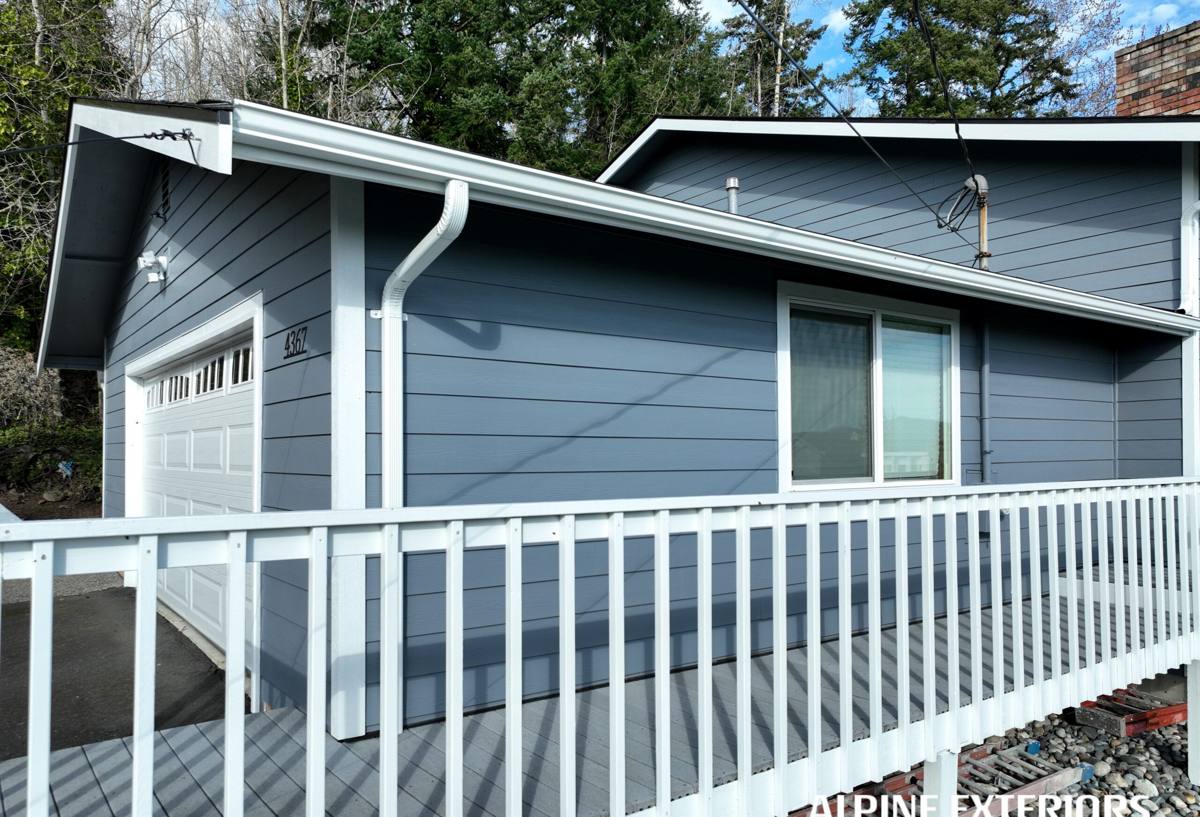
What Salt Air Does to a Roof
Salt air is corrosive to exposed metal — nails, flashing, vents, and hardware. Over time it can pit and weaken fasteners that aren't rated for coastal exposure, which is one of the more common causes of premature leaks in homes near the water. It also accelerates the breakdown of some sealants and can dull or streak certain roofing finishes faster than the same product would wear a few miles inland.
- Fasteners and flashing should be corrosion-resistant, not standard-grade, on any home this close to salt water.
- Exposed metal components (vents, drip edge, valley flashing) need coatings or materials built for marine-adjacent exposure.
- Sealant choices matter more here — some products hold up to UV and salt exposure better than others.
What Driving Rain and Moss Add to the Equation
Point Roberts gets the same wet, wind-driven Pacific Northwest rain pattern as the rest of the region, and on a peninsula with few windbreaks, rain doesn't always fall straight down — it gets pushed sideways into laps, seams, and flashing details. That's why underlayment coverage and flashing technique matter more here than the roofing material itself in a lot of cases. A shingle roof and a metal roof can both fail the same way if the water management underneath isn't done right.
Moss is the other constant. Shade, moisture, and mild temperatures are exactly what moss needs to establish itself, and once it gets a foothold on a roof it holds moisture against the surface, lifts shingle edges, and works into fastener lines. A roof that's shaded by trees for part of the day — common on many Point Roberts lots — needs to be installed with moss resistance in mind from day one, not treated as an afterthought once it shows up.
Signs a roof is losing the battle with these conditions
- Dark streaking or green growth concentrated on north-facing or shaded slopes
- Granule loss showing up in gutters, especially after wind or heavy rain
- Soft spots or discoloration on interior ceilings near exterior walls
- Flashing that looks corroded, lifted, or has visible rust bleed
- Moss or algae buildup along the roof edges or in valleys
Choosing a Roofing Material for a Point Roberts Home
There's no single "best" roofing material for every house — it depends on the roof's exposure, shade, budget, and how long the homeowner plans to stay in the home. What matters is picking a material that's a good match for salt air and moisture rather than defaulting to whatever's cheapest or most common.
| Material | How it handles this climate | Trade-offs to know |
|---|---|---|
| Asphalt composition shingle | Good performance when installed with proper underlayment and ventilation; algae-resistant shingle lines help with moss and streaking | Shorter lifespan than metal; needs periodic moss/debris maintenance on shaded roofs |
| Standing seam metal | Sheds rain and moss well due to smooth, steep-pitched surface; long service life | Higher upfront cost; requires coastal-rated fasteners and coatings to avoid corrosion |
| Synthetic/composite shingle | Resists moisture absorption and holds color well in salt air | Higher material cost than standard asphalt; fewer local installers experienced with it |
| Cedar shake | Traditional PNW look | High maintenance burden in a wet, moss-prone climate; shortest lifespan of the options here without diligent upkeep |
For most Point Roberts homes, a well-installed asphalt shingle with algae-resistant granules or a standing seam metal roof are the two options that offer the best balance of durability and manageable upkeep given the climate. We'll walk through the honest trade-offs for your specific roof rather than pushing one product across the board.
What a Correct New Roof Installation Actually Involves
A new roof is more than laying shingles or panels over the old surface. The parts that actually determine how long a roof lasts in this climate are mostly things you won't see once the job is done:
Tear-off and deck inspection
We remove the old roofing down to the deck so we can actually see what's underneath — rot, soft spots, or prior water damage don't get discovered by installing over them. Any damaged decking gets replaced before anything new goes down.
Underlayment
Given how much wind-driven rain this area gets, we use full synthetic underlayment coverage with additional self-adhered ice-and-water membrane at eaves, valleys, and other vulnerable transitions — the areas most likely to see water pushed sideways during a storm.
Flashing
Flashing around chimneys, skylights, walls, and valleys is where most roof leaks actually start, not in the field of the roofing material itself. We use corrosion-resistant flashing and proper step-and-counter-flashing technique rather than relying on sealant to do the work flashing should be doing.
Ventilation
Balanced intake and exhaust ventilation keeps the attic from trapping moisture, which matters a lot in a climate that's damp for most of the year. Poor ventilation shortens the life of the roofing material from underneath, regardless of what's installed on top.
Fasteners and hardware
We use corrosion-resistant nails and hardware throughout, not just at the exposed edges — salt air works on fasteners under the shingles too, over time.
Our New Roof Installation Process
- On-site assessment — we look at the existing roof, deck condition, ventilation, tree cover, and exposure specific to your property.
- Written estimate — a clear scope and price, with material options explained honestly, including trade-offs.
- Scheduling around weather — we plan installs for dry weather windows where possible; this region doesn't always cooperate, so we build in flexibility.
- Tear-off and deck repair — old roofing removed, deck inspected and repaired as needed.
- Underlayment and flashing installation — the water-management layer that does most of the real work.
- Roofing material installation — installed to manufacturer specification, which also protects your warranty coverage.
- Final walkthrough — we review the finished roof with you, including cleanup and any maintenance guidance specific to your property.
Cost Factors for a New Roof in Point Roberts
Every roof is priced based on its own specifics, but the factors that move the price up or down are fairly consistent:
| Factor | Why it affects cost |
|---|---|
| Roof size and pitch | More surface area and steeper pitches mean more material and labor time |
| Material choice | Asphalt, metal, and composite materials carry different price points and lifespans |
| Deck condition | Rot or soft decking found during tear-off adds repair cost before new roofing goes on |
| Number of penetrations | Chimneys, skylights, and vents each need proper flashing, which adds labor |
| Access and logistics | Point Roberts' location affects material delivery timing and scheduling |
| Existing layers | Removing multiple old roofing layers takes more labor than a single-layer tear-off |
Why Local Experience in Point Roberts Matters
Point Roberts is a bit of a logistical outlier — it's part of Whatcom County, but it's a peninsula that's physically separated from the rest of the U.S. mainland, so getting materials and crews there involves different planning than a job in, say, Birch Bay or Blaine. A crew that already works this area understands the delivery timing, scheduling considerations, and the practical realities of getting a job done efficiently without surprises mid-project. That experience translates into fewer delays and a smoother process for the homeowner.
Local experience also means we've seen how roofs in this specific area actually perform over time — which materials hold up to the salt air and moss pressure here, and which details (flashing, ventilation, fastener choice) matter most for homes in this exact climate zone. That's different from general regional knowledge of the Pacific Northwest; it's specific to what happens to a roof sitting right on the water.
Keeping a New Roof Performing After Installation
A correctly installed roof still benefits from basic upkeep in this climate, especially on shaded lots:
- Keep gutters and downspouts clear so water isn't backing up under roof edges
- Have moss or algae growth addressed early rather than letting it spread across a slope
- Trim back tree limbs that keep sections of the roof shaded and damp
- Schedule a visual inspection after major storms, particularly ones with high wind
- Watch for granule buildup in gutters as an early sign of shingle wear
If you're planning a new roof installation in Point Roberts, we're happy to walk your property, talk through material options honestly, and put together a written estimate — no pressure, no obligation. Fill out the form below to get started.