 Birch Bay Siding
 Window Replacement in Lynden: Built for This Climate, Not a Catalog
Lynden sits inland from the coast, surrounded by farmland, but it still gets the same weather pattern that defines this whole corner of Washington: long stretches of driving rain, a marine air mass that rolls through Whatcom County off the water, and a moss season that can run most of the year on shaded, north-facing walls. Windows take the brunt of that. A window that's failed to seal properly, or was installed without the right flashing detail, doesn't fail quietly out here — it shows up as fogged glass, soft trim, drafts you can feel from across the room, and in bad cases, rot working its way into the wall framing around the opening.
We work window replacement jobs across Whatcom County, from the coastline near Birch Bay to the farm country around Lynden, and the lesson is the same everywhere: the window itself matters less than how it's installed. A quality window put in wrong will leak. A mid-grade window installed correctly, with proper flashing and sealing, will outlast it. This page is about doing that job right for Lynden homes specifically.
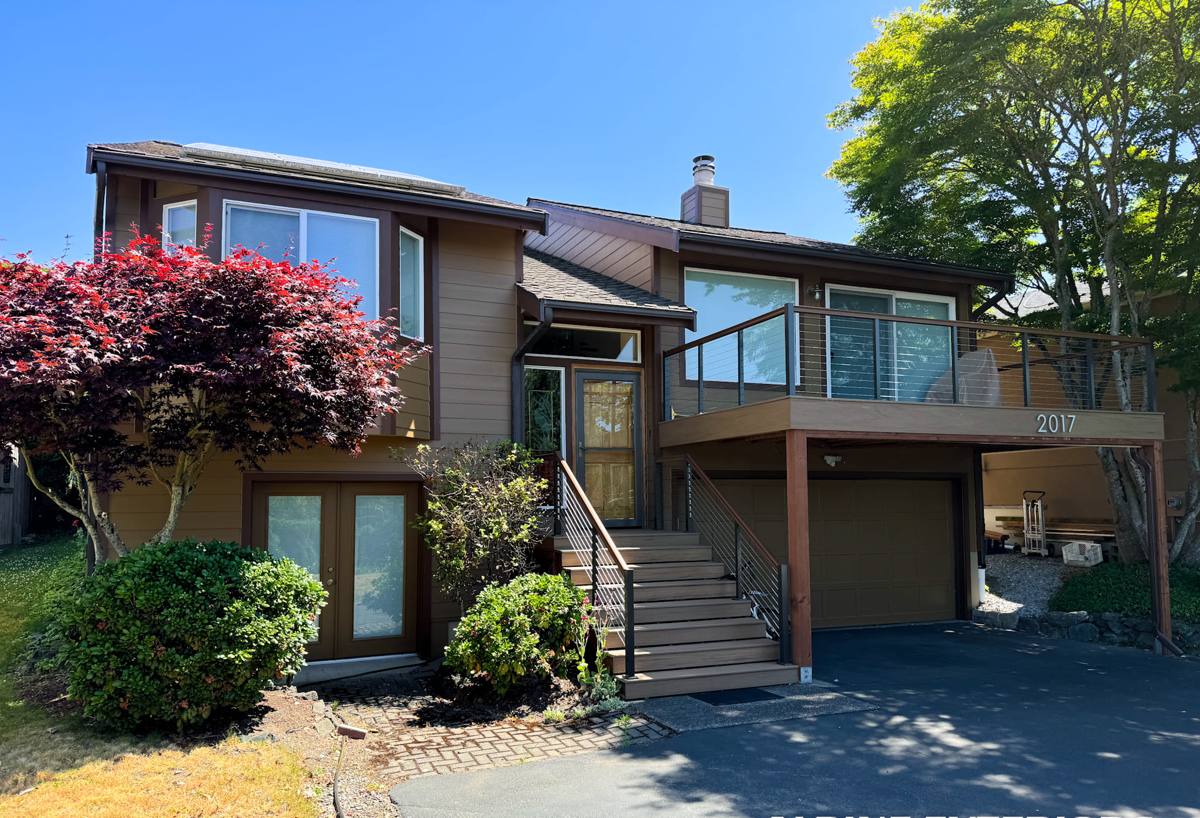
What Whatcom County Weather Does to Old Windows
Older wood and aluminum windows in this area tend to fail in a few predictable ways, and knowing which one you're dealing with helps decide whether you need repair or full replacement.
Moisture Intrusion
Driving rain — rain pushed sideways by wind rather than falling straight down — finds every gap in old caulking, worn weatherstripping, and degraded flashing. Once water gets behind the trim, it doesn't dry out quickly in our climate. Wood sills and jambs stay damp for days, which is exactly the condition rot and mold need to take hold.
Moss and Organic Growth
A long moss season means anything that stays damp and shaded — window sills, the tops of trim boards, corners where two surfaces meet — becomes a growth surface over time. Moss holds moisture against the material even longer than bare wood would, accelerating decay underneath it.
Seal Failure and Condensation
Double-pane windows have a gas-filled space between the panes sealed by a spacer. Once that seal fails — common in older units — the insulating gas escapes, moisture gets in, and you get permanent fogging between the panes that no amount of cleaning fixes. This is one of the clearest signs a window needs replacing, not repairing.
Signs a Lynden Home Needs Replacement, Not Just Repair
Not every window problem calls for full replacement. Here's a practical way to sort it out before spending money on the wrong fix:
- Fogging or moisture trapped between panes that doesn't clear — this means the seal is gone and cannot be repaired, only replaced.
- Soft, spongy, or discolored wood at the sill or bottom corners of the frame — often a sign rot has already started behind the trim.
- Windows that are difficult to open, won't stay open, or don't latch fully — usually a sign the frame has shifted or warped.
- Visible daylight or a noticeable draft around the frame when the window is closed and locked.
- Condensation forming on the inside of the glass regularly, even in normal indoor humidity — a sign of poor insulating performance.
- Moss or dark staining building up on the exterior sill or corners year after year despite cleaning.
- A noticeable jump in heating costs without other explanation, especially in a home with its original windows.
If you're only seeing failed caulking or worn weatherstripping with otherwise solid frames and clear glass, that can often be repaired. Once the seal or the wood structure is compromised, replacement is the honest recommendation.
Choosing the Right Window Material for This Climate
Material choice matters more here than in drier parts of the state, because whatever you install has to handle sustained moisture exposure and temperature swings without warping, rotting, or requiring constant upkeep.
| Material | How It Handles Local Moisture | Maintenance | General Cost Position |
|---|---|---|---|
| Vinyl | Won't rot or absorb water; performs well against driving rain when properly installed | Low — no painting, occasional cleaning | Most affordable |
| Fiberglass | Very stable in wet, cold, and warm conditions; resists warping | Low | Mid to upper range |
| Wood-clad (wood interior, exterior cladding) | Good if cladding is intact; interior wood still needs protection from any interior moisture | Moderate — cladding needs periodic inspection at joints | Upper range |
| Aluminum | Conducts cold and can condense/sweat in our damp winters; not our preferred choice for this region | Low, but condensation issues are common | Varies |
Our standard recommendation for most Lynden homes is vinyl or fiberglass, both of which shed water well and don't give moss or rot anything to work with. We'll walk through the trade-offs for your specific home rather than pushing one product line — the right choice depends on your home's age, siding type, and budget.
Glass Package
Standard double-pane low-E glass is adequate for most homes in this area. Triple-pane adds cost and weight for a modest efficiency gain and can be worth it for north-facing rooms or homes right along more exposed, windier stretches of the county — but for most Lynden homes, double-pane low-E with a quality argon fill is the practical, cost-effective standard.
Our Window Replacement Process
- On-site assessment: We inspect each window opening, not just the glass — checking for hidden rot, soft framing, and how the existing flashing was done.
- Honest scope: We tell you plainly which windows need full replacement, which could be repaired, and why — no upselling every window on the house if it isn't needed.
- Measurement and ordering: Exact measurements are taken for each opening; window sizes are rarely uniform even within the same house, especially in older homes.
- Removal: Old units are removed carefully to expose the rough opening so we can actually see and address any hidden damage before the new window goes in.
- Repair of hidden damage: Any rot or moisture damage found in the framing is repaired before the new window is set — installing a new window over a damaged opening just hides the problem.
- Flashing and sealing: Proper flashing tape and sealant are installed in the correct order — this is the single most important step for keeping driving rain out over the long run.
- Setting and insulating: The window is leveled, shimmed, and insulated around the frame without over-packing, which can bow the frame and affect operation.
- Interior and exterior trim: Trim is finished to match the home, and all exterior seams are sealed with weather-rated caulking.
- Final walkthrough: Every window is opened, closed, and checked for proper operation and seal before we consider the job done.
What a Correct Installation Actually Involves
Most window failures we see in older Lynden homes trace back to installation shortcuts, not bad windows. A correct installation in this climate means:
- Flashing installed in the right sequence — under the sill first, then sides, then top — so water is always directed outward and down, never trapped behind the window.
- A sloped sill pan so any water that does get behind the trim drains out instead of pooling against the wood.
- Weather-resistant barrier (house wrap) integrated with the window flashing, not just taped over it as an afterthought.
- Exterior caulking that's rated for sustained wet exposure, not a general-purpose sealant that breaks down after a season or two of our rain.
- Shimming that supports the frame evenly so the window doesn't rack out of square over time, which is what causes seals and locks to fail early.
Farm-Country and Rural Lynden Considerations
Lynden's rural surroundings bring a couple of practical wrinkles that don't apply to a tighter, in-town lot. Homes on larger properties are often more exposed to wind coming across open fields, which pushes rain into window seams harder than it would on a sheltered in-town lot. Older farmhouses in the area also frequently have original wood windows that were solid in their day but were never designed for modern energy expectations or several decades of continuous damp exposure. In these cases, we look closely at the framing around each opening before quoting, since older farmhouse construction sometimes has less moisture protection built in than homes framed in the last few decades.
Why Hire a Crew That Already Works in Lynden
A window installer who mostly works drier climates can do a technically fine job and still get the flashing sequence wrong for this region, because it simply hasn't mattered as much where they usually work. We install windows across Whatcom County year-round, in the same driving rain, the same moss season, and the same damp winters your home has to stand up to. That means we're not guessing at what holds up here — we're building to it every week. It also means when we recommend a material, a glass package, or a flashing detail, it's based on what we've seen actually perform on homes like yours, not a manufacturer's marketing sheet.
Energy Efficiency and Long-Term Value
Old, drafty windows cost you twice: once in higher heating bills through the wet winter months, and again in the moisture damage that develops around a poor seal. New, correctly installed windows address both. Low-E glass and tight, properly flashed frames cut down on drafts and condensation, which reduces the risk of the mold and mildew issues that come with chronic dampness indoors — a real concern in a climate as wet as ours. Over the life of the window, the combination of lower energy costs and avoided repair costs from moisture damage is usually the bigger factor, not just the upfront price of the unit itself.
If your Lynden home has windows showing any of the signs above, or you're just ready to stop dealing with drafts and fogged glass through another Whatcom County winter, we're happy to take a look. We offer free, no-pressure estimates — walk the property with us, get a straight answer on what actually needs replacing, and decide from there.