 Birch Bay Siding
 Board & Batten Siding for California Creek Homes
California Creek sits in one of the wetter, wind-exposed pockets of Birch Bay, and it shows in how houses age here. Homes a few blocks from the water take a different kind of beating than homes further inland in Whatcom County — more wind-driven rain hitting the walls sideways, more salt in the air corroding fasteners and finishes, and a moss season that runs long into the year on any surface that stays damp. Board & batten siding, done correctly, can hold up well in this environment. Done wrong — which happens more often than homeowners realize — it becomes one of the higher-maintenance siding styles you can put on a house near the coast.
This page is specifically about board & batten siding for California Creek properties: what the climate actually demands from this siding style, what a correct installation looks like, and why the details matter more here than they would on a home thirty miles inland.
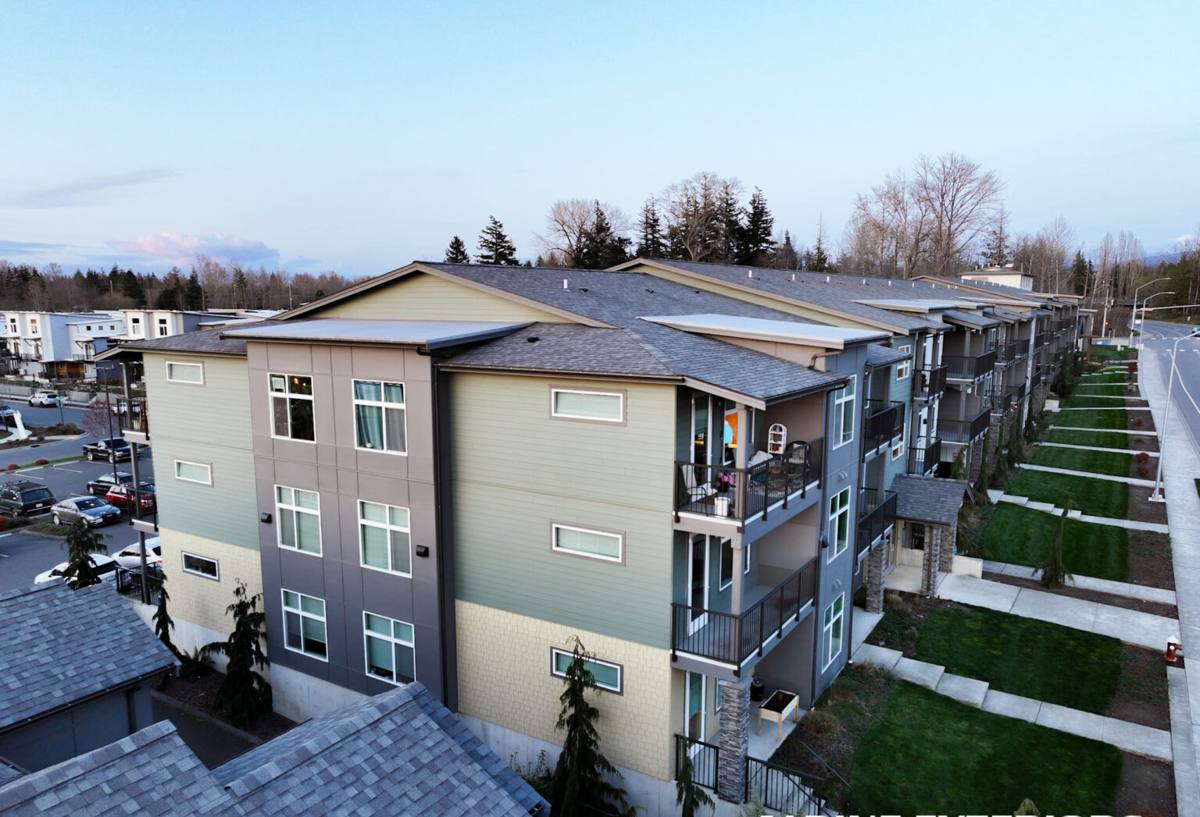
What Board & Batten Siding Actually Is
Board & batten is a vertical siding pattern: wide flat panels or boards installed side by side, with narrower strips (the battens) covering the seams between them. It's a classic look — you'll see it on farmhouses, craftsman-style homes, and a growing number of modern coastal builds — and it reads as clean, linear, and a little more distinctive than standard horizontal lap siding.
What most homeowners don't realize is that "board & batten" describes a pattern, not a material or a construction method. You can build it out of engineered wood, vinyl, primed spruce boards, or fiber cement, and you can install it directly against the wall or over a proper drainage gap. Those choices matter enormously in a climate like this one — far more than they would in a dry inland region — because the pattern itself creates more seams, more fastener penetrations, and more opportunities for water to find a way behind the cladding than a standard lap profile does.
Why This Climate Changes What "Correct" Means
Three things define the exterior envelope challenge in this part of Whatcom County:
- Salt air: Proximity to Birch Bay means airborne salt accelerates corrosion on exposed fasteners, uncoated metal flashing, and lower-grade hardware.
- Driving rain: Wind off the water pushes rain sideways into wall assemblies, not just straight down onto them, which puts real pressure on every seam, joint, and batten line.
- Extended moss season: Shaded, north-facing, or tree-lined walls stay damp for long stretches of the year, and moss and algae take hold on any siding material and finish that lets moisture linger on its surface.
None of these conditions are unique to California Creek, but they're more pronounced here than in drier parts of Whatcom County, and they compound. A board & batten installation that would perform fine in a sheltered inland yard can fail years early on a wall that's catching salt-laden, wind-driven rain on a regular basis.
The Rainscreen Gap Is Non-Negotiable
Board & batten's vertical battens create dozens of linear seams running down the wall. If those battens are nailed flat against the water-resistive barrier with no air gap behind them, any moisture that gets past the battens — and some always will, eventually — has nowhere to drain or dry. It sits against the sheathing. That's how you get rot, siding delamination, and hidden framing damage that isn't visible until it's expensive.
A correct installation uses a rainscreen: vertical furring strips or a drainage mat behind the siding that creates a continuous air gap, so any water that does get behind the cladding can drain down and dry out instead of soaking into the wall assembly. This is standard practice on any board & batten job we do near the water, and it's one of the first things worth confirming with any contractor bidding this kind of work in this area.
Fastening and Batten Spacing
Battens need to be fastened into structural framing or properly blocked sheathing, spaced and nailed to the manufacturer's specification, not "close enough." Under-fastened battens work loose in coastal wind gusts over time; over-driven or misplaced fasteners crack the boards or create entry points for water. Fastener material matters too — coastal salt air is hard on standard galvanized nails and screws, so corrosion-resistant fasteners rated for the exposure are worth insisting on.
Flashing at Windows, Corners, and the Foundation Line
Every transition point — window and door openings, outside corners, the bottom termination near the foundation — is a place where water wants to get behind the siding. Board & batten's vertical lines make it tempting to run boards straight into these transitions without proper flashing, but that's where a large share of coastal siding failures actually start. Correct head flashing over openings, proper kick-out flashing where roof lines meet walls, and a clean, ventilated termination at the base of the wall are what keep driving rain from working its way in over time.
Where Board & Batten Jobs Go Wrong in Wet Coastal Areas
The failures we see in board & batten installations near the water tend to follow a pattern:
- Battens face-nailed directly to the sheathing with no rainscreen, trapping moisture behind the boards.
- Caulk used as the primary water seal at seams and joints instead of proper flashing and drainage — caulk fails and needs recoating; flashing doesn't.
- Engineered wood or lower-grade composite panels used in a pattern that concentrates water exposure at every batten seam, in a climate where those materials already need careful moisture management.
- Standard fasteners that corrode faster than expected given the salt exposure, leading to streaking and loose battens years before they should need attention.
- Board & batten installed over damaged or unaddressed original sheathing, so the new siding looks right but the wall behind it was never actually fixed.
None of these are exotic problems. They're the predictable result of treating board & batten like a cosmetic pattern instead of a wall assembly that has to manage water in a demanding climate.
Why We Install James Hardie for Board & Batten — Not Engineered Wood or Vinyl
We install James Hardie fiber cement exclusively, and board & batten is one of the styles where that choice matters most. Vertical fiber cement panels (like HardiePanel) paired with Hardie trim battens give you the board & batten look without the moisture vulnerability of wood-based products or the flexing, fading, and seam issues that come with vinyl board & batten systems.
| Factor | James Hardie Fiber Cement | Engineered Wood / Vinyl Board & Batten |
|---|---|---|
| Moisture response | Fiber cement doesn't swell, rot, or delaminate from water exposure the way wood-based panels can | Engineered wood is moisture-managed but remains wood-based; vinyl doesn't rot but relies on gaps and fasteners that can loosen |
| Salt air / coastal exposure | Non-combustible fiber cement core holds up well with a factory finish rated for this kind of exposure | Finishes and seams are more exposed to accelerated wear near the water |
| Finish | ColorPlus factory finish is baked on and warrantied against fading and cracking | Field-painted or lower-grade factory finishes vary in coastal durability |
| Fire resistance | Non-combustible material | Wood-based products are combustible; vinyl can deform under heat |
| Long-term maintenance | Designed for long service life with minimal recoating when installed and finished correctly | Often requires earlier repainting, caulk maintenance, or panel replacement |
We're not saying every engineered wood or vinyl product on the market is poorly made. We're saying that after years of doing exterior work in this specific climate, fiber cement is the material we're willing to stand behind on every board & batten job we sign our name to — and it's the only one we install.
Our Process for a California Creek Board & Batten Project
- On-site assessment: We walk the exterior, check existing siding and sheathing condition, and identify any moisture or rot issues that need to be dealt with before new siding goes on — not covered up by it.
- Tear-off and sheathing check: Old siding comes off and we inspect the wall assembly underneath. Any damaged sheathing or framing gets repaired before anything new is installed.
- Water-resistive barrier and rainscreen: A proper weather barrier goes on the wall, followed by a rainscreen gap so the wall assembly can drain and dry behind the new siding.
- Flashing details: Windows, doors, corners, and the base of the wall get flashed correctly before the siding pattern is built out around them.
- Board & batten installation: HardiePanel or equivalent Hardie vertical panels go up first, followed by battens fastened to spec with corrosion-resistant hardware.
- Final inspection and walkthrough: We check fastening, seams, and flashing details before calling the job done, and walk the finished exterior with the homeowner.
Cost Factors for Board & Batten Siding in This Area
Board & batten costs vary by project, and we don't publish blanket per-square-foot numbers because the real cost drivers are specific to each house. The factors that move the number most in California Creek are:
| Factor | Why It Matters Here |
|---|---|
| Existing wall condition | Homes with hidden moisture damage from prior siding need sheathing or framing repair before new siding goes on |
| Wall exposure | Walls facing prevailing wind and rain off the water may need extra attention to flashing and drainage detailing |
| Home size and wall complexity | More corners, window openings, and roof-to-wall transitions mean more flashing work and labor time |
| Trim and batten detailing | Batten spacing, corner treatment, and trim profile choices affect both material and labor |
| Access | Multi-story sections, tight lot lines, or landscaping near the walls can affect staging and labor time |
Why Hiring a Crew That Already Works California Creek Matters
A contractor who's worked houses in this specific pocket of Birch Bay already knows which walls take the worst of the weather off the water, what the moisture conditions tend to look like once the old siding comes off, and how Whatcom County's permitting and inspection process works for exterior re-siding. That's not a small thing — it means fewer surprises mid-project, and a crew that isn't learning the local climate's demands on your dime.
It also means the crew has already made the judgment call, repeatedly, on the details that matter most here: how much of a rainscreen gap to build in, what fastener grade to use given the salt exposure, and how to detail flashing on a wall that's going to see real wind-driven rain. Those aren't things you can fully spec out on paper — they come from having done this specific kind of work in this specific kind of place.
Checklist: What to Confirm Before You Sign a Board & Batten Contract
- Is a rainscreen gap or drainage mat included behind the battens, not just a flat nail-up installation?
- What fastener material is being used, and is it rated for coastal salt exposure?
- Is the sheathing being inspected and repaired if needed before new siding goes on, not just covered?
- Are window, door, corner, and base flashing details spelled out in the written scope of work?
- Is the siding James Hardie fiber cement, or a substitute material — and if a substitute, why?
- Does the contractor carry current licensing and insurance for exterior work in Washington?
- Is there a written warranty covering both materials and workmanship, and what does each one actually cover?
If you're weighing board & batten siding for a home in California Creek, we're glad to take a look and give you a straight, no-pressure assessment of what your walls actually need. Fill out the form below for a free estimate.