 Birch Bay Siding
 Window Replacement for California Creek Homes
California Creek sits close enough to Birch Bay and the Strait of Georgia that homes here take a different kind of weathering than houses further inland in Whatcom County. Salt-laden air moves in off the water, wind-driven rain finds every weak seal, and the long gray stretch of fall through spring keeps moss and moisture pressure on siding, trim, and window openings for months at a time. Windows are one of the first places that shows up. If you've noticed fogging between panes, drafts around the frame, wood trim gone soft at the corners, or a window that's just gotten hard to open and close, that's usually not a one-off problem — it's the climate doing what it does here, year after year.
We work on homes in this immediate area regularly, which matters more than it sounds like. A window replacement done right in California Creek isn't the same job as one done in a dry inland climate — the flashing details, sealant choices, and frame materials all need to account for salt exposure and near-constant moisture. That's the standard we hold every job to.
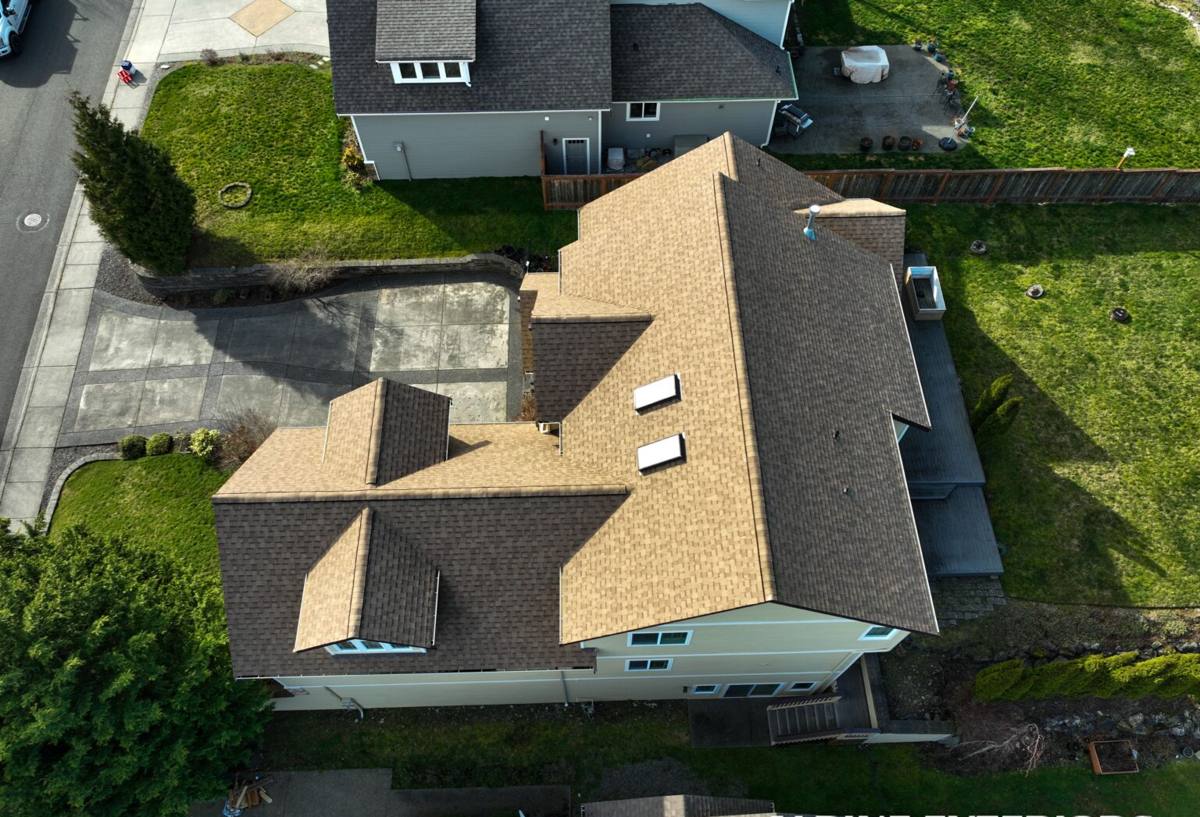
What This Climate Does to Windows Over Time
Salt Air and Metal Components
Homes near Birch Bay and California Creek get periodic salt spray carried on the wind, even at a distance from the water. Over years, that salt accelerates corrosion on window hardware — hinges, cranks, locks, and especially any exposed aluminum or steel components. Once hardware starts corroding, windows get stiff, seals stop compressing evenly, and small gaps start letting in air and moisture.
Driving Rain and Water Intrusion
Rain here doesn't just fall straight down — wind pushes it sideways into wall assemblies, and window openings are one of the most common entry points for water that gets behind siding. A window that was installed without proper flashing, or with flashing that's failed over time, can leak for months before it shows up as a stain on an interior wall. By then there's often already damage to the framing around the opening.
Moss, Algae, and Trapped Moisture
The long moss season in this part of Whatcom County isn't just a roof and siding issue. Moss and algae can take hold on horizontal window sills and in corners where water sits and doesn't dry out between rain events. That trapped moisture is exactly what wood trim and sill material can't tolerate long-term — it's a slow rot process that's easy to miss until the material is already soft.
Signs a California Creek Home Needs Window Replacement
- Fogging or a hazy film between panes of double- or triple-pane glass — a sign the seal has failed and the gas fill is gone
- Visible gaps, drafts, or cold spots around the frame when it's windy outside
- Wood trim or sills that feel soft, spongy, or show paint bubbling and peeling
- Windows that stick, won't stay open, or take real effort to latch
- Rising heating bills without any other clear explanation
- Visible corrosion or chalky buildup on hardware, tracks, or frames
- Water stains on interior drywall or sills below or around the window
What a Correct Window Replacement Involves
Swapping in a new window is the easy part. The parts that actually determine whether the job holds up in this climate are the ones you don't see once the trim goes back on.
Proper Flashing and Sealing
Every opening gets flashed so water is directed out and away from the wall assembly, not trapped behind it. In a driving-rain climate like this one, sill pan flashing and correctly lapped house wrap around the opening aren't optional extras — they're the difference between a window that stays dry for decades and one that quietly leaks for years.
Material Choice for Salt and Moisture Exposure
We steer homeowners toward frame materials and hardware finishes that hold up under salt air exposure — vinyl and fiberglass frames generally resist corrosion better than bare aluminum, and hardware with a marine-grade or corrosion-resistant finish is worth the difference in a location this close to the water. This isn't about any one brand being bad; it's about matching the product to the actual exposure the house sees.
Insulation and Air Sealing
Once the old window is out, the rough opening gets properly insulated and air-sealed before the new unit goes in — gaps left here are a common cause of drafts that show up even after a "new" window is installed.
Glass Package
Double-pane, low-E glass is the standard for this region's mix of damp winters and cool summers. Triple-pane is worth considering for north- or west-facing rooms that take the brunt of the weather, though it comes at added cost.
How Our Process Works
- Walkthrough and assessment — we look at every window being considered, check for hidden moisture or framing damage, and talk through what's actually needed versus what can wait
- Honest estimate — a written estimate that covers materials, labor, and any framing repair we expect to find once old windows come out
- Removal and inspection — old windows come out carefully, and we inspect the rough opening for rot or water damage before anything new goes in
- Repair as needed — any soft or damaged framing gets replaced before the new window is installed, not covered over
- Installation with proper flashing — new window set, shimmed level and plumb, flashed and sealed to shed water correctly
- Insulation, trim, and finish — opening insulated, interior and exterior trim finished to match the home
- Final walkthrough — we check operation, seals, and appearance with you before calling the job done
Comparing Common Frame and Hardware Options
| Option | Salt Air / Corrosion Resistance | Maintenance | Typical Cost Position |
|---|---|---|---|
| Vinyl frame | Good — doesn't corrode | Low — occasional cleaning | Lower to mid |
| Fiberglass frame | Very good — stable and corrosion-resistant | Low | Mid to higher |
| Bare aluminum frame | Poor without added coatings — prone to pitting near the coast | Higher — needs monitoring for corrosion | Lower |
| Wood frame, unclad | Poor if exposed to driving rain without diligent upkeep | High — repainting and sealing | Higher |
| Wood frame, clad exterior | Good on the exterior face; interior still wood | Moderate | Higher |
Why Hiring a Crew That Knows California Creek Matters
General contractors who don't work this area regularly sometimes treat window installation as a generic job — same details regardless of where the house sits. That approach misses what actually causes callbacks in a place like this: flashing that's fine in a dry climate but inadequate against driving rain, or hardware that looks fine on install day and starts corroding within a couple seasons of salt exposure. We work on homes throughout the Birch Bay and California Creek area and see the same failure patterns repeatedly, which is exactly why we build every install around them instead of relying on generic best practices from somewhere else.
Whatcom County building requirements and typical wind and rain exposures for waterfront-adjacent homes also factor into how we spec flashing and sealants — it's not a one-size approach across every job we do.
Cost Factors Homeowners Should Know
Every home and window count is different, so we won't quote a number without seeing the job, but a few factors consistently move the price:
- Number of windows being replaced and whether it's a whole-house project or select units
- Frame material chosen (vinyl, fiberglass, or wood-clad)
- Glass package — standard double-pane low-E versus triple-pane
- Condition of the existing rough openings — hidden rot or water damage adds repair time
- Window size and configuration, including any custom or non-standard shapes
- Access and second-story versus ground-floor installation
We'd rather find framing damage during the estimate walkthrough than discover it mid-project, so we look closely before pricing the job.
Maintaining New Windows in This Climate
A properly installed window in a salt-air, high-rain climate still needs some basic upkeep to reach its full lifespan. Rinsing accumulated salt residue off frames and hardware a couple times a year, keeping sills clear of trapped debris and moss growth, and checking exterior caulking annually for cracking all go a long way. None of it is complicated, but skipping it is how a 20-plus year window starts showing problems in half that time.
If you're noticing drafts, fogged glass, or sticking windows on your California Creek home, we're happy to take a look and give you a straightforward, no-pressure estimate — just fill out the form below to get started.