 Birch Bay Siding
 Why Ferndale Decks Age Faster Than the Brochure Photos Suggest
Ferndale sits close enough to the water and the marine weather patterns that move through Whatcom County that decks here take a different kind of beating than decks fifty miles inland. Salt-laden air corrodes fasteners and connectors from the inside out, long stretches of driving rain push moisture into every joint and seam, and the region's extended moss season keeps shaded and low-airflow areas of a deck damp for months at a time. None of this is dramatic on its own. It's cumulative. A deck that looks fine in July can be hiding soft framing, rusted hardware, or a slow drainage problem that's been working against it since the previous winter.
Repairing a deck correctly in this area means treating those three factors — salt exposure, sustained rain, and moss — as the actual design conditions, not an afterthought. A repair that would hold up fine in a dry climate can fail here in a few seasons if it ignores how water and organic growth actually behave on a Whatcom County deck.
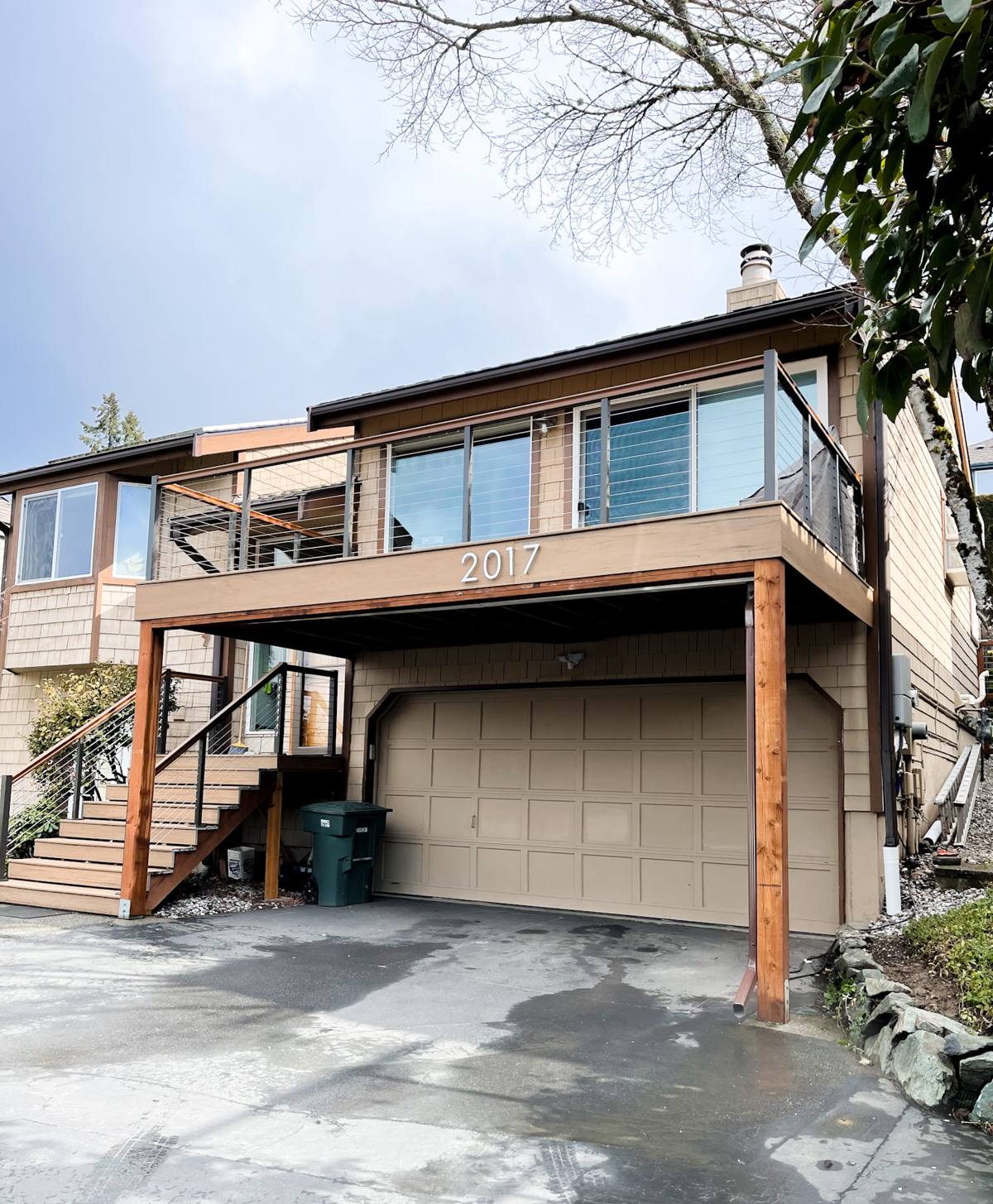
Signs Your Deck Needs Repair — And What They Usually Mean
Surface Clues
- Boards that feel spongy or flex more than neighboring boards
- Dark staining or green-black growth concentrated in one area rather than spread evenly
- Nail heads popping up or fastener stains bleeding through the wood
- Railings that wiggle or feel less rigid than they used to
- Gaps opening up around the ledger board where the deck meets the house
- Standing water that takes more than a day to fully drain after rain
What's Usually Underneath
Spongy boards point to moisture trapped between the decking and the joists below, often because debris or moss has been holding water against the wood. Popped fasteners are frequently a sign of corrosion — the fastener has lost grip strength and is working its way out under normal foot traffic. Loose railings can be as simple as a few worn connections, or as serious as post rot at the base. A gap at the ledger board is worth taking seriously immediately, since that connection carries a significant share of the deck's structural load and is one of the most common failure points on older decks.
What a Correct Deck Repair Actually Involves
A repair that only replaces the boards you can see is a cosmetic fix, not a structural one. A proper repair starts from the ground up:
Substructure First
Footings, posts, beams, and joists get checked before anything else. In this climate, that means probing for soft wood at ground contact points, checking post bases for standing water or soil contact that shouldn't be there, and confirming that joists haven't been quietly losing strength under decking that looked fine from above.
The Ledger Connection
Where the deck attaches to the house is inspected for flashing that's failed or was never installed correctly, and for fastener corrosion at the connection itself. This is not an area to patch around — if the ledger attachment is compromised, the whole deck's safety margin is affected.
Fasteners and Hardware
In coastal air, standard fasteners corrode faster than homeowners expect. A repair that reuses corroded hardware, or replaces it with the same grade that failed, is setting up a repeat visit in a few years. Correct repair work matches fastener and connector grade to the exposure the deck actually sees.
Decking and Railings
Only after the structure underneath is sound does it make sense to address the boards, railings, and any cosmetic elements. Replacing decking over a compromised frame is a common shortcut that hides the real problem instead of fixing it.
Repair or Replace? An Honest Framework
Not every deck problem calls for full replacement, and not every deck can be reasonably patched. The table below reflects the general factors that tip the decision one way or the other — every deck is different, which is why we look at yours in person before recommending either path.
| Factor | Leans Toward Repair | Leans Toward Replacement |
|---|---|---|
| Substructure condition | Posts, beams, joists are sound | Widespread rot or corrosion in framing |
| Age of deck | Under 15 years, built to a reasonable standard | Original construction quality was already marginal |
| Extent of damage | Localized to a few boards or one connection | Damage spread across multiple structural areas |
| Ledger condition | Attachment and flashing intact | Ledger rot or long-term water intrusion at the house |
| Drainage design | Water sheds away from the structure | Chronic standing water or poor original grading |
When the substructure is sound, targeted repair is almost always the more cost-effective and lower-disruption choice. When the framing itself has been compromised, patching the visible surface just delays a bigger job and can create a false sense of security about a deck's actual load capacity.
How Our Repair Process Works
- On-site inspection. We walk the entire deck, check the substructure from underneath where accessible, probe suspect areas, and inspect the ledger connection and fasteners.
- Written scope and estimate. You get a clear explanation of what's failing, what's still sound, and what the repair will involve — no vague line items.
- Structural work first. Any needed post, beam, joist, or ledger repairs happen before cosmetic work starts.
- Hardware and fastener upgrades. Corroded or undersized connectors are replaced with hardware suited to coastal exposure.
- Decking, railing, and finish work. Once the frame is solid, we address the surface elements and any railing repairs needed for safety and code.
- Drainage check. We confirm water is shedding away from the house and structure rather than pooling against it.
Materials and Hardware: Why the Details Matter Here
In a dry, low-humidity region, material choice on a deck repair is mostly about looks and budget. In Ferndale, it's about how the materials behave under sustained moisture and salt exposure. We favor fasteners and structural connectors rated for coastal or corrosive environments over standard-grade hardware, even when it costs a bit more up front, because the failure mode for cheap fasteners in this climate is fastener heads shearing or backing out under normal use — not a slow, visible warning sign.
For decking material itself, both quality wood and composite options have a place depending on your budget, the look you want, and how much maintenance you're willing to do. Wood decking generally needs more consistent maintenance — cleaning, sealing, and moss control — to perform well here, while composite decking trades a higher material cost for lower ongoing upkeep. We'll walk through the honest trade-offs for your specific deck rather than pushing one material as universally "better."
Moss, Drainage, and Long-Term Protection
Ferndale's extended moss season is one of the most underestimated stressors on a deck. Moss holds moisture against wood far longer than open air ever would, and it tends to establish itself first in shaded corners, under furniture, and along edges where airflow is already limited — exactly the spots where hidden rot develops. Part of a proper repair is addressing why moss took hold in the first place, not just scraping it off.
Practical Moss and Moisture Checklist
- Confirm decking has slight gaps for airflow and drainage between boards
- Check that gutters and downspouts aren't discharging directly onto or near the deck
- Clear debris from between boards and along ledger and rim joist areas each season
- Keep planters and furniture from sitting directly on damp boards for extended periods
- Address shaded, low-airflow zones with cleaning or treatment before moss becomes established
- Watch for water pooling after rain — it should clear within a day
Maintenance After Repair
A repair is only as good as the upkeep that follows it. For most Ferndale homes, that means an annual check of fasteners and connections, periodic cleaning to keep moss from re-establishing, and resealing or refinishing wood decking on the schedule appropriate to the product used. We'll tell you what your specific deck actually needs after the repair — not a generic maintenance checklist that doesn't account for your deck's exposure, shade, and material.
Why a Crew That Already Works in Ferndale Makes a Difference
Deck repair isn't a one-size-fits-all trade. A contractor who mostly works dry, inland jobs may not default to coastal-grade fasteners, may not think to check ledger flashing as carefully, and may not recognize early moss patterns as a warning sign rather than a cosmetic nuisance. Working regularly in Ferndale and the surrounding Whatcom County area means we see the same failure patterns repeat across similar homes, and we build repairs that account for them from the start instead of learning the hard way after a callback.
If your deck is showing any of the signs above, or you just want a second opinion before committing to a full replacement, we're happy to take a look. Reach out for a free, no-pressure estimate using the form below.