 Birch Bay Siding
 Roofing in Cottonwood Beach Isn't the Same Job as Roofing Inland
Cottonwood Beach sits right up against the water in Birch Bay, and that location changes what a roof has to survive. Homes here take a steady dose of salt-laden air, wind-driven rain that comes in sideways off the bay, and a long stretch of the year where shaded, north-facing slopes barely dry out between storms. That combination is hard on fasteners, flashing, and shingle granules in ways that a roof twenty miles inland never has to deal with. When we install a new roof in this neighborhood, we're not just laying down shingles — we're building a system that's specifically resistant to salt corrosion, wind uplift, and moss colonization, because those are the three things that actually shorten a roof's life out here.
A lot of the roof failures we get called out to inspect in Whatcom County's coastal pockets aren't failures of the shingle itself. They're failures of the details around it — fasteners that corroded early, underlayment that wasn't rated for prolonged moisture exposure, or ventilation that was never sized for a marine climate. New construction and full tear-off replacements are where those details get set for the next 25-30 years, so it's worth getting them right the first time.
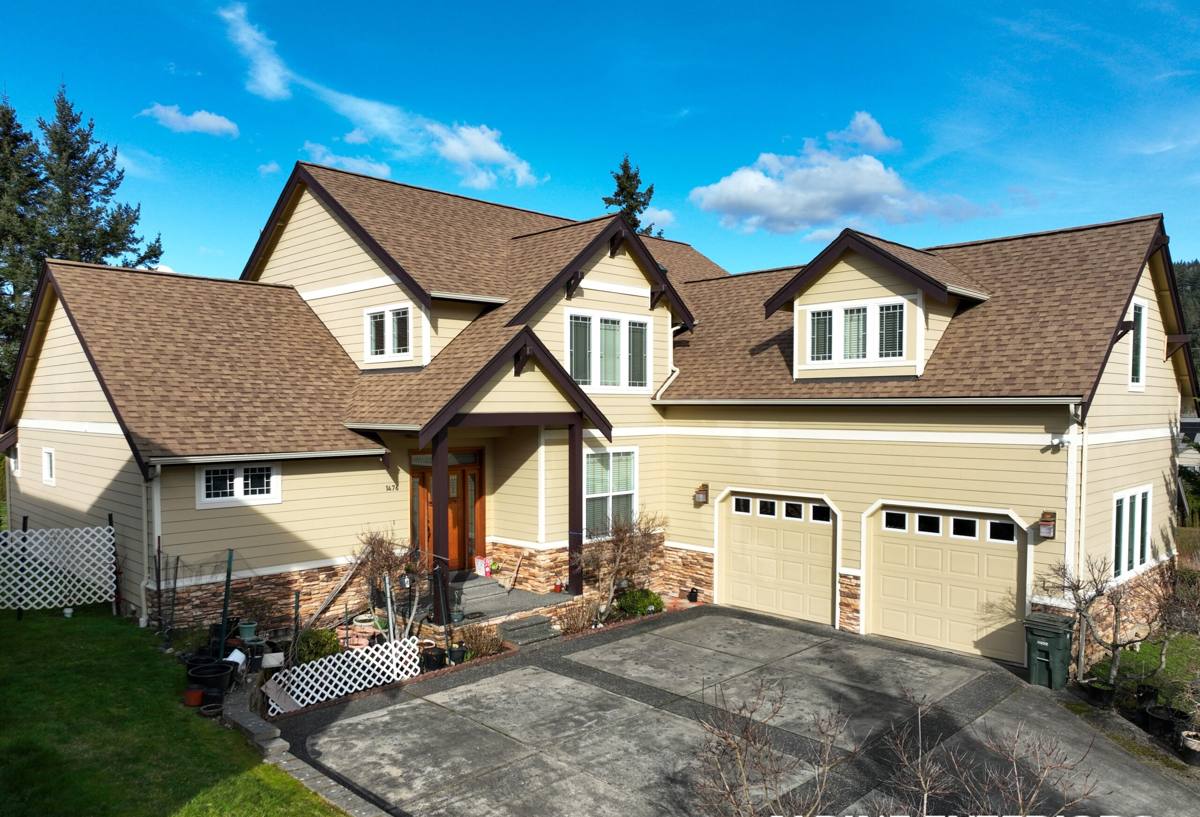
What the Local Climate Actually Does to a Roof
Salt Air and Corrosion
Airborne salt accelerates rust on exposed metal — nail heads, flashing seams, gutter fasteners, and any hardware that isn't rated for coastal exposure. Standard electro-galvanized nails can start showing rust streaks within a few years this close to the water. It's a slow problem, but it's a compounding one: once a fastener starts to corrode, it loses holding strength right around the time wind loads are highest.
Driving Rain
Wind off the bay doesn't just drop rain straight down — it pushes it sideways and up under laps, eaves, and around penetrations like vents and chimneys. A roof that would shed water fine in a calm inland rain can leak here if the underlayment, flashing, and starter courses weren't installed with wind-driven moisture specifically in mind.
Moss and Prolonged Dampness
Shaded slopes and tree-lined lots in and around Cottonwood Beach stay damp longer than open, sun-exposed roofs. That extended dampness is exactly what moss needs to establish. Once moss takes hold, it holds moisture against the roofing material, lifts shingle edges, and works its way into seams — turning a cosmetic issue into a moisture intrusion issue if it's left alone for a few seasons.
What a Correct New Roof Installation Includes
A new roof is only as good as the layers a homeowner never sees. For Cottonwood Beach homes, we treat the following as non-negotiable, not upgrades:
- Corrosion-resistant fasteners — stainless steel or hot-dip galvanized nails and flashing hardware, not standard electro-galvanized, anywhere within reach of salt air.
- A water-and-ice barrier at eaves, valleys, and penetrations — not just at the eaves like a minimum-code inland install might use, because wind-driven rain finds its way into valleys and around vents just as easily as it does the roof edge.
- A synthetic underlayment rated for extended UV and moisture exposure, since coastal weather delays can stretch a project's exposed-underlayment window longer than a calm-weather job.
- Balanced intake and exhaust ventilation, sized to the attic volume, so moisture from inside the home doesn't add to what the climate is already doing to the roof deck from outside.
- Properly lapped and sealed flashing at every wall intersection, chimney, and skylight — the single most common source of leaks we find on older coastal roofs.
Choosing a Roofing Material for a Bay-Front Property
There isn't one "best" roofing material for Cottonwood Beach — it depends on the home's roof pitch, budget, and how much long-term maintenance the homeowner wants to take on. Here's how the common options actually compare in this specific climate:
| Material | Salt Air Performance | Moss Resistance | Typical Lifespan Here |
|---|---|---|---|
| Architectural asphalt shingle | Good, with corrosion-rated fasteners and flashing | Moderate — benefits from periodic cleaning on shaded slopes | 20-25 years |
| Standing seam metal | Very good with a marine-grade coating and correct fastener spec | Excellent — moss struggles to grip smooth metal panels | 40-50+ years |
| Synthetic (composite) shingle | Good — doesn't corrode, but check fastener and flashing spec | Good — resists moisture absorption better than organic mats | 30-40 years |
Metal roofing carries a higher upfront cost, but its resistance to both salt corrosion and moss makes it a strong fit for the most exposed, shaded, or wave-facing lots in the neighborhood. Architectural asphalt remains a solid, cost-effective choice for the majority of homes when it's installed with the coastal-grade details listed above — the material itself isn't the weak point; a standard, non-coastal installation spec is.
Ventilation: The Detail Most Roofs in This Area Get Wrong
Attic ventilation gets overlooked because it's invisible once the roof is finished, but it's one of the biggest factors in how long a roof lasts in a damp coastal climate. Without enough intake at the eaves and exhaust at the ridge, warm, moist air from inside the home gets trapped against the underside of the roof deck. Over a Pacific Northwest winter, that trapped moisture condenses, keeps the sheathing damp, and creates exactly the environment moss and mildew thrive in — even before you factor in what's happening on the outside of the roof.
On a new installation, we calculate intake and exhaust based on the actual attic square footage rather than defaulting to a one-size-fits-all vent count. It's a detail that costs very little at installation time and is genuinely difficult to correct later without opening up the roof.
Our Installation Process
1. On-Site Assessment
We walk the roof and attic together, checking deck condition, existing ventilation, flashing points, and any signs of past moisture intrusion — not just measuring square footage.
2. Tear-Off and Deck Inspection
Old roofing comes off down to the deck so we can actually see the plywood or OSB underneath. Any soft, delaminated, or water-stained sections get replaced before anything new goes down — no roofing over a compromised deck.
3. Underlayment and Flashing
Ice-and-water barrier goes at eaves, valleys, and penetrations, followed by synthetic underlayment across the field. All flashing — step flashing at walls, counter-flashing at chimneys, and drip edge at eaves and rakes — is installed or replaced to current standards, not just reused from the old roof.
4. Roofing Material Installation
Shingles, panels, or composite material go on per manufacturer spec, with corrosion-resistant fasteners and correct nailing patterns for the wind exposure at this location.
5. Ventilation and Final Details
Intake and exhaust vents are set to the calculated balance, and we do a full walk-through with the homeowner before calling the job done.
What Affects the Cost of a New Roof Here
| Factor | Why It Matters in Cottonwood Beach |
|---|---|
| Roof pitch and access | Steeper or harder-to-access roofs near the bluff or shoreline take more labor and safety setup |
| Deck condition | Homes with a history of moss or slow leaks often need more deck replacement than expected |
| Material choice | Metal costs more upfront but reduces long-term maintenance versus asphalt in this climate |
| Ventilation upgrades | Older homes frequently need added intake or exhaust vents to meet a proper balance |
| Number of penetrations | Chimneys, skylights, and multiple roof planes add flashing work and material |
We give firm, itemized estimates before any work starts — no vague allowances that turn into surprise change orders once the tear-off begins.
Why It Matters to Hire a Crew That Already Works This Neighborhood
A crew that regularly works Cottonwood Beach and the surrounding Birch Bay shoreline already knows which fastener and flashing specs hold up here, how to schedule around the area's rain patterns so underlayment isn't left exposed longer than necessary, and what Whatcom County permitting expects for a full re-roof. That local familiarity shows up in fewer surprises mid-project and a roof that's actually specified for the conditions it will face, rather than a generic inland install spec applied to a bay-front home.
What to Expect and Look For in a New Roof Quote
- A written scope that names the specific fastener type (stainless or hot-dip galvanized), not just "roofing nails"
- Underlayment and ice-and-water barrier coverage specified by location on the roof, not a single vague line item
- A stated ventilation plan with intake and exhaust vent counts, not just "vents as needed"
- Flashing addressed explicitly at every wall, chimney, and skylight intersection
- A clear timeline that accounts for weather delays rather than a single fixed install date
- Manufacturer warranty terms explained in plain language, including what voids them
If you're planning a new roof for a home in Cottonwood Beach, we're happy to walk the roof with you, explain what your specific pitch, exposure, and deck condition call for, and put together a straightforward, no-pressure estimate using the form below.