 Birch Bay Siding
 Storm Damage Roof Repair for Terrell Creek Homes
Terrell Creek sits close enough to the water that every winter storm rolling off the Strait of Georgia brings the same combination: sideways rain, gusting wind, and salt-laden air that never really lets a roof dry out between systems. Add in Whatcom County's long, wet moss season, and roofs here take a different kind of beating than roofs forty miles inland. A shingle or flashing failure that would sit quietly for a season in a dry climate can turn into a soaked attic deck within a week around Birch Bay.
This page covers what storm damage actually looks like on a Terrell Creek roof, what a correct repair involves, and how our process works when a homeowner calls us after a rough night of weather.
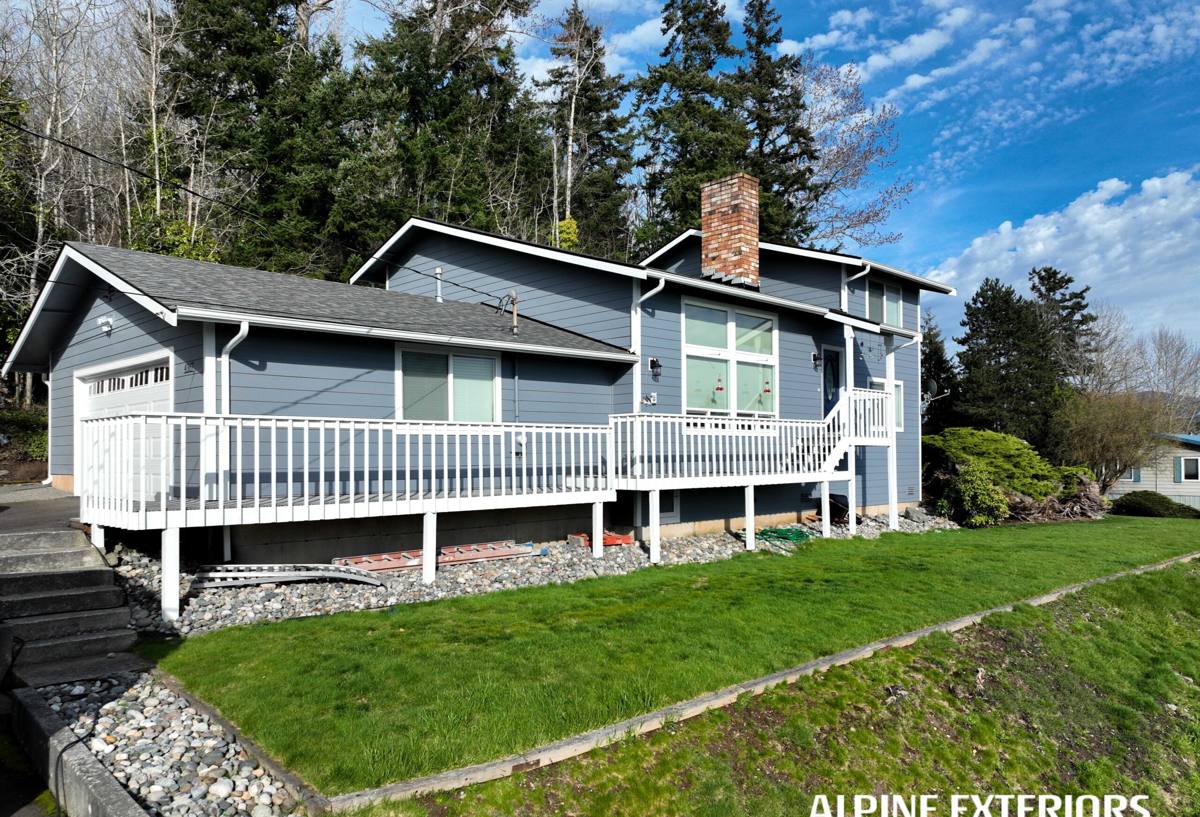
What Storm Damage Looks Like Here
Whatcom County doesn't see much hail, so most of the storm damage we're called out for around Terrell Creek falls into a smaller set of categories:
- Wind-lifted or torn shingles — gusts off the water catch an edge or a ridge cap and peel it back or snap it off entirely.
- Flashing displacement — step flashing, chimney flashing, and valley metal work loose from repeated wind-driven rain and freeze-thaw cycling.
- Wind-driven rain intrusion — water pushed sideways under shingles or through minor gaps that would never leak in calm rain.
- Fallen limbs and debris — mature trees common around Terrell Creek properties drop branches in high wind, cracking shingles, denting metal, or puncturing decking.
- Gutter and downspout separation — wind loading pulls gutters off fascia, which then backs water up under the drip edge.
None of these require a dramatic storm to happen. A single night of 40-50 mph gusts, which this stretch of Whatcom County gets several times a winter, is enough to start any of them.
Why Salt Air Changes the Equation
Proximity to the water means fasteners, flashing, and gutter hardware corrode faster here than they would on a roof further inland. A repair that ignores that — using standard fasteners instead of corrosion-resistant ones, or reusing pitted flashing — tends to fail again within a couple of storm seasons. We factor salt exposure into every material choice on a Terrell Creek roof, not just the visible shingle.
Why Fast Response Matters More in This Climate
A damaged roof that sits exposed for even a few days during Birch Bay's rainy months absorbs a lot of water. Once moisture gets into the decking, insulation, or framing, drying it back out takes far longer than the original repair would have, and mold and rot become real risks — especially in the mild, humid conditions typical of this part of Washington. Quick, correct temporary protection (not just a blue tarp thrown over the damage) is often what separates a same-week repair from a much larger decking or interior replacement job later.
There's also an insurance timing angle. Most carriers want damage documented and a temporary repair in place promptly after a storm event. Waiting weeks to address a wind-torn section can complicate a claim, since ongoing water intrusion can be characterized as neglect rather than storm damage.
What a Correct Storm Repair Actually Involves
A storm repair done right is more than swapping out the shingles that are obviously missing. Here's what we check on every call in the Terrell Creek area:
- Full slope inspection, not just the damaged spot — wind damage is rarely isolated to one section; we check the whole roof plane and adjacent slopes for lifted tabs or loosened nails that haven't fully failed yet.
- Decking condition underneath — if water got past the shingle layer, we check the sheathing for soft spots or delamination before covering anything back up.
- Flashing integrity at penetrations — chimneys, vents, and skylights are common failure points after wind events and need their own inspection, separate from the shingle field.
- Underlayment condition — if the underlayment was compromised, patching shingles over it without addressing the underlayment just delays the next leak.
- Fastener and material matching — repairs should use materials that match the existing roof's age and profile closely enough that the patch doesn't become its own future weak point.
Skipping any of these steps is how a "quick fix" turns into a callback six months later, usually during the next big storm.
Our Process for a Storm Damage Call
1. Initial Assessment
We inspect the roof from the ground and, where safe, on the roof itself, documenting the extent of damage with photos. This documentation matters both for our own repair plan and for any insurance claim the homeowner may file.
2. Temporary Protection
If the roof has an active leak point or exposed decking, we get it weatherproofed the same visit where possible, using proper synthetic underlayment or membrane rather than a loose tarp that wind can rip off in the next system.
3. Detailed Scope and Estimate
Once the damage is fully assessed, we put together a clear scope — what's being repaired, what materials are being used, and an honest cost range. If the damage is limited, we say so; we don't upsell a full re-roof when a targeted repair will hold up.
4. Repair Work
We match shingle type, color, and exposure as closely as possible to the existing roof, replace compromised flashing and underlayment rather than working around it, and re-secure or replace any damaged gutter sections tied to the same storm event.
5. Follow-Up Check
For larger storm repairs, we recommend a follow-up look after the next significant rain to confirm the repair is performing as expected before we consider the job closed.
Cost Factors for Storm Damage Repairs
Every storm repair is different, but the factors that move the price are consistent. This table breaks down the main variables we weigh when scoping a Terrell Creek repair:
| Factor | Lower Cost End | Higher Cost End |
|---|---|---|
| Extent of area affected | Single localized spot | Multiple slopes or ridge lines |
| Decking condition | Dry, intact sheathing | Soft or delaminated decking needing replacement |
| Roof access | Single-story, straightforward pitch | Steep pitch, multiple stories, tree cover |
| Material match | Common shingle still in production | Discontinued or specialty material requiring a wider blend-in |
| Flashing scope | Isolated flashing repair | Chimney, valley, and vent flashing all involved |
We walk homeowners through exactly where their repair falls on this spectrum before any work starts — no vague allowances, no surprise change orders.
Insurance Claims: What Helps and What Slows Things Down
Filing a storm damage claim in Whatcom County generally goes smoother when the homeowner has clear photo documentation from right after the event and a prompt professional assessment. We provide detailed photos and a written scope that adjusters can work from directly. What tends to slow a claim down is delayed reporting, damage that's been left exposed long enough to cause secondary water damage, or repairs done piecemeal without documentation of the original event. We're happy to meet an adjuster on-site if that helps move a Terrell Creek homeowner's claim along.
Moss Season and Long-Term Roof Health
Storm damage and moss growth are connected more than most homeowners realize. A roof with lifted or damaged shingles traps more moisture, and trapped moisture is exactly what moss needs to establish itself. Once moss gets a foothold on a north-facing slope — common in the shaded, damp conditions around Terrell Creek — it holds even more water against the shingle surface, accelerating wear. Part of a proper storm repair is making sure the fixed area doesn't become the spot where moss takes hold next season. That means correct shingle seating, clean water paths off the roof, and gutters that are actually moving water instead of holding it.
Why a Locally Familiar Crew Matters
A crew that already works in and around Birch Bay and Terrell Creek knows the microclimate: how wind tends to hit these roofs, which flashing details fail first in salt air, and what shingle lines actually hold up here versus further inland. That familiarity shows up in faster, more accurate assessments and repairs that account for conditions specific to this stretch of Whatcom County rather than a generic regional approach.
Homeowner Checklist After a Storm
- Photograph visible damage from the ground before anything is touched or cleaned up
- Check the attic (if accessible) for water stains, dampness, or daylight through the decking
- Clear debris away from gutters and downspouts, but avoid climbing onto the roof yourself
- Note the date and approximate time of the storm for insurance purposes
- Call for an inspection promptly — even minor-looking damage can be hiding a bigger issue underneath
- Avoid DIY tarping in high wind; a poorly secured tarp can cause its own damage
Get a Free, No-Pressure Estimate
If a recent storm has left your Terrell Creek roof with missing shingles, loose flashing, or signs of water intrusion, we're glad to come take a look. We'll give you a straight assessment of what's damaged, what it'll take to fix it properly, and a clear cost range — no pressure, no upsell. Use the form below to request a free estimate.