 Birch Bay Siding
 Metal Roofing Built for Terrell Creek's Coastal Conditions
Homes along the Terrell Creek area near Birch Bay sit in a stretch of Whatcom County where the roof works harder than it does almost anywhere else in the state. You've got salt-laden air rolling in off the water, wind-driven rain that doesn't just fall straight down but gets pushed sideways into laps and flashing, and a moss season that can run eight or nine months out of the year under the tree cover common to this part of the county. A roof here isn't just shedding water — it's fighting corrosion, wind uplift, and organic growth all at once, year-round.
Metal roofing, installed correctly, handles that combination better than most other roofing materials available to homeowners in this area. But "installed correctly" is doing a lot of work in that sentence. A metal roof that's cut corners on flashing detail or fastener choice will fail faster here than a mediocre asphalt roof would, because the same conditions that make metal roofing attractive — moisture, salt, and constant temperature swings — are also what expose bad workmanship the fastest.
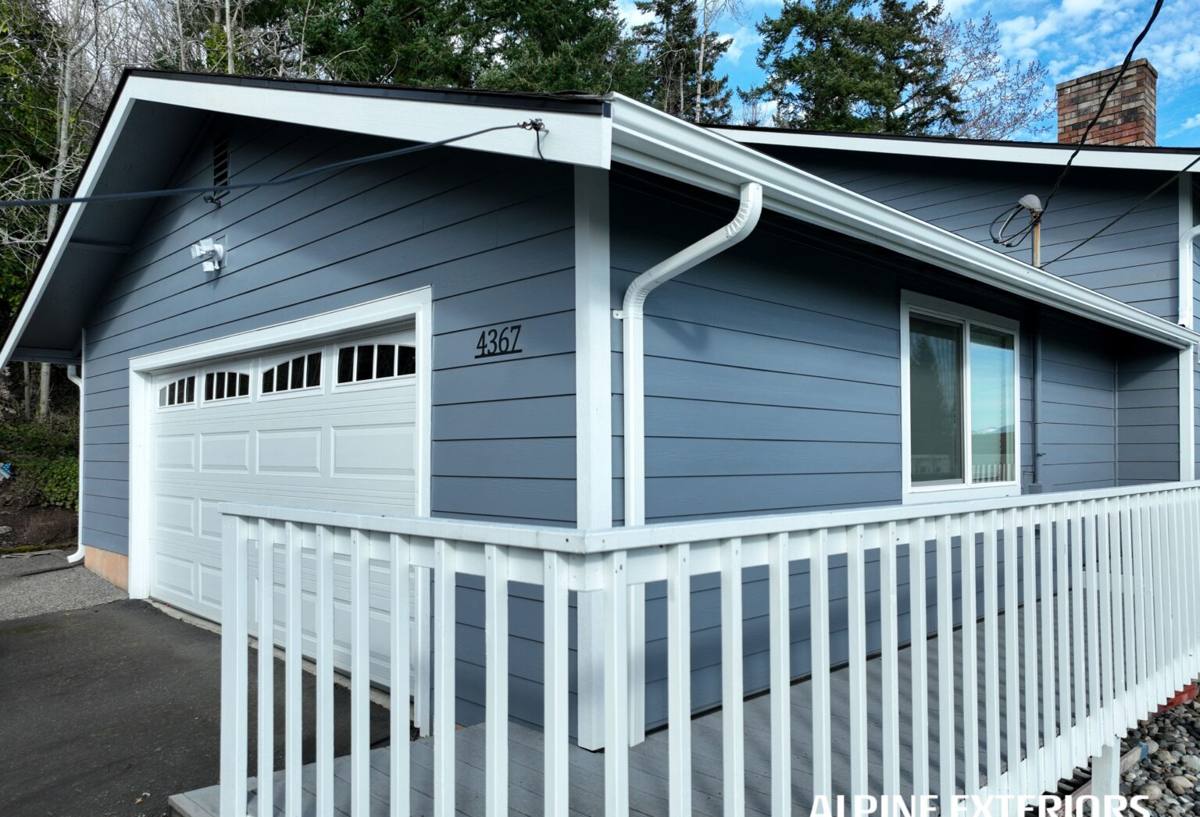
What Whatcom County's Weather Does to a Roof Over Time
Salt Air and Corrosion
Proximity to salt water means airborne salt settles on every exterior surface, including the roof. Over years, that accelerates corrosion on any metal component that isn't rated for coastal exposure — exposed fasteners, cheap flashing, and mismatched metals in particular. This is why the coating system and the metal alloy matter as much as the panel profile you choose.
Driving Rain and Wind-Driven Water
Storms moving through this part of Whatcom County frequently bring rain at an angle, not straight down. That matters because it pushes water into laps, seams, and fastener penetrations that would stay dry in a calmer climate. A roof system designed for inland conditions, with minimal lap overlap or under-detailed flashing, can leak here even when it would hold up fine fifty miles east.
The Long Moss Season
Tree cover, shade, and near-constant moisture give moss and algae a long growing window in Birch Bay and the surrounding creek areas. Moss holds water against roofing material, and on the wrong substrate that moisture retention leads to rot, granule loss, or coating breakdown. Metal roofing doesn't feed moss the way organic shingle surfaces can, but panels still need the right slope, gap, and maintenance rhythm to keep moss from gaining a foothold at seams and low-slope transitions.
Choosing a Metal Roofing System That Actually Fits This Climate
Not all metal roofing is the same product wearing different colors. The two main categories homeowners in this area choose between are standing seam and exposed-fastener panel systems, and the difference matters more here than it would in a drier climate.
Standing Seam vs. Exposed Fastener
| Factor | Standing Seam | Exposed Fastener |
|---|---|---|
| How panels attach | Concealed clips, no fastener penetrations through the panel face | Screws driven through the panel face into the deck or purlins |
| Coastal durability | Fewer penetration points for salt air and moisture to attack over time | Exposed screws and washers are the first thing to corrode or loosen |
| Maintenance burden | Low — no fastener washers to inspect or replace | Fastener washers typically need checking and occasional replacement over the roof's life |
| Upfront cost | Higher material and labor cost | Lower upfront cost |
| Best fit | Homes where long-term, low-maintenance performance matters most | Outbuildings, shops, or budget-driven projects where some maintenance is acceptable |
We'll walk you through both honestly. Exposed-fastener systems aren't a bad product — they're a different trade-off. In a salt-air, high-rain environment like Terrell Creek, we generally steer primary residences toward standing seam because it removes the recurring maintenance item — fastener washers — that causes most exposed-fastener leaks we get called out to fix on homes near the water.
What a Correct Metal Roof Installation Involves
Underlayment and Moisture Protection
Metal panels are the visible layer, but the underlayment underneath is what actually protects the deck if wind-driven rain gets past a seam or around a penetration. In this climate we use a high-temp synthetic or self-adhered underlayment at eaves, valleys, and penetrations — the areas most exposed to the sideways rain this area sees regularly.
Flashing and Penetrations
Every pipe boot, chimney, skylight curb, and wall transition is a potential leak point, and it's usually where a rushed installation shows up first — sometimes years later, after repeated freeze-thaw and wet-dry cycles work a poorly sealed flashing loose. Correct flashing detail means custom-formed metal at transitions, proper step flashing at walls, and sealants rated for long-term UV and moisture exposure, not general-purpose caulk.
Fasteners and Panel Attachment
Fastener quality and spacing directly affect how a roof handles wind uplift and thermal movement. Panels expand and contract with temperature swings, and fasteners or clips that don't accommodate that movement will eventually work loose or oil-can the panel. We match fastener and clip type to the specific panel profile and manufacturer spec rather than using a one-size-fits-all approach.
Ventilation
A metal roof over a poorly ventilated attic traps moisture, which shows up as condensation on the underside of the deck rather than a visible leak from outside. Proper ridge and intake ventilation keeps moist air moving out, which matters even more in a climate where the air outside is already damp much of the year.
Moss, Algae, and Long-Term Maintenance
Metal roofing resists moss far better than composition shingles because there's no organic mat for spores to root into. That said, moss and algae can still collect in valleys, at low-slope sections, and around any spot where debris accumulates — under overhanging branches especially. A little seasonal attention keeps a metal roof performing the way it's designed to:
- Clear debris from valleys and gutters at least twice a year, more often under heavy tree cover
- Rinse accumulated grime or moss growth with a garden hose — never a pressure washer, which can drive water under seams or damage coatings
- Trim back overhanging branches to reduce shade, leaf litter, and moisture retention on the roof surface
- Check sealant at penetrations annually, since sealant degrades faster than the metal itself
- Watch for granule buildup or organic debris caught at fastener heads or panel laps, which holds moisture against the metal
Our Process for Terrell Creek Homeowners
We approach every metal roofing project in this area the same structured way:
- On-site assessment: we inspect the existing roof, deck condition, ventilation, and any problem areas specific to your property's exposure and tree cover.
- System recommendation: we walk you through panel profile, gauge, and finish options suited to your home and your budget, explaining the trade-offs honestly rather than upselling the most expensive option.
- Written estimate: a clear scope of work and price before anything is scheduled — no surprise change orders for work that should have been anticipated.
- Installation: deck inspection and repair as needed, correct underlayment, custom flashing, and panel installation to manufacturer spec.
- Final walkthrough: we review the finished roof with you, including care and maintenance expectations specific to a coastal, tree-covered property.
Cost Factors to Understand Before You Get Quotes
Metal roofing costs more upfront than asphalt shingles, but the honest comparison has to include lifespan and maintenance, not just the installed price. Several factors move the number more than homeowners usually expect:
| Factor | Why It Affects Cost |
|---|---|
| Panel type | Standing seam runs higher than exposed-fastener panel systems due to material and labor |
| Roof complexity | Steep pitches, multiple valleys, dormers, and penetrations all add labor and custom flashing work |
| Deck condition | Any rot or damage found once the old roofing is removed needs repair before new panels go on |
| Gauge and coating | Heavier-gauge metal and marine-grade coatings cost more but hold up better to salt air |
| Tear-off vs. overlay | Removing existing roofing adds cost but lets us inspect and correct the deck and ventilation underneath |
We give straightforward, itemized estimates rather than a single lump number, so you can see exactly what's driving the price on your specific roof.
Signs Your Terrell Creek Home Needs a New or Upgraded Roof
Coastal weather tends to show its damage gradually, which is why a lot of roof problems in this area get caught late. Watch for:
- Rust streaking or discoloration at fastener heads or panel seams
- Persistent moss or algae buildup that returns quickly after cleaning
- Soft spots, sagging, or visible movement when walking the attic
- Water stains on interior ceilings, especially near chimneys, skylights, or wall transitions
- Loose, lifted, or oil-canned panels, particularly after a windstorm
- Granule accumulation or debris trapped at low-slope areas and valleys
If you're noticing any of these, it's worth having someone look at the roof before the next round of Whatcom County storms works the problem further.
Why a Crew That Already Works Terrell Creek Matters
A roofing contractor who mostly works drier, inland areas isn't necessarily going to detail flashing and underlayment the way a coastal, high-moss-pressure property needs. We work Birch Bay and the surrounding Terrell Creek area regularly, which means we're used to designing for wind-driven rain, salt exposure, and long wet seasons as the baseline, not the exception. That shows up in the small decisions — underlayment choice at eaves, fastener spec, valley detailing — that don't show up on a spec sheet but determine whether a roof is still performing well in fifteen years or leaking in five.
If you're weighing options for your roof, we're happy to walk your property, look at what you're working with, and give you a straightforward, no-pressure estimate — fill out the form below to get started.