 Birch Bay Siding
 Why Marietta Siding Takes More Punishment Than Most
Marietta sits close enough to the water that its homes deal with a different set of siding problems than houses further inland in Whatcom County. Salt-laden air moves in off the bay, wind-driven rain hits exterior walls sideways instead of straight down, and the long, damp stretch of fall through spring gives moss and algae months to establish themselves on anything that stays shaded or damp. None of that is unusual for this part of the Washington coast, but it does mean siding here fails in specific, predictable ways — and a repair that doesn't account for those causes tends to fail again within a couple of years.
We repair siding in Marietta and the surrounding Birch Bay area regularly enough to recognize the pattern before we even get a ladder out: south and west-facing walls take the worst of the driving rain, north-facing walls stay damp longer and grow more moss, and anything near ground level or under eaves with poor drainage shows rot first. Understanding where and why damage shows up is most of what separates a repair that lasts from one that doesn't.
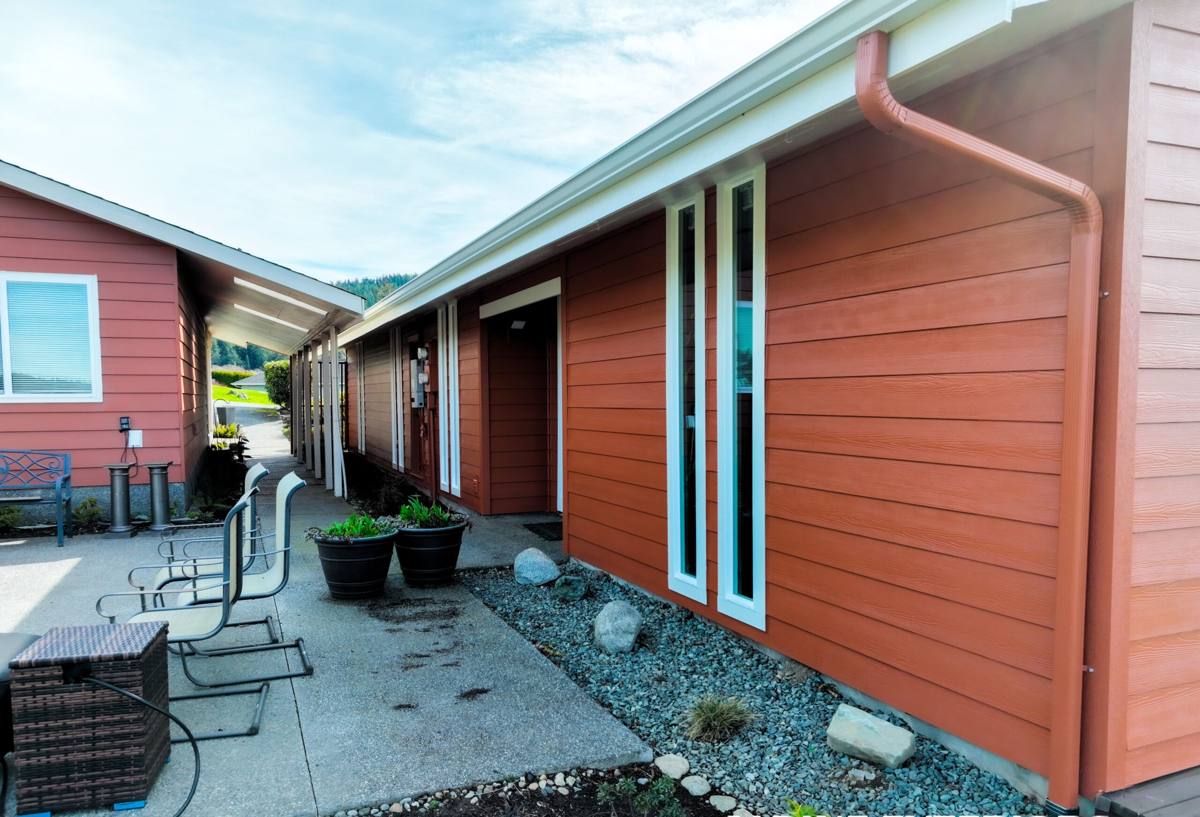
Common Siding Damage We See in Marietta Homes
The specific problems vary by siding material and by which side of the house we're looking at, but a few issues come up again and again on homes in this stretch of Whatcom County:
- Moisture intrusion behind panels or boards — usually from failed caulking, gaps at trim, or house wrap that was never properly lapped during the original install
- Soft or rotted sections near the bottom courses, around windows, and at any point where siding meets a deck, porch roof, or grade
- Moss and algae staining on shaded and north-facing walls, which holds moisture against the siding surface long after a rain has passed
- Corroded or backed-out fasteners — salt air accelerates corrosion on lower-grade nails and screws, and a fastener that's lifted or rusted through no longer holds the panel tight
- Cracked, warped, or delaminating boards, common on older wood and engineered wood products that were never rated for this level of sustained moisture exposure
- Faded or peeling paint on field-painted siding, which exposes the substrate underneath to the exact conditions it was least equipped to handle
Repair vs. Replacement: How We Make the Call
Not every damaged section needs a full re-side, and we're not going to tell a homeowner they need one when a targeted repair will genuinely hold up. But we also won't patch something that's going to fail again in a season or two just to make a smaller invoice. Here's roughly how we think through it:
| Situation | Usually Repair | Usually Replace |
|---|---|---|
| Damage confined to one or two wall sections | Yes, if sheathing underneath is sound | No |
| Rot found behind the siding at the sheathing or framing | Only after that structure is repaired first | Often, if damage is widespread |
| Siding is under 10 years old and otherwise healthy | Yes | Rarely |
| Siding is older engineered wood or untreated wood showing repeat failures | Short-term only | Yes, long-term |
| Damage is scattered across most of the exterior | No | Yes |
| Homeowner plans to sell or repaint soon | Case by case | Often makes more sense |
When we find that the underlying material — whether it's an older wood product, a primed composite, or a lower-grade engineered board — is the actual source of repeat failures rather than a one-time installation defect, we'll say so plainly. In those cases, our honest recommendation is a full re-side with James Hardie fiber cement, which is the only product we install new. We'll explain more on that below, but the short version is: we'd rather tell you a repair is a stopgap than sell you one and let you find that out on your own.
Why We're Selective About What We Repair Long-Term
We install only James Hardie fiber cement siding on new work and full re-sides — we don't install vinyl, LP SmartSide, Cemplank, Allura, or primed wood. That said, siding repair is a different job than new installation, and plenty of Marietta homes are wearing materials we didn't put there. We'll still repair what's on your house today when a repair is the honest answer. What we won't do is pretend a patch on a material that's structurally failing is a permanent fix, or install a non-Hardie product as a "repair" when what the wall really needs is a proper re-side.
What a Correct Siding Repair Actually Involves
Diagnosis Before Anything Gets Touched
The first step is figuring out how far the damage actually extends. Visible rot or a cracked board is often just the part you can see — moisture tends to travel behind siding along house wrap and framing before it shows up on the surface. We check the sheathing and framing behind any damaged section before we decide what the repair needs to include, because closing a wall back up over hidden rot just buys a couple of years before the same spot fails worse.
Fixing the Water Path, Not Just the Symptom
Most siding failures in this climate trace back to water getting somewhere it shouldn't — a gap in flashing, caulking that's shrunk and cracked, house wrap that wasn't lapped correctly, or trim that was never properly sealed. A repair that just replaces the damaged board without correcting the water path is going to fail again for the exact same reason. We address the entry point as part of the repair, not as an afterthought.
Matching Material and Finish
A repair that's structurally sound but visually obvious wasn't really finished. For sections we repair with James Hardie product — including homes that already have Hardie siding installed — we match the profile, exposure, and ColorPlus factory finish so the repaired section reads as part of the wall, not a patch. On homes with other existing materials, we're upfront about what can and can't be matched exactly, since discontinued colors and profiles are a real limitation with several products on the market, not just older wood.
Fasteners and Sealants Rated for Marine Exposure
Given how much salt air this area sees, we don't cut corners on fastener grade or sealant quality during a repair. Using standard hardware because it's what's on hand is exactly how a homeowner ends up with the same corrosion problem again in a few years.
Our Siding Repair Process, Start to Finish
- On-site inspection — we walk the exterior, identify all affected areas (not just the one you called about), and check behind damaged sections for hidden moisture or rot
- Honest diagnosis — we tell you what we found, what's causing it, and whether repair or replacement is the right call for that section
- Written scope and estimate — a clear explanation of what work is included, what materials will be used, and what it will cost, before anything is touched
- Repair of the underlying issue — damaged sheathing or framing gets addressed, water paths get corrected
- Siding repair or panel replacement — matched material installed correctly, fastened and sealed to spec
- Finish and cleanup — caulking, touch-up, and a final walk-through so you know exactly what was done and why
Why Hiring a Crew That Already Works Marietta Matters
A siding repair crew that mostly works inland doesn't always think about wind-driven rain exposure or salt air corrosion the same way, because it isn't the daily reality of the jobs they run. Working this stretch of Whatcom County regularly means we already know which wall orientations take the worst weather, what a normal amount of moss growth looks like versus a sign of a bigger moisture problem underneath, and which fastener and sealant grades actually hold up here instead of failing again in two or three years.
It also means fewer surprises during the job itself. We're not guessing at how the local climate will treat a repair — we're applying what we've already seen hold up, and what hasn't, on homes in this same environment.
Homeowner Checklist: Signs Your Siding Needs Attention
Most siding problems are easier to catch early than to fix once they've spread. Walk your exterior and look for:
- Soft spots when you press on siding, especially near the bottom courses or under windows
- Visible cracks, splits, or warping in individual boards or panels
- Paint that's peeling, bubbling, or has faded unevenly across a wall
- Moss or algae buildup that's thick enough to hold moisture, not just surface discoloration
- Caulking that's cracked, shrunk away from trim, or missing in sections
- Streaking or staining below seams, which often points to water tracking behind the siding
- Fasteners that are visibly rusted, backed out, or missing their heads
- Any musty smell or visible staining on interior walls that back onto exterior siding
Catching any of these early usually means a smaller, cheaper repair. Waiting through another wet season almost always means more of the wall needs to come apart to fix it properly.
Maintaining Repaired Siding Through Whatcom County's Wet Season
A correct repair should hold up on its own, but a little seasonal attention extends the life of any siding in this climate. Keep gutters clear so water isn't sheeting down the wall, trim back vegetation that's shading a wall and keeping it damp, and do a quick visual check after the first hard windstorm each fall. If you notice new moss forming in the same spot repeatedly, that's usually a sign the area isn't drying out properly between rains — worth a look before it becomes a repair.
If you're seeing any of the warning signs above, or you just want an honest opinion on whether a section of your Marietta home needs a repair or something more, we're happy to take a look. Estimates are free, there's no pressure, and we'll tell you plainly what we find.