 Birch Bay Siding
 Composite Decking for Terrell Creek Homes
Terrell Creek sits close enough to Birch Bay's shoreline that homes here deal with a specific mix of weather most inland deck jobs never see: salt-laden air drifting off the bay, long stretches of driving rain through fall and winter, and a moss season that seems to start earlier and last longer every year. A deck built without that combination in mind starts showing problems within a couple of seasons — not because the material failed, but because the installation didn't account for where the water and salt actually go.
This page is about composite decking specifically for Terrell Creek properties: what the climate demands, what a correctly built deck looks like underneath the boards, and how we approach the job differently because we already know this stretch of Whatcom County.
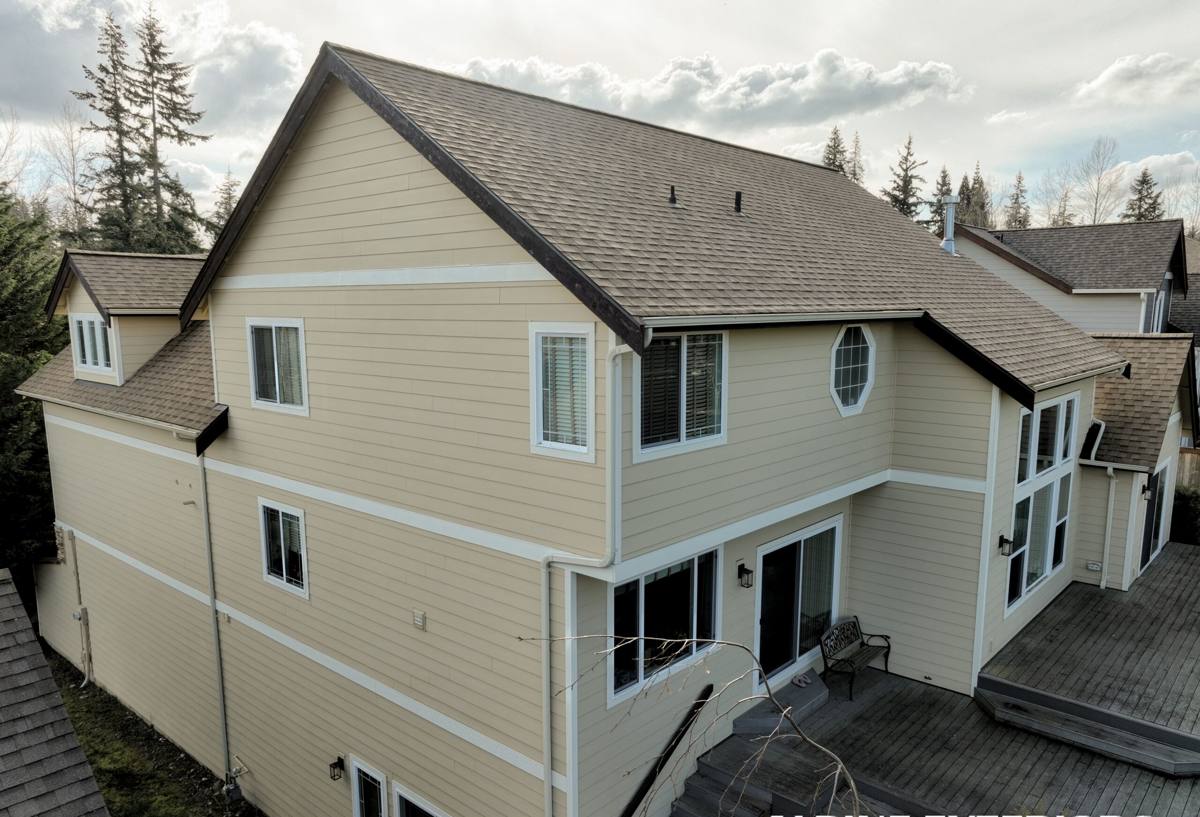
Why Birch Bay's Climate Is Tough on Decks
Three things work against outdoor decking here, and they compound each other.
Salt Air
Even a few hundred yards inland from Birch Bay, airborne salt settles on exposed surfaces. It accelerates corrosion on fasteners, hinges, and any exposed metal hardware, and it can dull or discolor lower-grade finishes over time. Composite decking itself doesn't rust, but every screw, bracket, and joist hanger holding it up can — if the wrong hardware went in, you won't see the damage until the deck starts to feel loose.
Driving Rain
Whatcom County's rain doesn't just fall straight down — wind off the water pushes it sideways into fascia boards, under rail posts, and into any gap that wasn't flashed or sealed. Composite boards handle moisture on their surface fine; the problem is what happens underneath and behind them if water gets trapped against wood framing or pools where it can't drain.
Moss and Organic Buildup
Shade, moisture, and mild temperatures are exactly what moss and algae need to thrive, and Terrell Creek's tree cover means plenty of shaded deck surfaces. Moss holds moisture against the board surface longer than open sun exposure would, which matters for both grip (wet moss is genuinely dangerous underfoot) and for how quickly grime builds into the board's texture.
What a Correctly Built Composite Deck Needs Here
Composite decking is popular for a good reason — it doesn't rot, splinter, or need annual staining the way wood does. But "composite" isn't one product, and a deck that holds up in this climate depends on more than just the boards you can see.
- Stainless or coated fasteners rated for coastal/marine exposure — standard galvanized screws can corrode faster near salt air than inland installs would suggest.
- Proper joist spacing for the specific composite board — composite deflects differently than wood, and manufacturer spec sheets vary by product; ignoring that leads to bounce or long-term sagging.
- Ventilation underneath the deck — trapped moisture under low-clearance decks is one of the most common causes of hidden framing rot, regardless of what's on top.
- Correct flashing where the deck meets the house — this is the single most common failure point we see on older decks, composite or not.
- Drainage-aware layout — board direction and gapping should account for where water actually needs to go, not just aesthetics.
- Hidden fastening systems where board profile allows — reduces surface penetration points where moisture and salt can work their way in over time.
Substructure Matters as Much as the Decking
We've seen composite decking installed over undersized or untreated framing that was never going to last as long as the boards on top of it. In a climate like this, the substructure — joists, beams, ledger board, footings — takes the brunt of moisture exposure. Building or upgrading that substructure correctly the first time is what actually determines whether a Terrell Creek deck lasts fifteen years or thirty.
Composite vs. Other Decking Materials for This Area
| Material | Salt Air Resistance | Moss/Moisture Behavior | Maintenance |
|---|---|---|---|
| Composite decking | Strong — doesn't corrode; hardware is the exposure point | Resists rot; surface can still hold moss if shaded and not cleaned | Occasional wash; no staining or sealing |
| Pressure-treated wood | Moderate — treatment helps but fasteners still at risk | Absorbs moisture; prone to rot and moss growth without upkeep | Regular staining/sealing, board replacement over time |
| Cedar | Moderate — natural oils help but fade with salt exposure | Better natural resistance, but still needs sealing in shaded areas | Higher — periodic sealing and cleaning |
| Aluminum decking | Very strong, minimal corrosion | Sheds moisture well; least moss-prone | Low, but higher material cost and different look/feel |
Composite lands in a good middle ground for most Terrell Creek homeowners: strong resistance to the moisture and rot issues wood faces here, without the cost premium of aluminum, and without the ongoing sealing schedule cedar or treated wood demand.
Our Installation Process
The steps aren't unusual, but the details we pay attention to at each one are shaped by having worked other decks in this same area.
- On-site assessment — we look at existing framing (if any), drainage slope, shade exposure, and how close the deck sits to grade or standing water.
- Substructure work — repair, upgrade, or build framing sized correctly for the composite product chosen, with attention to ledger flashing and joist protection tape.
- Fastener and hardware selection — coastal-rated fasteners and connectors chosen for the specific exposure level of that deck's location.
- Board installation — laid out with drainage and expansion gaps set per manufacturer spec, not guessed.
- Rail, stair, and trim work — finished with the same corrosion-aware hardware standard as the deck structure itself.
- Final walk-through — we go over cleaning basics and what to watch for seasonally before we consider the job done.
Cost Factors for a Terrell Creek Composite Deck
Every deck is priced on its own specifics, but the variables that actually move the number for homes in this area are consistent:
- Substructure condition — replacing rotted or undersized framing adds cost but is not optional if it's compromised.
- Deck size and shape — square footage plus how many angles, steps, or rail sections are involved.
- Board tier — composite lines vary from entry-level to premium capped boards, which affects both price and how well the surface resists moss and staining.
- Height and access — elevated decks need railing, stairs, and sometimes additional footings.
- Hardware spec — coastal-rated fasteners and hidden fastening systems cost more than standard hardware but pay off in reduced maintenance near the water.
Composite decking generally runs higher up front than pressure-treated wood, but the maintenance savings over the deck's life — no annual staining, no re-sealing after every wet winter — usually narrow that gap over a decade or more.
Maintenance in a Marine Climate
Composite decking is low-maintenance, not no-maintenance, especially this close to the bay. A simple seasonal routine keeps a Terrell Creek deck performing the way it should:
- Rinse or sweep off debris and pollen buildup a few times a year, more often under trees.
- Scrub shaded, moss-prone areas with a soft brush and mild soap before moss gets a foothold — it's far easier to prevent than remove once established.
- Check fastener heads and railing hardware annually for early corrosion signs, particularly on decks with more direct bay exposure.
- Keep gutters and downspouts clear so runoff isn't dumping extra water onto or under the deck.
- Confirm under-deck ventilation gaps haven't been blocked by stored items or landscaping growth.
Signs It's Time to Call Someone
Soft or bouncy spots, discoloration around fastener heads, persistent moss that keeps returning after cleaning, or gaps opening up at the house connection are all worth a look before they become bigger repairs.
Why a Local Terrell Creek Crew Matters
Deck-building fundamentals don't change from town to town, but the judgment calls do. Knowing how much shade a given Terrell Creek lot actually gets through winter, how close a property sits to salt spray versus a more sheltered spot, and which drainage patterns cause problems on this terrain versus elsewhere in Whatcom County — that comes from working here repeatedly, not from a generic install checklist. A crew that's built decks up and down this area brings that judgment to your job before the first board goes down, which matters more for long-term performance than almost any material choice.
Get a Straightforward Estimate
If you're planning a new composite deck or replacing an aging one in Terrell Creek, we're happy to come take a look, walk the site, and give you an honest read on what your specific lot needs. There's no pressure and no obligation — just a straight answer and a clear estimate using the form below.