 Birch Bay Siding
 Why Custer Homes Need a Roof That Can Handle This Climate
Custer sits close enough to the water that homes here deal with the same marine weather pattern that moves through the rest of Whatcom County: salt-laden air off the Strait, long stretches of driving rain from fall through spring, and shaded, moisture-trapping conditions that keep moss and algae going most of the year. A roof that would hold up fine in a drier inland climate can start showing problems within a few years out here. Metal roofing, installed correctly, is one of the better answers to that combination — but "installed correctly" is doing a lot of work in that sentence, and it's where most of the difference between a roof that lasts and one that doesn't gets decided.
This page is about metal roofing specifically for Custer properties — what the local climate actually does to a roof over time, what a correct installation looks like, and how we approach the job when we're on your property.
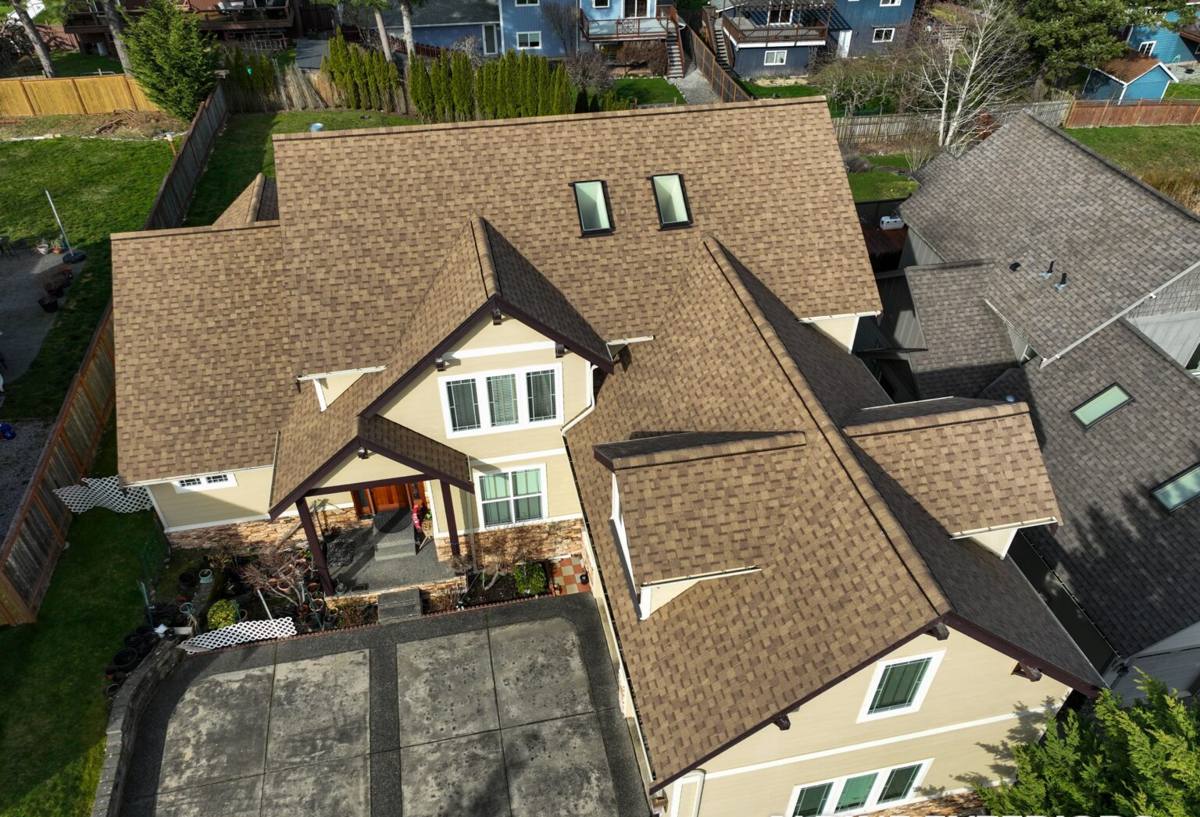
What Salt Air, Rain, and Moss Season Actually Do to a Roof
Salt Air and Corrosion
Airborne salt doesn't need to be blowing directly off the water to matter — it travels with the wind and settles on every exterior surface it touches, including roofing. On metal roofing, salt exposure is a fastener and cut-edge issue more than a panel issue. Quality coated panels resist it well; exposed steel at a cut edge, a mismatched fastener, or a scratch through the coating is where corrosion actually starts. This is why fastener selection and edge treatment matter more here than they would on a roof fifty miles inland.
Driving Rain
Whatcom County doesn't just get a lot of rain — a good share of it comes in sideways during winter storms. That kind of wind-driven rain finds every gap in flashing, every underdriven fastener, and every place where two roof planes meet. A metal roof's watertightness depends almost entirely on the details at those transitions, not on the field panels themselves. Panels rarely leak; flashing, penetrations, and terminations do.
Moss and Organic Growth
Shaded roof sections, north-facing slopes, and anywhere debris collects stay damp longer here than in most of the country, and that's exactly what moss and algae need to establish. On asphalt shingles, moss roots into the granules and lifts them, shortening the roof's life. Metal doesn't give moss anything to root into, which is a real advantage — but moss and organic debris can still build up in valleys, around penetrations, and on lower-slope sections, holding moisture against the surface and, over time, affecting even a good coating if it's left unaddressed.
Metal Roofing Options for Custer Properties
Not all metal roofing is the same product wearing different colors. The two broad categories homeowners choose between are standing seam and exposed-fastener panels, and the right call depends on the roof's slope, the home's style, and budget.
| Type | How It's Fastened | Best Fit | Trade-offs |
|---|---|---|---|
| Standing Seam | Concealed clips, no exposed screws in the field | Most Custer homes; low-slope sections; long-term, low-maintenance ownership | Higher upfront cost; requires more precise installation |
| Exposed-Fastener Panel | Screws driven through the panel face | Outbuildings, shops, budget-conscious projects | Fasteners and their washers age faster in salt air and need periodic inspection/replacement |
| Metal Shingle/Shake Profile | Interlocking panels mimicking shingle or shake appearance | Homes wanting a traditional look with metal's durability | More seams and profile detail than standing seam; installation quality matters even more |
For most homes in this area, we lean toward standing seam because it has no exposed fasteners for salt air and driving rain to work on over time. Exposed-fastener panel still has its place — it's a solid, economical choice for shops and outbuildings — but on a primary residence where you want decades of low-maintenance performance, the concealed-fastener systems are the better long-term investment.
Coating and Finish
The paint system on a metal roof is doing real work in this climate — it's the barrier between the steel or aluminum substrate and the salt air. We look for panels with a factory-applied coating rated for coastal exposure rather than a bargain finish, because the cost difference upfront is small compared to the cost of a coating that chalks, fades, or lets corrosion start at fifteen years instead of forty.
What a Correct Metal Roof Installation Actually Involves
The panels themselves get most of the attention, but the roof's actual performance comes down to what's underneath and around them.
- Underlayment: A high-temperature, self-adhered underlayment at eaves, valleys, and penetrations — not just felt paper — to back up the panels if wind-driven rain ever gets past them.
- Fasteners and clips: Corrosion-resistant fasteners matched to the panel metal, sized and spaced to the manufacturer's specification, not a generalized "close enough" pattern.
- Flashing: Custom-formed flashing at every valley, wall transition, chimney, and vent — this is where the majority of real-world leaks originate, and it's the hardest part of the job to do well.
- Ventilation: A metal roof that traps moisture in the attic underneath it will cause condensation problems regardless of how good the panels are. Ridge and soffit ventilation needs to be planned as part of the roof, not treated as an afterthought.
- Panel alignment and seaming: Standing seam panels need to be run straight and seamed correctly to shed water as designed — a slightly out-of-square installation looks fine from the ground but performs worse in a storm.
Skipping or shortcutting any one of these doesn't usually show up on day one. It shows up two, five, or ten winters later, as a leak that's expensive to trace back to its actual source under finished panels.
How We Approach a Metal Roofing Project in Custer
- On-site assessment: We look at your existing roof structure, slope, ventilation, and any problem areas — valleys, dormers, chimneys — before recommending a system.
- Straightforward estimate: You get a clear breakdown of panel type, underlayment, flashing scope, and ventilation work, not a vague lump sum.
- Tear-off and deck inspection: Once the old roofing is off, we check the deck for rot or soft spots — common on older homes where moisture has been getting in unnoticed — and address it before anything new goes down.
- Underlayment and flashing first: The water-management layer goes in correctly before a single panel is installed.
- Panel installation: Panels are run, seamed, and fastened to spec, with attention to alignment at every plane.
- Final walkthrough: We go over the finished roof with you, including how to handle basic upkeep, before we consider the job done.
Cost Factors for a Custer Metal Roofing Project
Metal roofing costs more upfront than asphalt shingles, and the final number depends on more than just square footage. Here's what actually moves the price on a real project:
| Factor | Why It Matters |
|---|---|
| Panel type (standing seam vs. exposed-fastener) | Concealed-fastener systems cost more in material and labor but need far less long-term maintenance |
| Roof complexity | More valleys, dormers, and penetrations mean more custom flashing work — this often affects cost more than roof size |
| Existing deck condition | Rot or soft decking found during tear-off adds repair cost but has to be fixed for the new roof to perform |
| Ventilation upgrades | Adding or correcting ridge/soffit ventilation is worth doing at the same time as a re-roof |
| Coating quality | Coastal-rated finishes cost more than basic coatings but hold up significantly longer against salt air |
We'd rather walk you through these factors on your actual roof than quote a number that doesn't reflect what your home needs. Every roof in Custer is a little different depending on slope, age, and exposure.
Maintenance: What to Expect After Installation
One of the real advantages of a correctly installed metal roof is how little it asks of you afterward — but "little" isn't "none," especially in this climate.
- Clear debris from valleys and around penetrations once or twice a year, particularly after fall leaf drop.
- Rinse off moss and algae buildup before it accumulates in shaded areas — it won't root into metal the way it does into shingles, but it holds moisture against the surface.
- Check exposed fasteners (if you have an exposed-fastener system) every few years for backing out or early corrosion at the washer.
- Have flashing and sealant at penetrations inspected periodically — sealant is the one component of a metal roof that does age and eventually needs attention, even when the panels themselves are fine.
Signs Your Current Roof Is Due for a Closer Look
Whether you're on an aging shingle roof considering a switch, or an older metal roof that was installed with shortcuts, these are worth a professional look before they turn into interior damage:
- Visible rust streaking at fasteners, seams, or flashing edges
- Moss or dark staining concentrated in valleys or shaded slopes
- Panels or shingles that look uneven, lifted, or loose along an edge
- Water stains on interior ceilings, especially after a wind-driven storm
- Visible daylight or gaps at flashing around chimneys and vents
- Granule buildup in gutters (a sign an aging asphalt roof is breaking down)
Why Hiring a Crew That Already Works in Custer Matters
A roofing crew that mostly works drier, inland climates will size up a Custer roof the same way they'd size up one anywhere else — and that's exactly how avoidable problems get built into a new roof. Knowing how far wind-driven rain travels up a valley in a Whatcom County winter storm, which slopes hold moss longest in this specific microclimate, and how salt air actually behaves on fasteners over years, not months, comes from doing this work locally and repeatedly, not from a spec sheet. It affects real decisions on your roof: where extra underlayment goes, how flashing gets detailed, which fastener spec actually holds up here. That local, repeated experience is a big part of what separates a metal roof that performs for decades from one that needs attention again in five years.
If you're weighing metal roofing for a home in Custer, we're glad to take a look and talk through what your specific roof needs — no pressure, no obligation. Request a free estimate using the form below and we'll get back to you to schedule a time.