 Birch Bay Siding
 Sumas Siding Built for Whatcom County's Wet, Mossy Climate
Sumas sits in a corner of Whatcom County that gets more than its share of gray, wet weather. Rain settles in for days at a time, humidity lingers under tree cover and along the river bottom, and homes here go months without a真 real drying stretch. Whether your property is closer to Birch Bay's salt air or further inland near the border, the pattern is the same: driving rain, heavy shade in places, and a moss season that can run from fall through spring. Siding here doesn't just need to look good on installation day. It needs to hold up to repeated soaking, resist the moss and algae that thrive in this kind of dampness, and keep doing that for decades without babysitting.
That's the lens we use on every Sumas project. This page is about one thing specifically: what it takes to do James Hardie fiber cement siding correctly on a Sumas home, and why the climate here makes the material choice and the installation detailing matter more than they would somewhere drier.
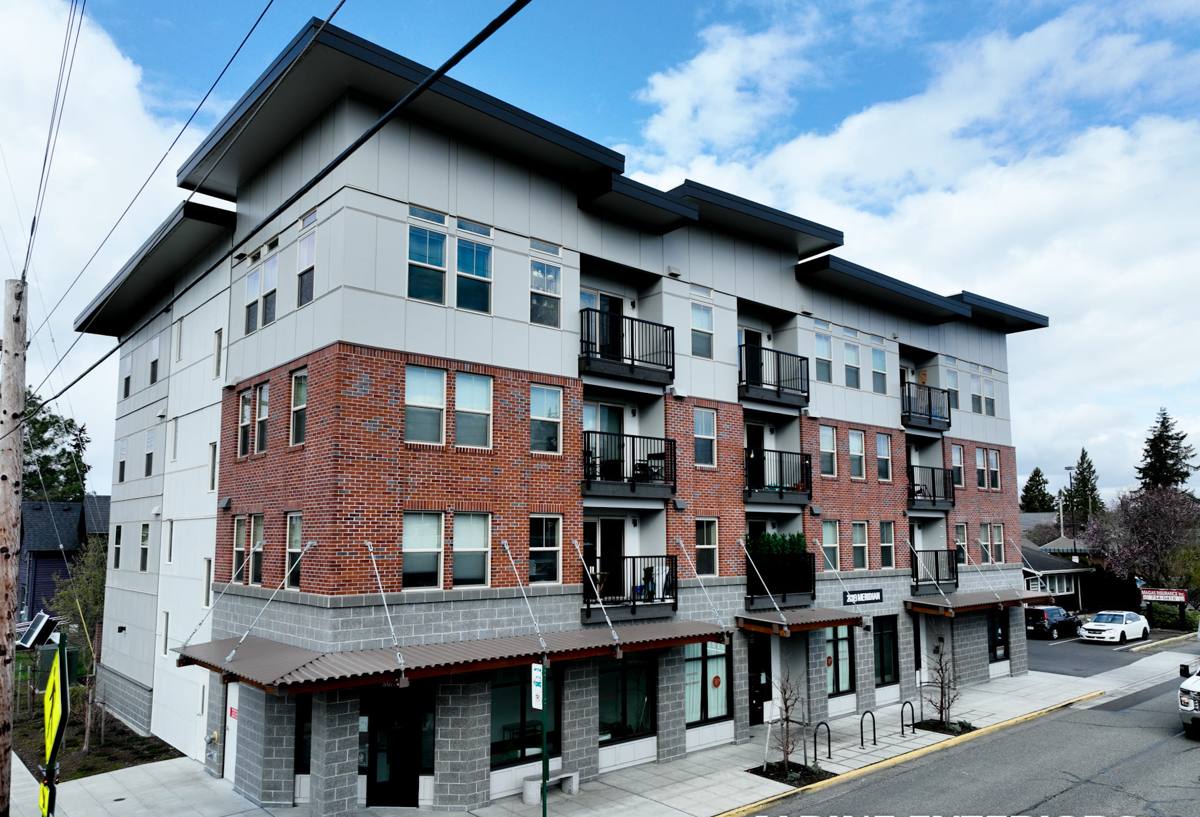
What Damp, Mossy Winters Do to the Wrong Siding Choice
Moisture That Doesn't Get a Chance to Leave
In a climate with long dry summers, siding mistakes are more forgiving — a poorly flashed seam or a tight caulk joint might dry out before it causes real damage. Sumas doesn't offer that grace period. When siding traps moisture behind it, or when water finds a way in through a bad joint, that moisture can sit for weeks. Over time that leads to soft sheathing, stained trim, and in the worst cases, rot that isn't visible until the siding itself starts to fail.
Moss, Algae, and the Shade Problem
Wooded lots and north-facing walls barely see direct sun for months at a stretch. That shade, combined with constant moisture, is exactly what moss and algae need to take hold. Some siding materials give moss something to grip and feed on — a porous or textured surface, a coating that breaks down under UV and damp cycles, or seams that collect organic debris. Once moss establishes itself, it holds even more water against the wall, which accelerates whatever problem was already starting underneath.
Why We Install Only James Hardie Fiber Cement in Sumas
We don't install vinyl, LP SmartSide, Cemplank, Allura, primed spruce, or cedar. That's not a marketing position — it's a standard we hold because of what we've seen this climate do to siding over the years. James Hardie fiber cement is the one product we're confident will still be doing its job on a Sumas home fifteen and twenty years from now, provided it's installed correctly.
Built for This Exposure Category
James Hardie engineers its HZ5 product line specifically for climate zones with more moisture cycling and cooler, wetter conditions — the Pacific Northwest fits squarely in that category. The board itself is non-combustible fiber cement, dimensionally stable, and doesn't swell, warp, or delaminate the way wood-based products can when they take on repeated moisture.
A Factory Finish That Doesn't Feed the Problem
ColorPlus finish is baked on at the factory under controlled conditions, not brushed or sprayed on site. That gives you a harder, more consistent surface than field-applied paint, which matters directly for moss and algae resistance — a smoother, more stable finish gives biological growth less to hold onto and holds its color longer under UV and constant damp exposure instead of chalking or fading unevenly.
What a Correct James Hardie Installation Involves
James Hardie siding is only as good as the installation behind it. The material can handle this climate; sloppy detailing can't. A correct install in Sumas means paying attention to the parts of the job nobody sees once the siding is up.
Clearances and Flashing Details
Every horizontal surface — window heads, door tops, roof-to-wall transitions — needs proper flashing that directs water out and away from the wall assembly, not behind it. Siding also needs the manufacturer-specified clearance from grade, roof lines, decks, and patios so water doesn't wick up into the bottom edge of the boards. In a climate where the ground and lower walls stay damp for long stretches, skipping this detail is one of the most common causes of hidden rot.
Fastening, Gapping, and Caulking Done Right
Fiber cement needs the correct fastener type, spacing, and placement — over-driven or wrong-gauge nails cause cracking and loosen the board's grip over time. Joints and butt seams need the gap and sealant approach James Hardie actually specifies, not a "caulk everything and hope" approach that traps moisture instead of letting the assembly breathe and drain as designed.
Ventilation Behind the Siding
A drainage plane and proper house wrap behind the siding give any moisture that does get past the surface a path to escape instead of sitting against the sheathing. This is invisible once the job is finished, which is exactly why it's the step that gets cut on rushed installs — and exactly why it matters most in a climate like this one.
How Hardie Compares to Other Siding in This Climate
| Factor | James Hardie Fiber Cement | Vinyl | Wood / Primed Spruce |
|---|---|---|---|
| Moisture behavior | Dimensionally stable, doesn't swell or rot | Doesn't rot, but can warp and gap, letting water behind it | Absorbs moisture; prone to rot in shaded, damp areas |
| Moss/algae resistance | Factory finish resists organic growth | Textured surfaces can collect grime and moss | Porous surface is highly susceptible |
| Fire performance | Non-combustible | Combustible, can melt or deform near heat | Combustible |
| Maintenance | Occasional wash; no repainting for years | Low maintenance but brittle over time | Regular repainting/sealing required |
| Typical lifespan when installed to spec | Decades, backed by a strong transferable warranty | Variable; shorter in harsh exposure | Shorter without diligent upkeep |
None of these materials are inherently "bad" — vinyl and cedar both have their place in the industry. But given what this climate does to a home over twenty, thirty, forty years, we've made the call that James Hardie is the only product we're willing to put our name behind here.
Our Process for a Sumas James Hardie Project
- Inspection and assessment: we look at your current siding, trim, flashing, and any signs of moisture damage before recommending a scope of work.
- Product and color selection: we walk you through the HZ5 lines, textures, and ColorPlus color options that fit your home and the neighborhood.
- Tear-off and inspection of the wall assembly: once old siding comes off, we check sheathing condition and address anything compromised before new material goes up.
- House wrap, flashing, and drainage plane installation: the unseen work that determines how the siding performs for the next several decades.
- Siding installation to manufacturer spec: correct fastening, gapping, clearances, and trim detailing throughout.
- Final walkthrough: we go over the finished work with you directly before calling the job complete.
Why It Matters That We Already Work in Sumas
A crew that already does siding work in this part of Whatcom County isn't guessing at how the local weather behaves — they've seen how a particular wall orientation collects moss, how long moisture actually takes to dry out on a shaded lot, and where flashing tends to fail on homes built to older standards. That local pattern recognition shows up in small decisions throughout a project: where to add extra flashing attention, which details deserve more time than the minimum, and what to flag for a homeowner before it becomes a bigger repair. It also means straightforward logistics — material lead times, scheduling around this area's wetter stretches, and being reachable afterward if a question comes up, rather than being a crew that did one job in the area and moved on.
Keeping Your Siding Performing After Installation
James Hardie siding installed correctly is low-maintenance, not no-maintenance. A few habits go a long way in a climate like this one:
- Rinse siding annually, focusing on shaded, north-facing walls where moss and algae are most likely to start
- Keep gutters clear so overflow isn't running down the siding face repeatedly
- Trim back vegetation and tree cover that keeps a wall section shaded and damp longer than the rest of the house
- Watch caulked joints and trim seams for cracking or separation, especially after a hard freeze
- Address any soft trim, staining, or bubbling paint promptly — small issues are far cheaper to fix than water damage that's had months to spread
If your current siding is showing moss buildup, soft spots, or trim that's staying damp longer than it should, those are signs worth having looked at before another wet season sets in.
Get a Free Estimate for Your Sumas Home
If you're weighing a siding replacement or just want an honest read on how your current siding is holding up against Sumas's climate, we're happy to take a look. Fill out the form below for a free, no-pressure estimate — we'll walk the property, answer your questions about James Hardie directly, and give you a straight assessment of what your home actually needs.