 Birch Bay Siding
 Decks Built for Nooksack's Weather, Not Just Its Looks
A deck in Nooksack has to earn its keep. This part of Whatcom County sees a long stretch of wet months, humid air off the bay, and a moss season that seems to start earlier every year. A deck that looks great in July but traps water under the boards by November isn't a good deck — it's a maintenance problem with a nice finish. Our approach to custom decks in this area starts with the climate, not the catalog. We pick materials, spacing, and fastening methods that hold up here specifically, then we build to the look you actually want.
We've worked enough properties in and around Birch Bay and Nooksack to know the pattern: decks fail from the ground up and from the inside out, long before the surface boards show it. Framing that never dries, ledger boards that were never flashed correctly, and fasteners that weren't rated for a marine-influenced climate are the three things we see most often on decks we're asked to repair or replace.
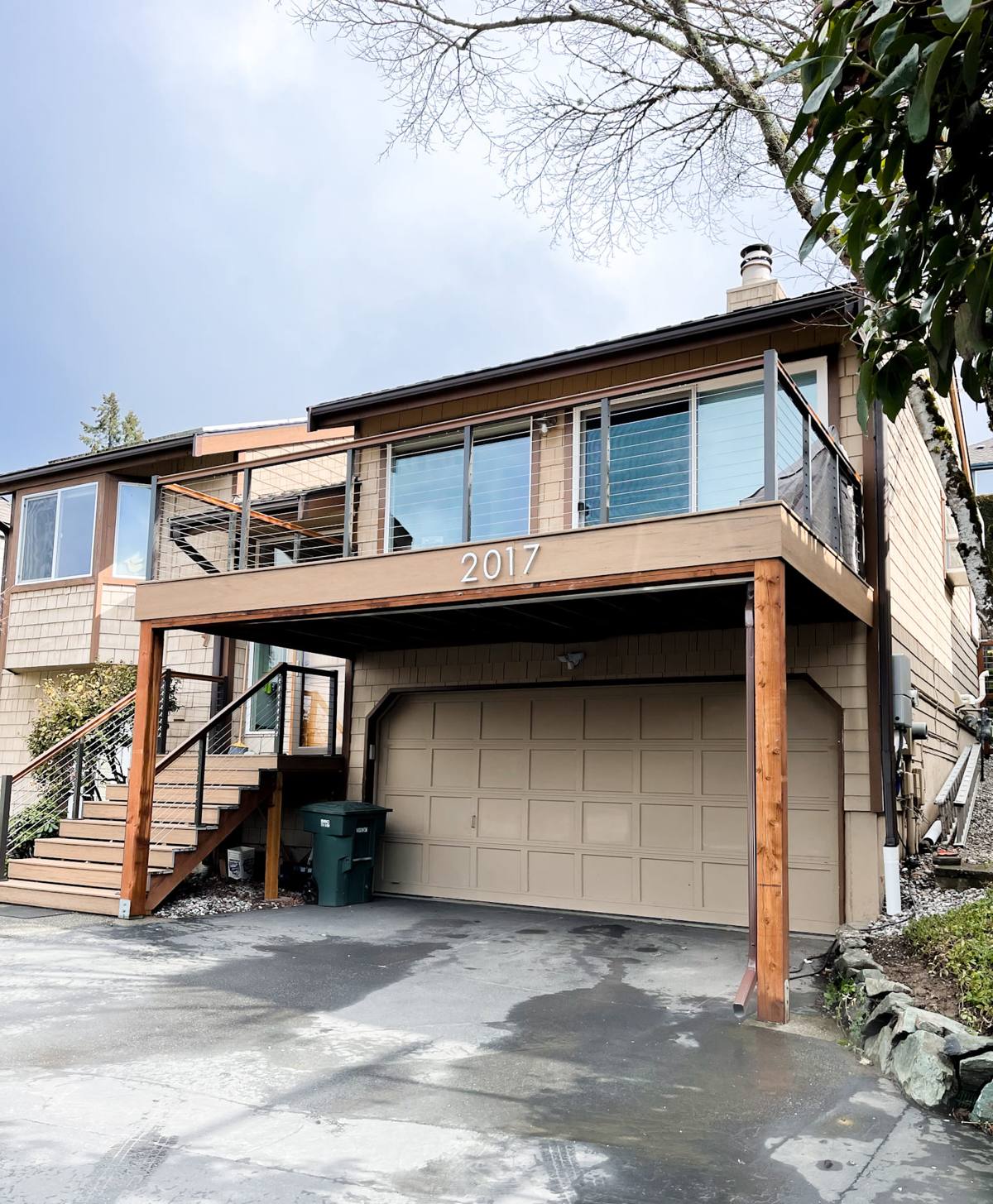
What Nooksack-Area Homes Need From a Deck
Nooksack sits inland from the coast along the Nooksack River corridor, which means it gets a mix of coastal moisture carried in on weather systems and the kind of low-lying humidity you get near a river valley. Combined with Birch Bay's salt-tinged air moving through the region, that's a lot of moisture exposure for lumber, hardware, and fasteners to deal with year-round.
Three things matter more here than in a drier climate:
- Drainage under and around the deck — standing water and poor air circulation are what start rot, not rain itself.
- Fastener and hardware corrosion resistance — cheap or mismatched hardware corrodes faster near the coast and in persistently damp conditions.
- Surfaces that shed moss instead of holding it — texture, spacing, and material all affect how much moss and algae take hold over a wet winter.
None of this is exotic. It's mostly about getting the unglamorous parts right — the parts that are invisible once the deck is finished.
Choosing the Right Decking Material
There's no single "best" decking material — there's a best fit for your budget, your maintenance appetite, and how much weather exposure the deck actually gets. Here's how the common options compare for a Nooksack or Birch Bay property:
| Material | Upfront Cost | Maintenance | How It Handles Our Climate |
|---|---|---|---|
| Pressure-treated lumber | Lowest | Annual cleaning, periodic staining/sealing | Good if sealed and maintained; neglect leads to graying, splintering, and moss buildup |
| Cedar | Mid-range | Regular sealing to hold color and resist rot | Naturally rot-resistant but still needs upkeep in this much moisture |
| Composite decking | Higher | Occasional washing, no staining/sealing | Very consistent performance in wet, humid conditions; resists moss better than wood |
| PVC decking | Highest | Lowest — mostly rinsing | Fully impervious to moisture; best choice for constant shade or heavy rain exposure |
We install all four, and we'll tell you honestly which one fits your situation. If your deck sits in heavy shade near trees or the yard stays damp most of the year, we'll usually steer you away from untreated wood toward composite or PVC — not because wood is a bad product, but because a shaded, damp deck asks more of wood than most homeowners want to keep up with.
A Note on Composite and PVC Brands
We work with several established composite and PVC decking manufacturers rather than committing to just one brand. Product lines change, warranty terms differ, and the right board profile depends on your railing choice, fastening system, and budget. We'll walk you through the options that are actually stocked and warrantied for installation in this region rather than pushing whatever's easiest for us to sell.
What a Correctly Built Deck Actually Involves
The visible decking is maybe a third of the job. The structure underneath is what determines whether the deck lasts eight years or thirty.
Footings and Framing
Footings need to be set below frost depth and sized for the soil conditions on your lot — river-valley soil and coastal soil don't always behave the same way, so we don't use a one-size footing spec across every property. Joists get spaced to match the decking material's span rating (composite and PVC generally need tighter joist spacing than solid wood), and we leave real air gaps between boards so the frame underneath can actually dry out between rain events instead of staying damp for months.
Ledger Attachment and Flashing
If the deck attaches to the house, the ledger board connection is the single most important structural and moisture detail on the entire project. A poorly flashed ledger is one of the most common causes of hidden rot damage to the house rim joist — and it's completely preventable with correct flashing and proper fastening. This is not a place to cut corners, and it's usually invisible once the deck is finished, which is exactly why it gets skipped on cheap builds.
Fasteners and Hardware
We use corrosion-resistant, code-rated fasteners and structural hardware throughout — hangers, post bases, and screws that are rated for exterior and ground-contact exposure. Mismatched metals (like the wrong screw in treated lumber) accelerate corrosion and can void hardware warranties. It's a small line item on a quote and one of the easiest places for a corner-cutting install to fail early.
Our Process, Start to Finish
- Site visit and design conversation — we look at drainage, sun/shade exposure, grade, and how you actually plan to use the space before recommending materials.
- Written estimate — clear pricing, material specifics, and a realistic timeline, no vague allowances.
- Permitting — Whatcom County generally requires a permit for decks above a certain height or attached to the structure; we handle that paperwork so it's not on you.
- Framing and structural work — footings, framing, ledger flashing, and hardware, inspected before decking goes down.
- Decking, railing, and finish work — installed to manufacturer spec so warranties stay valid.
- Final walkthrough — we go over care and maintenance specific to the material you chose before we consider the job done.
Maintenance for the Long Rainy Stretch
Every deck material in this climate benefits from a basic seasonal routine. Here's what actually matters:
- Sweep debris off the deck regularly in fall — trapped leaves hold moisture against the surface and feed moss growth.
- Rinse or wash the deck surface at least once or twice a year to interrupt algae and moss before it takes hold.
- Check that gaps between boards are clear so water can drain through rather than pool.
- For wood decks, plan on resealing or staining every 1–3 years depending on sun exposure and product used.
- Inspect railings, stairs, and ledger flashing yearly for movement, soft spots, or gaps.
- Trim back overhanging branches and vegetation that keep the deck surface shaded and damp longer than necessary.
Deck Problems We See Most Often in This Area
When we're called out to repair or rebuild a deck in the Nooksack or greater Birch Bay area, a handful of issues show up again and again:
- Moss and algae buildup on boards that never get direct sun, especially on the north or shaded side of a house.
- Soft or rotted ledger boards from missing or improperly installed flashing at the house connection.
- Corroded fasteners and hardware that were never rated for this level of moisture exposure.
- Undersized or poorly spaced footings that shift slightly over time, throwing the whole deck out of level.
- Boards installed tight with no drainage gap, which traps water and accelerates wear from the surface down.
Most of these are avoidable with correct installation the first time. None of them are things you can see just by looking at a finished deck — which is exactly why the build quality underneath matters as much as the material on top.
Why It Matters That We Already Work This Area
A deck built to a generic spec sheet doesn't account for what a Nooksack or Birch Bay property actually deals with over a full year — the rain totals, the humidity, the moss pressure, the salt-influenced air moving through the region. We're not learning this climate on your project. We know which details get skipped on a rushed build, which materials hold up and which ones disappoint homeowners two winters in, and how to build a deck that still looks and performs well after several wet seasons, not just at handoff.
That local familiarity also means a straighter process — realistic timelines, honest material recommendations, and no surprises about what Whatcom County permitting requires for your specific project.
Get a Free, No-Pressure Estimate
If you're planning a new custom deck or need an honest look at whether an existing one is still sound, we're happy to come take a look. Use the form below to request a free estimate — no pressure, just a straight assessment of what your property needs.