 Birch Bay Siding
 Composite Decking for Sumas Homes
Sumas sits inland from Birch Bay, tucked up against the Canadian border in the Nooksack lowlands, but it shares the same weather engine as the rest of Whatcom County. That means long wet stretches from fall through spring, humid air that never fully dries out the ground, and a moss season that can run nine months out of twelve on anything shaded or north-facing. A deck built here has to handle standing moisture, not just occasional rain.
We're not going to tell you Sumas gets the same salt exposure as a waterfront lot in Birch Bay — it doesn't. But the driving rain, the humidity, and the moss that comes with both are just as hard on a deck's fasteners, framing, and surface here as anywhere else we work in the county. That's the climate we build for on every Sumas project, whether the deck sits off a farmhouse, a newer build near town, or a place backing up to the river bottom.
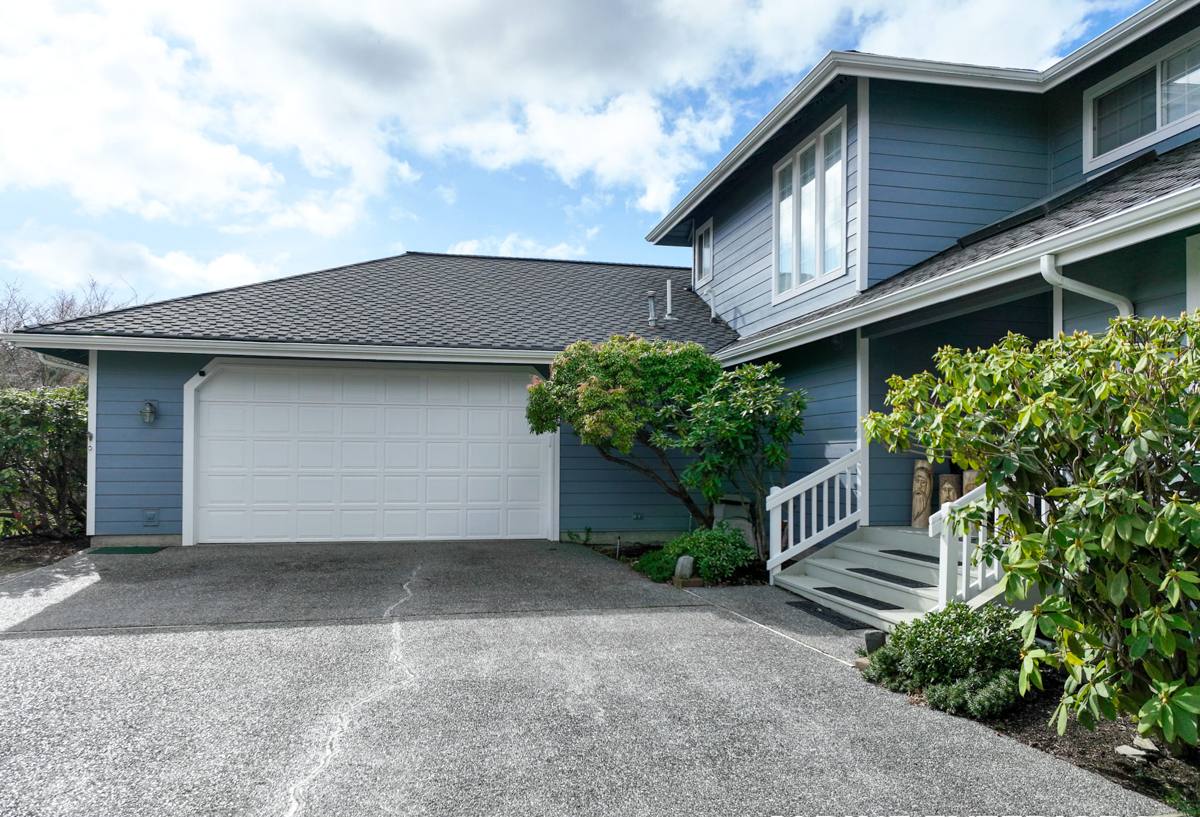
What This Climate Actually Does to a Deck
Most deck failures we get called out to inspect aren't dramatic — they're slow. Water finds a gap, sits there because the air is too damp to dry it out quickly, and starts working on whatever's underneath.
The specific problems we see
- Trapped moisture at ledger boards — where the deck attaches to the house, missing or failing flashing lets water track behind siding and into rim joists.
- Moss and algae film on the surface — shaded decks especially, which turns boards slick and, over years, holds moisture against the surface longer than it should sit.
- Fastener corrosion — the wrong screws or nails rust and streak, and eventually lose their grip in wet wood framing.
- Joist and beam rot — underneath the decking itself, out of sight, where a homeowner won't notice until boards start to feel spongy.
- Freeze-thaw movement — Whatcom County gets enough cold snaps each winter that trapped water in framing connections can freeze, expand, and loosen joints over a few seasons.
None of this is unique to any one brand of decking. It's a function of how the structure underneath is built and flashed, which is where most of the real work — and most of the corners that get cut — actually happens.
Why Composite Makes Sense for This Climate
Wood decking isn't wrong for Sumas, but it asks a lot of a homeowner: annual cleaning, periodic sealing or staining, and constant vigilance about moss buildup. Miss a year and you're often looking at sanding, stripping, or board replacement. Composite decking shifts that maintenance burden way down without pretending it's zero-maintenance — nothing installed outside in this climate truly is.
| Factor | Wood Decking | Capped Composite |
|---|---|---|
| Moisture absorption | High — swells, cups, splinters over time | Very low — capped shell resists water intake |
| Moss and algae grip | Textured grain holds spores well | Smoother capped surface, easier to rinse off |
| Annual upkeep | Cleaning plus sealing or staining | Periodic rinse; no sealing or staining |
| Typical lifespan here | 10–15 years before major repair | 25–30+ years with proper substructure care |
| Upfront cost | Lower material cost | Higher material cost, lower lifetime cost |
| Appearance over time | Grays and weathers unless maintained | Color-stable, some fading possible over many years |
The honest trade-off: composite costs more upfront and the framing underneath still needs to be built correctly, because the boards themselves aren't what fails first — the structure is. Composite buys you back the maintenance weekends, not a free pass on smart building.
What a Correct Installation Actually Involves
Framing and structure
Composite boards are heavier and behave differently under load than wood, so joist spacing has to match the manufacturer's span tables — usually tighter than a standard wood deck, especially for boards run at an angle. We use pressure-treated or better framing lumber, and we don't shortcut joist hangers or blocking to save a few boards.
Ledger flashing
Where the deck meets the house is the single most common failure point we find on older decks in this area. Correct flashing — metal flashing under the siding, properly lapped, with a water-resistant barrier behind it — keeps rain from tracking into the house framing. This is not a place to save time.
Ventilation and drainage
Composite doesn't rot, but the wood framing underneath it can if air can't move and water can't drain. We keep clearance under the deck, slope the substructure slightly away from the house, and avoid designs that trap standing water against ledger boards or posts.
Fasteners and fastening systems
We use hidden fastener clip systems where the product line supports it for a clean, screw-free surface, along with coated or stainless fasteners in the framing itself so corrosion isn't working against the structure for the next two decades.
Board layout and expansion gaps
Composite expands and contracts with temperature more than people expect. Gaps at butt joints and around fixed objects (posts, house walls) need to be set correctly at install, not eyeballed, or you get buckling or overly wide gaps a year or two in.
Our Process, Start to Finish
- On-site walkthrough — we look at the existing structure (if there is one), grade, drainage, and how the deck ties into the house before quoting anything.
- Honest scope and estimate — what needs replacing versus what can be reused, written out plainly, no vague allowances.
- Permitting — most deck rebuilds and new decks in Whatcom County require a permit; we handle that paperwork rather than leaving it on the homeowner.
- Demo and framing — old decking and any compromised framing come out first; new framing is built to span tables for the specific composite product chosen.
- Flashing and waterproofing — ledger and any post bases get properly flashed and sealed before a single board goes down.
- Decking installation — boards, fastening system, fascia, and any railing installed per manufacturer spec.
- Final walkthrough — we go over care basics with the homeowner before we call it done.
Composite Decking Options and What Drives Cost
Composite decking isn't one product — it spans a range of construction and price points, and the right choice depends on budget, sun exposure, and how the deck will actually get used.
| Cost Factor | What It Affects |
|---|---|
| Board tier (entry vs. premium capped composite) | Surface durability, fade resistance, warranty length |
| Deck size and shape | Material quantity, framing complexity, waste from angled cuts |
| Substructure condition | Whether existing framing can be reused or needs full replacement |
| Height and railing requirements | Guardrails, stairs, and code-required railing height add labor and material |
| Site access | Backyard access for equipment and material staging affects labor time |
| Hidden fastener systems | Cleaner look, typically a modest labor and material add versus face-screwing |
We won't quote a per-square-foot number without seeing the site — a flat backyard deck and a raised, multi-level deck over sloped ground are very different jobs even at the same square footage.
Maintenance: What Composite Actually Needs Here
"Low maintenance" doesn't mean "no maintenance," especially with this much rain and moss pressure. Here's the realistic care routine for a composite deck in this area:
- Rinse or sweep off debris and standing organic matter (leaves, needles) regularly, especially in fall.
- Scrub with a soft brush and mild soap-and-water solution once or twice a year to keep moss and algae from getting a foothold, more often on shaded sections.
- Keep gutters and downspouts near the deck clear so runoff isn't dumping directly onto or under it.
- Check that under-deck ventilation gaps stay clear of stored items, planters, or debris that traps moisture against framing.
- Inspect railing posts and stair connections annually for movement — the framing, not the boards, is what typically needs attention first.
- Avoid pressure washing at close range or high PSI directly into the capped surface, which can etch or damage the cap layer.
Why Hire a Crew That Already Works in Sumas
A deck built by someone unfamiliar with this specific stretch of Whatcom County can still look fine the day it's finished. The difference shows up in year three or four — in how the framing handles a wet winter, whether the flashing was actually done right, and whether the boards were spaced for real seasonal movement instead of a dry-day install. We work across this part of the county regularly, from Birch Bay out to inland communities like Sumas, so we're building to the same wet-season standard every time, not guessing at it.
We also don't treat composite decking as a product you can install the same way everywhere. A deck in a shaded, damp yard needs different attention to drainage and moss exposure than one in full sun. Knowing the difference before we start framing is part of what a local crew brings that an out-of-area installer often doesn't.
Get a Straight Answer on Your Sumas Deck Project
If you're weighing a new composite deck or replacing a tired wood one, we're happy to come take a look, walk the site with you, and give you a straightforward estimate — no pressure, no inflated scope. Use the form below to get started.