 Birch Bay Siding
 Siding Replacement in Ferndale: A Job the Local Climate Doesn't Forgive
Ferndale sits close enough to the water and far enough into Whatcom County's rain belt that its homes take a steady, year-round beating most siding products were never engineered to handle. Salt-laden air drifts in off the Strait, driving rain comes in sideways more months than not, and a long, damp moss season keeps north- and west-facing walls wet for weeks at a stretch. Siding replacement here isn't a cosmetic upgrade — it's a decision about what your home's exterior has to survive for the next 20-30 years.
We install exclusively James Hardie fiber cement siding, and this page walks through what Ferndale homes specifically need from a siding replacement, what a correct installation actually involves, and why the crew doing the work matters as much as the product going on the wall.
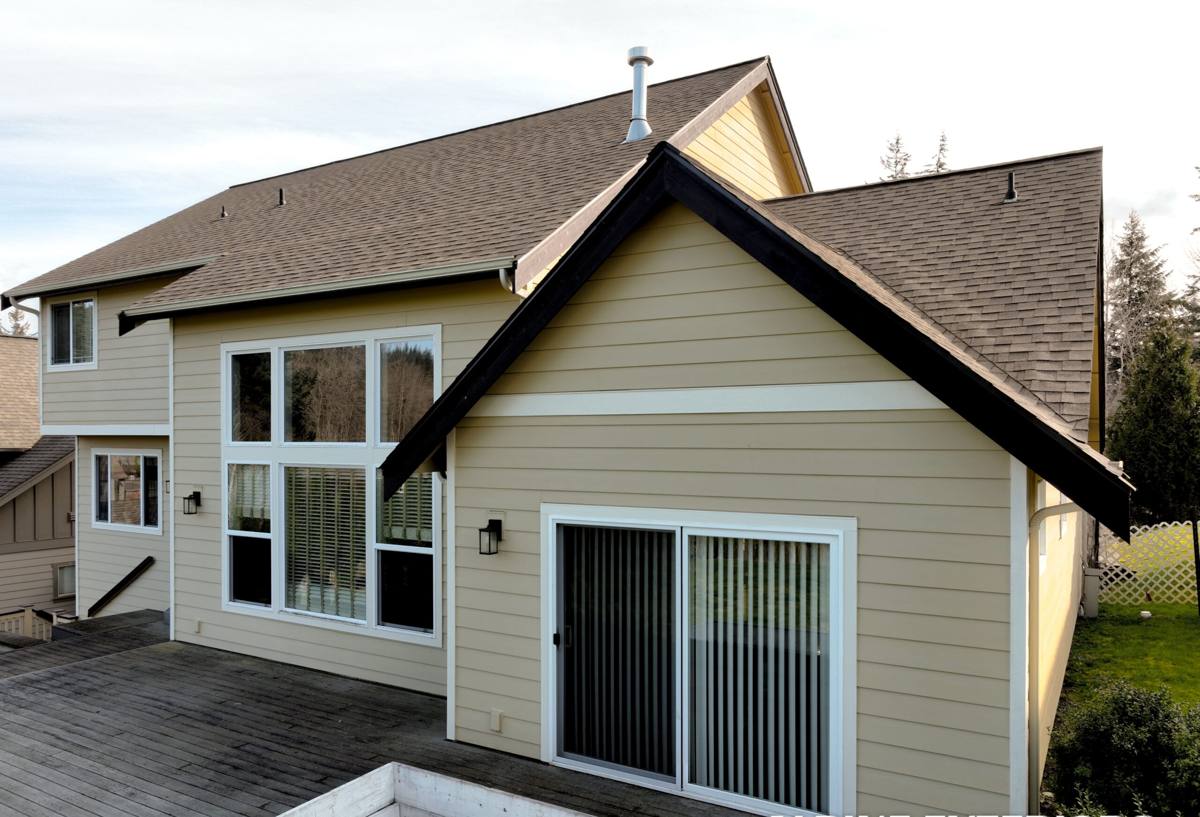
What Whatcom County Weather Actually Does to Siding
Every siding material reacts differently to the specific combination of conditions Ferndale sees. Understanding the mechanism of failure — not just "weather is bad for siding" — is what separates a replacement that lasts from one that starts failing again in a decade.
Salt Air and Corrosion
Airborne salt accelerates corrosion on fasteners, flashing, and any exposed metal trim. It also breaks down certain coatings and caulks faster than inland exposure would, which is why product choice and fastener selection matter more here than in a landlocked county.
Driving Rain and Wind-Driven Moisture
Ferndale's weather doesn't just rain straight down — wind pushes water sideways into laps, seams, and penetrations. Any siding system with weak moisture management at the seams, or that relies on face-sealing instead of proper drainage and flashing, is going to take on water eventually. Where that water goes once it's behind the cladding determines whether you get a cosmetic issue or a rot problem.
Moss, Mildew, and Prolonged Dampness
Shaded walls and roof-adjacent siding stay damp for extended stretches during Whatcom County's long wet season. Materials that absorb moisture or that need routine sealing to stay protected are fighting an uphill battle against a climate that barely gives surfaces time to dry between rain events.
Signs a Ferndale Home Needs Siding Replacement, Not Just Repair
Not every siding problem calls for a full replacement, but in this climate, deferred issues tend to compound quickly once moisture gets behind the cladding. Here's what tells us a repair won't cut it:
- Soft, spongy, or visibly swollen siding panels, especially near ground level or under windows
- Persistent moss or algae growth that returns within weeks of cleaning
- Paint that's bubbling, peeling, or failing faster than a normal repaint cycle would suggest
- Visible gaps, warping, or buckling at seams and corners
- Interior signs — musty smells, staining, or soft drywall — near exterior walls
- Siding that's original to a home built before modern moisture-barrier practices were standard
- Multiple past repairs to the same sections that keep recurring
If you're seeing two or more of these, it's worth a real inspection rather than another patch job.
Why We Only Install James Hardie Fiber Cement
We made a deliberate decision years ago to install one siding system — James Hardie — rather than offering vinyl, LP SmartSide, or wood alternatives alongside it. That's not a marketing position; it's a response to what we've seen hold up in exactly the kind of coastal, wet, moss-prone climate Ferndale sits in.
Vinyl siding is inexpensive and low-maintenance in mild climates, but it softens and warps at temperature extremes and its seams rely on overlap rather than a true weather-resistant barrier system — a real liability under sustained wind-driven rain. Engineered wood products like LP SmartSide use a wood-strand core that's more moisture-resistant than raw wood but is still an organic substrate; if the factory coating or field-applied sealant ever gets compromised at a cut edge or fastener point, moisture intrusion can progress from the inside out before it's visible. Cedar and primed wood siding require the most diligent, ongoing maintenance of any option and are the least forgiving of Whatcom County's damp cycle if that maintenance slips even one season.
James Hardie fiber cement is cement, sand, and cellulose fiber — non-combustible, dimensionally stable, and engineered specifically for climates like ours through its HZ5 product line. It doesn't rot, it resists moss and mildew far better than wood-based products, and its ColorPlus factory finish holds color without the repaint cycle vinyl and wood eventually demand.
How the Common Siding Options Compare in This Climate
| Factor | Vinyl | LP SmartSide / Engineered Wood | James Hardie Fiber Cement |
|---|---|---|---|
| Moisture/rot resistance | Doesn't rot, but seams can trap water | Moderate — vulnerable at compromised edges | High — non-organic, engineered for wet climates |
| Moss/mildew resistance | Moderate | Moderate, needs maintenance | High, especially with ColorPlus finish |
| Performance in driving rain/wind | Weaker seam sealing | Good if installed and sealed correctly | Strong with proper lap and flashing detail |
| Maintenance burden | Low, but limited repair options | Moderate to high — recoating, caulk checks | Low — factory finish, occasional wash |
| Fire resistance | Low — melts/deforms | Combustible | Non-combustible |
| Typical warranty structure | Prorated, varies widely | Manufacturer-specific, often shorter | Strong transferable limited warranty |
What a Correct Siding Replacement Actually Involves
The siding itself is only part of the system. In a climate like Ferndale's, the details behind the panels determine whether the job lasts one decade or three.
Tear-Off and Substrate Inspection
We remove the old siding down to the sheathing and inspect for hidden moisture damage, soft framing, or existing rot before anything new goes up. Covering over a problem is how a "new siding job" fails in five years instead of thirty.
Weather-Resistant Barrier
A continuous, properly lapped weather barrier goes over the sheathing before any siding is installed. This is the layer that actually keeps bulk water out of the wall assembly — the siding sheds most of it, but the barrier is the backup that matters most in wind-driven rain.
Flashing at Every Penetration
Windows, doors, vents, and any other wall penetration get properly integrated flashing, not just caulk. Caulk fails; correctly lapped flashing doesn't rely on a sealant staying intact for 20 years to keep water out.
Fastening and Clearances to Manufacturer Spec
James Hardie siding has specific requirements for fastener type, spacing, and clearance from grade, roof lines, and other siding-to-material transitions. Skipping these details is the single most common reason fiber cement installations underperform — the product isn't the problem, the installation is. It's also usually what determines whether the manufacturer's warranty is actually valid if something does go wrong later.
Trim, Caulking, and Paint Detailing
Corners, trim boards, and butt joints get sealed and finished to shed water rather than collect it. In a climate with this much sustained moisture exposure, these finishing details are where a lot of lesser installations start failing first.
Our Process for a Ferndale Siding Replacement
- Inspection and assessment — We walk the exterior, check for hidden moisture or structural issues, and assess what's driving the need for replacement.
- Scope and product selection — We recommend the right James Hardie product line and profile for your home's exposure, and walk through ColorPlus options.
- Written estimate — A clear, itemized estimate before any work begins — no surprise change orders for things a proper inspection should have caught.
- Tear-off and substrate repair — Old siding comes off, damaged sheathing or framing gets addressed, not covered up.
- Barrier, flashing, and installation — Weather barrier, flashing, and siding installed to manufacturer spec, with attention to Ferndale's wind and rain exposure.
- Final walkthrough — We review the completed work with you before calling the job done.
Cost Factors for Siding Replacement in Ferndale
Every home is different, and we don't quote sight-unseen, but these are the main variables that move the price on a real Ferndale project:
| Factor | Why It Matters |
|---|---|
| Square footage and home shape | More corners, gables, and dormers mean more cutting, trim, and labor time |
| Substrate condition | Hidden rot or moisture damage found during tear-off adds repair scope |
| Siding profile and accessories | Lap width, trim style, and shakes/panels in accent areas affect material cost |
| Height and access | Two-story sections, steep grades, or tight lot access affect labor and equipment needs |
| Existing siding removal | Full tear-off versus siding over an existing layer (which we generally don't recommend) changes scope |
| Window and trim work | Replacing or re-flashing trim and window surrounds alongside siding adds scope but improves the final result |
Why Hiring a Crew That Already Works in Ferndale Matters
Siding installation isn't one-size-fits-all across Washington. A crew that mostly works drier, inland climates doesn't build the same habits around flashing detail, barrier lapping, and moisture management that a crew working the Whatcom County coast does every week. Working in Ferndale regularly also means familiarity with local permitting expectations and the kind of exposure conditions — wind direction, typical moss patterns, salt exposure by proximity to the water — that inform where extra attention is warranted on a given home.
It also means accountability. A local crew is still local next year and the year after, not a name from an out-of-area outfit that's hard to reach if something needs a look under warranty.
Ready to Talk About Your Ferndale Home?
If your siding is showing its age or you're planning ahead for a replacement, we're happy to take a look and give you a straight, no-pressure assessment of what your home actually needs. Use the form below to request a free estimate.