 Birch Bay Siding
 Windows on Lummi Island Face a Harder Job Than Most
Lummi Island sits out in the Salish Sea, reached by a short county ferry crossing, and that setting is exactly why its windows wear out faster than the same product would twenty miles inland. Homes here catch wind and salt spray off the water from multiple directions, not just one prevailing side, and that changes what "correct" window work looks like. As a crew that also covers Birch Bay and the rest of Whatcom County, we see the same pattern on both sides of the water: standard installation practices that hold up fine in a dry climate fail early here.
Custom Windows on Lummi Island isn't really about fancy shapes or high-end trim packages, though we do plenty of that. It's about choosing materials and installation details that survive salt air, wind-driven rain, and a moss season that can stretch across most of the year on shaded, north-facing walls. Get those details wrong and you're looking at fogged glass, soft sills, and swollen sashes well before the window has earned out its cost.
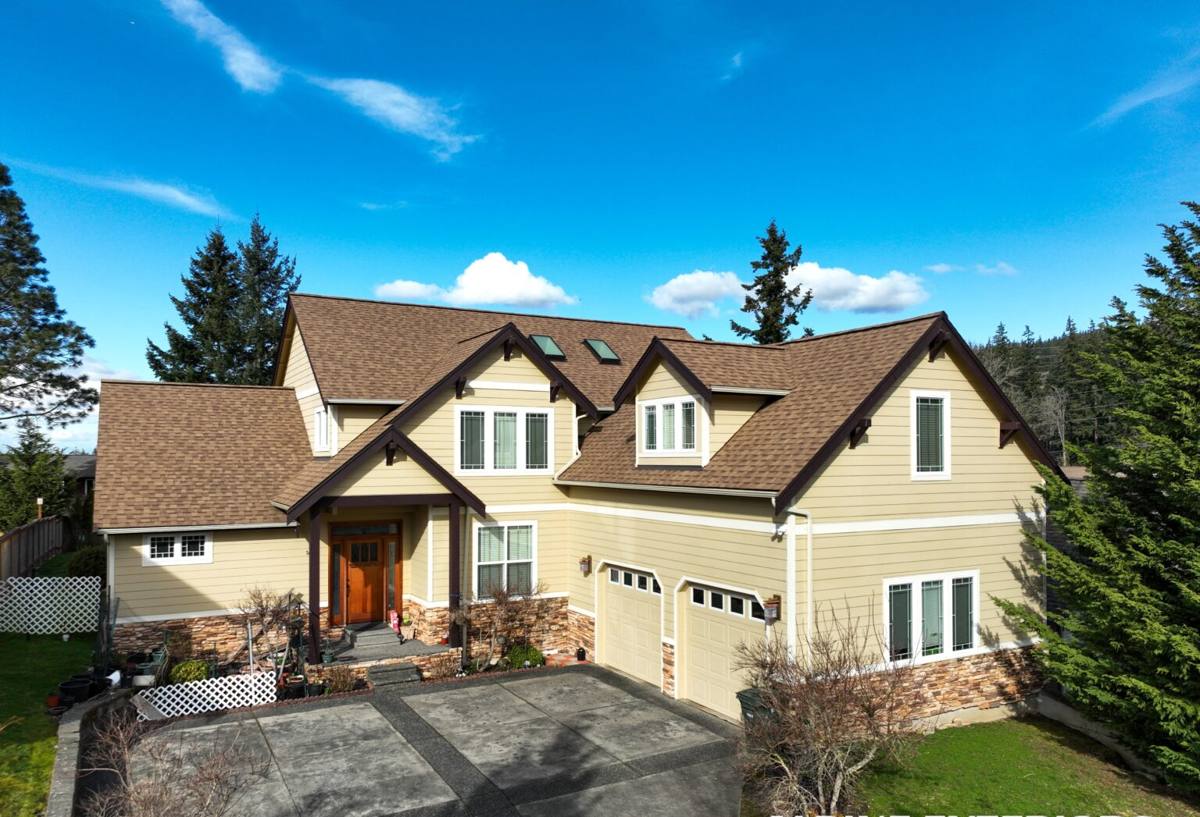
What Salt Air, Driving Rain, and Moss Season Actually Do to a Window
Three things work against windows on the island, and they don't act alone — they compound each other.
Salt Air
Airborne salt is corrosive to exposed hardware — hinges, cranks, locks, and screws — and it accelerates the breakdown of weatherstripping and sealants faster than a normal marine-adjacent climate would. Aluminum components pit and chalk. Even good vinyl and fiberglass frames need salt-tolerant hardware and sealants specified up front, not swapped in later.
Driving Rain
Rain here rarely falls straight down. Wind off the water pushes it sideways, which means water gets tested at the vertical joints, the head flashing, and the sill pan in a way that gentle rain never would. A window that's caulked instead of properly flashed might look fine for a season or two, then start leaking at the corners once the sealant fatigues.
Moss Season
Whatcom County's long wet stretch keeps north- and west-facing walls damp for months at a time. Moss and algae take hold on sills, in corner joints, and along trim boards, holding moisture against the frame long after the rest of the house has dried out. On original wood-frame windows, that's a direct path to soft, rotting sills.
Why Older Original Windows Suffer Most
A lot of Lummi Island's housing stock includes older cottages and cabins with original single-pane or early double-pane windows. Those units were never built with today's sealed insulated glass or synthetic weatherstripping, so they're the first to show interior condensation, drafts, and visible wood decay at the sill and lower rail. If your windows are original to a home built before energy codes tightened up, age alone is usually working against them before salt and rain even get involved.
What a Correct Custom Window Installation Involves
"Custom" should mean the window is built and installed to fit your actual opening and your actual exposure — not that it's simply expensive. Three things determine whether a window will hold up here: the frame material, the glass package, and the water management details around it.
Frame Material
| Material | Coastal Performance | Maintenance | Typical Cost Tier |
|---|---|---|---|
| Vinyl | Good — won't rust or rot, some UV chalking over time | Low — occasional cleaning | Lower |
| Fiberglass | Very good — dimensionally stable, resists salt and moisture well | Low | Mid to upper |
| Wood-clad | Good exterior protection, but any breach in the cladding exposes wood to rot | Moderate — watch seals and joints | Upper |
| Aluminum | Weaker choice here — prone to pitting and corrosion from salt air unless marine-grade and well finished | Higher — hardware and finish need monitoring | Mid |
We generally steer island and Birch Bay clients toward vinyl or fiberglass for most homes, not because other materials are bad products, but because they hold up with the least ongoing attention in this specific exposure. Wood-clad windows can still be the right call on a home where the look matters and the owner is willing to stay on top of maintenance.
Glass and Weatherstripping for a Marine Climate
Insulated dual-pane glass with a low-E coating and a warm-edge spacer is the baseline we'd recommend for this area — the warm-edge spacer resists the seal failure that leads to fogging between panes, which is one of the most common complaints we hear about lower-grade replacement windows near the water. Argon fill adds a little more thermal performance for the wet, cool months. Weatherstripping should be a compression-style synthetic gasket, not the thin foam strips found on builder-grade units, since it holds up better against salt exposure and repeated wetting.
Flashing and Water Management
This is the part of the job nobody sees once it's finished, and it's the part that decides whether the window lasts fifteen years or fifty. A correct install includes a sloped sill pan to shed any water that gets past the glass, head flashing integrated up under the existing housewrap or building paper (not just caulked on top of the siding), and sealants that are actually compatible with your siding material. Skipping any one of these steps is how a brand-new window ends up with a rotting rough opening five years later.
Our Process for a Lummi Island Window Project
- On-site assessment and measurement. We look at the actual opening, the condition of the surrounding trim and sheathing, and the wall's exposure to wind and rain before recommending anything.
- Product selection. We walk through frame material, glass package, and grille or configuration options based on your home's exposure and your budget — not a one-size-fits-all package.
- Scheduling around ferry timing and weather. Island jobs get planned around the ferry schedule and a realistic weather window, since an open wall in driving rain is not where we want to be.
- Removal and inspection. Once the old window comes out, we check the sheathing and framing underneath for hidden rot or moisture damage before anything new goes in.
- Install and flash. The new window gets set, shimmed level and square, and properly flashed and sealed for water management — not just caulked around the edges.
- Trim and finish. Interior and exterior trim is finished to match the surrounding wall so the new window looks original to the house, not bolted on.
- Walkthrough. We test operation, check the seal, and walk the job with you before we consider it done.
Custom Sizing and the Realities of Older Island Homes
A lot of the "custom" work on Lummi Island isn't about unusual shapes — it's about openings that have shifted over decades of settling, framing that's slightly out of square, or older cottages built to dimensions that don't match any current standard size. Ordering a stock-size replacement for one of these openings usually means a gap that gets packed with foam and hidden behind trim, which is exactly the kind of shortcut that lets water find its way in later.
True custom sizing means the window is built to fit the actual opening, square or not, so the flashing and sealant details can do their job the way they're designed to. It also means matching sightlines and sash proportions across a wall or an entire house, which matters more on older, architecturally consistent homes than it does on a newer build where every window already matches.
What Drives the Cost of a Custom Window Project Here
| Factor | Why It Matters |
|---|---|
| Frame material | Vinyl is generally the most budget-friendly; fiberglass and wood-clad cost more up front but may cost less in maintenance over time |
| Number and size of openings | Whole-house replacements have better per-unit pricing than one-off jobs, but total cost scales with size and count |
| Site accessibility | Island logistics — ferry timing, material delivery, and site access — can affect scheduling and labor time |
| Condition of the existing opening | Rot or moisture damage found during removal adds repair scope before the new window can go in |
| Glass package | Low-E coatings, argon fill, and impact- or sound-rated glass all add cost over basic dual-pane |
| Trim and finish work | Matching existing exterior trim profiles or interior casings adds labor beyond a bare window swap |
We don't quote a job until we've actually seen the openings, but these are the factors that move a bid up or down, and we'll walk through each one with you so there are no surprises once the estimate is in your hands.
Signs Your Windows Are Losing the Fight
- Fogging or a hazy film between the panes of glass — the sealed unit's seal has failed
- A sill or lower frame that feels soft or spongy when pressed
- Windows that are hard to open, close, or lock, or that have started to bind
- Visible corrosion, pitting, or chalky white residue on hardware and metal components
- Moss, algae, or black staining creeping from the siding onto the frame or sill
- Noticeable drafts or cold spots near the window in winter
- Condensation forming on the inside of the glass during cold, wet weather
- Visible daylight or gaps around the frame when the window is closed
Any one of these on its own might just mean routine maintenance. Two or three together, especially on a wall that takes the brunt of the weather, usually means it's time to talk about replacement before the surrounding framing gets involved.
Why Hiring a Crew That Already Works Lummi Island Matters
Working on the island isn't the same as working in town, and it shows in ways that affect your project directly. Material deliveries and crew scheduling have to work around the ferry, which means a contractor unfamiliar with that rhythm can end up with wasted trips or a job stretched out over more days than it should take. A crew that already routes jobs through the island builds that timing into the estimate from the start.
There's also the matter of knowing the housing stock. Lummi Island and greater Whatcom County have a real mix of older cottages, mid-century homes, and newer construction, each with different framing quirks and different vulnerabilities to salt and moisture. A crew that's opened up enough of these walls knows what to expect before the trim ever comes off, which means fewer surprises and fewer change orders once the job is underway.
Finally, there's accountability. A contractor based nearby in Birch Bay, with a track record of coming back for warranty work and follow-up questions, has a real incentive to get the water management details right the first time — because a callback means another ferry crossing, not just another job on a list.
Ready for a Straightforward Estimate
If your windows are showing their age, fogging, or letting in drafts, we're happy to take a look and give you an honest read on what's going on and what it would take to fix it right. Reach out for a free, no-pressure estimate — we'll walk the openings with you, explain the options in plain terms, and put together a quote that reflects what your home on Lummi Island actually needs.