 Birch Bay Siding
 Windows Built for Birch Bay Village's Marine Climate
Birch Bay Village sits close enough to the water that the air itself becomes part of the maintenance equation. Salt-laden moisture off the bay works its way into hardware, frame seams, and trim over years of exposure. Add the driving rain that comes with winter storms off the Strait of Georgia and a long, damp moss season, and you have a climate that is genuinely harder on windows than most inland Whatcom County neighborhoods. Windows here don't just need to look good and cut a heating bill — they need to hold a seal against wind-driven water and resist corrosion in hardware that lesser-quality units simply aren't built for.
When we talk about "energy-efficient windows" for a home in this specific area, we mean something more than a sticker on the glass. We mean a window and an installation that will still be performing the way it should ten and twenty years from now, in a spot where salt air and standing moisture are working against it every day.
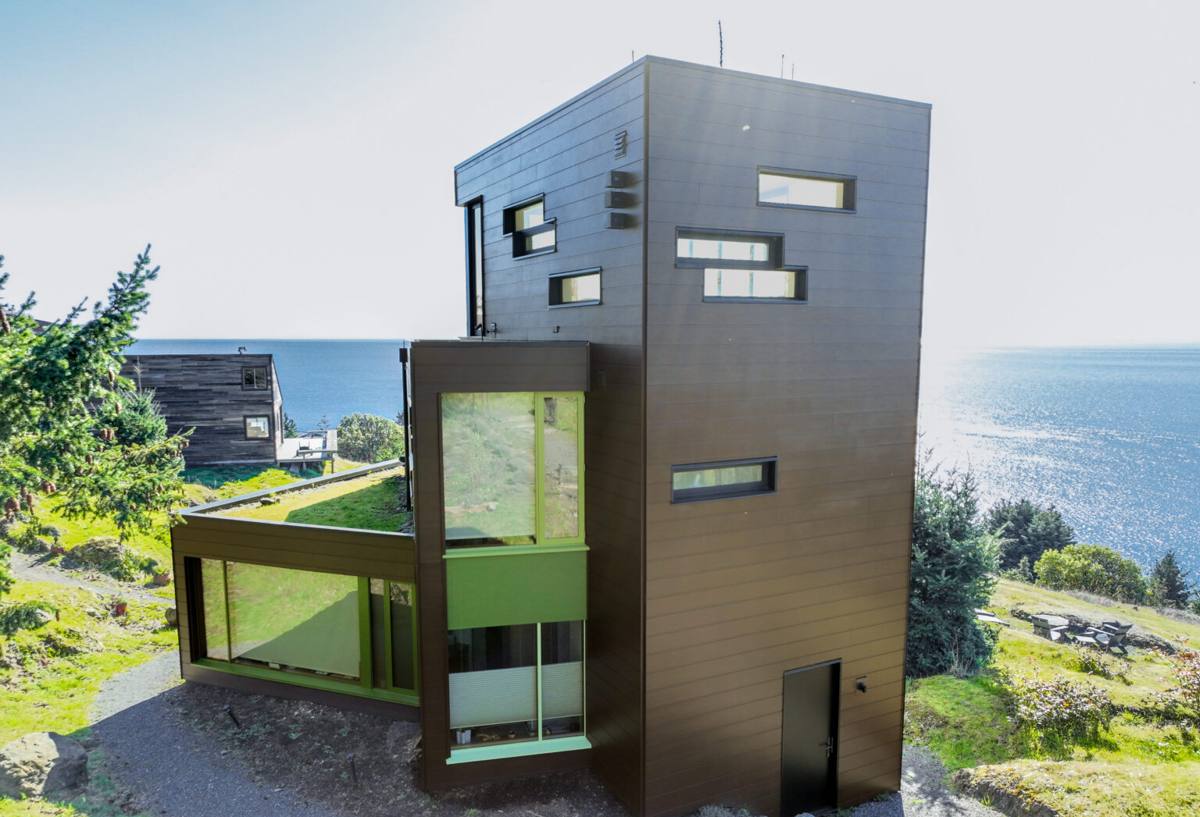
What "Energy Efficient" Actually Means
Energy efficiency in a window comes down to a handful of measurable properties, not marketing language. The two numbers worth understanding are U-factor and Solar Heat Gain Coefficient (SHGC).
U-Factor
U-factor measures how much heat passes through the window — lower is better. In a marine climate like Birch Bay's, where winters are wet and mild but still cool enough to run heat for months, a low U-factor keeps warm air inside and cold, damp air outside. This is the single biggest factor in whether your heating bill actually drops after a window replacement.
SHGC
Solar Heat Gain Coefficient measures how much solar heat the glass lets in. Homes with big water-facing views often want a moderate SHGC — enough to get some passive warmth on clear days without turning a south- or west-facing room into a greenhouse in July.
Low-E Coatings and Gas Fill
A low-emissivity (low-E) coating is a microscopically thin metallic layer that reflects heat back where it came from — inside in winter, outside in summer — without noticeably changing how clear the glass looks. Argon or krypton gas fill between panes adds insulation value over plain air. Together with a tight, well-sealed frame, these are what separate a genuinely efficient window from one that just looks new.
| Feature | What It Does | Why It Matters in Birch Bay Village |
|---|---|---|
| Low U-factor | Reduces heat transfer through glass and frame | Keeps heating costs down through wet, cool winters |
| Low-E coating | Reflects radiant heat | Improves comfort near large water-view windows |
| Argon/krypton fill | Adds insulation between panes | Extra buffer against constant marine humidity |
| Multi-point locking hardware | Pulls sash tight against the frame | Resists wind-driven rain intrusion during storms |
| Corrosion-resistant fasteners | Won't rust or seize | Stands up to sustained salt air exposure |
Choosing a Frame Material for a Salt-Air Environment
Frame material matters as much as the glass package, especially this close to the water. There's no single "right" answer — it's a trade-off between upfront cost, maintenance, and long-term performance.
| Frame Type | Salt Air / Moisture Performance | Maintenance | Typical Trade-Off |
|---|---|---|---|
| Vinyl | Good — won't rust or corrode | Low; occasional cleaning | Most affordable; frame can't be repainted |
| Fiberglass | Excellent — very stable, resists warping | Low | Higher upfront cost, longest expected service life |
| Wood-clad | Good on the exterior face, but end grain and joints need attention | Higher — caulk and finish need periodic inspection | Best interior appearance, more upkeep near the coast |
| Bare aluminum | Poor without a quality thermal break and coating | Moderate to high | We generally steer homeowners away from it in this specific location |
We don't push one brand or one material on every homeowner. What we do insist on is matching the frame to the exposure — a window on a wall that catches direct wind off the bay deserves a more robust hardware and weatherstripping spec than one tucked on a sheltered elevation, even on the same house.
Signs Your Current Windows Are Costing You Money
Older or poorly installed windows in this climate tend to show the same handful of warning signs. If you're seeing more than one or two of these, it's worth having them looked at.
- Visible fog or moisture trapped between panes — the seal has failed and the insulating gas is gone
- Cold drafts near the frame even when the sash is fully latched
- Hardware that's stiff, pitted, or corroded from salt exposure
- Soft or discolored wood trim around the window opening, especially at the bottom corners
- Condensation forming on the inside of the glass most winter mornings
- Noticeably higher heating bills compared to similar-sized homes nearby
- Paint or caulk that's cracked and pulling away from the frame
How We Handle Installation Here
The window itself only performs as well as the installation around it, and in an area that sees driving rain, that installation detail is where most failures actually happen — not in the glass.
Flashing and Moisture Management
Every opening gets properly flashed and integrated with the existing weather-resistive barrier before the new window goes in. This is the step that determines whether wind-driven rain during a winter storm ends up outside the wall — where it belongs — or inside it, where it can sit unnoticed for months.
Sealing and Insulation
We insulate the gap between the window frame and the rough opening correctly — not overpacked, which can bow the frame, and not left hollow, which leaves a cold spot and a path for moisture. Exterior sealant beads are tooled to shed water rather than trap it against the siding.
Final Fit and Operation
Every window is checked for square, level, and smooth operation before we consider the job done. A window that's slightly racked in its opening won't seal properly no matter how good the unit itself is.
Local Considerations for Birch Bay Village
Homes in this neighborhood range from older cottages built decades ago to newer construction, and each brings a different set of considerations. Older homes often have original wood-frame windows that were never designed with modern insulating glass in mind, and the rough openings can be slightly out of square after years of settling — that requires more careful field measurement than a straightforward like-for-like swap. Newer homes are more likely to already have vinyl or fiberglass units, where the conversation is less about frame material and more about upgrading glass performance or replacing failed seals.
Proximity to the water is the other variable we weigh house by house. A window on an elevation that takes the brunt of wind off the bay needs a heavier-duty weatherstripping and hardware spec than the same window style on a more sheltered wall of the same house. We look at each opening individually rather than treating every window on a home the same way.
What Affects the Cost
Every home is different, so we don't quote sight-unseen — but these are the main factors that move the price up or down.
| Factor | Effect on Cost |
|---|---|
| Frame material (vinyl vs. fiberglass vs. wood-clad) | Fiberglass and wood-clad run higher than standard vinyl |
| Glass package (double-pane vs. triple-pane, coatings) | Upgraded glass adds cost but improves comfort and efficiency |
| New construction vs. retrofit/insert | Retrofit is typically less invasive and less costly than full frame replacement |
| Condition of the existing opening | Rot repair or out-of-square framing adds labor before the window goes in |
| Window size and configuration | Large picture windows or special shapes cost more than standard sliders |
| Number of windows in the project | Whole-house projects typically bring a lower per-window cost than one-off replacements |
As a general guide, homeowners in this area typically see per-window installed costs ranging from a modest few hundred dollars for a straightforward vinyl retrofit up into the low thousands for larger units or premium frame materials — but the only way to know what your project actually costs is a walkthrough of your specific windows and openings.
Why Work With a Crew That Already Knows Birch Bay Village
A contractor who works this area regularly already understands the exposure differences between a house tucked back from the water and one that takes wind straight off the bay. That familiarity shows up in small decisions — which side of the house gets the heavier weatherstripping spec, how much attention the flashing detail needs, what kind of trim repair to expect once old siding comes off around an opening. It also means we're not guessing at how local building department expectations apply to window replacement projects in Whatcom County. None of that replaces a careful, honest look at your specific home, but it does mean fewer surprises once the work is underway.
If you're weighing whether your current windows are worth repairing, upgrading, or fully replacing, we're happy to take a straightforward look and give you an honest read — no pressure, no upsell. Use the form below to request a free estimate for your Birch Bay Village home.