 Birch Bay Siding
 Storm Damage on Bellingham Roofs: Why the Climate Matters
Bellingham doesn't usually get the kind of single dramatic storm that tears a roof apart overnight. What it gets instead is a steady grind: driving rain off Bellingham Bay, wind that funnels down from the Strait of Georgia, salt-laden air near the water, and a moss season that can run from October through May in a wet year. Roof damage here is often the sum of all that pressure over time, punctuated by a windstorm or heavy downpour that finally exposes a weak point that's been building for months.
That's the piece a lot of homeowners miss when they call about "storm damage." The wind event is usually what causes the leak to show up, but the real cause is often months of moisture intrusion, moss holding water against the shingles, or a flashing detail that was never quite right to begin with. A repair that only addresses the visible wind damage and ignores the underlying moisture problem tends to fail again within a season or two, especially in a climate as consistently wet as ours.
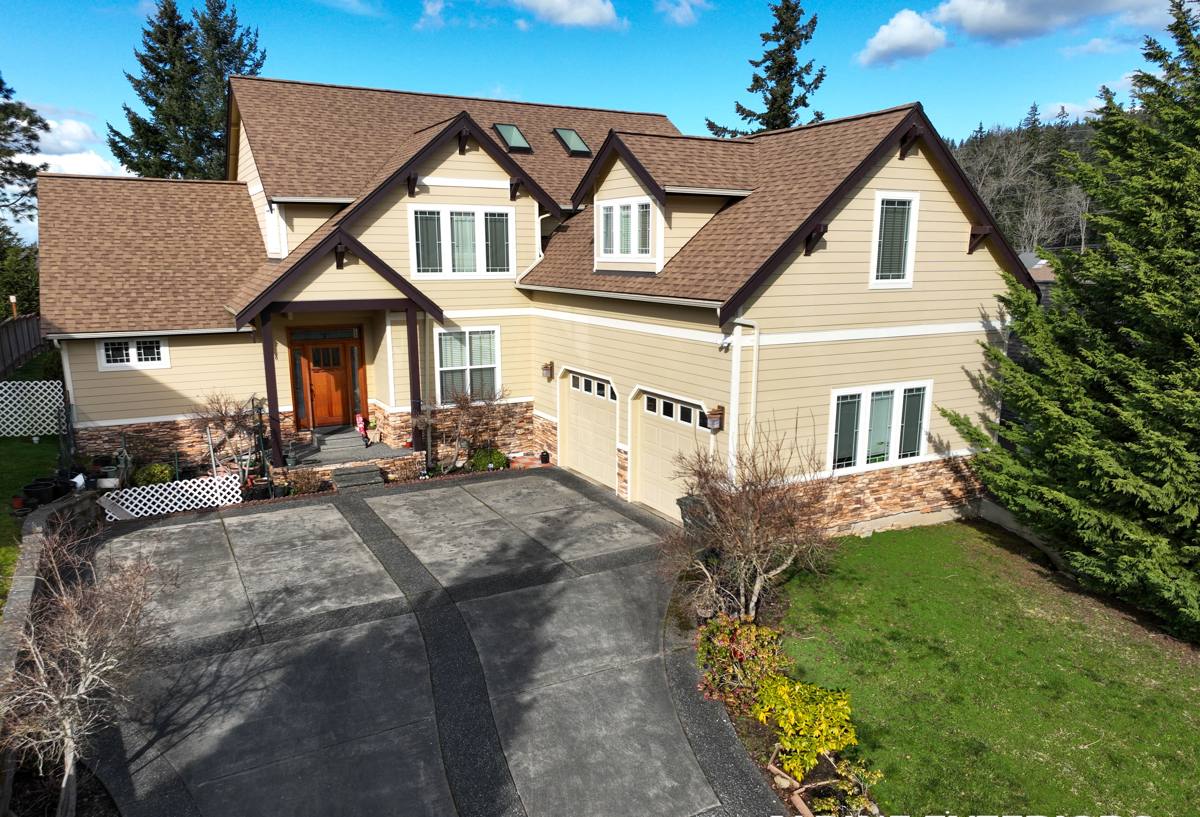
Common Storm Damage We See Around Bellingham
Every roof and every storm is different, but a few patterns show up again and again on homes throughout the Bellingham area and the rest of Whatcom County.
| Damage Type | What Typically Causes It Here | What It Usually Needs |
|---|---|---|
| Lifted or torn shingles | Southeast wind events pushing across Bellingham Bay and open lots | Reseal or replace the affected courses; check decking underneath for damage |
| Moss-related shingle breakdown | Long wet season combined with shade from fir and cedar cover | Moss removal, zinc or copper strip installation, spot shingle replacement |
| Flashing leaks at valleys, chimneys, or skylights | Repeated wind-driven rain forcing water sideways under shingle edges | Re-flash with proper step and counter-flashing, not just fresh caulk |
| Gutter and fascia damage | Windstorms and falling limbs from mature evergreens | Repair or replace damaged sections, re-secure fascia boards |
| Granule loss and wear at ridge lines | Persistent wind exposure at the highest point of the roof | Ridge cap replacement and a check of the ridge vent |
Some of these show up right after a storm. Others get discovered when we're up there looking at something else, which is one more reason a full inspection matters more than a quick patch of the one spot the homeowner noticed from the ground.
What a Correct Storm Damage Repair Actually Involves
Inspection Before Anything Else
A real inspection covers more than the roof surface. We look at the attic too, checking for water staining on the sheathing, compressed or discolored insulation, and any daylight coming through where it shouldn't. Wind and rain damage doesn't always announce itself with a hole you can see from the driveway. Sometimes the only sign is a faint stain on a rafter that will keep spreading if the entry point isn't found.
Matching Materials the Right Way
Storm repairs on an otherwise sound roof mean working within the system that's already there. That means matching shingle profile and color as closely as the manufacturer's current lineup allows, and making sure any replacement materials are compatible with the underlayment and fasteners already on the roof. A mismatched patch isn't just a cosmetic issue; different materials expand, contract, and shed water differently, which can create a new weak point right next to the one you just fixed.
Flashing Done Properly, Not Just Sealant
A lot of "repairs" we get called out to inspect after another contractor's visit are really just a bead of caulk laid over a flashing problem. Caulk is not a fix in this climate; wind-driven rain and constant damp will work it loose within a season or two. A correct repair reworks the actual flashing metal at valleys, chimneys, and skylights so water sheds the way it's supposed to, with sealant used only as a secondary layer, not the whole solution.
Moss, Algae, and Salt Air: The Slow Damage Nobody Notices
Because Bellingham's wet season runs so long, moss gets a real foothold on roofs that don't get much direct sun, especially on north-facing slopes shaded by evergreens. Moss holds moisture directly against the shingle surface far longer than open air would, which softens the mat underneath and lifts tabs at the edges, exactly where wind can then grab them. Homes closer to the water, including much of the Birch Bay shoreline, also deal with salt in the air that speeds up corrosion on exposed fasteners and lower-grade flashing metal. Part of doing this work right in our area is using fasteners and flashing rated for that exposure and building in moss control, usually a zinc or copper strip near the ridge, as a standard part of the repair rather than an upsell.
Our Process, Start to Finish
- Free on-site inspection. We look at the roof and the attic, not just the spot you're worried about.
- Photo documentation. Useful for you, for us, and for insurance if you're filing a claim.
- Written scope and estimate. A clear description of what's damaged and what we're proposing to do about it, not a verbal number scribbled on a business card.
- Insurance coordination, if needed. We'll meet an adjuster on site and make sure our scope lines up with theirs.
- Scheduling around weather windows. Roof work needs a dry stretch; we plan around what the forecast actually allows rather than rushing a repair in the rain.
- Repair and cleanup. Old material removed and hauled off, site left clean.
- Follow-up. We'll check back in if you have any concerns after the next heavy rain.
Insurance Claims: What We Do and Don't Do
We're a repair contractor, not a public adjuster, and we won't pretend otherwise. What we can do is document the damage thoroughly, write a detailed scope of repair in the format most adjusters expect, and be available to walk the roof with an adjuster if that helps move your claim along. We can't guarantee a claim will be approved or predict what your insurer will decide, and we're upfront about that from the first visit.
After any significant regional windstorm, it's common for crews from outside the area to go door-to-door offering to "handle the whole insurance claim" for homeowners. Some of that work is fine. But a rushed contract signed on the spot, before anyone has actually inspected the roof or explained the scope in writing, is worth slowing down on. A written estimate you can read before you sign, and a contractor who'll still be answering the phone next year, are reasonable things to expect from anyone working on your home.
Why a Birch Bay-Based Crew Matters for Bellingham Repairs
We're based right up the road in Birch Bay, and that proximity matters more than it might seem. We already know which wind direction tends to cause the most trouble on which exposures, we're familiar with Whatcom County's permitting requirements when a repair crosses into replacement territory, and we have working relationships with local suppliers so we're not waiting on freight from out of the area to get the right shingle match. Just as important, we're still going to be a local business next storm season, which means the warranty on our work actually means something.
What to Do Right After a Storm
- Stay off the roof and away from any section that looks damaged until it's safe to approach
- Photograph visible damage from the ground before any tarping or cleanup begins
- Check the attic and ceilings for water stains, drips, or daylight coming through the decking
- Only tarp what you can safely reach from the ground or a stable ladder; don't climb onto a wet, storm-damaged roof
- Get a local, licensed contractor out for an inspection before signing anything with a crew going door-to-door
- Keep receipts for any temporary repairs or water damage mitigation for your insurance file
- Insist on a written scope of repair, not just a verbal number
Cost Factors in Storm Damage Repair
Every roof is different, but these are the factors that most often move the price of a repair up or down.
| Factor | How It Affects the Job |
|---|---|
| Extent of damage | A few lifted shingles is a small job; wind damage spread across multiple slopes takes longer and costs more |
| Roof pitch and access | Steep or hard-to-reach roofs take more time and equipment to work safely |
| Decking condition underneath | Rot found once shingles are pulled back adds material and labor not visible at the initial inspection |
| Material match availability | Discontinued or unusual shingle colors can take longer to source |
| Number of penetrations | Chimneys, skylights, and vents each need their own flashing work, which adds time |
| Emergency protection needed | Tarping or temporary drying-in ahead of a repair adds a step but protects the home in the meantime |
None of these are meant to pad a bill. They're the honest reasons two roofs with similar-looking damage can end up needing different amounts of work, and we'll walk you through which of them apply to your roof before any work starts.
If a recent storm has left you with a leak, missing shingles, or damage you're not sure how serious it is, we're glad to come take a look. The estimate is free, there's no pressure to sign anything on the spot, and you'll get a straight answer about what your roof actually needs. Use the form below to get in touch and we'll schedule a time to come out.