 Birch Bay Siding
 Siding Repair Built Around What Sumas Homes Actually Deal With
Homes in the Sumas area, part of our Birch Bay service territory in Whatcom County, take a steady beating from weather most of the year. Salt-laden air off the coast, long stretches of driving rain, and a moss season that can run from fall through spring all work on exterior siding at once. None of these forces are dramatic on their own — no single storm usually does the damage — but the cumulative effect over years is what shows up as cracked panels, soft spots, peeling paint, and trim that's started to separate from the wall. A siding repair job done right in this area has to account for that slow, steady exposure, not just patch what's visible.
This page is about siding repair specifically — fixing damaged, aging, or failing siding on homes that don't need (or don't want) a full re-side yet. We'll walk through what typically goes wrong here, what a correct repair actually involves, and when repair stops making sense and replacement becomes the honest recommendation.
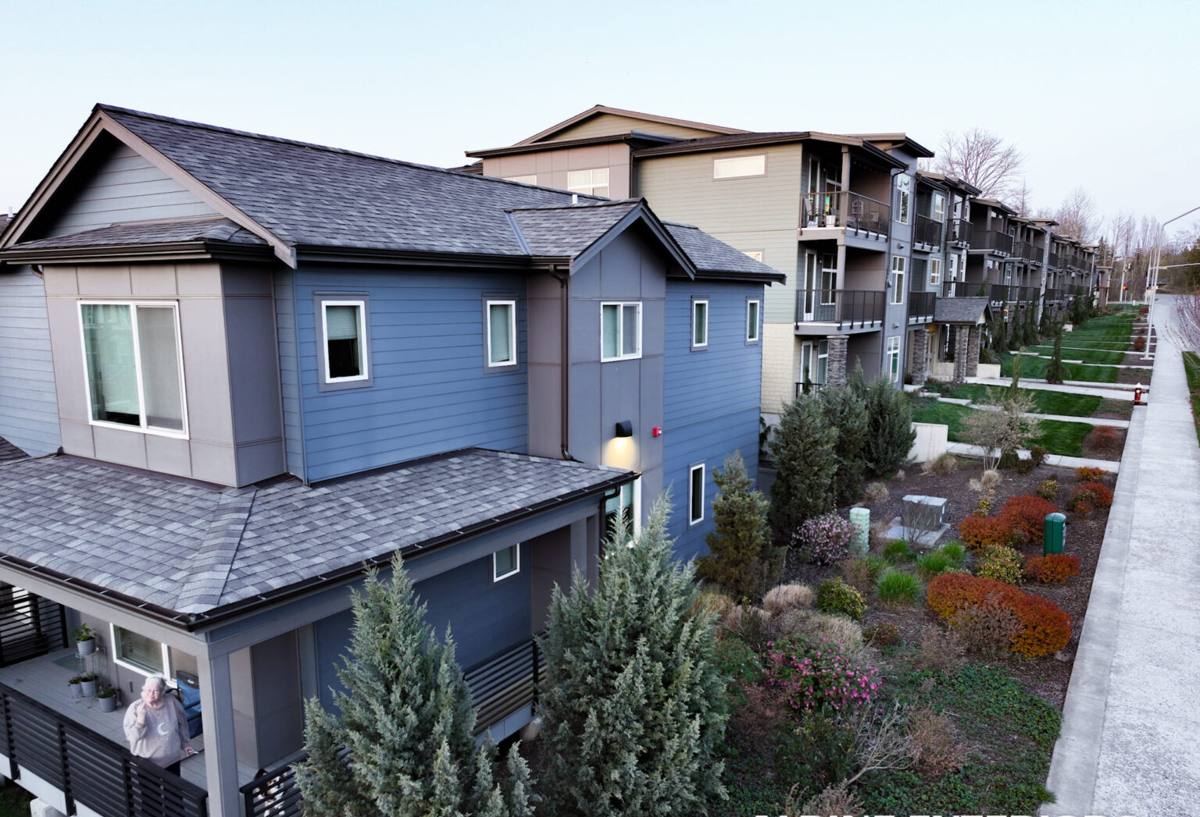
What the Local Climate Does to Siding Over Time
Salt Air and Corrosion
Salt in the air accelerates corrosion on fasteners, flashing, and any metal trim tied into the siding system. When those components fail quietly behind the siding, the panels themselves start to loosen, shift, or take on water — even if the siding face looks fine from the ground. This is one of the most common root causes we find on repair calls: the siding isn't the real problem, the fastening and flashing behind it is.
Driving Rain and Water Intrusion
Wind-driven rain doesn't just hit siding straight on — it gets pushed sideways and upward into laps, seams, and butt joints that were never designed to handle water moving in that direction. Over time this finds every weak point: a caulk joint that's shrunk, a panel edge that's swelled, a nail that's backed out slightly. Repair work in this climate is as much about finding and correcting these entry points as it is about replacing damaged material.
Moss and Sustained Moisture
A long moss season means siding surfaces — especially on north-facing walls and anywhere shaded by trees or roof overhangs — stay damp longer than they would in a drier climate. Moss and algae growth holds moisture directly against the siding surface, which is hard on paint film and, on wood-based products, on the substrate itself. Left untreated, this turns a cosmetic issue into a structural one.
Common Repair Calls We See in the Sumas Area
- Cracked or split panels, often from age, impact, or freeze-thaw cycling on saturated material
- Soft, spongy, or delaminating sections — usually wood-based or engineered wood products that have taken on water
- Buckled or warped panels caused by moisture cycling or improper original installation (nailed too tight, no expansion gap)
- Failed caulking and sealant joints around trim, windows, and corners
- Rust staining or streaking from corroding fasteners
- Paint failure — peeling, bubbling, or chalking — that signals moisture is getting underneath the finish
- Moss and algae staining, particularly on shaded or north-facing elevations
- Loose or missing panels where fastening has failed at the framing
What a Correct Repair Actually Involves
A repair that just swaps a damaged panel without addressing why it failed is a temporary fix. A repair done to hold up in this climate follows a few consistent steps:
- Diagnose the cause, not just the symptom. Before anything is replaced, we look at what's happening behind the siding — flashing condition, house wrap integrity, fastener corrosion, and whether water has a path it shouldn't have.
- Check the water-resistive barrier. If the underlying weather barrier is compromised where the damage occurred, replacing the visible siding alone won't solve the problem — it'll fail again in the same spot.
- Match materials correctly. Repairs on existing siding need panels, trim, and fasteners that are compatible with what's already on the wall, both in material behavior and appearance. Mismatched materials expand and contract differently and can accelerate failure at the joint.
- Re-flash and re-seal properly. Any repair that disturbs flashing or trim gets reinstalled to correct overlap and drainage, not just caulked over.
- Finish to match. Whether that means factory-finished replacement panels or field-applied coating, the goal is a repair that blends in and performs the same as the surrounding material — not a visible patch.
When Repair Makes Sense — and When It Doesn't
We'll always tell you honestly whether a section of siding is worth repairing or whether you're better off replacing it. Repair makes sense when the damage is isolated, the underlying structure is sound, and the rest of the siding still has useful life left. Replacement becomes the more honest recommendation when the damage is widespread, when the root cause (failed water barrier, systemic fastener corrosion, structural rot) affects more than the section in question, or when the existing material has a track record of failing repeatedly in this climate.
| Factor | Repair Usually Makes Sense | Replacement Is the Better Call |
|---|---|---|
| Extent of damage | Isolated to one or two areas | Spread across multiple elevations |
| Underlying structure | Sound, no rot or widespread water intrusion | Sheathing or framing showing damage |
| Material condition | Rest of siding still performing well | Siding nearing or past its service life |
| Root cause | Localized issue (impact, one failed joint) | Systemic issue (barrier failure, chronic moisture) |
| Material type | Any well-maintained system, including Hardie | Repeated failures on materials not suited to this climate |
That last row matters. If the siding we're repairing is vinyl, LP SmartSide, or a wood-based product that keeps coming back with the same moisture or panel-integrity issues, we'll say so directly. We install James Hardie fiber cement exclusively for a reason: it's non-combustible, engineered for wet climates, and holds up to the salt air and prolonged dampness this area sees far better than the alternatives over the long run. If a home's existing siding is fighting a losing battle against this climate, patching it every couple of years isn't a good use of money — a planned replacement to Hardie usually is.
Why a Locally Familiar Crew Matters for Repair Work
Siding repair is diagnostic work as much as it's installation work. A crew that already works in the Sumas and greater Birch Bay area has seen how the local weather pattern plays out on real homes — which elevations take the worst of the driving rain, where moss builds up fastest, how salt air affects fasteners and flashing over a five- or ten-year span. That local pattern recognition is what separates a repair that actually diagnoses the cause from one that just replaces what's visible and calls it done.
It also matters for follow-through. A crew based in the area is available to come back and check the work, address anything that shows up after a hard rain season, and stand behind what they installed — not a one-time visit from a contractor working out of a different region.
Our Repair Process
- Inspection: We assess the damaged area and the surrounding siding, and check what's happening behind the surface — flashing, barrier, fasteners.
- Honest recommendation: We tell you plainly whether repair is the right call, and what to expect if the underlying cause isn't fully addressable without a larger scope of work.
- Clear scope and estimate: You get a straightforward explanation of what's being repaired, why, and what it costs — no vague line items.
- Correct repair: Matching materials, proper flashing and sealing, and a finish that blends with the rest of the wall.
- Walkthrough: We show you what was done and why, so you understand the repair rather than just seeing a finished patch.
A Quick Checklist Before You Call Anyone
- Note which elevation the damage is on (north-facing and shaded walls often show moisture issues first)
- Check whether the damage is isolated or if you're seeing similar issues in more than one spot
- Look for rust streaking near fasteners or trim, which points to corrosion behind the siding
- Note any soft or spongy spots when you press gently on the siding — a sign of moisture intrusion
- Check gutters and downspouts nearby, since misdirected water is a frequent contributor to localized siding failure
- Ask any contractor you're considering how they diagnose the cause of damage, not just how they'll patch it
What to Ask Before Hiring for Repair Work
Repair work is easy to do poorly and hard to verify after the fact once it's painted or caulked over. Before hiring, it's reasonable to ask what caused the damage in the contractor's assessment, whether they'll inspect behind the siding rather than just replacing the visible panel, what materials they're matching to your existing siding, and whether they stand behind the repair if it fails again in the same spot. A contractor who can answer these clearly, without vague reassurances, is one who's actually done this work in this climate before.
If you're dealing with damaged, aging, or failing siding on a home in the Sumas or Birch Bay area, we're happy to take a look and give you a straight answer on repair versus replacement. Request a free, no-pressure estimate using the form below.