 Birch Bay Siding
 Point Roberts Takes a Harder Beating Than Most of Whatcom County
Point Roberts sits out on its own point of land, open to wind and water in a way most of Whatcom County isn't. There's less tree cover to break the wind, more direct exposure to salt-laden air coming off the water, and rain that arrives sideways more often than it falls straight down. That combination is hard on any exterior wall covering, and it's harder still on siding that wasn't built or installed with that exposure in mind.
We work throughout Birch Bay and the surrounding Whatcom County waterfront, and Point Roberts is consistently one of the toughest environments we see. Homes here don't fail because the siding is old — they fail because moisture found a way in years before anyone noticed, and by the time paint is peeling or boards are soft, the damage is already past cosmetic.
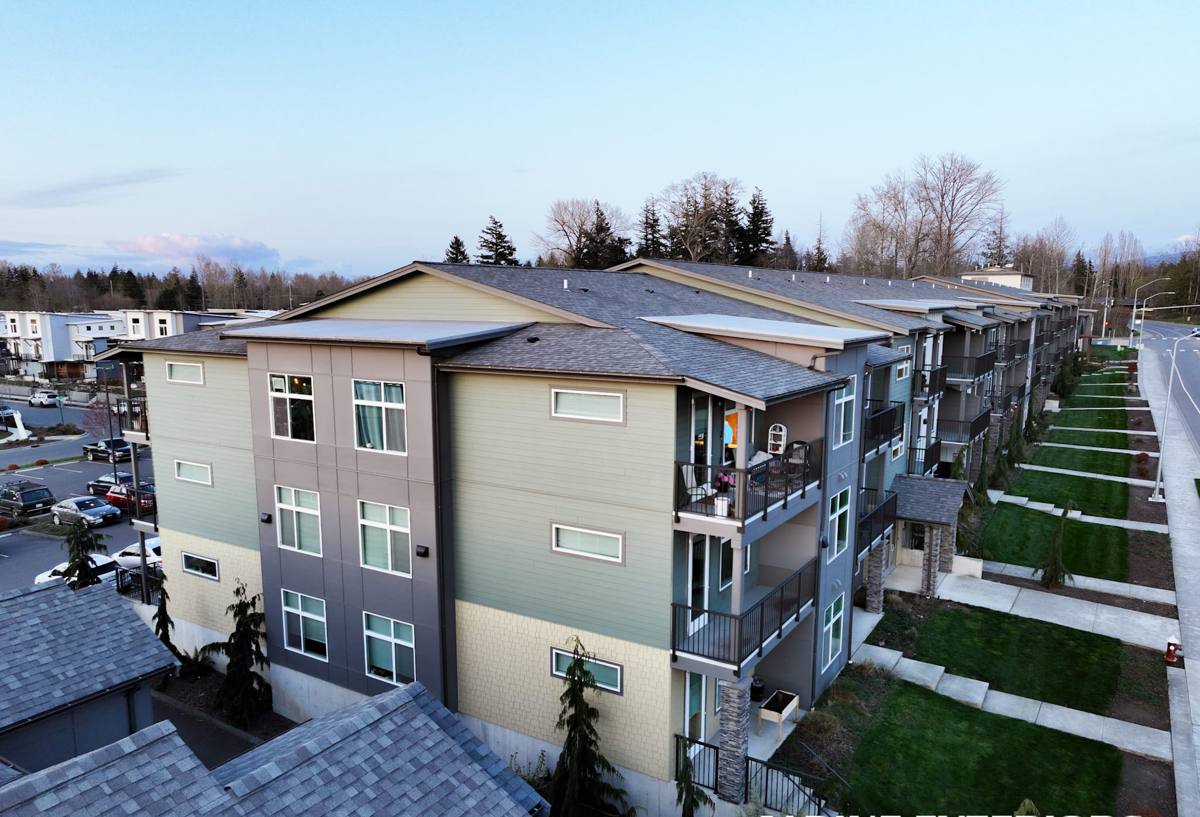
What Salt Air, Wind-Driven Rain, and Moss Season Actually Do to Siding
Salt Air
Airborne salt is corrosive to metal fasteners, flashing, and trim, and it accelerates the breakdown of paint films and caulk. On wood-based sidings it also speeds up moisture absorption at any point where the protective surface has worn thin — nail heads, cut edges, seams.
Driving Rain
Wind-driven rain doesn't just run down a wall, it gets pushed sideways and upward into laps, seams, and penetrations that were designed for water running downhill, not water being forced in at an angle. Undersized flashing or a caulked joint that should have been left open to drain is exactly where this kind of rain finds its way behind the siding.
Moss and Prolonged Dampness
Whatcom County's damp season runs long, and Point Roberts' exposure keeps surfaces wet even longer after a storm passes. Moss and algae hold moisture against the siding face for extended periods, which keeps wood-based products near their moisture threshold for weeks at a time instead of drying out between rain events. That sustained dampness is what eventually leads to swelling, soft spots, and paint failure — not any single storm.
Signs a Point Roberts Home Needs Siding Repair, Not Just a Repaint
A fresh coat of paint can hide a problem for a season, but it doesn't fix what's happening underneath. Before recommending paint, caulk, or a patch, we check for these signs that the damage has gone past the surface:
- Soft or spongy spots when you press on the siding, especially near the bottom courses and around windows and doors
- Paint that's bubbling, peeling, or failing repeatedly in the same spots year after year
- Visible swelling, delamination, or a puffy texture along seams and butt joints
- Dark staining or streaking below joints, trim, or fastener heads
- Moss or algae that keeps returning to the same area within a season or two of cleaning
- Gaps opening up at corner boards, trim, or window and door casings
- A musty smell or visible mold on interior walls that share an exterior wall with damaged siding
What a Correct Siding Repair Actually Involves
A repair that only replaces what's visibly damaged and stops there tends to fail again within a few years, because it doesn't address why the damage happened. Our process is built around finding the cause, not just covering the symptom.
1. Find the Water Path
Before any siding comes off, we trace how water got behind it — a failed seam, missing or undersized flashing, a caulked joint that should have drained, or a fastener that backed out and opened a gap. Repairing the siding without correcting the water path just buys a few more years before the same spot fails again.
2. Check What's Behind the Siding
Once the damaged material is off, we look at the water-resistive barrier, sheathing, and framing underneath. Sometimes it's dry and the repair stops there. Other times there's rot in the sheathing or framing that has to be addressed before anything new goes back on — patching over compromised structure is how small repairs turn into bigger problems a few years later.
3. Correct the Detail, Not Just the Board
Flashing gets replaced or added where it should have been in the first place. Butt joints and seams get proper clearance and backing instead of relying on caulk to do a flashing's job. Fastener patterns get corrected if they were part of the problem.
4. Match the Repair to the Existing Siding
Whenever possible we match profile, exposure, and finish so the repair reads as part of the wall, not a patch. Where an exact match on an aging product isn't realistic, we're upfront about that before starting the work.
Common Repair Scenarios We See on Point Roberts Homes
| What We Find | Likely Cause | What the Repair Involves |
|---|---|---|
| Soft, swollen boards at the base of walls | Splashback and prolonged ground-level moisture, often worsened by moss buildup | Remove and replace affected courses, correct grading or clearance, address moisture source |
| Paint failure and staining below window trim | Missing or failed head flashing above windows | Install or replace flashing, repair and repaint or replace affected siding |
| Gaps and cracking at corner boards | Wood movement and fastener backout from repeated wet-dry cycling | Re-fasten or replace corner trim, re-seal only where drainage isn't needed |
| Recurring moss and dark streaking on north-facing walls | Limited sun exposure combined with salt air and prolonged dampness | Clean, assess for underlying damage, repair as needed, discuss longer-term material options |
| Soft spots around a deck or porch attachment | Poor flashing where the structure meets the siding | Correct flashing detail, replace damaged siding around the connection |
Repair or Replace: How We Help You Decide
Not every damaged section means the whole wall needs to come off. But when damage is widespread, or when the underlying product has a history of failing in this climate, patching one spot at a time stops making financial sense. Here's how we walk homeowners through that decision.
| Factor | Leans Toward Repair | Leans Toward Replacement |
|---|---|---|
| Extent of damage | Isolated to one or two areas | Recurring in multiple locations across the home |
| Age and condition of remaining siding | Siding is otherwise sound and holding paint well | Siding is near the end of its service life or failing broadly |
| Cause of damage | A specific, correctable detail (one flashing, one seam) | A systemic issue with the product's moisture behavior |
| Match availability | Existing profile and finish can be reasonably matched | Product is discontinued or match would be visibly inconsistent |
| Homeowner's plans | Planning to stay short-term or budget is repair-focused | Long-term ownership and want to stop recurring repair costs |
We'll always tell you honestly which side of that line your home is on. If a repair will genuinely hold, we say so. If we think you're about to spend repair money on a wall that's going to need the same fix again in three years, we say that too.
Why We Repair and Rebuild With James Hardie Fiber Cement
When a repair calls for new siding material — whether it's a few courses or a full wall section — we use James Hardie fiber cement, and that's the only siding product we install. Fiber cement doesn't absorb and swell with moisture the way wood-based products can, which matters directly in an environment where surfaces stay damp for extended stretches during moss season. It's also non-combustible, holds its factory-applied ColorPlus finish far longer than field-applied paint typically lasts, and Hardie's HZ product lines are engineered for wet, coastal climates like this one rather than a generic national spec.
That matters for repair work specifically: when we tie new material into an existing wall, we want confidence that the patch will age at the same rate as the surrounding siding, not fail again faster because it's a different product with different moisture behavior. We won't install vinyl, LP SmartSide, primed wood, or other fiber cement brands as a repair material, even when they'd be cheaper or faster to source — we'd rather explain why than sell a repair we don't believe will hold up here.
Our Process for Point Roberts Jobs
Point Roberts is only reachable by driving through Canada or by boat, which means a repair job here isn't scheduled the same way as one five minutes from our shop. We build that into how we plan the work.
- Assessment visit — we inspect the damaged areas, check what's behind the siding where needed, and identify the actual water path causing the problem.
- Written scope and estimate — a clear description of what's being repaired, what material is being used, and what it costs, with no pressure to decide on the spot.
- Material and crew staged in one trip — because of the border crossing, we plan repair jobs to minimize the number of trips back and forth, which keeps costs predictable and avoids delays waiting on a second visit for a missed item.
- Repair, correction of the underlying detail, and cleanup — the work itself, done to the same standard as our installs anywhere else in our service area.
- Walkthrough — we go over what was found, what was fixed, and what to watch for going forward.
Why a Crew That Already Works Point Roberts Matters
A lot of siding repair estimates go sideways once a contractor realizes the job means a border crossing, a ferry, or a trip that doesn't fit neatly into a normal day's route — and that unfamiliarity shows up either as inflated pricing or as a crew that's less careful because they're rushing to get back. We already build Point Roberts into our scheduling and pricing, so there's no surprise trip charge added after the fact and no reason to cut corners to make the day work.
Familiarity with the area's specific exposure matters just as much as logistics. A repair detail that would be adequate on a sheltered inland wall in Whatcom County often isn't enough on a wall facing open water and salt air. Knowing that going in — rather than learning it the hard way after a callback — is a big part of why the same repair holds up here and doesn't need to be redone in a few years.
Get a Straight Answer on Your Siding
If you're seeing soft spots, recurring paint failure, or moss that keeps coming back on a Point Roberts home, it's worth having someone look before it turns into a bigger repair. We'll give you a free, no-pressure estimate, tell you honestly whether it's a repair or something bigger, and explain exactly what we'd do and why — just fill out the form below to get started.