 Birch Bay Siding
 Why Semiahmoo Windows Take More Than a Standard Install
Semiahmoo sits right up against the water, which means homes there deal with a different set of conditions than a house a few miles inland in Birch Bay proper or Blaine. Wind off the bay drives rain sideways into window frames instead of straight down. Salt air corrodes hardware, pits aluminum, and breaks down cheap sealants faster than the manufacturer's warranty paperwork ever accounts for. And the long gray stretch of fall through spring here means moss and algae get a foothold on anything that stays damp, including window sills and trim that don't shed water cleanly.
None of that is exotic information if you've lived on this stretch of Whatcom County for a while. But it matters enormously for how a window gets specified, flashed, and sealed. A window that performs fine in a sheltered inland neighborhood can start failing within a few years on an exposed waterfront lot if it was installed to a generic standard instead of a coastal one.
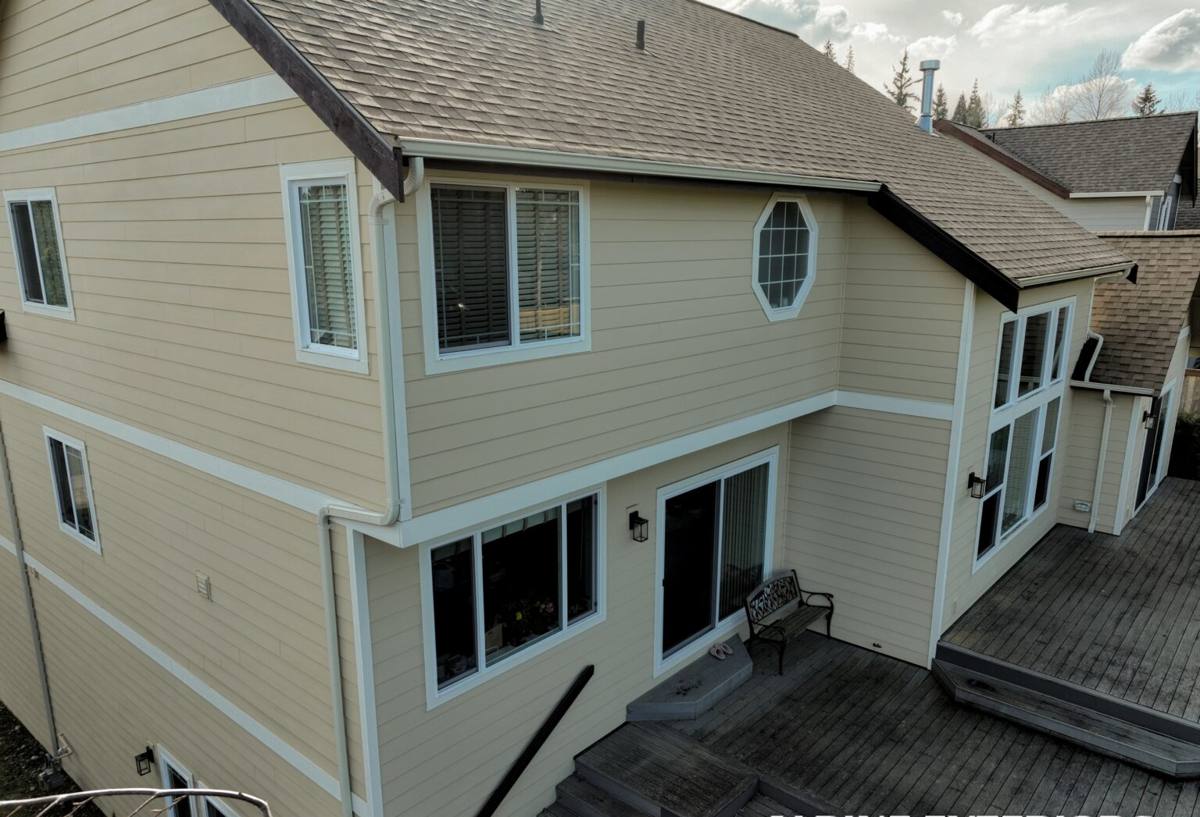
What "Custom" Should Actually Mean Here
We use the word "custom" carefully. It doesn't mean upgraded trim or a fancier grille pattern — though those are part of it. On a job like this, custom means the window is sized, framed, and detailed for the specific opening and exposure it's going into, not pulled off a shelf in a stock size and shimmed to fit.
What that looks like in practice
- Exact field measurements of each opening, since older Semiahmoo homes often have settled or slightly out-of-square framing
- Frame material and glass package chosen based on which elevation of the house it faces — a window facing the open water gets different treatment than one on a sheltered side
- Flashing and weather barrier details matched to the wall assembly behind the siding, not a one-size-fits-all wrap
- Hardware and fasteners rated for coastal/marine exposure, not standard-grade zinc or mild steel
Skipping any one of those steps is how you end up with a window that looks right on installation day and starts showing problems two or three winters later.
The Failure Patterns We See Most on This Stretch of Coast
Most of the window problems we get called out for near Birch Bay and Semiahmoo fall into a handful of repeat patterns, and almost all of them trace back to moisture management rather than the window unit itself.
Water intrusion at the sill and corners
Driving rain finds its way in at the lowest, weakest point of a window opening — the sill pan and corner seals. If the sill wasn't flashed to shed water forward and down, or if sealant was used as a substitute for proper flashing instead of a backup to it, water gets behind the frame. On an exposed site that can happen within a couple of storm seasons rather than over decades.
Frame and sash corrosion
Salt-laden air accelerates corrosion on lower-grade hardware, screws, and some aluminum components. It also breaks down certain sealant chemistries faster than inland conditions would. This is a maintenance-planning issue as much as an installation issue — some materials simply need more attention in this environment.
Moss, algae, and stuck-open weep holes
Weep holes are the small drainage gaps that let water that gets into the frame track back out. On the north and shaded sides of many Semiahmoo homes, moss and algae growth can gradually clog those weep paths. Once they're blocked, water that would normally drain harmlessly starts pooling inside the frame instead.
Condensation confused with leaks
Not everything that looks like a leak is one. Interior condensation on cooler days, especially with older single-pane or poorly sealed units, gets mistaken for a failed window. Part of a correct assessment is telling the difference before recommending a replacement.
Frame Material Choices for a Marine Environment
There isn't one "correct" material for every home — it depends on the home's style, budget, and how exposed the specific opening is. Here's how the common options actually compare for this climate, in plain terms.
| Material | How it handles salt air and rain | Maintenance | General cost position |
|---|---|---|---|
| Vinyl (quality, welded-corner) | Good — won't corrode or rot; UV-stable formulas hold color | Low — occasional washing | Lower to mid |
| Fiberglass | Very good — dimensionally stable, resists warping in temperature swings off the water | Low | Mid to higher |
| Wood-clad (exterior clad, interior wood) | Good on the exterior if cladding and flashing are correct; interior wood needs a dry, well-sealed opening | Moderate — cladding is low-care, but any exposed wood needs attention | Higher |
| Bare aluminum | Weakest choice directly on the water — prone to pitting and corrosion over time without upgraded coatings | Higher — needs monitoring for corrosion | Varies |
We'll talk through this against your actual openings rather than push one material across the board. A window tucked under an eave on a sheltered wall doesn't need the same spec as one taking direct spray off the bay.
Our Process for a Semiahmoo Window Job
1. On-site assessment
We look at each opening individually — orientation, exposure, current flashing condition, and any signs of past water intrusion in the wall or trim. This tells us which openings need extra detailing and which are more straightforward.
2. Measurement and specification
Exact field measurements, not catalog assumptions. We spec frame material, glass package, and hardware per opening based on exposure, matching the home's existing style where it's a replacement rather than new construction.
3. Removal and opening prep
Old units come out carefully so we can inspect the framing and sheathing behind them for hidden rot or prior water damage before anything new goes in. This step gets skipped by crews in a hurry, and it's usually where problems are found or missed.
4. Flashing and weather barrier integration
This is the part that actually determines whether the window stays dry for the next twenty years. Sill pan flashing, proper lapping with the house wrap or weather barrier, and correct head flashing sequencing all matter more here than on a sheltered inland build.
5. Installation and sealing
Unit set square and level, shimmed correctly, fastened per manufacturer spec, then sealed with sealants suited to marine exposure — not just whatever's fastest to gun in.
6. Final check and cleanup
Operation check on every unit, weep holes confirmed clear, and the site cleaned up. We'll walk you through what maintenance, if any, that specific window will need going forward.
Timeline and What the Job Involves for You
Most single-home custom window replacement projects in this area run from a few days to a couple of weeks depending on the number of openings and whether any framing repair turns up once old units are removed. Weather windows matter too — we plan installation around forecasted dry stretches where possible, since an open wall in driving rain is exactly the situation we're trying to prevent for the long term.
You don't need to be present for the whole job, but we'll walk the openings with you beforehand and again at completion so you know exactly what was done and why.
Why Local Experience on This Coastline Actually Matters
A crew that already works Semiahmoo and the surrounding Birch Bay area isn't guessing at how much wind-driven rain a west-facing window takes in a January storm, or how fast moss builds up on a shaded north sill. That knowledge shapes real decisions — which sealant to use, how aggressive the flashing detail needs to be, which openings can take a standard spec and which can't.
It also means straightforward logistics: material sourcing, scheduling around Whatcom County weather patterns, and familiarity with the kind of older coastal construction common in this area. There's no substitute for having actually installed windows on homes facing the same exposure yours does.
Keeping Custom Windows Performing in This Climate
A correct install is most of the job, but a little homeowner upkeep extends the life of any window on this coastline substantially.
- Rinse salt residue off exterior frames and glass a few times a year, especially after storms
- Check weep holes on lower sashes periodically and clear moss or debris if you see buildup
- Inspect exterior sealant lines yearly for cracking or separation, particularly on the most exposed elevation
- Keep gutters and downspouts clear so roof runoff isn't sheeting down across window heads
- Address any soft trim, bubbling paint, or discoloration around a frame early rather than waiting
If you're weighing custom windows for a Semiahmoo home, we're glad to take a look and give you a straight assessment — no pressure, no upsell, just an honest read on what your specific openings need. The estimate form below is the easiest way to get started.