 Birch Bay Siding
 Why Sandy Point Windows Wear Out Faster Than the Manual Says
Sandy Point sits close enough to the water that its homes take a different kind of weathering than houses even a few miles inland in Whatcom County. Salt-laden air works its way into window hardware, corrodes fasteners, and breaks down seals years ahead of schedule. Add in driving rain that comes sideways off the bay during winter storms, and a long stretch of the year where moss and algae stay damp on north- and west-facing walls, and you have a climate that punishes any window install that cuts corners on flashing, sealant, or frame material.
We work on homes throughout Birch Bay, and Sandy Point in particular tends to show a consistent pattern: window frames that look fine from the yard but have soft trim underneath, foggy double-panes from failed seals, and paint or vinyl finishes that have chalked or pitted well before a manufacturer's warranty period is up. None of that is really a defect in the window itself most of the time — it's a sign the original install didn't account for what this stretch of coastline actually does to a building over a decade or two.
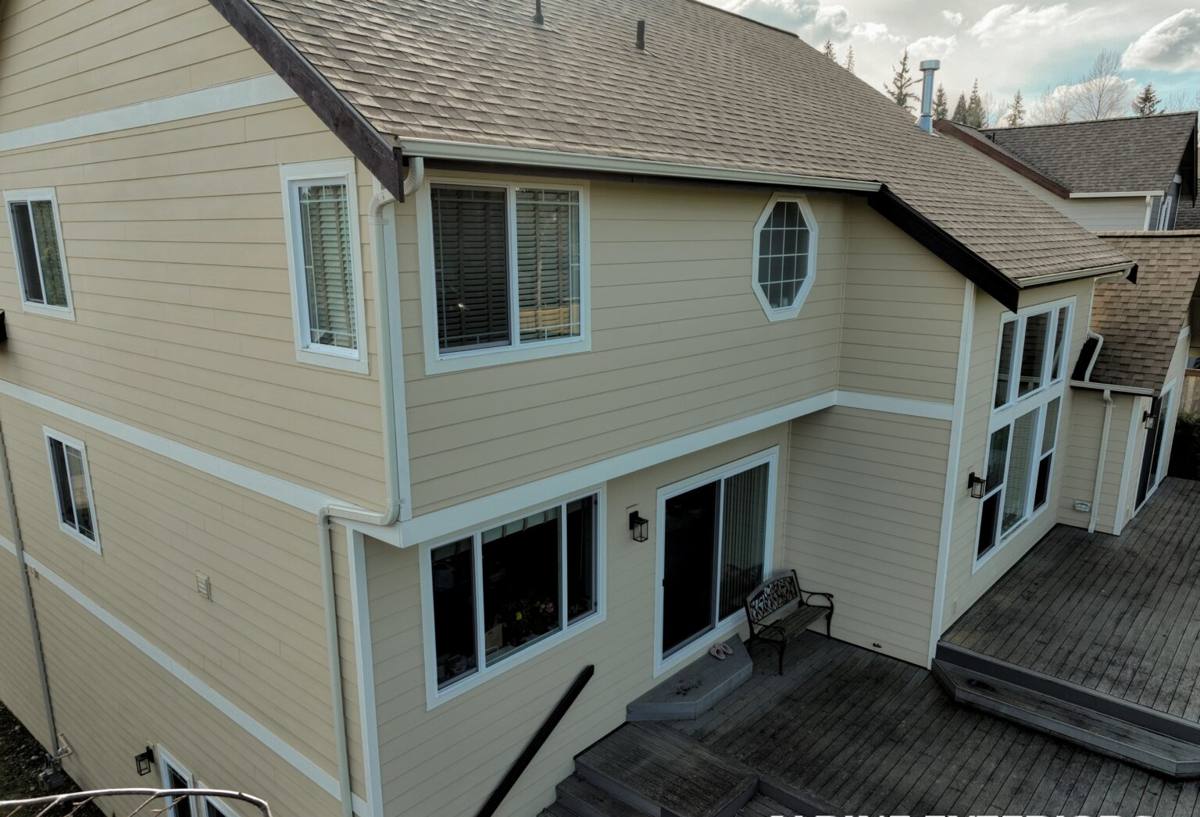
What Driving Rain and Salt Air Actually Do to a Window Assembly
Salt Air
Airborne salt is corrosive to metal hardware — hinges, locks, balance mechanisms, and screws — and it accelerates the breakdown of certain finishes. Windows installed without corrosion-resistant hardware or without a sealed, weather-tight frame-to-wall connection tend to develop sticking sashes, pitted cranks, and drafts well before the glass itself fails.
Driving Rain
Wind-driven rain doesn't just run down a wall, it pushes sideways and upward under sills and around trim. A window that relies on caulk alone, without proper flashing tucked behind the water-resistive barrier, will eventually let water in behind the frame. That's the single biggest cause of hidden rot we find when we pull old windows out along the coast.
Moss and Sustained Dampness
Birch Bay's long moss season means shaded and north-facing walls stay damp for extended stretches. Wood trim and sills in that condition need either a genuinely moisture-tolerant material or a finish system that's actually maintained — not just installed and forgotten.
Signs a Sandy Point Home Needs Window Replacement, Not Just Repair
- Fogging or a visible haze between panes — the seal has failed and the insulating gas is gone
- Soft, spongy, or discolored wood at the sill or bottom corners of the frame
- Windows that won't stay open, won't latch fully, or have visibly corroded hardware
- Noticeable draft or temperature difference near the window on a windy day
- Paint or vinyl that's chalked, pitted, or peeling despite reasonable upkeep
- Visible gaps between the frame and siding, or caulk that's cracked and pulling away
- A jump in heating costs that isn't explained by anything else changing in the house
If you're only seeing one or two of these, a repair or re-seal might genuinely be enough — we'll tell you that honestly during an estimate rather than push a full replacement you don't need yet.
What a Correct Window Replacement Job Involves Here
The window itself is only part of the job. In a driving-rain, salt-air environment, the install details matter as much as the product:
Removal Without Collateral Damage
Old windows come out carefully so we can actually see the condition of the framing and sheathing underneath before anything new goes in. This is where hidden water damage from a prior bad install usually turns up.
Repair the Opening Before It's Covered Again
Any soft wood, compromised sheathing, or degraded water-resistive barrier gets addressed before a new window goes in. Installing a good window into a bad opening just hides the problem for another few years.
Flashing, Not Just Caulk
Proper flashing — integrated with the wall's weather-resistive barrier in the correct shingle-lap order — is what actually keeps wind-driven rain out over the long run. Caulk is a backup layer, not the primary defense.
Corrosion-Resistant Hardware and Fasteners
Given the salt exposure this close to the water, we favor fasteners and hardware rated for coastal or high-moisture conditions rather than standard-grade components that corrode early.
Sealing and Insulating the Gap
The gap between the window frame and the rough opening gets properly sealed and insulated — done wrong, it's a draft and moisture path that undoes the benefit of a new window.
Interior and Exterior Trim Finished Correctly
Trim gets reinstalled or replaced and finished in a way that sheds water rather than trapping it against the wall — an easy detail to rush, and one that shows up as rot within a few years when it's skipped.
Window Material Options for Salt Air and Coastal Exposure
There isn't one "best" window for every home — it depends on your siding, your budget, and how exposed the specific wall is to weather. Here's how the common options generally hold up in this climate:
| Material | Salt Air / Moisture Behavior | Maintenance | Typical Fit |
|---|---|---|---|
| Vinyl | Good moisture resistance, won't rot or corrode | Low — occasional cleaning | Most budgets, most home styles |
| Fiberglass | Excellent stability, resists warping and corrosion | Low | Larger openings, higher-end remodels |
| Aluminum | Can corrode over time without coastal-grade coatings | Moderate — coatings need upkeep | Specific architectural styles |
| Wood / Wood-Clad | Vulnerable to sustained dampness and moss exposure without diligent upkeep | High | Historic or high-end homes where owner accepts the upkeep |
We'll walk you through what's realistic for your home rather than defaulting to whatever's easiest to install. If a homeowner wants wood-clad windows for the look, that's a legitimate choice — we just make sure they understand the maintenance commitment that comes with it in this climate up front.
Our Process, Start to Finish
- On-site assessment — we look at your current windows, the framing condition where accessible, and how exposed each wall is to wind and rain
- Honest recommendation — repair, partial replacement, or full replacement, based on what we actually find, not a sales script
- Written estimate — clear pricing, materials, and timeline before any work starts
- Removal and inspection — old windows out, framing checked and repaired if needed
- Install with proper flashing and sealing — the part that determines whether the job lasts
- Trim and finish work — interior and exterior detailing done correctly, not rushed
- Final walkthrough — we test every window with you before we consider the job done
What Affects Window Replacement Cost
| Factor | Why It Matters |
|---|---|
| Window material and glass package | Vinyl, fiberglass, and glass upgrades (low-E coatings, gas fill) all carry different costs |
| Number of openings | Whole-house replacement typically brings a better per-window cost than one-off jobs |
| Condition of the existing opening | Rotted framing or sheathing found during removal adds repair work before the new window goes in |
| Wall exposure | Bay-facing and west-facing walls that take the worst of the driving rain sometimes warrant extra flashing detail |
| Trim and siding tie-in | Matching existing trim profiles or siding takes more labor than a straightforward swap |
We don't quote a number until we've actually looked at your windows and openings — anything else is a guess, and guesses turn into change orders later.
Why a Crew That Already Works Sandy Point Matters
A window installer who mostly works inland doesn't necessarily think about wind-driven rain loads or salt-air hardware corrosion by default — it's just not what they run into every week. Working this stretch of Birch Bay regularly means we already know which walls tend to take the worst weather, what kind of hidden damage shows up when we pull old windows on homes near the water, and which install details actually matter here versus which ones are just upsells.
It also means straightforward logistics: we're not driving a crew in from out of the area for a callback, a warranty check, or a follow-up question six months after the install.
After Your Windows Are In: Keeping Them Performing
- Rinse salt residue off frames and glass periodically, especially after storms
- Check exterior caulk lines annually and touch up before winter
- Keep gutters and downspouts clear so runoff isn't sheeting across window trim
- Clear moss or debris buildup on sills and trim before it holds moisture against the surface
- Operate locks and cranks periodically through the year so hardware doesn't seize
A well-installed window in a tough climate still benefits from basic upkeep — it's a fraction of the work a bad install creates down the road.
If your windows in Sandy Point are drafty, fogged, or just past their useful life, we're happy to take a look and give you a straight answer on what your home actually needs. The estimate is free, there's no pressure, and you'll get a clear picture of your options before you decide anything.