 Birch Bay Siding
 Why Siding Repair in Custer Is Its Own Challenge
Custer sits close enough to Birch Bay and the Strait of Georgia that homes here take on a different set of stresses than siding just a few miles inland in Whatcom County. Salt-laden air off the water works its way into seams, fastener heads, and cut edges. Driving rain off winter storms hits walls at an angle, not straight down, which pushes water into places builders never expected it to reach. And the long, damp moss season that stretches from fall through spring gives organic growth months to take hold on any siding surface that stays shaded or slow to dry.
None of this means Custer homes need exotic solutions. It means siding repair here has to account for moisture behavior first and cosmetics second. A repair that looks fine on the day it's finished but doesn't address how water moves behind the cladding will fail again, usually in the same spot, within a couple of seasons.
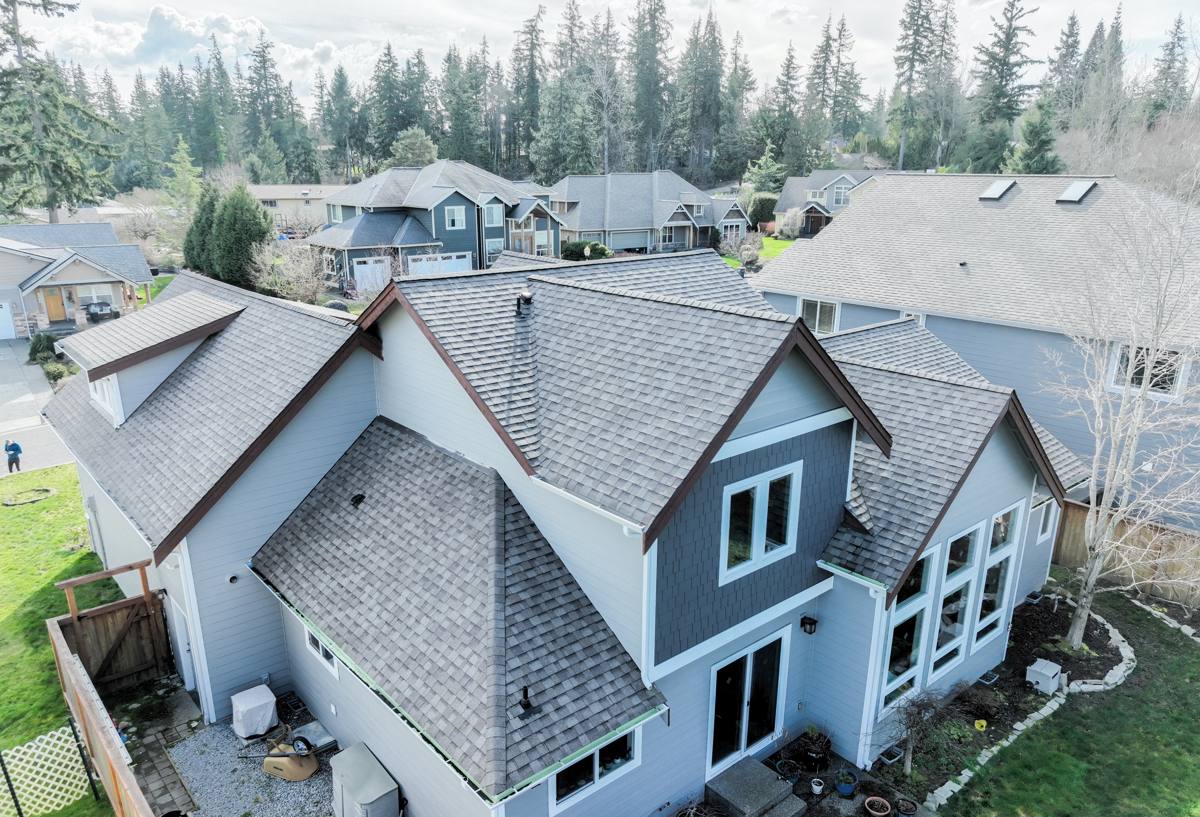
What Typically Goes Wrong on Custer Homes
We see a fairly consistent pattern of damage on siding calls in this area, and it almost always traces back to moisture, not simple wear:
- Swollen or delaminating panels near ground level, gutters, or downspout discharge points where water sits longest.
- Cracked or split boards around window and door trim, often from expansion and contraction cycles combined with poor original flashing.
- Moss and algae staining on north-facing walls and under eaves that don't get direct sun or wind to dry them out.
- Fastener stains and loose boards where corrosion has started on nails or screws exposed to salt air.
- Soft or spongy spots that indicate water has already gotten behind the siding and into the sheathing, not just the surface material.
The last item is the one that separates a genuine repair from a cosmetic patch. If the sheathing or framing behind the siding has absorbed moisture, replacing the visible board without addressing what's underneath just seals the problem back up.
Why Some Damage Looks Small But Isn't
A six-inch soft spot at the bottom corner of a wall can be the visible edge of a much larger area of hidden water intrusion. Fiber cement, vinyl, and wood all telegraph water damage differently — vinyl can look untouched while the sheathing behind it rots, wood shows staining early but can hide internal decay, and fiber cement tends to show swelling right at the point of moisture entry, which is actually easier to diagnose accurately.
What a Correct Siding Repair Actually Involves
A repair done right isn't just cutting out a bad section and nailing in a new one. On every job we do in Custer, the process includes:
- Diagnosing the moisture path. Before any siding comes off, we identify how water got in — a failed caulk joint, missing kick-out flashing, a clogged gutter, or a butt joint that was never sealed.
- Opening up enough area to see the real extent of damage. Cutting back only the visibly stained board often leaves compromised material behind it untouched.
- Checking the water-resistive barrier and flashing. If the house wrap or flashing tape has failed at the damaged area, it gets corrected as part of the repair, not left as-is.
- Replacing damaged sheathing if needed. If the OSB or plywood behind the siding has softened, that gets addressed before any new siding goes back on.
- Installing matching, correctly fastened replacement material with proper clearances at grade, decks, and roof lines so the same failure doesn't repeat.
Skipping steps two through four is how a "repair" turns into a callback six months later.
Matching Materials: Why It's Harder Than It Sounds
One of the most common repair requests we get isn't from new James Hardie installs — it's from homeowners with existing vinyl, LP SmartSide, cedar, or older fiber cement who need a section patched and want it to blend in. Matching old siding is rarely straightforward:
- Discontinued colors and profiles mean an exact match may not exist anymore.
- Sun-faded original siding next to a brand-new patch can look mismatched even with the "same" product.
- Engineered wood and older fiber cement products have had multiple formulation changes over the years, so a board bought today may not perform or look identical to one installed a decade ago.
We'll always give you an honest answer on whether a patch will actually blend in, or whether replacing a full wall section — or eventually the whole elevation — is the more realistic path to a result you'll be happy with.
Why We Only Install James Hardie
When a repair calls for new material, we install James Hardie fiber cement exclusively. We don't carry vinyl, LP SmartSide, Cemplank, Allura, primed spruce, or cedar, and that's a deliberate standard, not a limitation of what's available to us. In a climate like Custer's — salt air, sustained damp periods, and heavy moss pressure — the trade-offs of those other products (moisture sensitivity at cut edges, coating or finish maintenance, or long-term dimensional stability) are exactly the weak points that show up as repair calls later.
James Hardie's HZ5 product line is engineered for wetter, colder climates like the Pacific Northwest, and its ColorPlus factory finish is baked on and warrantied against peeling and cracking, rather than relying on field-applied paint that needs recoating. When we patch into existing Hardie siding, we're working with a product line and finish system we know well, which makes for a cleaner, more durable match than guessing at a competitor's discontinued profile.
Repair vs. Replacement: How We Help You Decide
Not every damaged wall needs full replacement, and not every patch is a good long-term investment. The table below outlines how we typically frame that decision for homeowners.
| Situation | Recommended Approach | Why |
|---|---|---|
| Isolated damage, siding under 10 years old, good color match available | Targeted repair | Underlying material and finish are still sound; a clean patch holds up well |
| Damage at multiple points across one wall | Full wall or elevation replacement | Multiple failure points usually indicate a systemic flashing or drainage issue affecting the whole surface |
| Siding is 20+ years old, discontinued color/profile | Replacement of affected elevation, phased if needed | Patches won't blend, and older material is nearing the end of its service life anyway |
| Repeated repairs in the same spot | Investigate structural/drainage cause before re-repairing | Recurring failure means the original moisture path was never actually fixed |
Our Process for Custer Repair Calls
We keep the process straightforward and transparent from the first call to the final walk-through:
- On-site inspection. We look at the damage itself and everything around it — grading, gutters, flashing, and how water moves across the wall.
- Honest scope recommendation. You get a clear answer on whether this is a spot repair, a partial re-side, or something bigger, along with why.
- Written estimate that spells out material, labor, and any sheathing or flashing correction included.
- Scheduled repair work timed around weather windows, since fiber cement repair and finish work need reasonably dry conditions to install and seal properly.
- Final walk-through so you can see exactly what was done and why, including anything we found once the wall was opened up.
Signs You Should Call for an Inspection Soon
- Visible swelling, bubbling, or soft spots anywhere on exterior walls
- Persistent moss or dark staining that returns shortly after cleaning
- Cracked caulk or gaps at trim, window, and corner joints
- Loose boards or visible fastener corrosion
- Interior signs like peeling paint or musty smell on an exterior-facing wall
Why Hiring a Crew That Already Works in Custer Matters
Siding repair quality depends heavily on understanding the specific conditions of the house in front of you. A crew that regularly works Custer and the greater Birch Bay area already knows which wall orientations take the worst weathering, how moss establishes on shaded elevations, and which older siding products in this area tend to need repair versus replacement. That local pattern recognition shortens the diagnostic process and helps avoid guesswork about what's actually driving the damage.
It also matters for accountability. A contractor who works this area regularly has a reputation to maintain with neighbors and repeat clients here, not just a one-off job to finish and move on from.
Get a Straight Answer on Your Repair
If you're dealing with damaged, stained, or failing siding on a Custer home, we're happy to take a look and give you an honest assessment of what's actually going on and what it will take to fix it right — whether that's a simple patch or a larger conversation about replacement. There's no pressure and no cost for the estimate; use the form below to get started.