 Birch Bay Siding
 Windows Built for Sandy Point's Waterfront Exposure
Sandy Point sits right up against the water, and that changes what a window installation needs to survive out here compared to a house a few miles inland. Homes in this stretch of Whatcom County take a steady diet of salt-laden air, wind-driven rain off the Strait of Georgia, and a wet season that runs long enough to grow moss on just about any surface that stays damp. A window that would hold up fine in a sheltered neighborhood can fail early on a Sandy Point lot if it isn't installed with that exposure in mind.
This page covers what we actually do when we install windows on Sandy Point homes — the materials, the flashing details, the process — and why hiring a crew that already understands this stretch of coastline matters more here than it would somewhere drier.
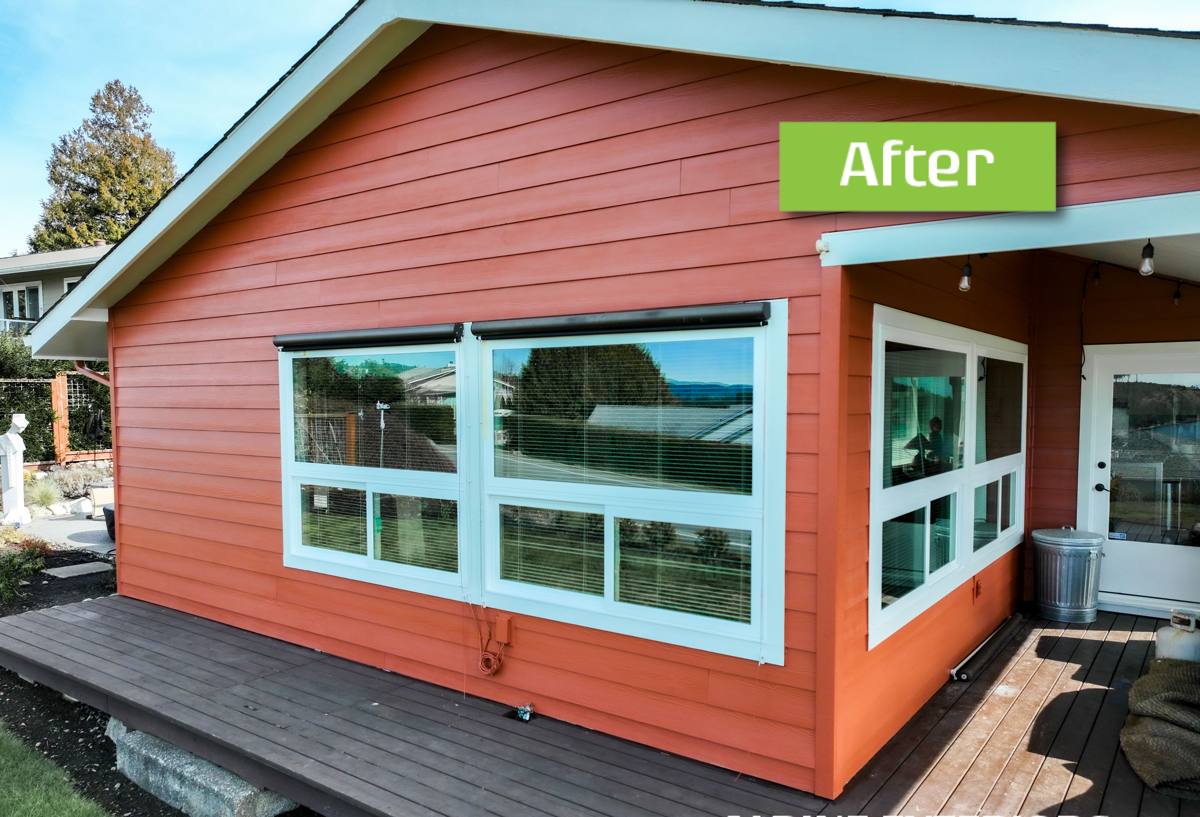
What Salt Air, Wind-Driven Rain, and Moss Do to Window Assemblies
Three things wear on windows out here, and they don't act alone — they compound each other.
Salt air accelerates corrosion on anything metal: hinges, cranks, screws, and lesser-grade flashing. It also degrades some sealants and finishes faster than manufacturers' ratings assume, because most of those ratings are tested for general climates, not for a house sitting close to saltwater with regular onshore wind.
Driving rain off the water doesn't fall straight down — it comes in sideways, which means it hits window assemblies at angles that ordinary sill design and shallow flashing details weren't meant to handle. A window that would be fine in a calm rain event can still leak in a wind-driven storm if the water management behind the trim wasn't done right the first time.
Moss and prolonged dampness come from the length of the wet season, not its intensity. Whatcom County's marine climate keeps surfaces damp for extended stretches, especially on north- and west-facing walls that don't get much sun to dry out between storms. Moss holds moisture against wood trim, sills, and caulk lines, which shortens the life of anything not detailed to shed water quickly.
None of this means Sandy Point is a bad place to own windows — it just means the installation has to account for these conditions instead of treating this as a generic siding-and-window job.
Signs a Sandy Point Home Needs New Windows
Not every window problem calls for full replacement. Some issues are hardware or sealant fixes; others point to a failed installation that needs to be corrected properly. Common signs we see on homes in this area include:
- Fogging or moisture between panes — a sign the seal on a double- or triple-pane unit has failed
- Soft or discolored wood trim or sill, especially on walls facing the water or prevailing wind
- Visible moss or persistent green staining around the frame or sill even after cleaning
- Drafts or a noticeable temperature difference near the window in winter
- Corroded hardware — cranks, hinges, or locks that stick, seize, or show rust
- Water staining on interior drywall or trim below or beside the window after storms
- Frames that no longer sit square, making the window hard to open, close, or lock fully
If you're seeing one or two of these and the frame itself is still solid, a repair or re-sealing may be enough. Once you're seeing several together, or there's evidence of water getting behind the frame into the wall assembly, replacement is usually the more honest recommendation.
What Correct Window Installation Actually Involves
A window installation is only as good as what happens before the new unit ever goes in the opening. On a coastal property, the prep work matters more than it does inland, because there's less margin for a shortcut to go unnoticed.
Flashing and Water Management
Every opening gets flashed to direct water out and away from the wall structure — not just at the sill, but integrated with the house wrap or weather barrier above and to the sides so water can't work its way behind the window over time. On exposed elevations, we pay particular attention to sill pan flashing, since that's the detail most likely to be skipped on a rushed job and the one most likely to cause hidden rot if it's missing.
Sealing and Insulation
Gaps around the frame get properly insulated and sealed — not just caulked on the outside face, which only hides a gap rather than closing it. A visible bead of caulk that isn't backed by proper flashing and insulation behind it is a cosmetic fix, not a real one, and it tends to fail first in wind-driven rain.
Fastening and Structural Fit
The window has to sit square and plumb in the opening before it's fastened, or it will bind, leak, or wear unevenly no matter how good the unit itself is. We shim and fasten according to the manufacturer's specifications, since that's also what keeps most window warranties valid.
Choosing Frame Materials for Coastal Whatcom County Conditions
There's no single "best" window material for every home — it depends on the exposure, the look you want, and how much upkeep you're willing to do. Here's how the common options generally hold up in a salt-air, high-moisture environment like Sandy Point:
| Frame Material | Coastal/Moisture Behavior | Maintenance | Notes for Sandy Point |
|---|---|---|---|
| Vinyl | Won't rust or rot; performs well in salt air | Low — occasional cleaning | Solid all-around choice for most exposures here |
| Fiberglass | Very stable, resists corrosion and won't warp | Low | Good option for the most exposed, wind-facing walls |
| Aluminum-clad wood | Weather-resistant exterior with a wood interior | Moderate — exterior is low-upkeep, interior wood still needs care | Works well when you want a wood look inside |
| Solid wood | Attractive but most vulnerable to moisture, rot, and moss buildup | High — needs regular painting/sealing | We're honest that this is the highest-maintenance choice on an exposed lot |
| Bare aluminum | Prone to corrosion and pitting in salt air over time | Moderate to high | Not what we typically recommend for water-facing walls here |
We're not going to tell you every wood window will fail — plenty of homeowners keep them looking great with consistent maintenance. But we will tell you honestly what kind of upkeep schedule a given material needs once it's a few hundred feet from saltwater, so you're not surprised five years in.
Our Installation Process, Step by Step
The process is straightforward, but the order and the details matter:
- On-site assessment — we look at each opening, the exposure it faces, and the condition of the surrounding trim and wall assembly, not just the window itself
- Measuring and product selection — exact sizing, plus a frame material and glazing package suited to that wall's exposure
- Removal — old units are removed carefully to check for hidden rot or water damage in the framing before anything new goes in
- Repair of any framing issues — if we find soft wood or old water damage, we address it before installing, not after
- Flashing and setting the new window — sill pan, side and head flashing, and correct shimming for a square, plumb fit
- Insulating and sealing — gaps filled properly, exterior sealed with materials rated for the exposure
- Trim and finish work — interior and exterior trim reinstalled or replaced to match the home
- Final walkthrough — we check operation, seals, and finish with you before calling the job done
What Affects the Cost of Window Installation
Costs vary by home, but the main drivers are consistent. Rather than quote a number that won't fit your specific situation, here's what actually moves the price:
| Factor | Why It Matters |
|---|---|
| Number and size of windows | More openings and larger units mean more material and labor |
| Frame material | Vinyl is typically the most budget-friendly; fiberglass and clad-wood cost more |
| Condition of the existing opening | Hidden rot or water damage found during removal adds repair work |
| Glazing package | Double vs. triple pane, and coatings for sun and heat performance, affect unit cost |
| Exposure of the wall | Wind- and water-facing elevations may call for upgraded flashing details |
| Trim and finish work | Matching existing trim or upgrading it adds labor and material |
We give a firm, itemized estimate after seeing the actual openings — not a rough guess over the phone — because on a coastal property the condition behind the trim can change the scope more than the window itself does.
A Homeowner's Checklist Before Hiring
Whether you go with us or anyone else, here's what's worth confirming before you sign a contract for window work in this area:
- Washington state contractor license, current and in good standing
- Liability insurance, and workers' comp coverage if they run a crew
- A written scope that names flashing and sealing details, not just "install windows"
- Experience with coastal or waterfront properties specifically, not just general remodeling
- A clear explanation of what happens if hidden rot is found during removal
- Manufacturer warranty terms, and confirmation the installer's work won't void them
- References or completed local projects they can point you to
If a contractor can't speak specifically to how they handle wind-driven rain or salt exposure, that's worth asking about directly before you hire them.
Why a Crew That Already Works Sandy Point Matters
Installers who mostly work inland jobs aren't necessarily doing anything wrong — they're just used to a different set of conditions. A crew that regularly works Sandy Point and the surrounding Birch Bay area already knows which elevations take the worst of the wind, how fast moss builds back on a north-facing sill, and where a standard flashing detail needs to be upgraded for the exposure. That's the difference between a window that looks right on installation day and one that's still performing correctly in five or ten years of Whatcom County winters.
If your property is part of a community or homeowners' association, it's also worth checking whether exterior changes like window replacement need approval before work starts — we're happy to work around that process once you know what it requires.
If you're weighing repair versus replacement, or just want a straight answer on what your windows need, we're glad to take a look and put together a free, no-pressure estimate — no obligation either way.