 Birch Bay Siding
 Why Sandy Point Homes Need a Different Approach to Windows
Sandy Point sits right up against the water, which means the homes here take a steadier beating than houses even a mile or two inland in Birch Bay. Salt-laden air corrodes hardware and fasteners faster than it does elsewhere in Whatcom County. Wind off the strait drives rain sideways into wall assemblies during a good chunk of the fall and winter. And the long, damp moss season that settles over this part of Washington keeps north- and west-facing walls wet for weeks at a stretch. Windows are one of the biggest openings in that wall assembly, so how they're installed — not just what brand is on the label — decides whether a house stays dry or starts hiding rot behind the trim.
We're not selling you on the idea that a window alone fixes this. A well-built window installed poorly will fail in a wind-driven rain event just as fast as a cheap one. What matters is matching the product to the exposure and installing it correctly for a Sandy Point wall, not a generic install anywhere in the county.
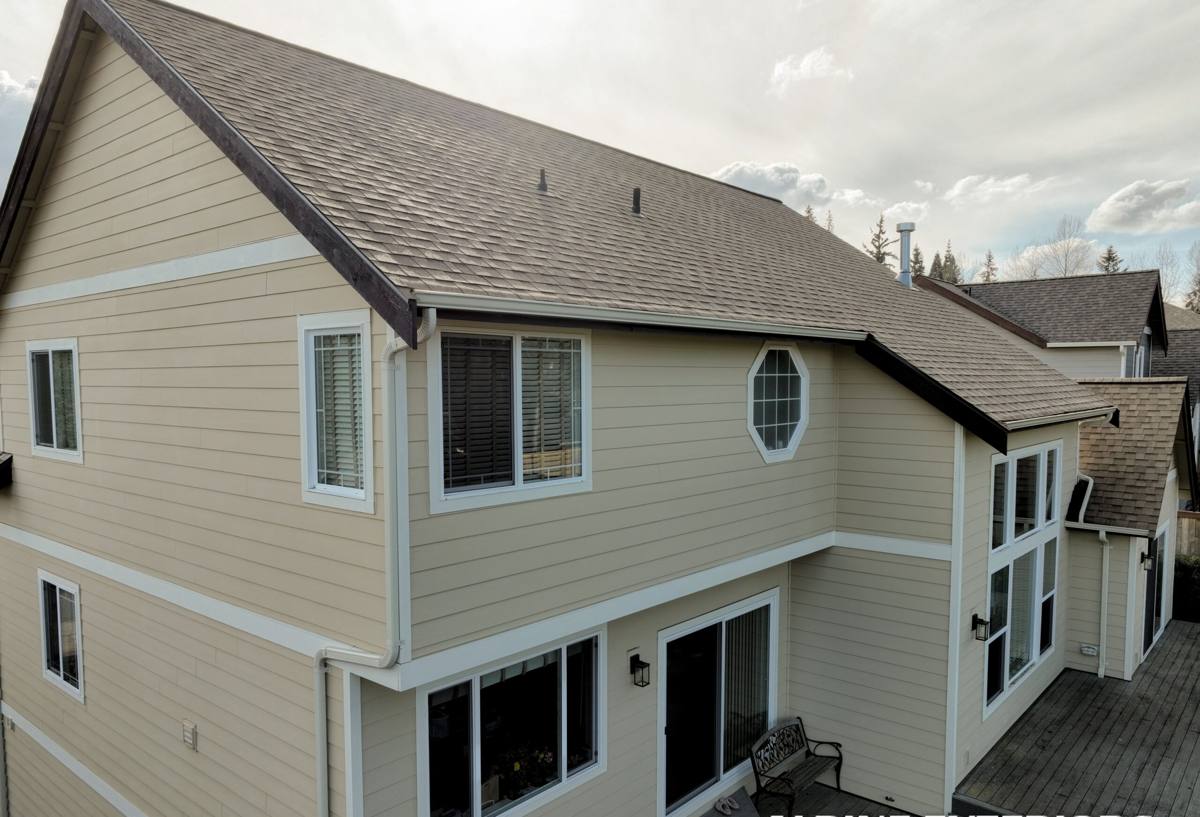
What Salt Air and Wind-Driven Rain Actually Do to Windows
Corrosion at the Hardware Level
Locks, hinges, balance systems, and screws are usually the first thing to go on a waterfront home. Standard steel or lower-grade aluminum hardware pits and seizes within a few years this close to the water. It's a small detail that gets skipped on a lot of standard installs because it doesn't show up as a problem until the third or fourth winter.
Wind-Driven Rain Intrusion
Rain that comes in horizontally, pushed by wind off the water, tests a window's weatherstripping and the flashing behind it in ways a calm rain never will. A window rated for still-air conditions can still leak under sustained wind pressure if the flashing details around the rough opening aren't done right.
Moss, Algae, and Trapped Moisture
Whatcom County's moss season isn't just a roof problem. Moss and algae hold moisture against siding and trim for extended periods, and if that moisture finds a path in around a window opening — through a gap in flashing tape, a missing sealant joint, or a poorly lapped house wrap — it can sit there for months without anyone noticing until the trim starts to soften.
What a Correct Window Installation Involves
A proper install for a Sandy Point exposure is built in layers, not just "put the window in the hole and caulk around it." Here's the sequence that actually keeps water out:
- Rough opening inspected and repaired if there's any existing rot or soft framing before the new window goes in
- Sill pan flashing installed to direct any water that gets past the window back outside the wall, not down into the framing
- Self-adhered flashing tape lapped correctly at the sides and head — shingle-style, so water always sheds outward and downward
- Window set plumb, level, and square, with shims at the correct load points so the frame doesn't rack over time
- Low-expansion foam or backer rod and sealant at the gap between frame and rough opening, sized to allow for material movement
- House wrap integrated over the flashing at the top, not tucked under it, so the drainage plane stays continuous
- Exterior trim and sealant joints finished with a product rated for UV and salt exposure, not a generic caulk
Skip any one of those steps and the window can look fine for a year or two before a leak shows up — usually as a stain on interior trim, a soft spot in the siding, or a musty smell that's hard to pin down.
Choosing Frame Materials for a Waterfront Exposure
Frame material matters more here than in a sheltered inland lot. We walk every Sandy Point customer through the honest trade-offs rather than pushing one product line.
| Frame Material | Salt Air Performance | Maintenance | Trade-Offs |
|---|---|---|---|
| Vinyl (quality grade) | Good — won't corrode or rust | Low — occasional wash | Can discolor or become brittle under long UV exposure; look for marine-grade weatherstripping |
| Fiberglass | Very good — stable and corrosion-resistant | Low | Higher upfront cost; worth it on directly exposed elevations |
| Aluminum-clad wood | Depends heavily on cladding quality and sealed joints | Moderate — exterior low, interior wood needs normal care | Beautiful interior finish, but any breach in the cladding exposes wood to moisture fast in this climate |
| Bare wood | Poor without diligent upkeep | High — regular repainting/sealing | We generally steer waterfront clients away from unclad wood on exposed walls; it's a maintenance commitment most people underestimate |
None of these are wrong choices — it depends on which elevation of the house we're talking about, your maintenance appetite, and your budget. A west-facing wall catching direct wind and rain off the water calls for a different answer than a sheltered east-facing wall on the same house.
Glass and Weatherstripping: What Actually Earns Its Keep
Double-pane, low-E glass is the standard starting point for this climate, and for most Sandy Point homes it's the right call — it manages both heat loss and condensation better than older single-pane or basic dual-pane units. Where we pay closer attention is the weatherstripping and the operating hardware, because that's what holds up (or doesn't) against sustained wind pressure. A quality compression seal on a casement window, for instance, generally resists wind-driven rain better than a slider's brush seal, which matters on a wall that takes rain head-on.
Argon gas fill and warm-edge spacers are worth the modest upcharge for the efficiency gain, but they don't solve a moisture problem — that's still a flashing and installation issue, not a glass-package issue. We'll never tell you a better glass package fixes a bad install.
Common Problems We Find on Existing Sandy Point Windows
When we're called out to look at an older window on a waterfront property here, a handful of issues show up repeatedly:
- Corroded balance springs or locks that make windows hard to open or that no longer latch tight
- Failed seals on double-pane units, showing up as fogging or condensation between the panes
- Soft or delaminating exterior trim around the frame, usually from years of trapped moisture rather than a sudden failure
- Sealant joints that have shrunk, cracked, or pulled away from the frame after repeated wet-dry cycles
- Discoloration or staining on interior sills, which almost always traces back to a flashing gap rather than the glass itself
Catching these early is far cheaper than waiting until the framing behind the window is compromised. If you're noticing any of the above, it's worth having someone take a real look rather than just re-caulking the surface and hoping.
Our Process on a Sandy Point Project
1. On-Site Assessment
We look at the specific exposure of each elevation — a window on the water side of your house isn't dealt with the same way as one tucked under an eave on the sheltered side. We check the condition of the existing rough opening before quoting anything.
2. Straightforward Estimate
You get a written scope covering frame material, glass package, flashing approach, and trim finish — no vague line items. If we recommend one elevation get a different product than another, we'll explain why.
3. Installation
Old windows come out, the opening gets inspected and repaired if needed, and the layered flashing and sealing sequence described above goes in before the new window is ever set. We don't shortcut this step to save a few hours.
4. Cleanup and Walkthrough
We walk the finished openings with you, operate each window, and point out anything you should keep an eye on going forward.
Maintenance Checklist for Sandy Point Homeowners
New or existing windows both benefit from a simple seasonal check, especially given the moss season and salt exposure this area sees:
- Rinse hardware and tracks periodically to clear salt residue before it starts pitting metal
- Inspect exterior sealant joints each fall for cracking or gaps before the wet season sets in
- Clear moss and debris away from window trim and sills where moisture can sit
- Check interior sills after heavy wind-driven rain events for any sign of moisture
- Operate every window at least a few times a year so hardware doesn't seize from disuse
Why a Crew That Already Works Sandy Point Matters
Window installation isn't a one-size-fits-all trade, and a waterfront exposure in Whatcom County isn't the same job as a subdivision install fifteen miles inland. A crew that's already worked this specific stretch of Birch Bay knows which elevations typically take the worst of the wind, what the local moss and moisture patterns do to trim over a season, and which flashing details actually hold up here versus what a manufacturer's generic install guide assumes for a milder climate. That local track record is worth more than a brand name on the window itself.
If you're weighing a window replacement or repair on a Sandy Point property, we're happy to take a look and give you a straight, no-pressure estimate — use the form below to get started.